J.McDonald Knives
Basic Member
- Joined
- Jan 28, 2007
- Messages
- 2,021
Wa..Wa..Wally,
:jerkit: Gotta agree with Jr.
see uncle BBBBB Beaver isnt as think as you dumb he is!!! HEHE!!
:jerkit:
The BladeForums.com 2024 Traditional Knife is available! Price is $250 ea (shipped within CONUS).
Order here: https://www.bladeforums.com/help/2024-traditional/
Wa..Wa..Wally,
:jerkit: Gotta agree with Jr.
:jerkit: might want to look into getting some glasses. :jerkit:
see uncle BBBBB Beaver isnt as think as you dumb he is!!! HEHE!!
 Jr...Jr..Jr.. Too bad we can't honestly say anything that nice about you
Thanks Craig. I was messing around with it yesterday and it looks like I have to choke it down.Hi George,
My sidearm burner is set up just a little different, but when it comes to tuning, you might try backing up the mig tip so that the outlet is centered in the air inlet opening (and also centered with the burner tube). In a small forge you can choke down that air inlet and run some surprisingly low pressures. Just passing along help I've got from others that got me in the ballpark a lot quicker.
Best of luck, Craig

I hear Ya, but I just wanted to see if I could build one.
And to cheap to buy one. HEHEHEHEHE!!!!

Edit- it looks like you were having the opposite problem that I had... I should have finished reading
I use a modified version of the sidearm burner, and I learned a few tricks from jacking around with it. The biggest issue with our venturi burner was getting a good mix, and there's a few things that we did to help. For one, make sure that you've got enough space for a sufficient amount of air to get in there. You could also scoot back the mig tip so that it shooting nearer to the air intake, which should get things mixing sooner. You can also drill angular holes in the pipe right past the T so that more air is being sucked in as the gas is jetted by.
We suffered from having too small a T, so the other holes that helped with the oxygen, and after some more tuning, we chould choke down the T for the most part and run a hot, almost neutral (a little lean) mix. The oxygen supply and vacuum are the two main thing that we needed taking care of. You may also want to check your flare and make sure that it sizeable enough to create a low pressure zone and get the two gasses to mix.
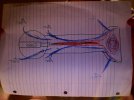
Here's a quick (ugly) sketch of what we did and the little fixes we made. The holes go around the circumferance, and seemed to help with the mix and burn issues that we were having.... though they may be superficial (My understanding of physics is rather basic... the concept does seem to work on the same principals that rest of the venturi burner does though). The tip is just past the hole in the T.
It'll get up to welding on it's own, but I can also hook it up to a blowdryer if I don't mind running an oxidizing environment. I averaged 2-3psi for forging if that means anything.
 that it is getting enough air. I will find out after I make up the forge body. This sucker it louder than the blower forges that I have. Thanks for the input.:thumbup: