Need some input, home shop bench

Joined
Sep 27, 2007
Messages
7,680
Hi all,
I need a little input and so I decided to come to the guys who I know deal with the subject every day.

For quite some time, I've done sharpening and minor repair work for the locals in my garage. The problem has always been that I have they typical garage for a suburban family with a wife, two kids, a couple dogs, and whatnot.....which means that my belt sander is in one corner, the drill press in another, and maybe if I look really hard, I can find the grinder that used to be over there:o

Well, I sold a couple of motorcycles and yesterday started hauling out some accumulated junk. I soon will have a ten foot or so section of garage wall to build a work bench on and I want some input. Over the years I have built several large aquarium stands using 4x4's for legs, with the frames for the top made out of 2x4's, with plywood tops and 1x12 pieces of pine for shelves. I was thinking about going with the same type of construction to build an inexpensive bench for knife work now that I've got someplace to do it. I am considering making the benchtop out of 2x4's or 2x6's so that the top is substantial enough to bolt machinery onto, such as a belt sander, or grinder.

Any ideas are welcome. If any of you guys are using some sort of hand made bench for knife work, what is it like? How did you make it? and what was the cost?

Thanks!
 
Guess I posted this in the wrong spot. Either that, or nobody has a workbench in their shop:o
 
I have a few workbenches. They are pretty simple. Just build them sturdy....and bigger than you'll think you need. I always end up needing more space than I thought I would.

I don't know that 2X is necessary for the top. I used heavy plywood and it worked just fine. If your going to be doing a lot of hammering then they thicker stuff is probably a good idea.

Just think about what you'll need/use and go from there.

SDS
 
My sturdiest bench is freestanding, center podium style. 3 foot by 4.5 feet. The legs are 4x6 I got off a jobsite from a carport teardown. the top laterals are 2x6 and the bottom laterals are 2x8, all lag bolted with 6 inch 3/8 lags. (predrill the holes!). The top is 2x6 with 1/2 inch plywood on top, screwed down like mad. 3.5 inch deck screws into the table frame and the 2x4 crosspiece down the middle (also lagged into the top laterals) and 1.5 inch dec screws on the plywood. Painted....3 or 4o times so far.

there's a good quarter ton of weight on the bottom, a lot of it is stuff that moves, but there are 4 pieces of switching rail, about 75 pounds each, that stay there as ballast.
 
Personally, I would just use standard 2x4 for the supporting structure and get some 3/4" ply for the top, this will be plenty of meat to bolt a belt sander or anything else to, I would use nylon threaded bolts and nuts to prevent loosening, no screws as they have a tendency with vibration to work loose. I wouldnt use 2x or 1x material for the top because doing knife work you really want a true flat continuous surface. As far as depth of the workbench, it depends on what you need(I like a deeper bench). Also if you plan on putting a lot of heavy machinery onto the top I would put the 2x4 supports 2' on center within the bench top to give the plywood adequate support.

You should only need legs in the front of the bench, the rear should be supported by a rear 2 x 4 running the entire length of the bench that is fastened to the wall studs(AT EVERY STUD with some heavy duty deck screws or lags. I would put a 2x4 leg every 4' and a kicker to the wall from each of these to prevent rolling of the legs, you could also anchor a small piece of 2x4 to the floor using concrete wedge anchors or tap-cons at each leg and fasten the legs to that using deck screws.

This is all just suggestions take me for what they are worth.
 
I would advise making your top out of a couple layers of 3/4 ply. When one layer gets trashed you can just replace it with another piece and have a fresh surface. I've also known people to use two layers of low grade 3/4 ply with a layer of 1/4 inch A/C on top so they can cut down on the cost when they resurface.

Make sure you have a decent overhang on your top so that you can attach clamps as needed.
 
I built my work benches pretty much as you describe. Use decking screws and low cost metal corner braces that are sold in the lumber section in the corners and at the 4 x 4 uprights. If you tie the bench to the studs in the wall, three 4 x 4 uprights should be all that is needed, one at each front corner and one in the middle. I personally would use four so that I have one at each side of where I sit to work.

Make them 6 inches too wide and then in the furthest 2 x 4, drill 3/16 holes directly in front of where you would sit for putting punches, tweezers, most used files ect. Don't forget at least one power strip with twice as many outlets as you think you will need.

The extra pieces of 4 x4 should be kept. Drill 1/2 inch holes about 1 inch in from the back and front on one side - about 3 inches apart and 1 1/2 deep. Pliers, cutters large files, screwdrivers, etc can all find a home there. Put it next to the holes you drilled in the 2 x 4 section.

On the other side of the holes in the 2 x 4 you can put your stiddy, small anvil, hammers ect.

I also have two Dremel Lithium units and a small vice right within reach. I have two big variable speed rotary tooll with foot pedals - one on each side of where I sit. This gives me up to four bits or wheels to use for any project without having to change out anything.

I have two 42 inch spring loaded arm worklights. They can swing to any location on the bench. Be sure to find the ones that have metal pivots from the last section of the arm to the light head. I use reflector type bulbs to get brilliant light where I am working and I ususally use both of them.

Buy an optivisor so that you can view your work at 1.5 magnification. They even work with glasses and if you use them all the time - help protect your eyes from disintegrating mini cut off wheels and other mini pojectiles that seem to occur. You work will greatly improve when you see all you do at 1.5 magnification.
 
Last edited:
Hi Friend,

I've used three 2x12s to top some benches, but have found framing them out with 2x4s and topping with 3/4" ply adequate. It's actually easier, cheaper and has a better surface. I too use 4x4s for the legs. I simply frame out a space for a plywood topped shelf a few inches off the floor. I frame that to the inside of the legs so the shelf is inset a little, as the table top is framed to the outside of the legs.

I would tend to make the bench a bit shorter than the full ten feet. Then the grinder could be put on it's own stand at one end. That would allow you to put a bucket under the grinder and minimize all the grinding crap in the air and on the bench. If you have some version of a stone-bench-grinder/wire-wheel/polisher maybe put it on the bench end that would be near the belt grinder. Put the drill press down there too. I'd probably put the bench vise at this end too for hack sawing and possible angle grinder type work. The knife vise and granite block would go at the other end. I have a slab of granite counter-top remnant near the middle along with a heavy sheet of plastic for cutting on (was for rolling out pie dough).

In addition to your bench, I'd consider lots of lighting along with electric outlets and/or power strips, fan(s) to blow particulate matter away from you as you work and ample shelving along the wall above the bench. Drawers spread along beneath your bench top come in real handy too and aren't difficult to build. Rolling tracks are available at hardware/building suppliers.

Oh ya, I have often used movable clamps to "bolt down" grinders and vises to the bench. Sometimes it's nice to be able to change things around when more space is needed or a particular project requires a different setup.

All the best, Phil
 
Wow! Guess my thread got lost in the shuffle last night:D

Thank you all VERY much, this is exactly what I was looking for. I've built benches before, but I really just wanted some of you guys to share what has worked for you, and I've got some new ideas as a result of all your input.

I have a customer who has some nice 3/4 inch plywood and a table saw. He said he'd cut out the pieces for the top for me. A couple 4x4's and 2x4's from my local lumber guys, a few brackets, and I'll be off and running with this one.

Carp, thanks for reminding me to give it plenty of overhang for clamps and such!:thumbup:

Pics when it's done.

Thanks,
Jonny
 
Jonny,
Built mine with 4x4’s ram set into the floor and back wall, MDF for a middle shelf and 2x10’s for the top deck. 6” Wilton vise mounted up fine with no reinforcement needed and added a couple of 4’x4” sheets of peg board on the wall behind it for hand tools. Overkill? Probably but it does double as a tornado shelter in a pinch:D
Have fun with it.
Ray
 

Attachments

  • bench.jpg
    bench.jpg
    45 KB · Views: 92
Last edited:
I just built one with 4x4 legs and 1x4 cross pieces (with 3 inch holes cut so that I could through-bolt from the 4x4s into the cross piece)... and then I got lucky and found some extremely cheap but beautiful 2x6 rough cut white oak at a neighbor's saw mill for the table surface. This stuff is heavy and tough. And quite pretty with some Danish oil. Now if I could only find a post vise for it!

So try to see if you have any saw mills nearby (not lumberyard) and try to scrounge some rough cut hard wood for the surface.
 
I just built one with 4x4 legs and 1x4 cross pieces (with 3 inch holes cut so that I could through-bolt from the 4x4s into the cross piece)... and then I got lucky and found some extremely cheap but beautiful 2x6 rough cut white oak at a neighbor's saw mill for the table surface. This stuff is heavy and tough. And quite pretty with some Danish oil. Now if I could only find a post vise for it!

So try to see if you have any saw mills nearby (not lumberyard) and try to scrounge some rough cut hard wood for the surface.

Great idea, but alas, I have no mills in my area. At least the local lumberyard is a small family owned business I'm familiar with, not a Home Depot:D
 
Jonny,
Built mine with 4x4’s ram set into the floor and back wall, MDF for a middle shelf and 2x10’s for the top deck. 6” Wilton vise mounted up fine with no reinforcement needed and added a couple of 4’x4” sheets of peg board on the wall behind it for hand tools. Overkill? Probably but it does double as a tornado shelter in a pinch:D
Have fun with it.
Ray

That one looks SOLID!!:thumbup:

.......but how do actually get close enough to it to work??:p
 
I've found that 3/4" MDF works better than plywood for a bench top because it is usually more dense (unless you use a very good plywood). It is also much cheaper. Moisture is an issue though, so I painted my bench with floor paint.
 
I have never been good at framing, but I am really good with steel. All 4 of my benches are on steel bases; two on casters. All have different tops because of different needs, 1-3/8" steel, 2-6' of kitchen type formica, 3-3/4" oak ply and 4-expanded steel.

Each has its purpose, but number one amongst all is flatness, I really agree with the afore mentioned plywood for being inexpensive and flat, especially a furniture grade. :D
 
Last edited:
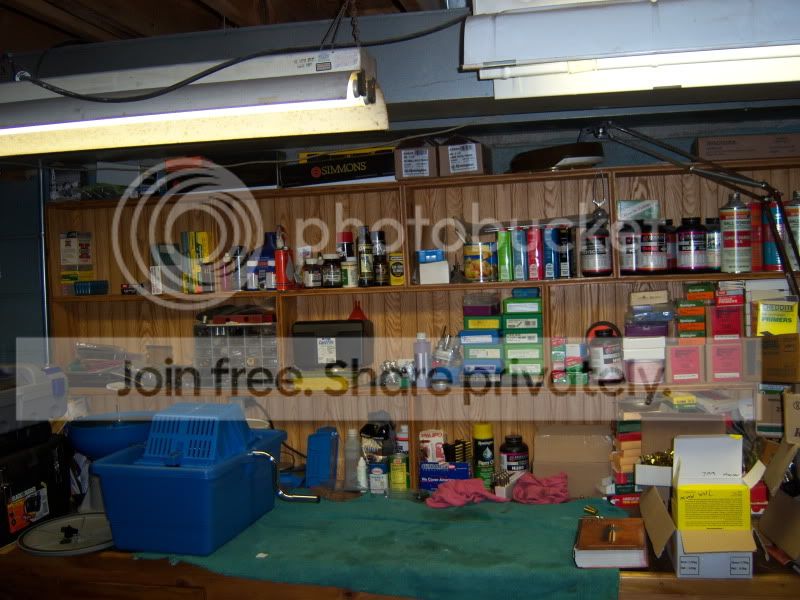
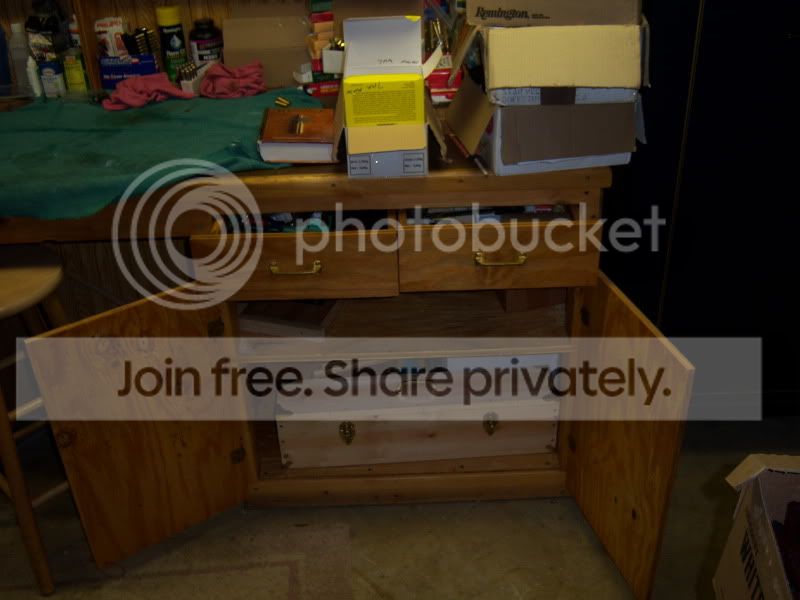
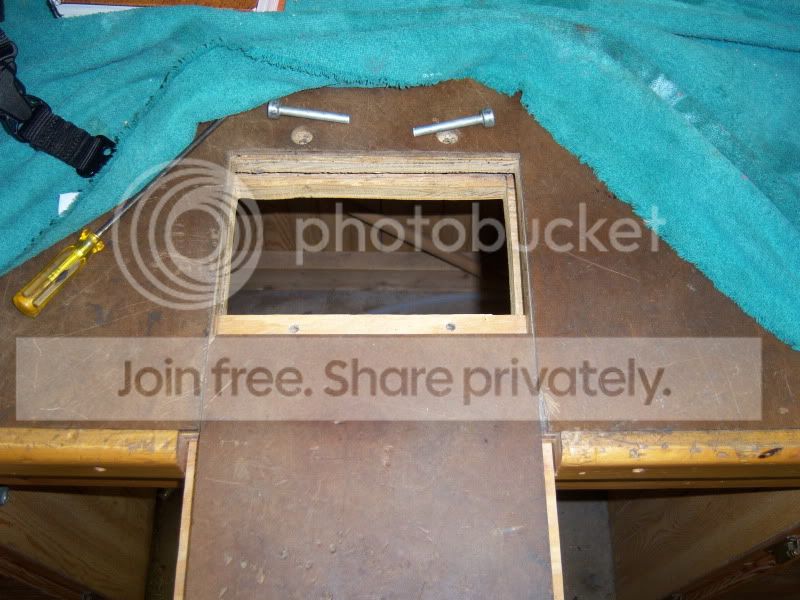
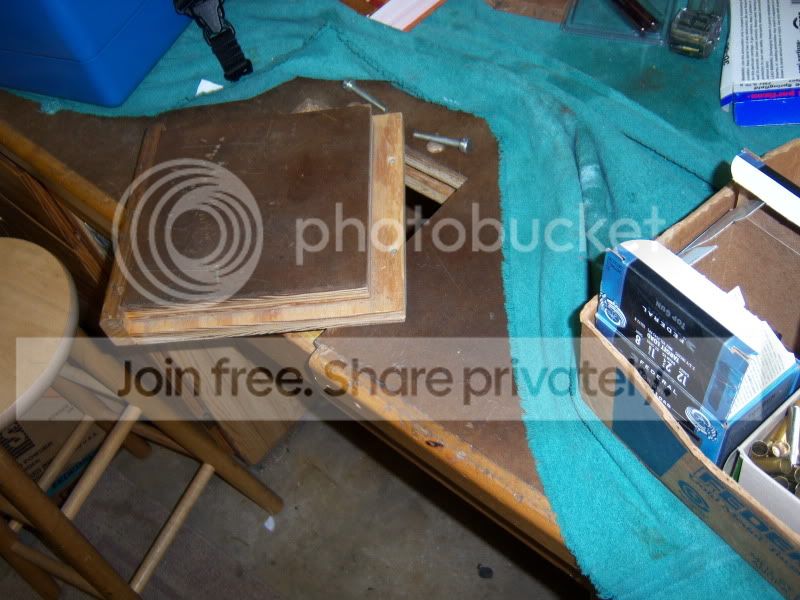
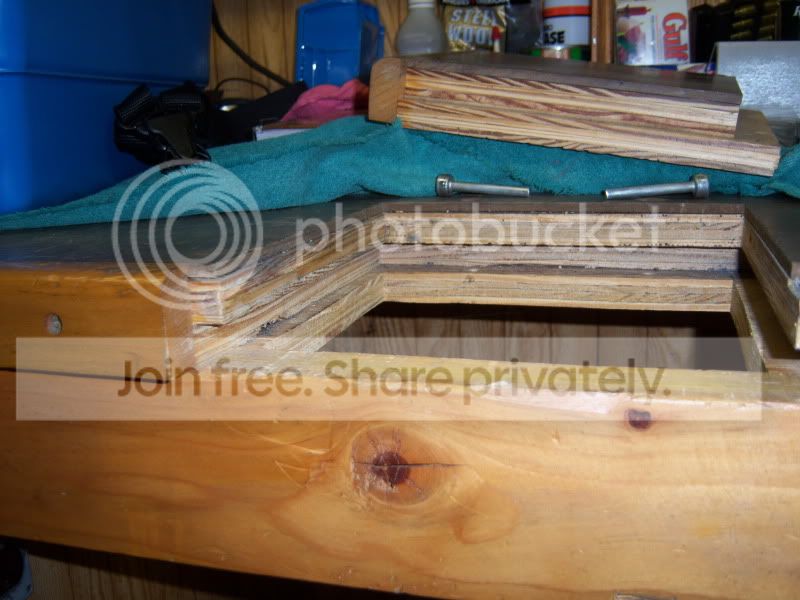
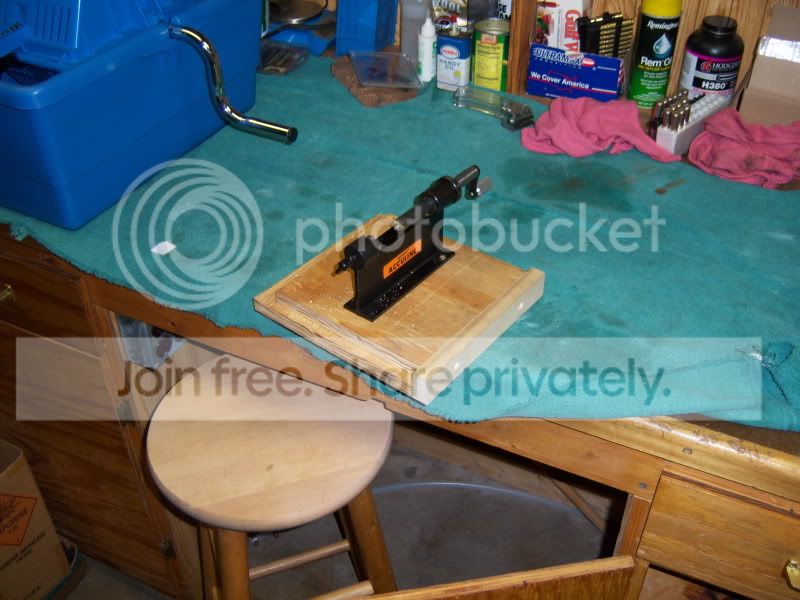
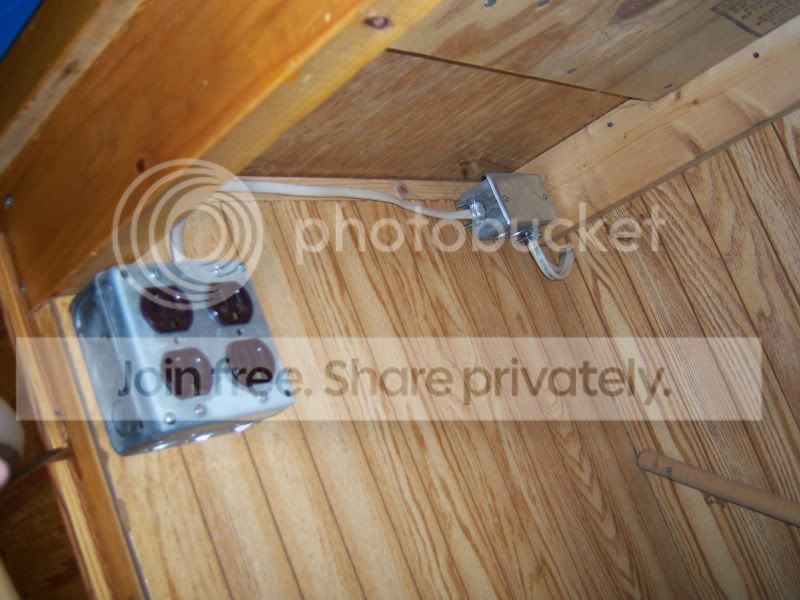
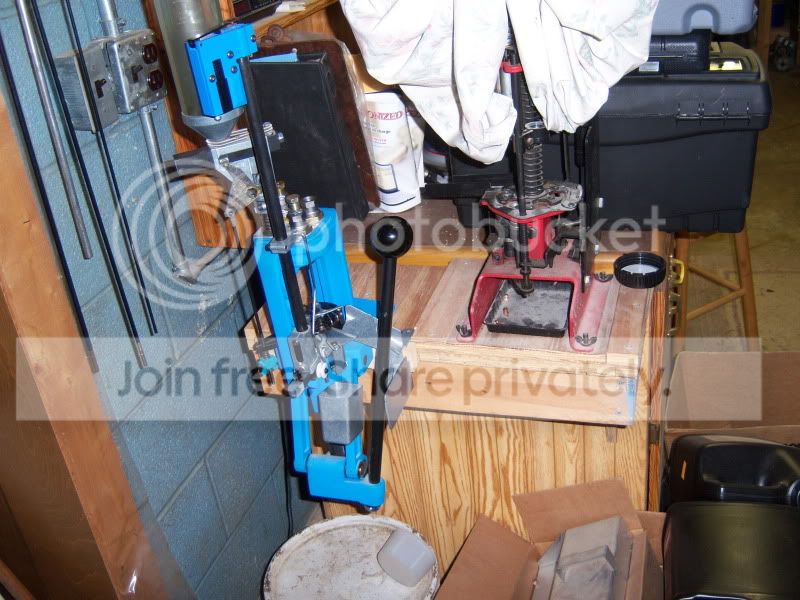
This is the bench I use for my gunsmithing and most of my work. The other "wood working" bench is just a sheet of 3/4" over a 2x4 frame. This might give you some ideas on things to add into the bench. The center is removable, and the bench is powered. Powered as such it has working outlets, light and all built in. Though the light is a magnifying jewelers type of light.

Its a 2x4 frame with a masonite top. The removable inserts are pictured, as is the underside of the assembly, and the side storage for them. You might want to build cupboards topside as the grinder is going to throw dust all over whatever is behind it, or just skip them there. Another thing comes to mind.. leaving more room open on the left or right side for tools to be setup. This is only setup for one thing at a time and it works great for processing alot of ammunition, but as a knife maker you might be using several tools at once and changing them could get to be a hassle.

100_0926.jpg


100_0928.jpg


Centerdivider.jpg


100_0922.jpg


100_0923.jpg


100_0929.jpg


Undersideofthecenter.jpg


undercenter2.jpg


100_0931.jpg
 
A couple of things I usually choose to do when building workbenches (3 in use right now and another being used by my friend):

A base with some weight is definitely a good thing if you are planning to bolt a grinder or such to it

Putting a piece of truck inner tube under the legs will help cut down of vibrations

I usually cement my workbenches (or anything) really in place to keep them from shifting. I do this by screwing a frame around each leg, lining it with a double layer of plastic wrap, and mixing the cement inside the mold.

Making sure your table is level and well secured will save you a lot of trouble.

Lighting and electric are always nice to have close at hand.

I've found that having drawers/cabinets/shelves underneath the workbench to be helpful, but keep in mind when building that they can be added later and shouldn't slow you down.

Most importantly IMHO is to have a solid top. The top of the table is going to be something you will likely have a lot of weight on and probably several tools/vises bolted to; you don't want something that will flex. I started on a table with a 3/4" mdf top and using the vice bolted to it was nearly impossible. I like to use maple (get the cheap 1x1" pieces from cheapo depot and laminate them together) because it is rock hard and takes quite a bit to dent, and then cover it with a sheet of masonite. This way I can just switch the top off when it gets wrecked, and still have a very sturdy base (which I only have to pay for once). I actually keep one of the old sheets around for when I paint/stain and one with a few different jigs and such glued to it.
 
Lots of great advice here. I would only second that you bolt at least a 2x4 into the wall and build everything off of that. No amount of weight in the legs will make it sturdier.
 
I am a huge fan of MDF for workbench surfaces. I have one bench (pictured) that I have been beating the heck out of for the better part of 15 years.

For a rock solid work surface, layer the MDF as thick as you want it with glue and screws. For the top layer glue it, clamp it and set some weights on top then pin it with dowel. This gives you a 100% 3/4" screw free top surface for the stray chisel or drill bit.

Every so often you can sand it smooth or fill in dents and it'll be like new again with no splintering or shredding you get with plywood.

I also prefer laminating 2x4's or 2x6's side by side for legs. Cheaper than treated or doug fir and 2 pieces of wood laminated together are stronger than a single piece of lumber the same size.

JMHO

bench.JPG


mag_vise_2.JPG
 
I am a huge fan of MDF for workbench surfaces. I have one bench (pictured) that I have been beating the heck out of for the better part of 15 years.

For a rock solid work surface, layer the MDF as thick as you want it with glue and screws. For the top layer glue it, clamp it and set some weights on top then pin it with dowel. This gives you a 100% 3/4" screw free top surface for the stray chisel or drill bit.

Every so often you can sand it smooth or fill in dents and it'll be like new again with no splintering or shredding you get with plywood.

I also prefer laminating 2x4's or 2x6's side by side for legs. Cheaper than treated or doug fir and 2 pieces of wood laminated together are stronger than a single piece of lumber the same size.

JMHO

Thanks for all of the great info guys. Cpirtle, I got started on my project before seeing your post:D I ended up going with a mix of ideas. I scrapped the idea for a plywood top like most of my aquarium stands use and went with one poster's "overkill' method using 2x10's!:thumbup:

Here are a few pics of how it's shaping up. The whole unit will be attached to a 2x4 that I plan on screwing into the studs of the wall. This has been fun so far. I haven't seen this much floor along this wall of my garage in years!!

Eventually, I'll build some shelves on the top of the bench at the rear, a shelf and drawers underneath the right hand side of the bench, and I'll leave the left hand side open for shop vac storage and whatever else.

Newshopbench1.jpg


Newshopbench.jpg


Newshopbench4.jpg
 
Back
Top