New Knife- Hammon and figured Maple

Joined
Dec 8, 2014
Messages
814
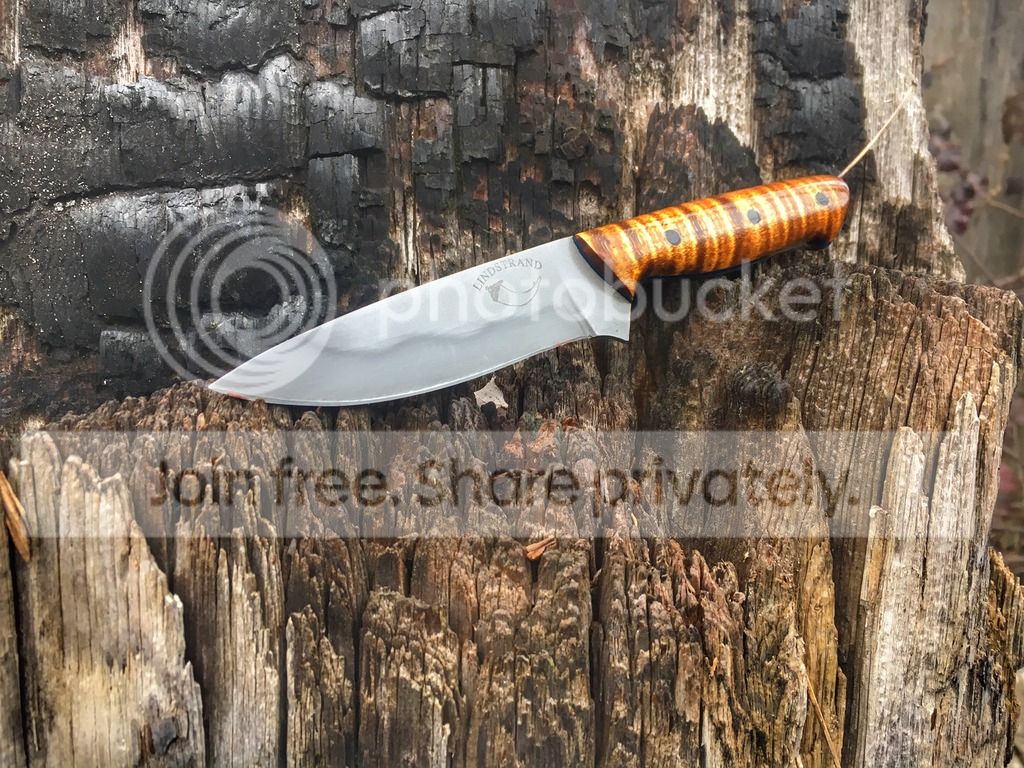
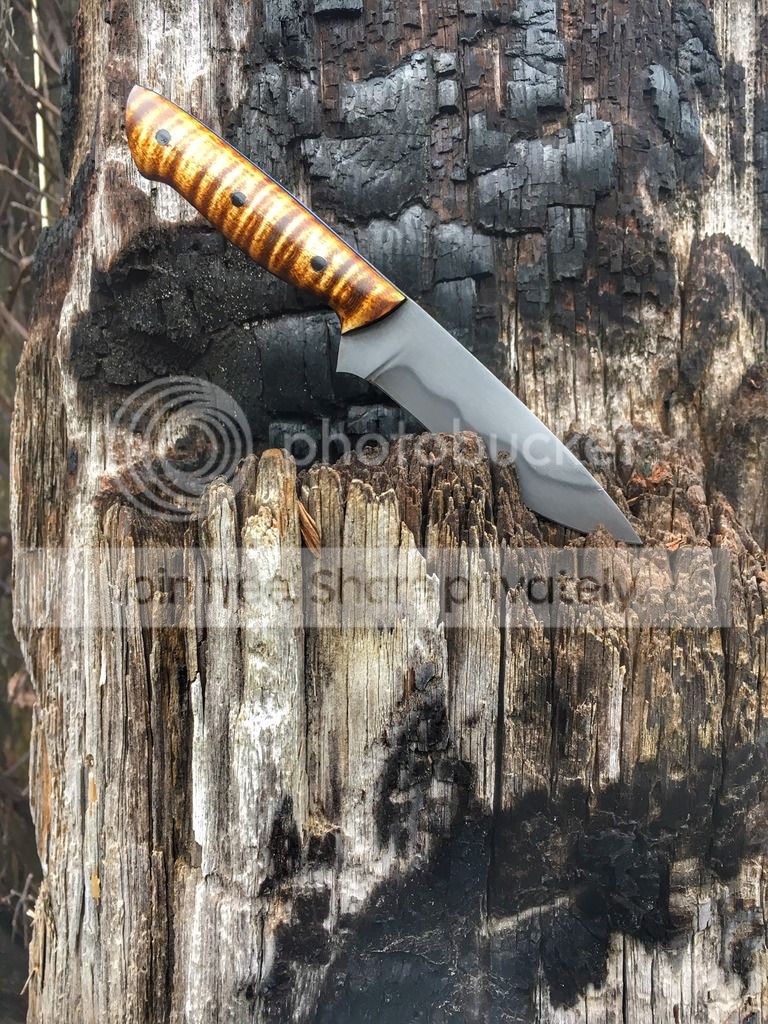
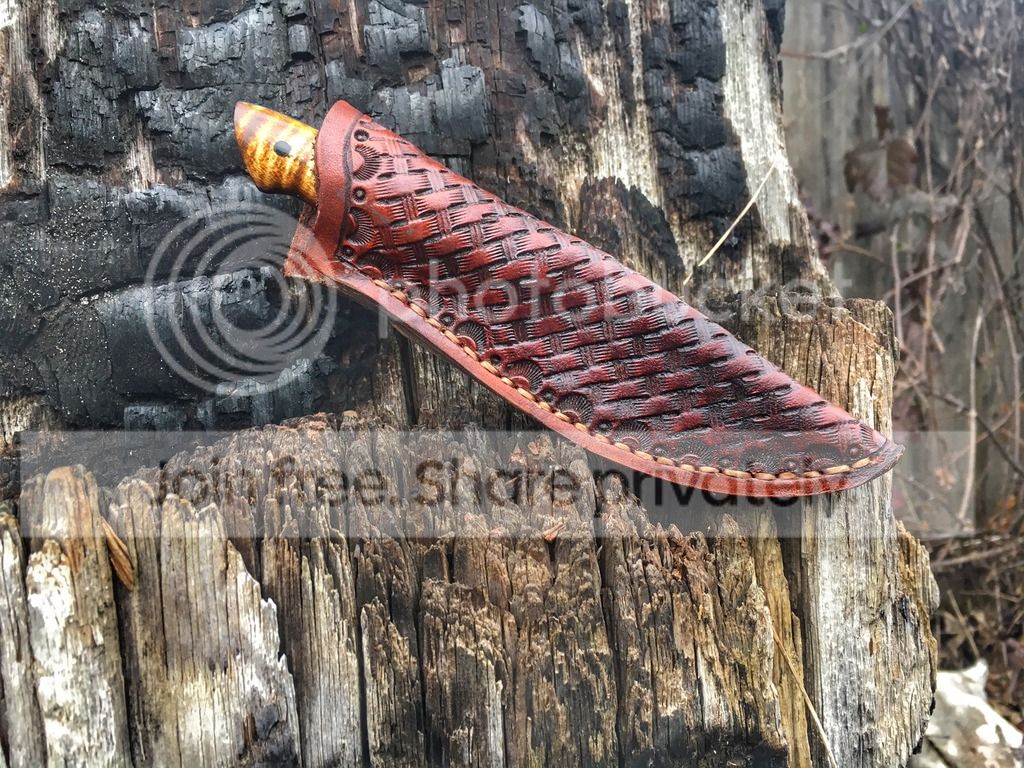
Hi everyone! I wanted to share my latest knife with you. This is my bird and trout model- its just a hair under 7 inches long. The steel is clay quenched 15n20, the handle is figured maple- stained with aqua fortis… I’m rather partial to traditional stains. Pins are carbon fiber and the sheath is made from 9oz leather. I think this is one of my favorites so far- please let me know what you guys think! Any feedback it welcome, its how I learn and grow as a maker!


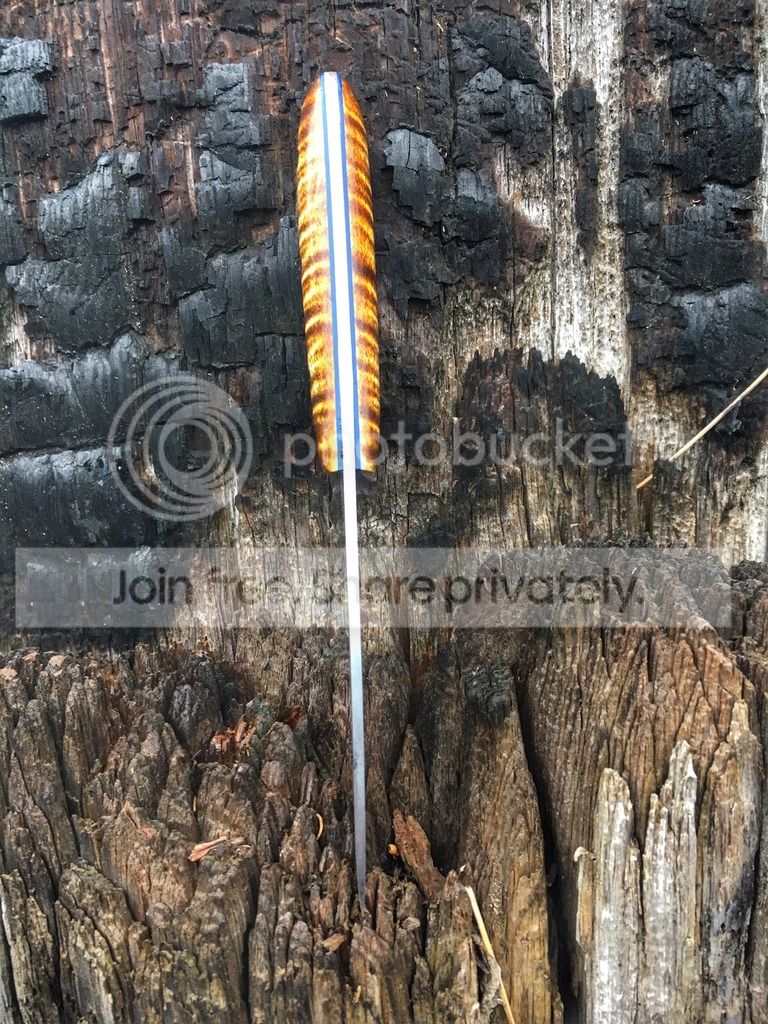
Looking very good !! I would change the angle at the front of the scales on the next one. Not only would it look better but would be much easier to clean. Your hammon looks terrific too!!!
Frank
 
Thanks guys! I'll give that a try Frank- what kind of angle would you recommend?
 
Nic.,

It has been fun watching the evolution of your progress. You are doing fine work. The leather still needs a little help but you are making leaps and bounds. Keep it up.
 
Nic.,

It has been fun watching the evolution of your progress. You are doing fine work. The leather still needs a little help but you are making leaps and bounds. Keep it up.

Thank you Marc! Leatherwork is something I struggle with- , but I'm learning!
 
Nic.,

It has been fun watching the evolution of your progress. You are doing fine work. The leather still needs a little help but you are making leaps and bounds. Keep it up.

Same here. Good job sticking with it and taking the constructive criticism in a positive way.
 
Thanks guys! I'll give that a try Frank- what kind of angle would you recommend?

looking at the pics, i believe he's referring to the picture from the spine angle (blade pointing down in the 3rd picture) the scales angle in slightly toward the blade rather than taper away from it, which will trap material and make it harder to get into the cracks to clean... not major at all but if it was tapered the other way, a lot of things would slide out of that angle rather than into it.
 
It looks great! One thing on the sheath I think would look better is a darker thread. So it matches the antique more.
 
Well, I just happen to like the light thread for the contrast.... I guess that's why they have chocolate and vanilla ice cream?

You might burnish the top edge where it looks "raw" and allows a few fibers to wave around.

Ken H>
 
I think the sheath has a "hobbyist" look to it and that is fine. But Nic is really stepping up her knifemaking game. Her knives deserve sheaths that are just as nice. The stamp pattern gets a bit washed out in spots (might just be the lighting playing tricks) and the structure or form of the sheath gets flattened some in the middle. But the two items that make the most difference are the thread spacing and the edges. These two things are very important to the overall impression of the sheath. A few inexpensive tools from Tandy can really step you up to the next level. You need an overstitch wheel with a few different optional spacing wheels and you need an edger. If you can only afford one, the #4 edger should serve you well. The overstitch wheel is used after you cut in the stitch groove to mark the stitch spacing. After the sheath is stitched together you use the overstitch wheel again to go over the stitches which makes the stitches nice and neat. Then, you use a smooth faced hammer to go over the stitching. This tamps down the stitches making them flush with the sheath surface while also making the edges of the stitch grooves, which push up a bit during the cutting, sit down nice and flat. The edges make a big difference as well. By chamfering/beveling the square edges, then sanding, rubbing and buffing, the edges get a nice radius and a tight weatherproof surface. The effect of these simple procedures is a refined and professional appearance.

 
Very nice! I love how the maple came out with the AF, and the hammon came out nice!
 
Thank you all for the feedback and complements- I really appreciate it!

Marc- Thank you for the sheath advice! Dave Ferry has been kind enough to try to coach me on the leather work- it sounds like I have some more tools to buy and skills to learn!
I have an edger ( I dont know what size) and a stitching wheel- is that different from an overstictch wheel?
 
Thank you all for the feedback and complements- I really appreciate it!

Marc- Thank you for the sheath advice! Dave Ferry has been kind enough to try to coach me on the leather work- it sounds like I have some more tools to buy and skills to learn!
I have an edger ( I dont know what size) and a stitching wheel- is that different from an overstictch wheel?


Your stitching wheel is probably an overstitch wheel, same thing. With Dave coaching you, the sky is the limit.
 
Nic had emailed me these pics and some others of the sheaths. She has given me permission to share here some of what I discussed with her on getting that sheath up to speed. Might be helpful to other folks.

First she absolutely nailed the knife didn't she. Wow!

On the sheath several things jump out really quick. I think the biggest factor between really quality sheath work and ok sheath work is the quality of the leather. To get a real good sheath you have to use really good leather. This means either Wicket and Craig or Herman Oak. Both are American tanneries that specialize in vegetable tan leather whihc is the type of leather you want to use for a sheath. Unfortunately that means buying a "side" which is half a cow split down the backbone. This is a pretty large piece of leather, 20 to 25 square ft. Its gonna run you about $220 or a little more. 7/8 oz is about the right weight for most sheath projects although I tend to use a lot of 8/10 oz, the next size up, as we do a lot of carving as well as stamping and the heavier leather carves better. Most experienced leather workers have their favorite one or the other between Wickett and Craig and Herman Oak. I use both in our shop but have a real fondness for the Wickett and Craig. If you look at the belt loop on Nic's sheath and where it folds over you can see the roughness of the grain, sometimes referred to as fuzzy. This is a quick give away the leather could of been better. In this pic see the evenness of the roughout side. No fuzzies:

xLFt0O9.jpg


I'll post a little more as time allows, gotta go feed the horses, but I wanted to get started. The longer I play with leather the more convinced I become of the importance of good leather.
 
Back
Top