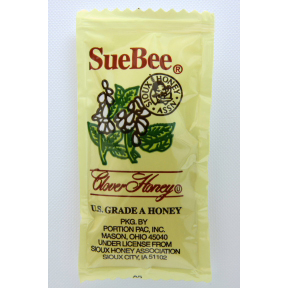
New MUST HAVE P.S.K. item

Fletcher Knives

STEEL BREATHING BLADE MAESTRO
Moderator
Joined
Aug 30, 2007
Messages
5,483
F01-0501200-1100bg.jpg


You're never too old to learn a little something from gramps. My grandfather was a bee keeper in his spare time for a couple of decades when he was younger. During that time, he developed a love for honey and a VAST knowledge of its uses. Since I was born, honey has always been an important part of my diet due to its properties and medicinal qualities, not to mention its pretty darn tasty! I have eaten it at least once a day in some way everyday. Even if it means just squezzing some out of the little bear directly on the tastebuds before i run out the door. It's very important to me to have a good intake of honey from my area as well as surrounding areas or places I might go. When I get to a new place, the first thing I do is locate a jar of local honey and start eating it. It's a great way to build your immune system to all of the allergens of that area as well as get a taste of all the flavors honey has to offer. It's funny, even though I know a million uses for honey, honeycomb, wax, etc. and I eat it all the time, for some reason I never thought to add it to my PSK.

Well last weekend, I made a trip to Memphis to have a Xmas with my parents and grandparents since this year we'll be spending the actual Xmas with the wife's family.

While I was there, i was hanging out with my grandfather and noticed a good size scar i hadn't previously noticed on his arm (or had noticed and had just forgotten about). I asked him what it was from. He said that one day he was tending his bees and on the way back to his house he brushed up against a piece of scrap sheet metal and it cut him pretty bad. He knew that honey was a good ointment for cuts, so he took out his knife, cut a section of his shirt to use as a dressing, poured a little honey on the wound and bound it up with the shirt section. Back in those days, he was a very busy man, so anytime something was done good enought the first time, there was no reason to re-do it. The dressing was a good one, so he didn't change it when he got home. The sheet metal he had gotten cut on was pretty nasty and covered in dirt and scum, yet when he took the bandage off a few days later, it was well into the healing process and completely free of infection. He said he let it air out a little, then put a little dab more honey on it and wrapped it up for a few more days. After that he washed it off again and it was fine. He told me that ever since then, if he gets a good cut, he'll put honey on it and wrap it up and it works great. He said he has yet to get a cut infected.

I had long known of ancient people using honey for a number of things, including medicinal, but for some reason it had just completely slipped my mind. On the way home from our trip, the wife and I went into a chik-fil-a and got some food. While waiting in line, I saw that they had a bunch of handy dandy little honey packets on the counter. I handed the ladie $5 extra and said "This is for all the honey packets I'm about to relieve you of." She said, "help yourself." I took almost all of them, probably about 50 packets. I started thinking about everything you could use them for, nutrients, though small, still some / field dressing a wound or small cut / using as bait for small animals and insects / etc. I can't even imagine now how I ever went out without them. i keep a good amount of them stuffed in my PSK.

Does anyone else keep honey in their PSK. Has anyone else ever used it while they were out? I keep a bunch of them in my pockets now too and just take one out and eat it whenever I need a little boost and something to smile about. It does the trick. I could see how this stuff could help you in a TON of ways in a survival situation. Not to mention, if you got really really bored and down, you could collect a bunch of wild edibles and make yourself some candy to perk your spirit up. It only takes a dab of honey to turn a piece of bark into a piece of candy.
 
Honey's a great source of energy and a disinfectant but I think it works best of it's unprocessed. In the processing I think (I may be wrong) they heat it up to kill off any bugs and stuff, that process can muck up some of the good properties of the product. Honey's a great idea for PSK thanks for bringing it to our attention.

On a similar track I've got a fermented paw-paw lotion that is for cuts, abrasions, burns, rashes and ........ nappy rash!

Jules
 
That's a good idea if it isn't processed beyond the point of ruining the medicinal properties. My only fear is that my PSK would get smashed and then become one big sticky PSK:D

I have in the past used a small honey-bear in my pack when backpacking. Helps to sweeten the tea and it's a great emergency food source.

I wonder if you can get "more" natural honey, let it crystalize and then pack it in a small container??? At least a small container you could toss in a pot of boiling water to liquify. Those little Nalgene squeeze bottles might do the trick....good idea though,

Dave
 
When you get little "honey" packets like that, look real close and be sure what you're buying. I've had some from another chicken place that were mostly sugar and water, and there was very little honey in it. It tasted pretty good, but it wasn't really honey!
 
I live in Tennessee and our local CO-OP has many different flavors of local honey for sale. They are also at our local Farmers Market. I wouldn't buy proccessed honey because the pasturazation process ruins the natural properties. Thanks, Jason
 
That's a good idea if it isn't processed beyond the point of ruining the medicinal properties. My only fear is that my PSK would get smashed and then become one big sticky PSK:D

I have in the past used a small honey-bear in my pack when backpacking. Helps to sweeten the tea and it's a great emergency food source.

I wonder if you can get "more" natural honey, let it crystalize and then pack it in a small container??? At least a small container you could toss in a pot of boiling water to liquify. Those little Nalgene squeeze bottles might do the trick....good idea though,

Dave

I actually took the crystalized honey idea into consideration. I have a couple of jars of good North Georgia honey straight from the hives that have crystalized a good bit. I thought about trying to take some of the good hard stuff from the bottom and packaging it in some way that would be a block, wrapped in waxpaper, easy to carry that could be heated during the trip to restore it to its natural state in a sort of double boiler configuration (with just hot water not boiling) so it didn't have to be turned back into gel-like form until you needed/wanted it. The little packets are good, but as mentioned above, they don't have all of the enzimes and stuff that make it medicinal anymore due to processing, so in addition to those for food and such, I've been also carrying a small jar of the good stuff. I've also been looking into tubes with caps like are used for toothpaste. Haven't found anything yet though.
 
You can also buy the honey sticks for about 25cents each.. Some people complain that the break and leak. I never had that happen to me before and use them for backpacking and hiking. Most of the time when im outdoors i got 2-3 sticks.. For me its so normal to have some that i dont even think of it.. I guess you might say i got them in my PSK too. They are realy great for backpacking to give that energy to get over the montains. Honey would take less then 20min to work it self into the blood stream. Chocolate can take over an hour to do that. Some good honey is from leatherwood of new zealand. There is also a company i get honey here from CA which is also very good. I just cant remember the name right now. Got 4 jars at home.

Sasha
 
For the tube to hold honey go to Target they have some realy cheap and good. REI also sells some tubes that are very good and would last much longer. I tend to carry in there some Gatoraid powder for the very long and hard hikes.

Sasha
 
I don't carry honey in my PSK but it's a great idea and makes a lot of sense. You can't eat bacitracin or neosporin - but honey is dual-use for both wounds and food.

I've been going through a big jar of Really Raw Honey - it's amazing stuff:
http://www.reallyrawhoney.com/

Just a heads-up to everyone - don't feed raw honey to babies. Raw honey contains botulism spores which an adult's digestive system can handle but a baby's often can't.
 
David the small tubes of honey I dont even remember where i got them. Maybe Cost Plus or some other store like that. I would ask my sister as she gets them for me when ever she sees them. When i did see them they were always next to the counter. I got some in every car and pack. At target you can get larger plastic tubes that are empty that you can fill with your own honey. I would ask her and post the name of the store where she gets them.

Sasha
 
There are four bee products that can be of use honey, pollen, beeswax and propolis. The honey people have discussed, beeswax has a list of uses that is very long (I think I saw a thread about it), pollen is a source of amino acids and can be used as a food source (a handful is maybe half a meal, but acidic so it can cause heartburn), propolis is even more useful for health than honey (http://en.wikipedia.org/wiki/Propolis) but it is very expensive. Sometimes you can find jars of "Bee's Bread" (a combination of honey and pollen, sometimes made from pollen contaminated honey, sometimes made by mixing honey and pollen), sometimes propolis is added to the mixture as well (slightly odd taste), sometimes you can find jars of honey with propolis and no pollen. I have in the past made my own honey/pollen/propollis mixture, I made it so that it was close to the consistency of crystalized honey (I slightly warmed the honey to make it flow better and then just stirred the pollen and propolis in). Results may vary, allergies may occur, might be more useful than a combination vitamin/carb source.
 
Mr. Becker extolled the virtues of honey to me at the Blade show many moons ago. Good to see it again. He recommended it especially for deep cuts.
 
honey is amazing stuff... and absolutely delicious....:thumbup: we eat a lot of it here...
 
All honey is not created equal! If you're serious about using honey for something beyond food, start learning about manuka honey. http://www.manukahoney.com/ is as good as any place to start.

The following scientific info I recently got from Medscape.

The recalcitrant nature and complexity of chronic wounds continue to challenge health practitioners in the field, with many of the standard treatment options often failing to provide good outcomes. Chronic wounds are often infected with bacteria resistant to antibiotics, compounding the problem. Some alternative biologic forms of treatment have been used and are gaining recognition; they include apitherapy (application of honey), maggots, and leeches. In addition to other wound-promoting actions, they all seem to show efficacy against bacteria, such as methicillin-resistant Staphylococcus aureus (MRSA).
Honey -- A Topical Treatment for Wounds
In recent years, there has been a resurgent interest in the use of honey in wound care. Honey, a plant nectar that is modified by the honey bee Apis mellifera, has been used as a treatment for wounds since antiquity, with records of its use dating back to the early Egyptians, Assyrians, Chinese, Greeks, and Romans.
There are several mechanisms through which honey is thought to act on and heal wounds. When it is applied directly on a wound surface or via a dressing, it can act as a sealant, keeping the wound moist and free from contamination. In addition, honey is comprised of glucose (35%), fructose (40%), sucrose (5%), and water (20%). This high sugar content plus vitamins, minerals, and amino acids) provides topical nutrition that is thought to promote healing and tissue growth. Honey is also a hyperosmotic agent that draws fluid from the wound bed and underlying circulation, which kills bacteria that cannot thrive in such an environment. It is bactericidal in other ways as well. During the process of honey production, worker bees add the enzyme glucose oxidase to the nectar. When honey is applied to the wound, this enzyme comes into contact with oxygen in the air, which leads to the production of the bactericide hydrogen peroxide. Macroscopically, honey has also shown debriding action.[1-3]
Manuka (Medihoney) is a medicinal honey with enhanced antibacterial properties derived from floral sources in Australia and New Zealand. In June and July 2007, Health Canada and the US Food and Drug Administration (FDA), respectively, cleared it as the first medicinal honey product for use in wounds and burns. Peter Molan, a New Zealand biochemist at the University of Waikato, has reported that it can stop bacterial growth even when diluted up to 56 times. He has conducted studies on this honey in rats and piglets that have suggested that it has anti-inflammatory properties and can stimulate epithelial growth, advancing closure of skin in these animals.[4]
"In the last few years, a lot of good science has been done in the area," said Shona Blair, a microbiologist at the University of Sydney, Australia in an interview. She has tested various strains of honeys against bacterial strains obtained from hospitals and found that even the strains most resistant to antibiotics failed to grow in the presence of honey. Manuka honey may even be active against MRSA.[5,6]
A review of the literature suggests positive results for honey in wound care, but more confirming evidence is needed. About 17 randomized controlled trials involving a total of 1965 participants have been published; 5 other types of clinical trials involving 97 participants treated with honey have also been reported in the literature. Furthermore there are about 16 trials of honey on a total of 533 wounds in animal models (which rule out a placebo effect). There are over 270 cases, of mostly chronic wounds cited in the literature that were treated with honey. Honey gave good results in all but 14 of these cases.[7,8]
For example, Dr. Jennifer Eddy, associate professor of family medicine at the University of Wisconsin, provided a case study of a patient with a severely gangrenous diabetic foot ulcer that was salvaged following honey treatment.[9] Dr. Eddy is currently recruiting patients with diabetic foot ulcers for a study that will compare honey with hydrogel dressings that appear like honey, having been altered to resemble honey in terms of coloring and smell to maintain objectivity. Not all case studies have been positive, however.
An observational study at the University of Bonn, Germany, reported good healing rates in the use of honey as a dressing for wounds in 15 children with cancer, who are prone to weakened immunity and poor wound healing following radiation treatment and chemotherapy. While more studies are needed, the results seen in children looked promising, and study author Arne Simon, MD, says specialists should consider standardized honey when confronted with wounds that refuse to heal.
Another study is underway at the Red Cross War Memorial Children's Hospital in Cape Town, South Africa, comparing a standard treatment with honey-based antibacterial wound gel product in approximately 80 children with burns.
Manuka honey has used in Iraq where it produced good results at a makeshift clinic in the treatment of children with burns set up by US armed forces.[11] Honey is an ideal affordable first aid dressing material, especially for emergent situations where standard medications and equipment are not readily available, such as war-torn or earthquake-stricken regions. It is suitable for treatment of burns, where emergency cooling with contaminated water can lead to infection.
 
i know that some athletes use honey instead of 'energy gel' (kind of like energy bars, but in syrup form instead so that it absorbs faster). i've used the stuff before and it comes in little packets, but you can buy it in bulk too and fill up your own 'energy gel flasks' (tiny squeezable water bottles). i'd think that if you looked for these flasks in some running or biking stores, you'd find them useful for storing honey as well.

some links: http://www.mec.ca/Products/product_...older_id=2534374302782731&bmUID=1198235682898

and a squeeze tube

http://www.mec.ca/Products/product_...older_id=2534374302782731&bmUID=1198235682893
 
ReallyRawHoney IS really good!

I, too, would like to find some of the reusable toothpaste type tubes. PB in one, raw honey in another...great food.
 
PB already comes in a (kinda cumbersome) tube, retail...

Skippy brand.

Would be nice to know where to get toothpaste-type containers for honey though....
 
Back in the olden days when I was a kid My grandma cured all kinds of ills with honey or lemons or both. Many people used to put a little honey in the baby bottles with the warm milk. Add cayenne pepper to the above items and you can cure or kill about anything.:D
 
Back
Top