

- Joined
- Jun 3, 1999
- Messages
- 1,989
This is a story about two men and how destiny caused them to work together in a knife making project. One is in the east, in a South East Asian country namely Malaysia and the other one is in the west, in a North American country namely US. The one in the east is having a dream to have a cutter/chopper in Damascus of his own designed and the one in the west is having the technology, the craftsmanship and the blacksmithing experience to make the dream of the one in the east to come true. The design of the cutter/chopper was drawn with specs and info of the needed materials and it was sent to the one in the west. After some planning and preparation then one day in December, 2010 the project was launched and the actual works got started. And its only supposed to finish by January, 2011. That makes the estimated time to finish the making of this cutter/chopper for about a month but in two contiguous years.
Pictures were shot during the WIP and those pictures were sent to the one in the east with permission that those pictures and the story about it can always be shared in any forms with others.
BTW, its me Mohd the one in the east who designed the cutter/chopper and its him Chuck Richards the one in the west who translated the design from a mere graphical drawing into the real thing of a cutter/chopper!
And here is the showing and the telling about the making of the cutter/chopper. And lots of thanks in advance to you all pals for all the looking, the reading and the discussion involved! Kindly take notes that all of the descriptions here are from Chuck who as the smith knows the purpose and the reason as well as the result and the impact of his each doing shown in the picture. And now the pictorial story began.


Dry welding? Is it the same concept of a hyperbaric welding? Why and what for it was used here? It sound interesting and it makes me real curious! Is the dry welding meant for producing a cleaner billet? Would Chuck or any knife maker kindly offer me some light about this dry welding concept and all the reasoning for doing it to the stack of 1095/15N20, pretty please!



Another interesting thing for me here is about the reason behind the pairing of the steels in the mix. Why the pairing is in such a way that 1095 was paired with 15N20 while 52100 was paired with L6? Can it be done with different pairing such as 1095 is paired with 52100 and 15N20 is paired with L6 or 1095 is paired with L6 and 15N20 is paired with 52100?
BTW Chuck, is the weighing of the steels is to get the correct mix of 2/3 52100 and 1/3 L6?


Now it looks the basic shape of the blade is already there except for the notch at the ricasso. Did you hammer it all using the power hammer Chuck?
HAPPY NEW YEAR 2011!
mohd
Pictures were shot during the WIP and those pictures were sent to the one in the east with permission that those pictures and the story about it can always be shared in any forms with others.
BTW, its me Mohd the one in the east who designed the cutter/chopper and its him Chuck Richards the one in the west who translated the design from a mere graphical drawing into the real thing of a cutter/chopper!
And here is the showing and the telling about the making of the cutter/chopper. And lots of thanks in advance to you all pals for all the looking, the reading and the discussion involved! Kindly take notes that all of the descriptions here are from Chuck who as the smith knows the purpose and the reason as well as the result and the impact of his each doing shown in the picture. And now the pictorial story began.
Chuck said:First is the stack of 1095/15N20 23 layers ready for welding up the box.
Chuck said:Next is the box welded up for dry welding the billet.
Dry welding? Is it the same concept of a hyperbaric welding? Why and what for it was used here? It sound interesting and it makes me real curious! Is the dry welding meant for producing a cleaner billet? Would Chuck or any knife maker kindly offer me some light about this dry welding concept and all the reasoning for doing it to the stack of 1095/15N20, pretty please!
Chuck said:Next getting it hot.
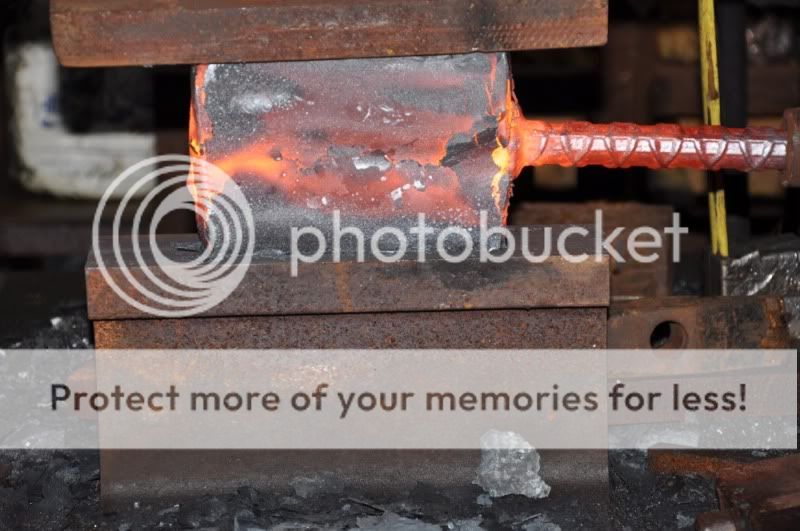
Chuck said:And the first press .
Chuck said:.. and end shot of the first press. You can see the sides of the can bulging out. I want this to happen as I will remove the sides after this step.
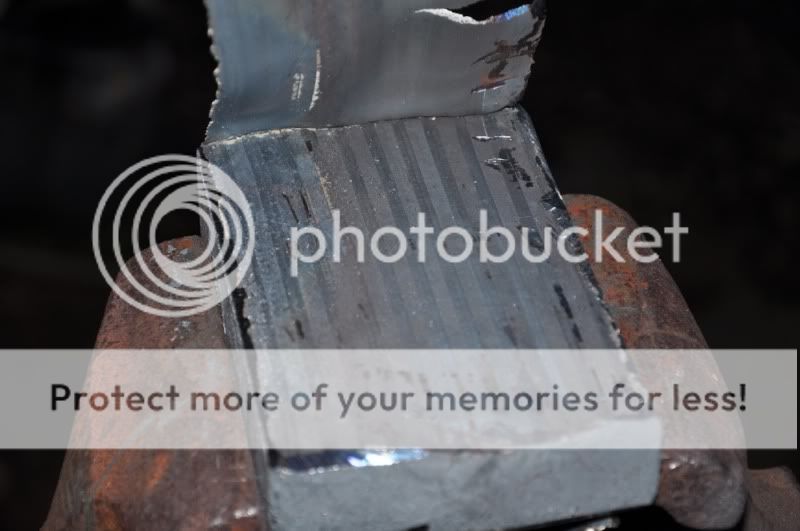
Chuck said:I open up the can ..
Chuck said:.. to show the cleanly welded layers.
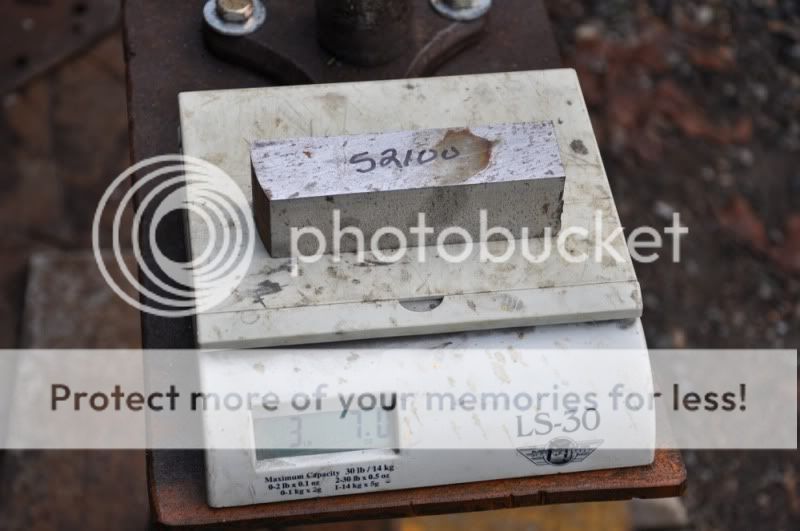
Chuck said:The next shot is the 52100 in bulk form. I cut this from a 6.5" dia round and re-cut it into usable sizes.
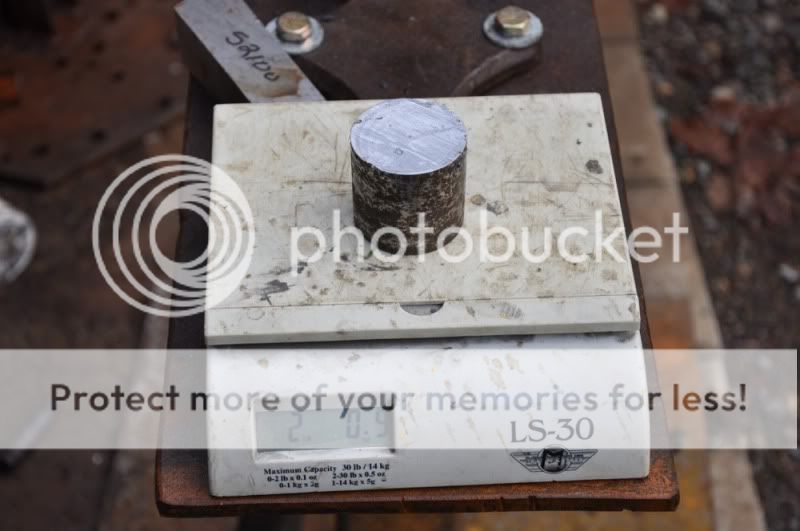
Chuck said:Then I cut a piece of L-6 from a 2.25" round. This gives me a 2/3 -1/3 mix for the 52100/L6 mix. The L-6 is on top and ground clean. I will also grind the 52100 clean and cut and stack a 5 layer billet. Then weld it all up for the next step.
Another interesting thing for me here is about the reason behind the pairing of the steels in the mix. Why the pairing is in such a way that 1095 was paired with 15N20 while 52100 was paired with L6? Can it be done with different pairing such as 1095 is paired with 52100 and 15N20 is paired with L6 or 1095 is paired with L6 and 15N20 is paired with 52100?
BTW Chuck, is the weighing of the steels is to get the correct mix of 2/3 52100 and 1/3 L6?
Chuck said:First is the first stack of the full billet. The 1095, 15N20, are the 5 larger blocks. The 52100, L6 are the smaller ones. This makes up a 140 layer billet. I weld up the top to seal the whole billet to dry weld again. I will then grind off all the weldment after I have done the first weld and before I press the sides. After I clean up and draw out the billet I then cut and re-stack by 4. This gives a total layer count of 560. I then draw out once more and round off the corners.
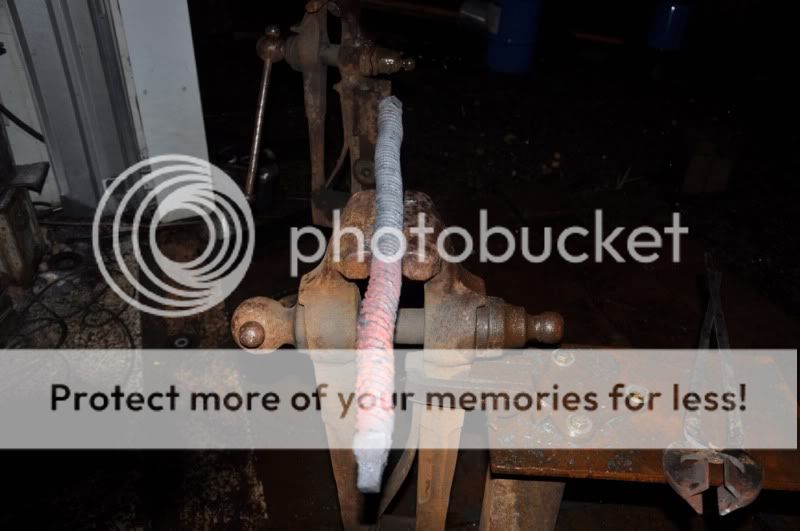
Chuck said:Then I twisted the bar. I attempted to do a twist on bar at 1.5" dia but it was just to hard to do. So I drew it out to 1.25" and it worked much better. As you can see I got a pretty tight twist on it.
Chuck said:Drawing it out flat once more to the final bar.
That is a 24" ruler on it for scale.
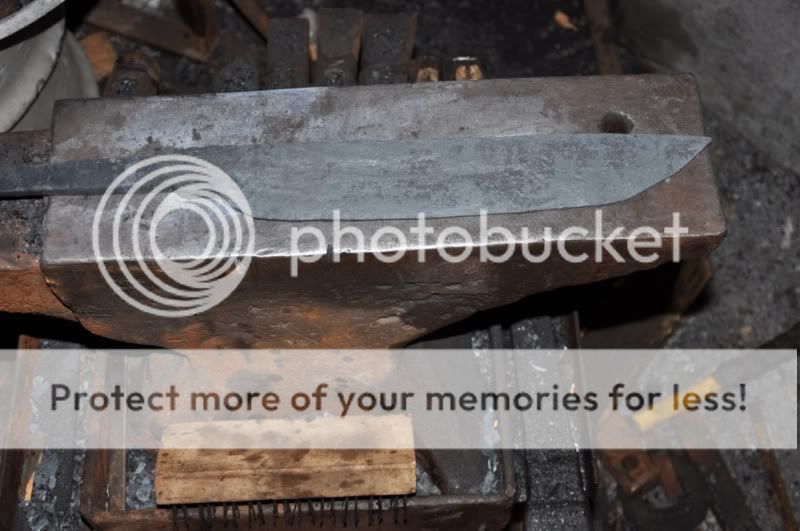
Chuck said:Then finally the forged blade. For reference also, the white line on the front of the anvil is 12.25". Like I said in another email, I had to use every millimeter of material to get the 2.25" width you asked for. I hope to be able to do some grinding and possibly HT this week. I do have enough to do another blade if something goes wrong but I hope not to need it for this project.
Now it looks the basic shape of the blade is already there except for the notch at the ricasso. Did you hammer it all using the power hammer Chuck?
HAPPY NEW YEAR 2011!
mohd

 I'm just pulling you chain - I like the big knives too.


 .
.


