Outdated Survival Techniques

A trap will trap for you when you have a broken leg . Try bloodtrailing a deer with splints on .

You can hunt when you are trapping and trap when hunting .
 
You could easily starve waiting and waiting for your traps to catch anything.

Maybe. But with a little training and confidence I think you would be surprised. I was, after I learned to trap a long time ago. Most of the furbearers that I have caught would not necessarily make a good meal, but in a pinch I wouldn't have complained. I have eaten Nevada Bobcat and it wasn't that bad, but those coyotes are for survival situations only.

In any case, I have always considered trapping prerequisite knowledge to wilderness living, be it planned or unplanned. And as Kevin points out, your traps are working for you 24/7 while you lay around camp doing what you will. Don't sell the skill short, it increases your odds enormously in situations that demand it.
 
IIRC my point about trapping was that you have to set alot of them, and know what you're about to get fed on a regular basis. Trapping is a perfectly vaild way to get game and it is a passive system that lets you hunt while you attend to other things.

Setting up a productive trapline is a mattter of serious scouting, intimate knowledge of animal behavior, ability to manage human scent, and dedication to getting around to your traps in time to collect any animals before they escape or get eaten.

Learning how to make the trap itself is just the beginning and its kind of foolish to think you can make a few in the back yard and then expect them to pay off in the bush.

I'm not the one to address this subject. Coote has probably forgotten more about trapping than I ever learned. Mac
 
right on point pict! makeing or setting traps /snares means knowing your quarry[Sp] like fishing, you want fish?know where they live and what they want to eat.
 
I use regular gas in my Coleman dual fuel and it actually runs better on that then white gas, every now and then just put it on full and run it for about 10 mins, the whole things gets as clean as a whistle.
 
Thanks guys . I,ll stull use the coleman stuff . At least I know if I am stuchk that there is an alternative . I wonder if I would get more miles per pot full with super ? L:O:L
 
My statement is near the beginning of this thread. There is not a seperate thread. I was referring only to the figure 4 trigger with regard to trapping. I have had some success with snares, fish traps. etc. However, when it comes to using steel traps and techniques such as dirthole sets, drowning sets, bodygrip vs. foothold etc. I am a complete novice. I have a fair book education but have not found someone to take me under their wing. 35 years of fishing, hiking, hunting, camping, etc. and this is still probably my weakest area. Please understand I have a very positive view of trapping and trappers. It is just the darn figure-4.
 
Regarding stove fuels, many of the common backpacking and mountaineering stoves burn a variety of fuels.

From the MEC.ca website, for an MSC XGK Stove: "High-output element burns white gas, kerosene, unleaded auto-fuel, diesel, aviation gas, JP-8 and Jet 1-A."

So it looks like there are lots of options.

D
 
Eyegor & Pict,
Thanks for the explanation I am tracking now.

Pict,
I agree with your statement about learning the basics in your backyard and it not paying off in the bush. You are 100% correct, people that carry fishing and trapping gear expecting to learn how to do either in a survival situation are crazy. To become proficient in firestarting, trapping, fishing or virtually any skill you have to practice and practice a lot.

Almost everyone I know that carrys a PSK carrys "snare" wire. I would bet good US currency that 90% of those people could not snare a whopper at burger king much less a rabbit in a survival situation. Chris
 
At the risk of being a cowboy in a room full of Indians, I'd say the whole "woodcraft" school of thought is comprised of Outdated Survival Techniques.

Of course, I might change my tune when TSHTF. :D
 
WeaselBites said:
At the risk of being a cowboy in a room full of Indians, I'd say the whole "woodcraft" school of thought is comprised of Outdated Survival Techniques.

Of course, I might change my tune when TSHTF. :D

Depends on where you live or where you are when TSHTF
 
Cliff Stamp said:
I know people who have done that, the other guy lived. One of the main issues is that the sucker fills their mouth with the same poison.
-Cliff

If I remember right from Zoology, snake venom is a protein and can be digested by the human digestive system without any problems. It's only when it enters the blood stream directly where trouble arises, though I guess that holding it in one's mouth for any length of time could result in absorbtion through the thin skin-membranes of the mouth. FWIW...
 
runningboar said:
Depends on where you live or where you are when TSHTF

Wyoming. Plenty of space, more than a superabundance of stupid antelope to eat. I could probably head overland in my 4wd to someplace where, seriously, we wouldn't see anybody. Yes, in that scenario, I would probably do well to know some woodcraft. Having been raised in the "asshole Sierra Club hippie backpacker" school, I know very little. ;)
 
WeaselBites said:
Wyoming. Plenty of space, more than a superabundance of stupid antelope to eat. I could probably head overland in my 4wd to someplace where, seriously, we wouldn't see anybody. Yes, in that scenario, I would probably do well to know some woodcraft. Having been raised in the "asshole Sierra Club hippie backpacker" school, I know very little. ;)

What did an asshole ever do to you to deserve to be called a Sierra clubber ?L:O:L
 
Weasel could you be more specific re woodcraft? BTW it is good to here you come to your senses,:) .
 
I had also been told not to use a tourniquet, though I suspect thats due to the number of people using them incorrectly and cutting off blood flow entirely.

Kinda breezed through the replies, so someone may have mentioned this already.

I'm above and beyond your standard "First Aid Course" I get my Paramedic certification renewed every year.. We're taught to apply tourniquets.. and we're also taught the risks.

Simply put, it's not only people applying them to much... #1: Once it's on.. it stays on till they're in the hospital.. and in the field most "CPR/First-Aid Trainees" take them off to check to see if the bleeding has stopped. This introduces toxins to the blood stream, and that's often more fatal then the wound.
#2: Once applied, 99% of the time anything below the tourniquet is going to be amputated because the limb below has been cut off from blood flow for so long. Think about it (and I mean no offense to anyone here.. we're all smart for asking stuff like this... it's the "sheep" that scare me.. and this is an actual example shown to us in training) Your in a car accident. The impact with the steering wheel creates a 3" long 1" deep laceration on your thigh. Nothing major is cut.. but the wound is bleeding "uncontrollably" (From the sheep's eyes) Direct pressure will stop the bleeding. But your unconscious.. you can't tell them that. So instead, they people at the scene apply a tourniquet... they saw it done on TV. 30 minutes later, in the ER.. Your leg is amputated..

And another reason why they don't train this to everyone... because the good Samaritan Law only protects if you act within the bounds of your training.. depending on the state your in.
 
2dogs said:
Weasel could you be more specific re woodcraft? BTW it is good to here you come to your senses,:) .

The whole "chop 'n' build" thing. Even campfires. My education in outdoorsmanship was anti-chopping, anti-campfire.
 
Kevin the grey said:
What did an asshole ever do to you to deserve to be called a Sierra clubber ?L:O:L

Those darned assholes! I swear they're almost as bad as Sierra Clubbers! :D
 
WeaselBites said:
My education in outdoorsmanship was anti-chopping, anti-campfire.

In many cases you don't need to chop wood as you can use debris and fallen woods. However a fire is very valuable for personal heat, light, signals and protection. There are a host of secondary uses as well such as charcoal for filtering, using the fire to construct tools by hardening woods, soften/melt metals/plastics, etc. . That seems like an awful lot of resources to ignore.

-Cliff
 
Cliff, the school of thought in which I was raised looked sternly upon even collecting deadfall for fires. No doubt, if survival were at stake, even the staunchest Leave-No-Tracer would forgive a fire, but they would argue that warm gear and a stove (and a flashlight and a whistle) are better, and why on Earth would you get caught outdoors without them?

Obviously, such a philosophy is oriented toward short stints away from civilization and perhaps doesn't have as much to say about living for long periods in the middle of nowhere, cut off from modern supplies. Like, say, if TSHTF.

I agree that making a fire is one of those things we should know how to do, even if we virtually always have a better choice.

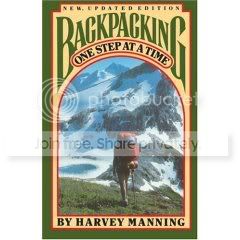
Edit: Here's the book that replaced my Scout manual as the outdoors Bible:

backpackbook.jpg


It was first published out of Seattle in 1972, so, well, you can imagine. It said things like, if you have to have a hatchet, go chop down a billboard with it. :D Which you have to admit is funny in an asshole hippie backpacker kinda way.

 
Back
Top