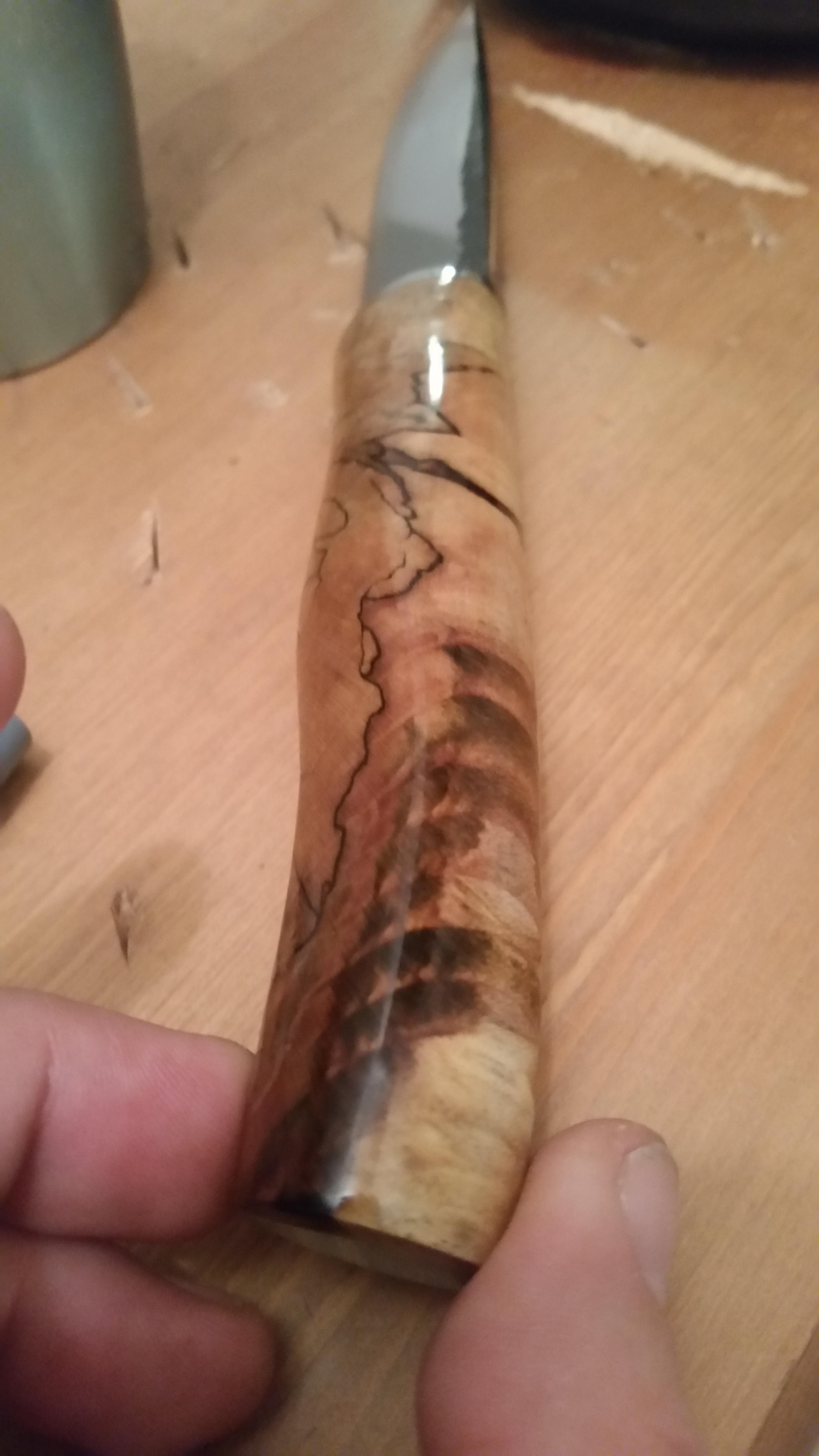
Partial hidden tang knife handles breaking

bodog

BANNED
Joined
Dec 15, 2013
Messages
3,097
Alright, I must be doing something wrong. I did a lot of searching and can't find anything that may help me figure out what I did and how to keep it from happening again.

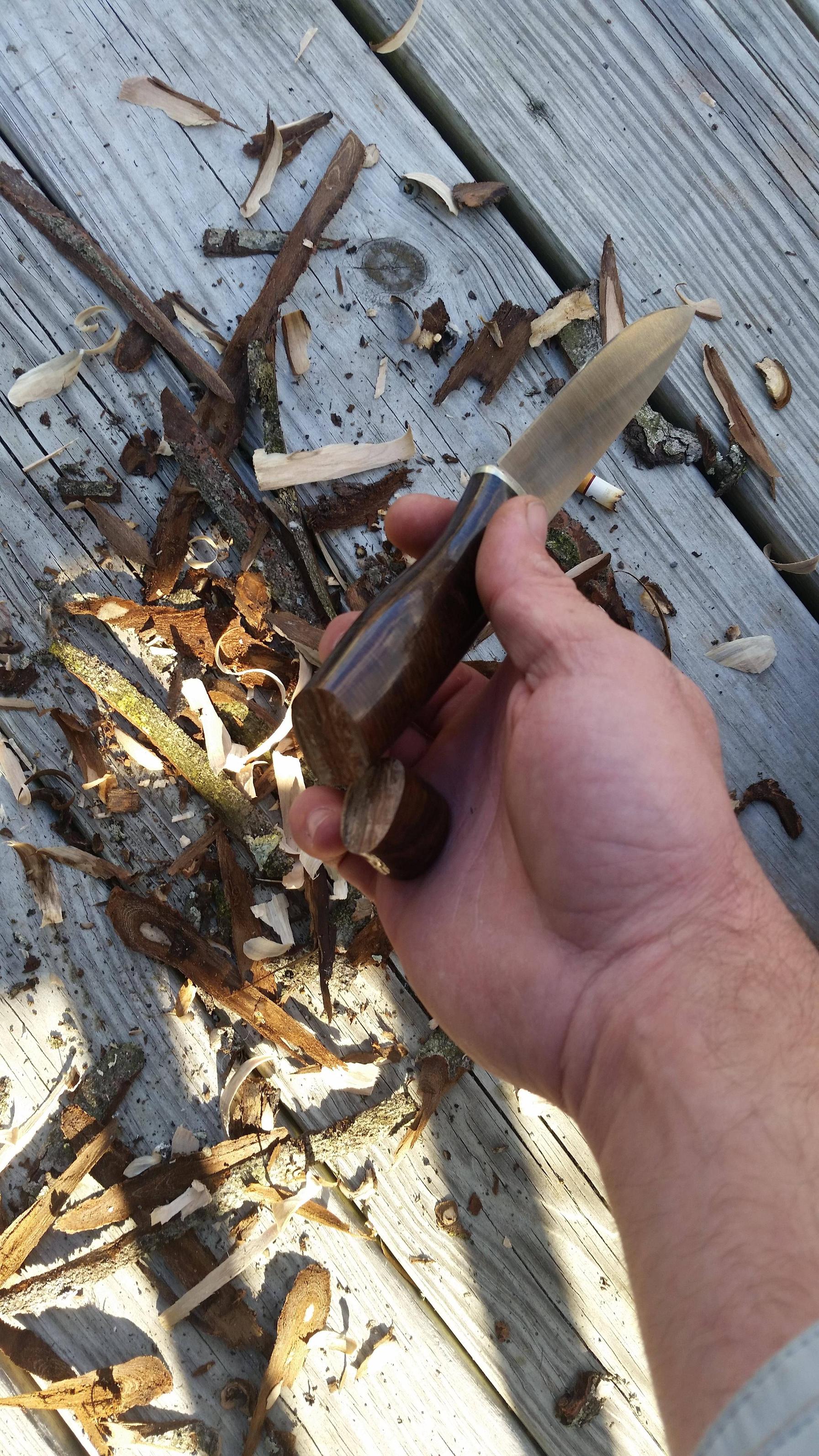
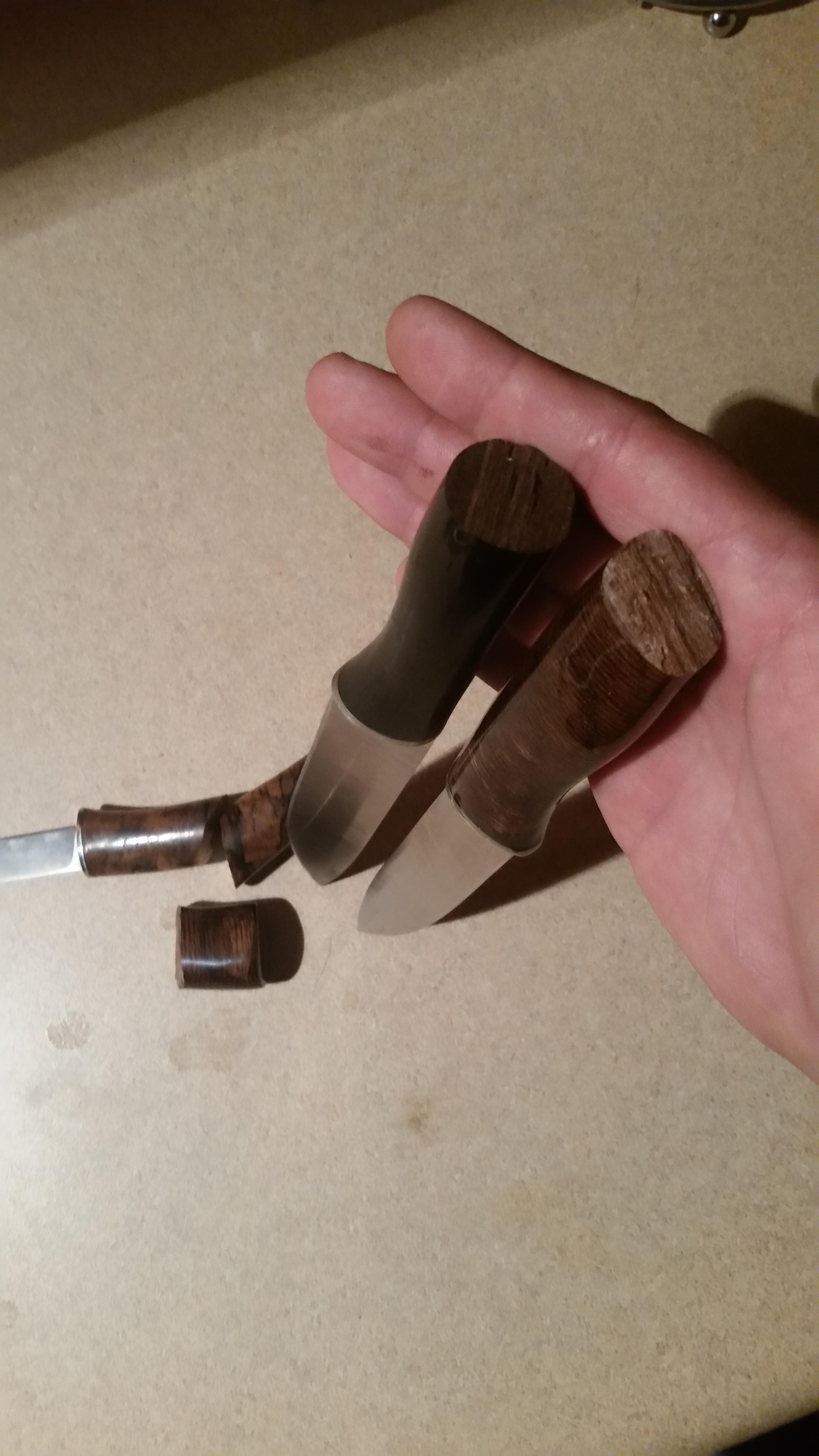
I made four hidden half tang knives, three of the handles broke when whittling seasoned oak.

Three of the four knives had similar medium sized profiles, one was considerably smaller. Medium sized knives are between 4.5 and 5 inch blades with about 4 inch tapered tangs. The smaller one was about 3.5 inches with a 2.5(ish) inch tang. The handles all had an inch or two of wood past where the tang ended.

Two of the medium sized knives and the smaller knife broke where there was no tang.

The wood was stabilized spalted maple (two knives including the small one), stabilized oak crotch, and unstabilized blackwood. The one that didn't break was the bigger knife with stabilized spalted maple.

One of the three broken handles was stabilized by K&G and the unstabilized blackwood broke across the grain.

The smaller knife with the stabilized spalted maple had a fairly punky piece of wood but I figured with it being stabilized it wouldn't matter so much.

The larger knife that didn't break was also heavily spalted. It was stabilized by the same guy as the small piece. It was the last knife I tested so I was fairly certain it'd break too. When it didn't I started pushing it harder into decently firm chops into the branch and it held up fine.

Is this an issue with the wood or am I doing something wrong when finishing the handles?

I did not drill into the sections that broke. All handles were at least an inch to an inch and a half thick from top to bottom and from side to side. They were all rounded with no sharp corners. While I did have to use some strength to whittle the oak, it was in no way into the realm of unreasonable use.

1) How do I keep this from happening again while using hidden half tang profiles?

2) Any ideas how I can salvage these blades without wrecking the heat treatment that's already done? Melting the epoxy doesn't seem like it'd work well. The only thing I can think of is to grind the old wood off and start over.

I'm probably overlooking something and any help is appreciated.
uYdN5Yv.jpg


i7mpeGz.jpg


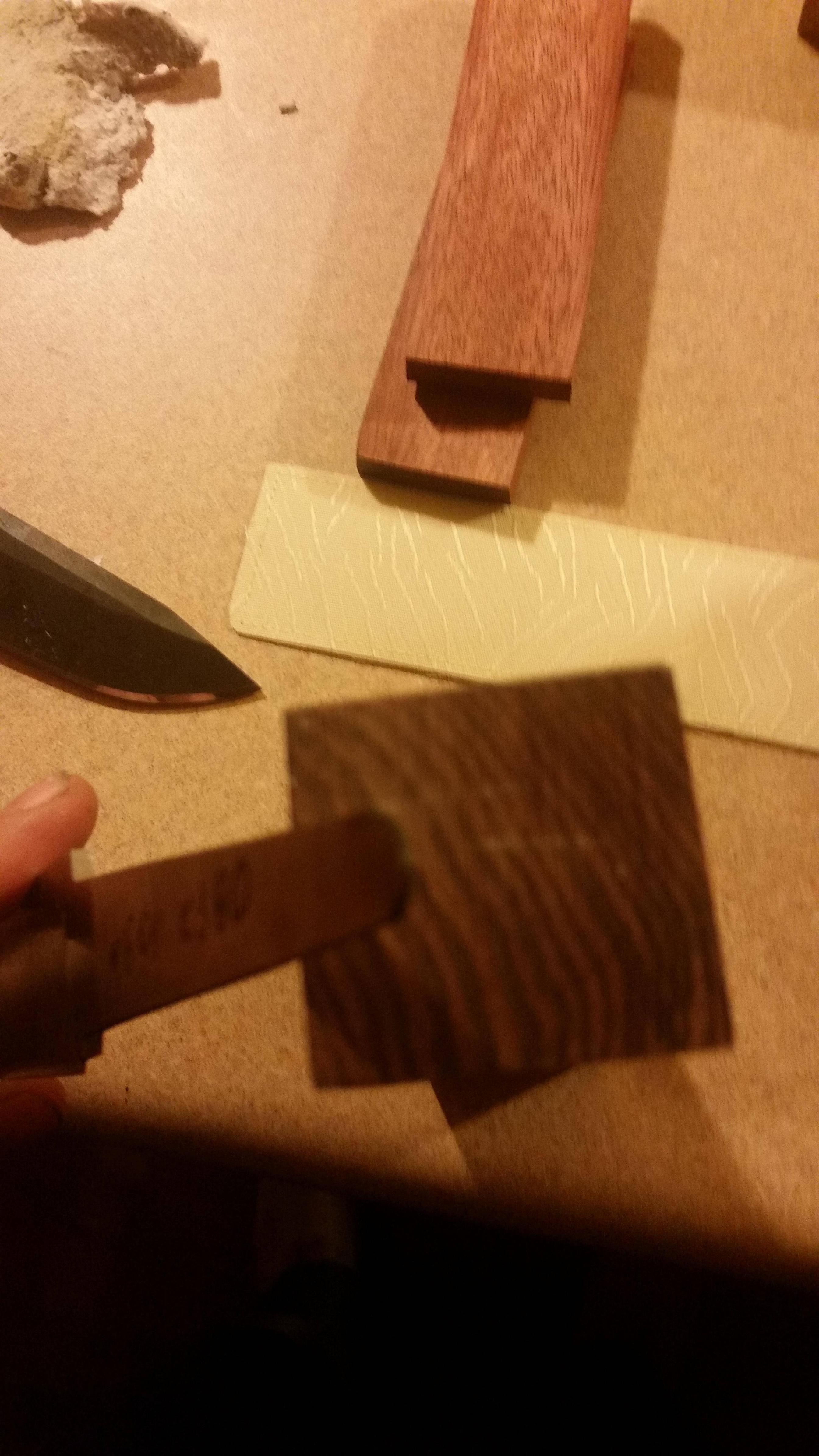
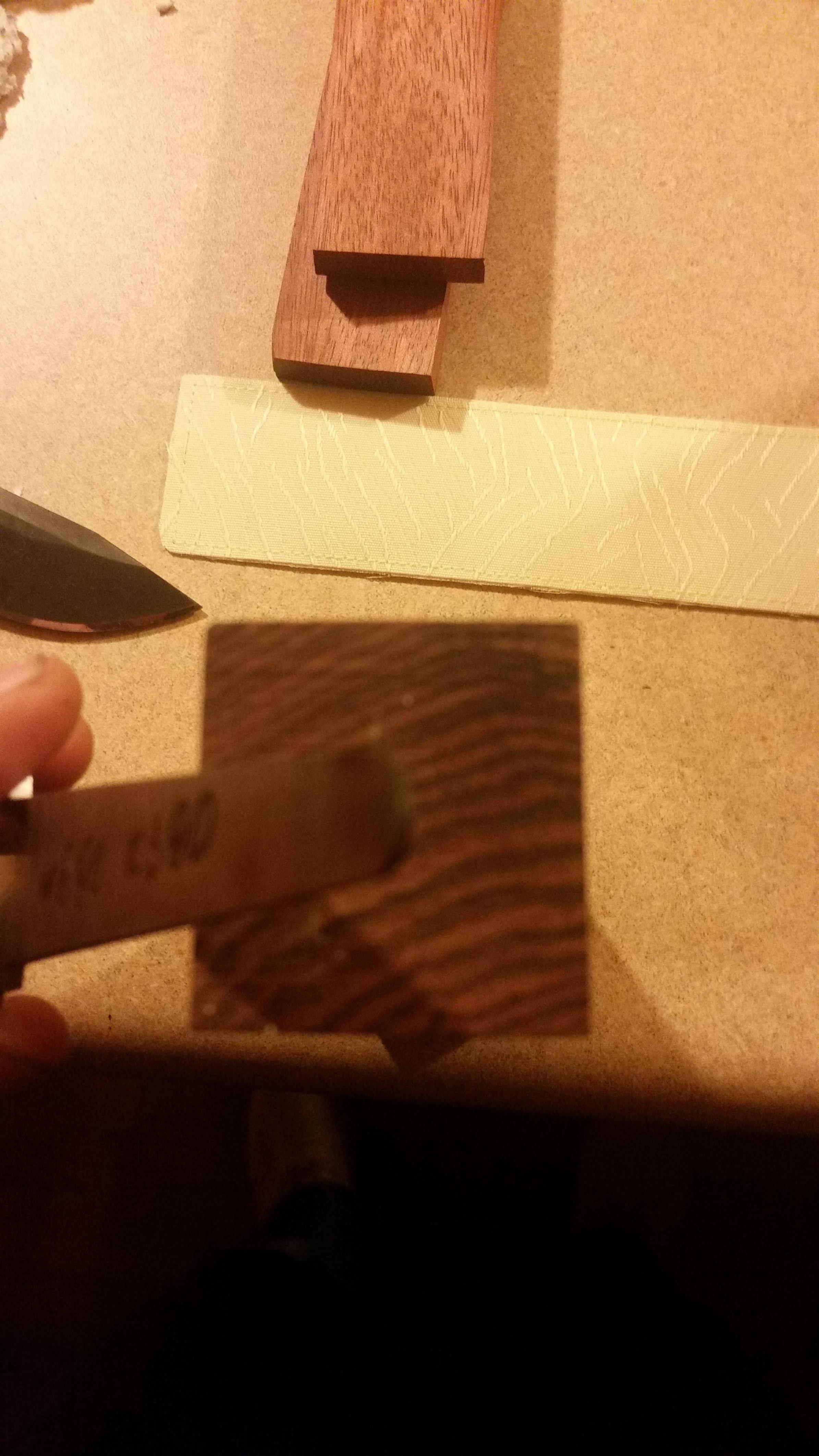
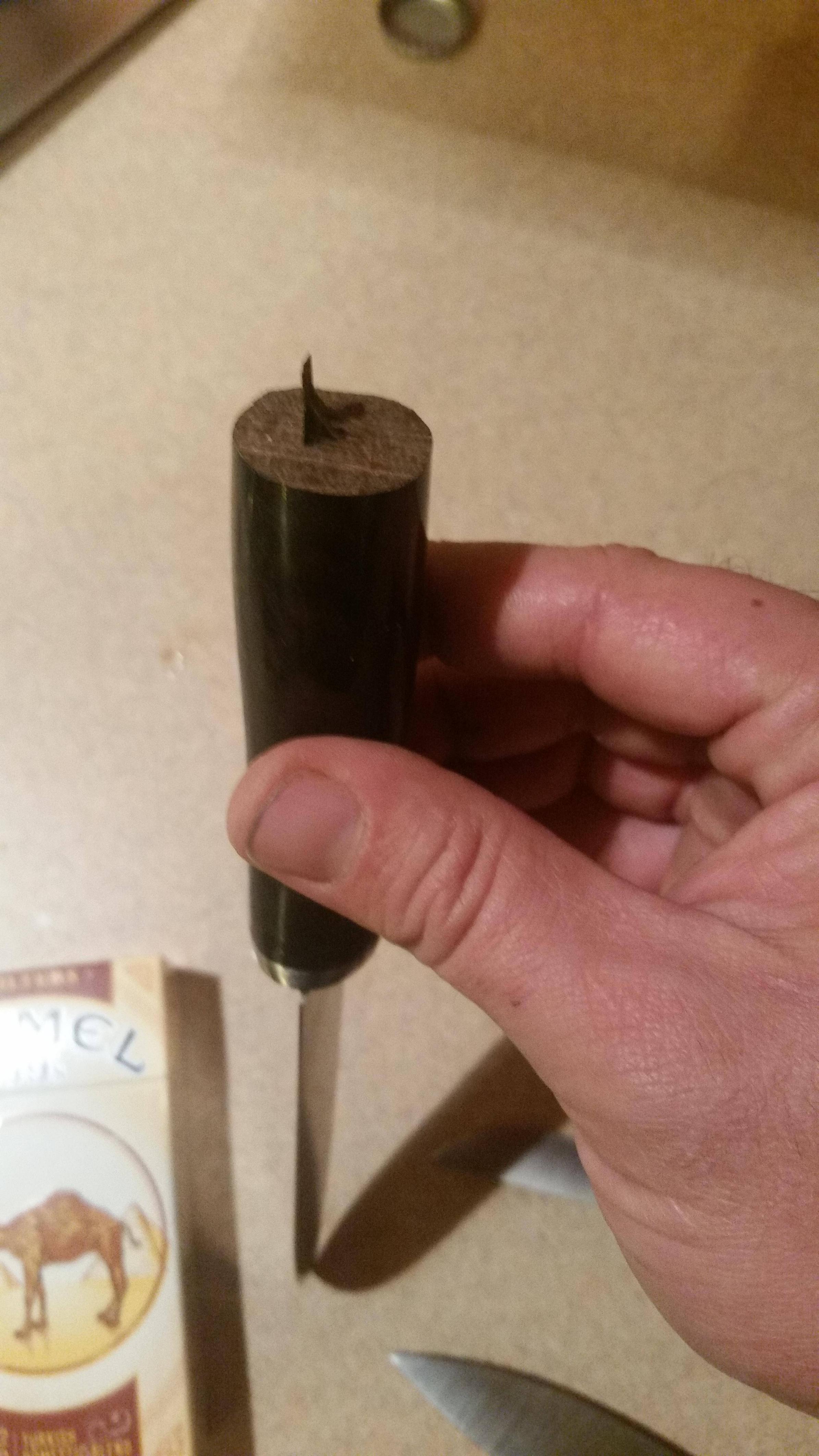
Closer look at the grain of the blackwood. Should I have turned the piece 90 degrees where the grain was running from front to back and up and down instead of front to back and side to side?
Pb8ewIg.jpg
 
Last edited:
Is it just me or is the grain running perpendicular to the blade. If so then that's why it's giving you fits. Same reason the grain in a 2x4 runs parallel to its length. Wood is very week across the grain.
 
Another good example is a hammer handles grain runs perpendicular to the force apalyied.
 
Another good example is a hammer handles grain runs perpendicular to the force apalyied.

The blackwood is perpendicular and the oak crotch isn't. The oak crotch is the one stabilized by K&G so I assumed it was safe enough for light to medium use. The maple burl is all over the place. I figured if I had problems it would've been those pieces.
 
That is certainly how it looks to me too (cross grain), but I would have thought that stabilizing the wood should make that doable. I feel like I see a lot of cross grain stabilized handles, but maybe I'm actually only seeing that on full tangs and takedowns.

I don't make knives, so I guess I had always kind of thought of stabilized wood as being similar to micarta in a way. But I know for untreated wood, I would expect it to be very fragile if hafted cross grain.
 
I'm thinking about sanding the breaks even, drilling holes and epoxying a pin through the handles, and putting a liner there, and then epoxying the pieces back together. I think it'd look fine at the end and the pin would add the needed strength, but.... the pin wouldn't be welded to the tang so I don't know if it'd be all that beneficial. I could offset the pin to run alongside the tang. It wouldn't be an obvious screw up once done. It would mess with the balance a little bit.

Thoughts?
 
Last edited:
Use a bolt as the pin and the threads create a mechanical lock when epoxied in place. You could also play musical knife butts and swap material lol
 
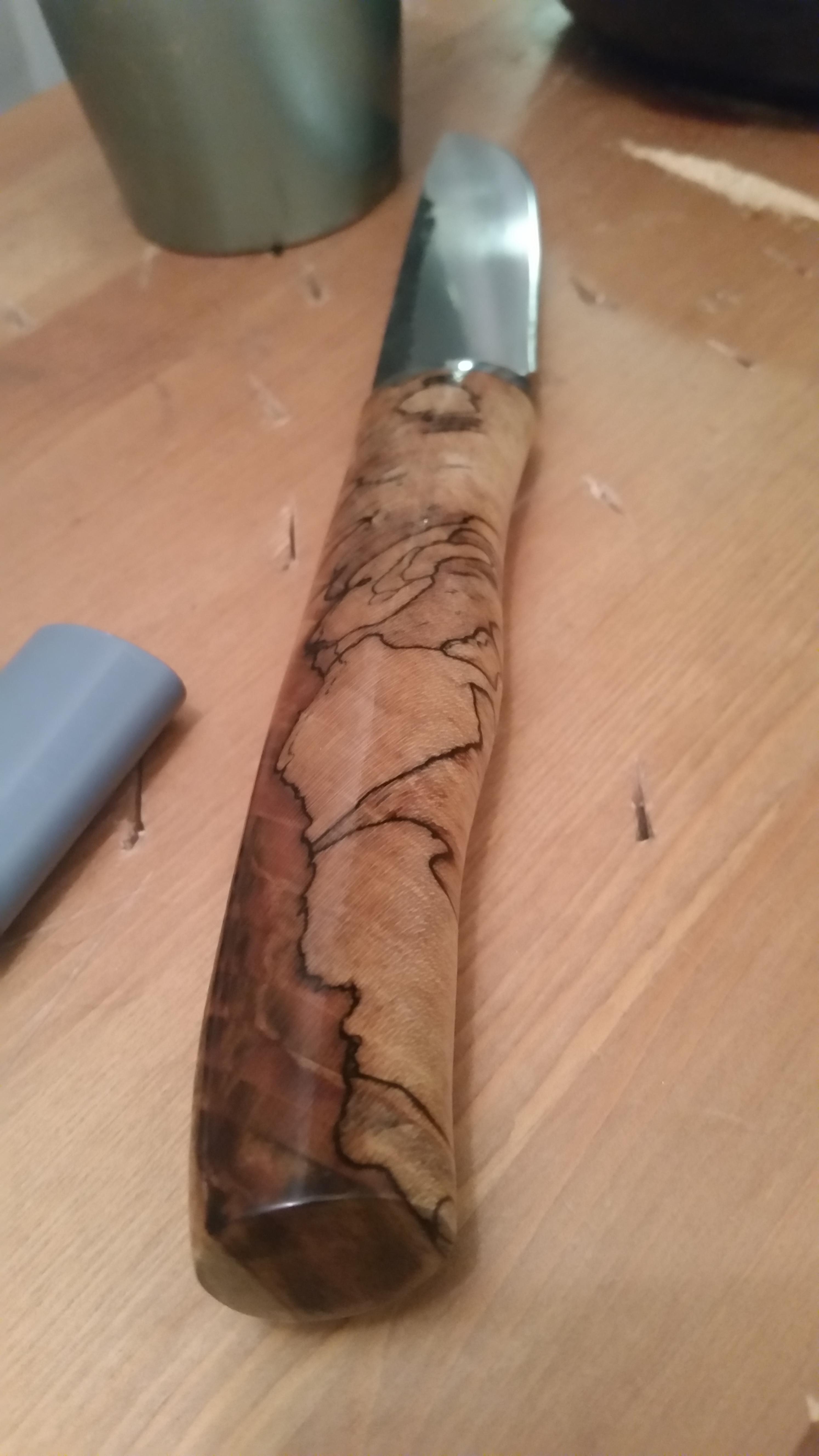
Here's the one that turned out good. I thought it was going to be the weakest because of the pretty intense variations through the piece.

EzG1yzd.jpg


ZGvXenv.jpg
 
Last edited:
Use a bolt as the pin and the threads create a mechanical lock when epoxied in place. You could also play musical knife butts and swap material lol

That seems like a pretty good idea. I'll give it a shot.
 
im not getting what your showing, the tang needs to go into the end of that block. The ring direction on the block does not matter what matters is the grain. Thoes blocks in the pictures are pictures of the end of the grain. You want one end of the grain at the guard and the other end of the grain at the butt. The direction/rotation that the partial tree rings face is not important.
 
im not getting what your showing, the tang needs to go into the end of that block. The ring direction on the block does not matter what matters is the grain. Thoes blocks in the pictures are pictures of the end of the grain. You want one end of the grain at the guard and the other end of the grain at the butt. The direction/rotation that the partial tree rings face is not important.

I didn't think it was incredibly important as long as the grain was running front to back. That's why it boggles me a little that the blackwood broke.

The blackwood grain was running from front to back with the ring pattern going side to side instead of front to back and up and down. With those pictures I was wondering if the grain running front to back and up and down would be better.

The oak crotch I think was doomed from the beginning because the grain was running from top to bottom to highlight its figure. I guess I should've kept that piece to a full tang.
 
Last edited:
That last knife picture looks like bias cut maple. Might not be bad for scales or a through tang knife. But thoes purdy rings you see are the tee rings cut across at a 45°. If that handle fails it will fail 90° off of the ring pattern going the other way at 45°. This bias cut give you slightly stronger wood then stright end grain cut wood.
 
If Side to side or up and down mattered then you would have a knife that was strong in only one direction of forge and weak in the other direction. Just think of it like a bunch of straws you want your knife tang to go with the straws.
 
Russ,
I responded to your email and asked for photos, but these ones show me what I wanted to see. I see that they are all gross grain and broke at the point of no support. The solution is to weld an extension on the tang and make it a through tang. The break can either be carefully glued together and then through drilled, or sanded flat and a spacer added like on many puukko knives.

In the future avoid cross grain with the same fervor that you avoid a rattlesnake ... don't mess with it unless you are experienced in handling them ( pun intended).

I can help you with fixing this problem if needed.
 
Russ,
I responded to your email and asked for photos, but these ones show me what I wanted to see. I see that they are all gross grain and broke at the point of no support. The solution is to weld an extension on the tang and make it a through tang. The break can either be carefully glued together and then through drilled, or sanded flat and a spacer added like on many puukko knives.

In the future avoid cross grain with the same fervor that you avoid a rattlesnake ... don't mess with it unless you are experienced in handling them ( pun intended).

I can help you with fixing this problem if needed.

Responded via email
 
Russ brought these knives by the store today. Heck of a nice guy.

The blackwood was a real surprise. I have never seen a wood supplier sell end grain cut blackwood. Because it was so dark the lines looked like long grain to a novice, but was cut across the grain. For the life of me I can't say why it was cut that way. I told him to send a note to the seller.

The maple burl was just one of those things. Burl is cut whatever way it looks best, and this handle was thin and on a short tang ... thus it broke. Lessen learned, I'm sure.

The oak crotch was really pretty, but had many hairline cracks, one of which was where it snapped off. I think it was a bit too high in moisture content when stabilized and these hairline cracks formed along all the curls. A through tang might have prevented the break, but the problem was in the wood, not the handle workmanship.

The fit and finish as well as handle shaping on these knives was well done. The guard/bolsters fit is as good or better than many folks I know who have been doing it for a long time.

He had some other nice wood that was cut right, and I suggested he take off the bad handles and replace them with the good wood.

The oak crotch handle was salvageable with gluing the break and installing a reinforcement pin run in from the butt. He may try that and see how it does. His wife wanted that knife and what SWAMBO wants SWAMBO gets :)


He brought some blades he has been getting from a smith in Europe. They were high grade blade steel, really well made, and the grinding was great. I told him there was no shame in using good quality blades made by another maker as long as he was up front with that info. As his skills increase Russ plans on making blades himself.


Anyway, it was a nice visit ... and he brought Guinness.
 
Lol, thanks Stacy. And thanks again for the pointers and advice. Without guys like you, guys like me would have to always start at square one in this addiction.
 
Back
Top