
-
The BladeForums.com 2024 Traditional Knife is available! Price is $250 ea (shipped within CONUS).
Order here: https://www.bladeforums.com/help/2024-traditional/
You are using an out of date browser. It may not display this or other websites correctly.
You should upgrade or use an alternative browser.
You should upgrade or use an alternative browser.
Please help after laughing at me 🥹 (after putting knife in Lemon+Cola)
- Thread starter Dextar
- Start date
WD-40 won't provide long-lasting rust protection, it evaporates far too quick and it is more for cleaning and to get rid of water / moisture, .....I use Lanolin instead, e.g. for my Terava Skrama. Here down under you get it from the hardware stores, if you can't find it in your stores, Amazone will have it...
Update:
Thanks for all of your advices, special thanks to Mk-211, FortyTwoBlades, Bill DeShivs.
Now the rusts are removed, only problems:
1. there are many "scratches" after wiping down, at the time the new knife arrived, I concerned about 2 scratches, now I don't have any concern , but is there a way to polish it?
2. after applying WD-40, the it feels "greasy" every time I touch and handle it, is it safe if I touch food after handling the knife? Is there a way to remove the oil-feeling?
Here are the "new" knife, thank you all once again.
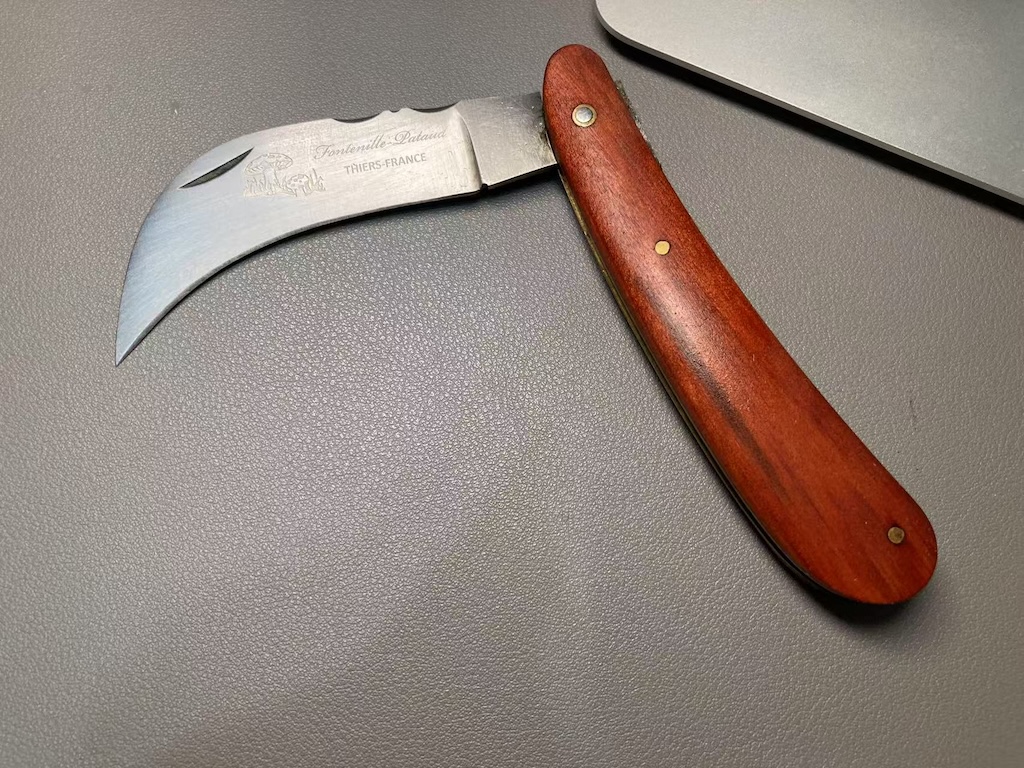
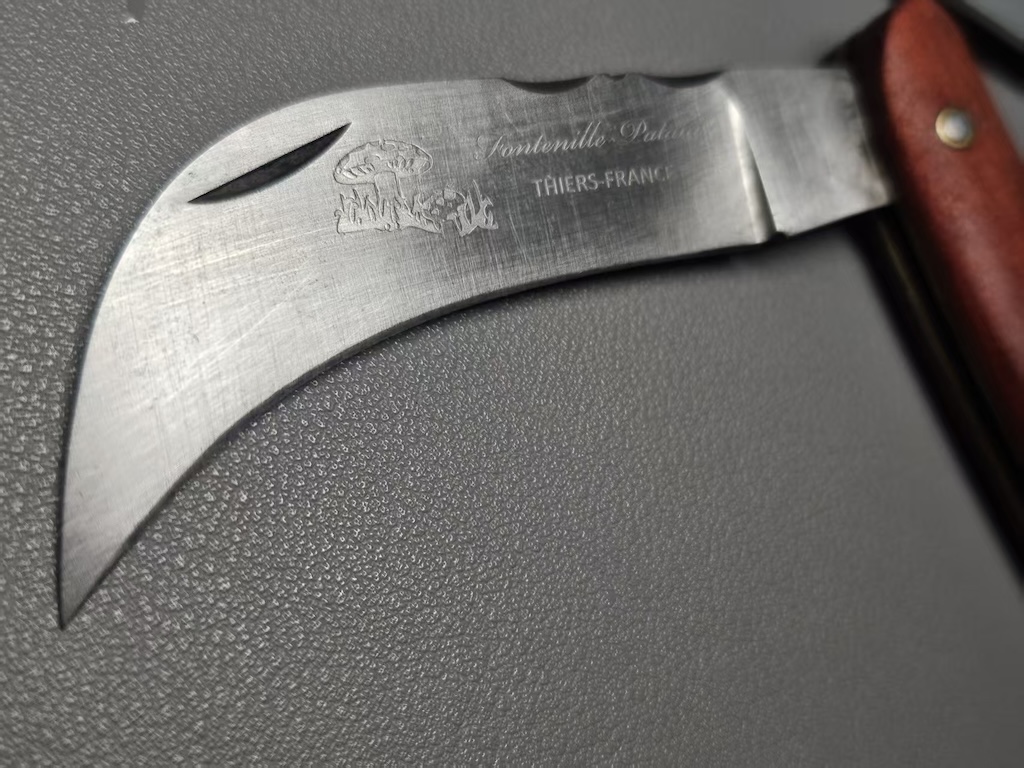
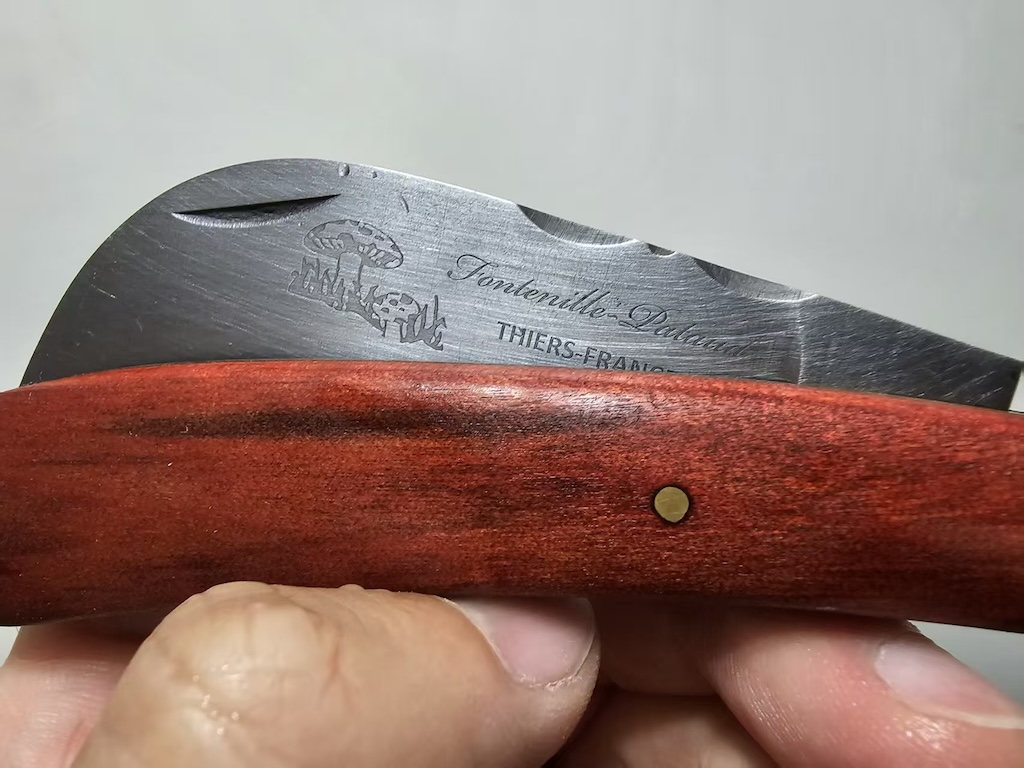
Thanks for all of your advices, special thanks to Mk-211, FortyTwoBlades, Bill DeShivs.
Now the rusts are removed, only problems:
1. there are many "scratches" after wiping down, at the time the new knife arrived, I concerned about 2 scratches, now I don't have any concern
, but is there a way to polish it?2. after applying WD-40, the it feels "greasy" every time I touch and handle it, is it safe if I touch food after handling the knife? Is there a way to remove the oil-feeling?
Here are the "new" knife, thank you all once again.
Thank you once again for this remind, I didn't realize it and this really saves me.If not being used for food, just hose it down with WD-40.


Mk-211
Gold Member
- Joined
- Jan 8, 2025
- Messages
- 3,284
I would spray some cleaner, like windex on a rag or paper towel. Then wipe down the handles, if there's WD-40 on them.
I use a vegetable wash to clean any knife that will cut food. That way it doesn't contaminate the food and or possibly make you sick.
I use a vegetable wash to clean any knife that will cut food. That way it doesn't contaminate the food and or possibly make you sick.
Scratches never bothered me, but yes, with a lot of careful polishing they can be reduced.
For the residual wd-40 - it should easily wipe away with even a dry cloth. What remains internally will continue to displace water as it evaporates. A single drop of pivot oil will last longer now that the rust is gone.
It looks like you've done a fine cleaning job. Keep up simple maintenance: clean the blade every time, protect it with a small amount of food safe oil, and use rust remover when needed. When it becomes second nature, you won't even have to think about it. Wipe the blade when carrying - I do this almost constantly before I fold it/sheath any knife in the field. I'm personally more lax about oiling my blades before storage, though. But, like you, it's how I learned to contend with rust.
For the residual wd-40 - it should easily wipe away with even a dry cloth. What remains internally will continue to displace water as it evaporates. A single drop of pivot oil will last longer now that the rust is gone.
It looks like you've done a fine cleaning job. Keep up simple maintenance: clean the blade every time, protect it with a small amount of food safe oil, and use rust remover when needed. When it becomes second nature, you won't even have to think about it. Wipe the blade when carrying - I do this almost constantly before I fold it/sheath any knife in the field. I'm personally more lax about oiling my blades before storage, though. But, like you, it's how I learned to contend with rust.

fishface5
Gold Member
- Joined
- Feb 3, 2001
- Messages
- 9,870
To get rid of the scratches you would need to sand off all of the metal of the blade down to the level of the scratches, which would take a lot of work, including using progressively finer grits depending on how clean and shiny you wanted it to look.
Another less intensive option would be to try to cover up the scratches by sanding a new consistent scratch pattern onto the blade.
Either way you want to use sandpaper that is glued to a hard flat backing material, probably sanding legthwise i.e. parallel to the spine.
But either way you risk sanding off the etching.
Another less intensive option would be to try to cover up the scratches by sanding a new consistent scratch pattern onto the blade.
Either way you want to use sandpaper that is glued to a hard flat backing material, probably sanding legthwise i.e. parallel to the spine.
But either way you risk sanding off the etching.

- Joined
- Mar 8, 2008
- Messages
- 26,323
WD-40 is not food contact safe, so you don't want it getting on food, though it's not likely to kill you if you accidentally ingest trace amounts. Still just not something you'd want to do. If you need food-safe oil for it you can use food-grade mineral oil or silicone oil (the grade matters!) which are both relatively heavy oils, or for a thinner oil there's my Desert Whale liquid wax. For blade protection I generally prefer waxes over oils, which I use for lubrication instead. Oil on blades tends to bead up or leave bare patches over time, while waxes remain in place. Both will wear off a blade in use, so require periodic reapplication for continued protection.
- Joined
- Mar 8, 2008
- Messages
- 26,323
Ballistol is mostly mineral oil with some emulsifiers and anise oil (which gives it that distinctive odor.)
...the base it is a highly refined, medical-grade mineral oil used in cosmetics and baby products. It serves as the base oil and is non-toxic.... together with the other ingredients (oleic acids, salts and alcohols....) it is rated food safe. It cleans, it protects against rust, and it is food safe...it even has some antiseptic properties so you can cut yourself with a knife that's treated with Ballistol and don't have to worry too muchBallistol is mostly mineral oil with some emulsifiers and anise oil (which gives it that distinctive odor.)
 ....just cost a "little" bit more....
- Joined
- Mar 8, 2008
- Messages
- 26,323
I think you're misquoting the SDS. It's not "oleic acids" and "salts" but rather the salt form of oleic acid, sodium oleate, which is an emulsifier and surfactant. The emulsification allows the oil to mix with the alcohols, which it would normally be immiscible with. The alcohols both act as a thinner and light cleaning agent....the base it is a highly refined, medical-grade mineral oil used in cosmetics and baby products. It serves as the base oil and is non-toxic.... together with the other ingredients (oleic acids, salts and alcohols....) it is rated food safe. It cleans, it protects against rust, and it is food safe...it even has some antiseptic properties so you can cut yourself with a knife that's treated with Ballistol and don't have to worry too much
It's a fine product for a bunch of different uses, but it's not magic. It's ultimately mineral oil like so many other products on the market, with a few extra compounds to adapt it better to some applications vs. other formulations.
- Joined
- Mar 8, 2008
- Messages
- 26,323
Food grade silicone sprays abound! I have some by CRC that I use as a release aid when I mold mallet heads out of scrap HDPE. However, it's worth being aware that if you work with paint at all, silicone is a big no-go. Even tiny amounts of silicone lubricant contamination on a surface will make paint fisheye and it's very difficult to remove. If you don't work with paint, though, it's great stuff. I
protect it with a small amount of food safe oil
For blade protection I generally prefer waxes over oils
Hi edgelion, FortyTwoBlades,
Just wanted to ask if there is certain products you would recommend to protect the blade?
I just found it so easy to be rusted, I brought it to outdoor only 1 time after cleaning, in very moist atmosphere (drizzle), then today I found the knife comes to this:


Though I highly doubt that this is also because of the material of the sheath, otherwise, it's not reasonable that only upper part of the blade were getting rusted.
As you can see, the knife is placed like this, so, the upper part of the blade touches more than lower part. (the upper left photo: left-half of the blade rusted, right-half not; the upper right photo: right-half part of the blade rusted, left-half part not)
But I still wanted to ask if there is a way to keep it away from rust longer.

- Joined
- Mar 8, 2008
- Messages
- 26,323
I like waxes personally and have spent a lot of time developing my own (PineUltimate and Super Safflower wax polishes.) However, a commonly used one available from other locations is Renaissance Wax.

Mick Boardman
Gold Member
- Joined
- Jul 15, 2020
- Messages
- 3,225
I don’t usually wear my glasses and sometimes I get the pic wrong.  I was looking at the logo and was squinting and trying to figure out what that was. I thought it was a nuclear blast mushroom rising up from a lake of fire. Now I can see it’s a magic mushroom rising from blades of grass.
I was looking at the logo and was squinting and trying to figure out what that was. I thought it was a nuclear blast mushroom rising up from a lake of fire. Now I can see it’s a magic mushroom rising from blades of grass. Thank you!I like waxes personally and have spent a lot of time developing my own (PineUltimate and Super Safflower wax polishes.) However, a commonly used one available from other locations is Renaissance Wax.
Ya, it's the logo of mushroom knife, the logo was the only reason I loved the knife so much and decided to buy it (then regret because of the quality and blemish finish), but, this is the only knife I bring every time I go hiking every season except in winter.I don’t usually wear my glasses and sometimes I get the pic wrong.
If there is any other knives with mushroom logo, fish logo, I will consider, just like these...I am trying to find them until now

Since it's cheaper where I buy it and it seldom gets used up for cooking, my default is grapeseed oil. There are definitely better products specifically for inhibition of rust, but it works for me. Though, I think I agree with FortyTwo in this case - use wax.
There may also be something about the leather sheath, too. Sometimes storing blades in leather for a long time can cause trapped moisture to stay on the metal where it might otherwise air dry. But if it's happening that quickly, I wonder if it could be that the leather was tanned with formic acid or something similar that has not fully neutralized. I know little about this, so hopefully someone else can better inform.
There may also be something about the leather sheath, too. Sometimes storing blades in leather for a long time can cause trapped moisture to stay on the metal where it might otherwise air dry. But if it's happening that quickly, I wonder if it could be that the leather was tanned with formic acid or something similar that has not fully neutralized. I know little about this, so hopefully someone else can better inform.