
Please help me troubleshoot my terrible grinding

Joined
Sep 16, 2002
Messages
1,577
Things started out shaky early, improved a lot midway through to where I thought I was in a groove, and then this happened. I have some ideas as to what may have caused this (not holding a steady angle, etc.), but I tried and felt like I was doing those things more or less right while this was happening:
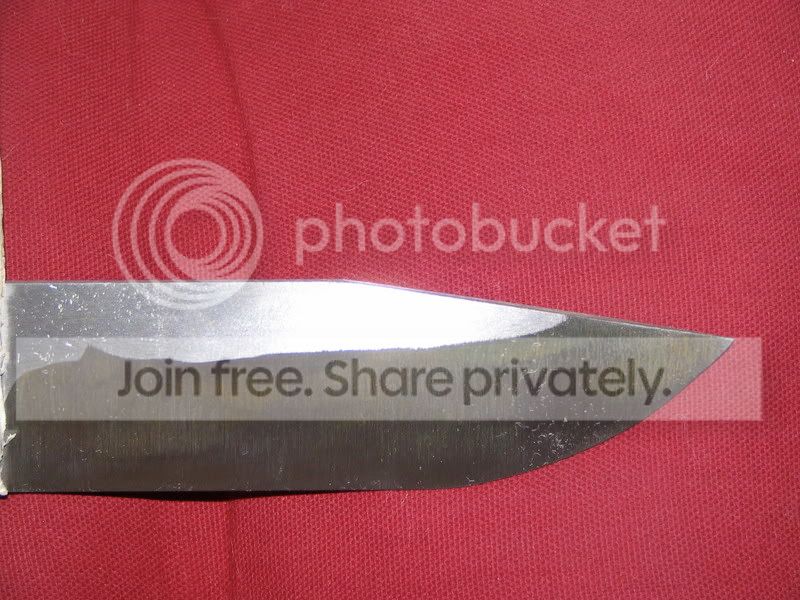
IMG_1079.jpg


This is maybe the fourth or fifth blade I've tried to grind on my Craftsman 2x42, and it seems like each one gets worse. I thought the first one (just scrap for practice) turned out actually pretty well once I settled down and focused on a proper plunge:
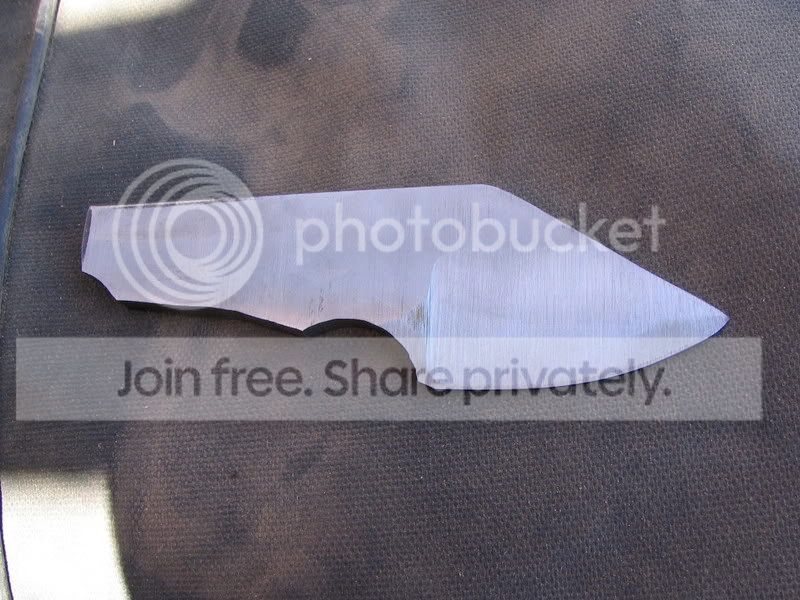
IMG_0896.jpg


A couple of general questions:

-Is thicker stock easier to do or learn on than thinner stock (that first scrap piece was 1/4", the few since have been 1/8")? It seems so to me, but don't really know at this point.

-Is a shorter blade easier than a longer blade? Again, that first scrap try was short, the last few have been longer (with the one pictured above being ~5")

-Do you think this blade is salvageable?

Thanks in advance for any advice, it's discouraging to feel like I'm getting worse rather than better.
 
The answers to the questions you asked are: Yes....Yes....and Yes
And Practice, practice, practice.:thumbup:
For what it's worth those do not look all that bad for some first few knives.
Keep grinding.
Mace
 
One #1, try getting a good mill file and draw filing the bevel a little higher to encompass the high spot.
 
What grit of belt is the top knife at? A sharp belt makes keeping the bevels flat much easier. It looks like the bevel is not very flat. As long as the bevels are flat the grind line will be strait. I am guessing your belt grinder has one speed and thats fast so it is easy to mess things up especialy if you are using dull belts and pushing to hard. Also a full flat grind ( bevels all the way to the spine) is much easier than the partial that you have tried.

Thicker stock is much easier.

I would put on a sharp fresh belt and raise the grind line some and try to even out the bevel. I use 40 grit belts as a first step the fesher the better. Put the knife aginst the platen and feel the bevel flat up against it with a very light touch. when the platen and bevel are parellel add more presure.

As I said before a light touch and a sharp belt is what works for me. It does take alot of practice to be able to feel that the bevels are flat against the platen.

It does look like you are off to a good start so keep it up and as Mace said Practice, practice, parctice.
 
I used to use a 2X42 craftsman...thats not bad for that machine! Its platen is bad for knives, and your plunges will suffer. I suggest filing them in with a chainsaw file from now on or replacing the platen.

That machine also runs pretty fast, which makes it even harder...

Dips and high spots in your grind are due to uneven pressure on the blade. Its a practice thing until you get the feel for it.

A good way to practice is to grab free wood paint stirrers at home depot. Theyre about as thick as knife stock and you can grind them like a knife.

For what its worth, when i was on the 2X42, I used to rough grind on it, then go straight to draw filing and sanding. not sure if it was because i sucked or if it was the machine. I should fire it up some day and see what I can do on it.
 
Thanks for the encouragement and advice guys. I started the top one with a worn 60 grit to cut in the edge thickness, then switched to a new 60 grit, followed by a used 120 grit (not sure how much I had used the 120 before.) I haven't really been able to figure out why or how to explain, but I've just not had the feel since that first day with the piece of scrap. I really think it has a lot to do with the 1/8" stock, as there just isn't much of an angle to work with making it hard to hold and feel. Also, the thinner material gets very hot quickly, often burning my thumb with just a single pass and that's not helping me to hold it steady.

I know it depends on a lot of factors, but how long do belts remain 'sharp'? ie, do you use one new belt per blade, per side, or???
 
PS I have added a ceramic platen liner which has helped with the plunges.

When moving the blade to the belt surface at the start of each pass, do you try to hit the angle dead on, do you come in towards the edge first and then allow the bevel come down to the platen, or ???
 
Heat will be a problem with that grinder as it runs fast and compounded by the thin stock. A worn belt will worsen the heat. You want a nice ceramic belt that will cut and stay relatively cool.

As for belts, i run 2X72" on a KMG, and use Norton Blaze belts. They last a LONG time compared to any other belt i've ever used, but you shouldn't need to use more than one belt for every few knives in the size you're doing. I am currently rough profiling on a Norton Blaze belt that i've ground almost 15 knives on and its still going strong.

For grinding, get a bright light and put it directly above your grinder shining where you will grind. Stand and hold the blade at waist height and look down. Try grinding by looking at two things:
1. The shadow between blade and belt. It should remain even left to right and in thickness as you move the bldae back and forth.
2. The streak of sparks coming off the blade....it should be an even stream across the wdith of the belt, showing that youre holding the blade flat against the belt.

I start at the plunge, lightly putting the blade on the belt and matching the angle.

Also try locking your arms and moving at the hip rather then trying to move your arms back and forth.

For using the craftsman, you may want to build a push stick, which will support the spine and allow you to put pressure on the blade without burning your thumbs :) Some use gloves but I wouldn't advise it. Getting a glove caught between belt and the idler wheels would turn your hand into a real mess, or worse.
 
I would definitely start your grinds with sharp belts. They will establish the path to follow later with finer ones. I draw my blades across from the choil side to the tip. Do not go to a finer belt thinking because it is finer you will have a better chase of evening out the grind line try to maintain an even pressure through the time you are pulling the blade across. If there is an irregular section then you must compensate with the coarse belt rather than trying to go to a finer one. I like the Nortons and 3Ms in 60 grit to start.
get some paint or some wood sticks (this isn't a joke) and also some mild steel. About 5/32 will be a good thickness for a hunter. 3/32 is tough to grind bottom to top. Hope something is here that will help.Usually, lots and lots of practice needed to do good but you will get there if you stay at it.
 
Thanks again. I'll try going back to the fresh 60 grit to see if I can fix it.

Towards the end, I wrapped some masking tape around one of my thumbs and that helped some with the heat. I'm trying to avoid wearing gloves due to the possible dangers that may entail.
 
P J - I use the Craftsman also and have done just a few more blades than you. Putting on the ceramic platen helped me a ton. I also stopped using the Craftsman belts and bought some good ones from truegrit.com and that made a huge difference. I use 50 grit for my rough grinding. I cut my plunges with a round file prior to starting any belt grinding. I have been able to get my grind lines straight on the last 2 blades, finally. On the blades prior to that I used the file to get them straight. I grind edge up from the plunge to the tip, lifting or turning a bit at the tip depending on the look of the tip grind I want. I have never used anything but the Craftsman so i have no perspective of what grinding would be like on a better grinder.
 
I am just now learning as well and using the 2x42 craftsman at home. one think I have to remember (and master Yoda told me) is when starting to put the blade on the belt place the edge of the blade closer to the belt than the plunge. I get the deep gouges below my grind line when I tip the blade in from the side rather than the edge. Your first Grind should be good to give you a nice flat spot you can work from to work your way through the blade. Hope it helps.

Larry
 
I don't know if this will help but, I place the blade edge first then roll to the bevel. Also try starting in the center of the blade(no pressure just let it touch to get your angle) slide to the choil apply pressure and grind to the tip. This was a tip I picked up from Mr.Batson and my grinding improved alot.
 
I still get those high spots occasionally. And that's a big reason why my blades tend to have full grinds :). Usually, that happens to me on the same side you're showing because I have a tendency to dig the plunge area in harder than the rest of the blade when grinding right handed. The best advice I could give has already been given. Watch the gap of the blade/belt junction, and look for sparks to come off the full width, or at least the center or the belt. Every time I create a high spot like that, I know it before I look at it, because I see the sparks come off of the edge of the belt near the plunge instead of flying off the center of the belt. A few french words later, I try to correct my errors.

Focus on the gap (where the edge of the blade meets the belt) and pay attention to the spark pattern in the periphery.

Also, try and lock your elbows in and take as consistent a stance as possible when grinding. Make it the same every time, to the best of your ability. Hold the blades the same, your feet the same, your elbows the same, your head the same. Then, correct your mistakes within these boundaries.

And practice. :D

--nathan
 
Last edited:
The way I think I'm going about it is along the lines of Mr. Sharpe's technique, but obviously I'm not getting it right.

Thanks for all of the additional comments and advice. I guess it's just going to take more practice to build some muscle memory. I'm going to see if I can salvage this one, and then I'm going back to some thicker material for a while to see if I can get the feel back that I experienced on that first practice day.
 
This is the opposite of the problem I had with the last knife I finished. I ground it from a file after removing the teeth. The grind line came out straight at the finer grits, but was pretty crooked at the rougher grits. The problem is I dont know how I fixed it, so I cant do it again.
 
Not much to add other than when I do something like that it's because I'm forcing on a dull belt. I used to be a cheap skate when it came to belts, but I used the advice I read on here about treating the belts as if they were free and the amount and severity of my mistakes took a nose dive. Keep it up your on the right track.
 
I would recommend personally, as you are starting out? if possible, to get a slower grinder (if $$ permits) or pulleys or something. You can mess up a whole lot faster if you're grinder is moving at 3000FPM than as opposing to say 1000. As you get better, then grinding at faster speeds becomes easier.
 
To save your fingers from burning try using a push stick. I use a long hammer handle(I can actualy tuck it under my armpit for extra support). Grind the end with a little shelf or lip that you can rest the spine of your knife on while grinding. I have also seen someone use a wood dowel with some brass rod stuck out the end to rest the blade on.
Hope that helps.
Mace
 
According to the box it came in, the Craftsman spins at 4400 FPM. Unfortunately a better grinder isn't going to be in the cards for me for quite some time.

I like the idea of a push stick, but wouldn't this make it even harder to feel that the blade is flat against the platen? I suppose I should just give it a try and see what it feels like.

Thanks again to all!
 
Back
Top