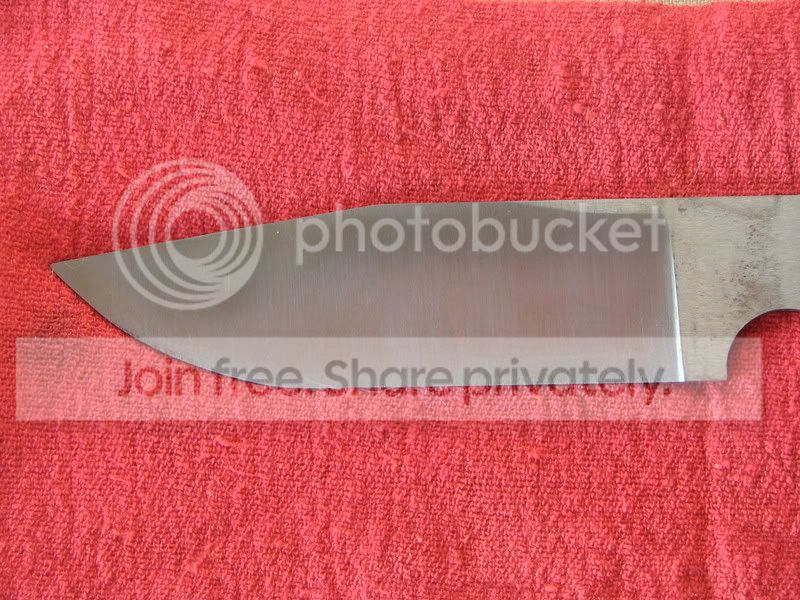
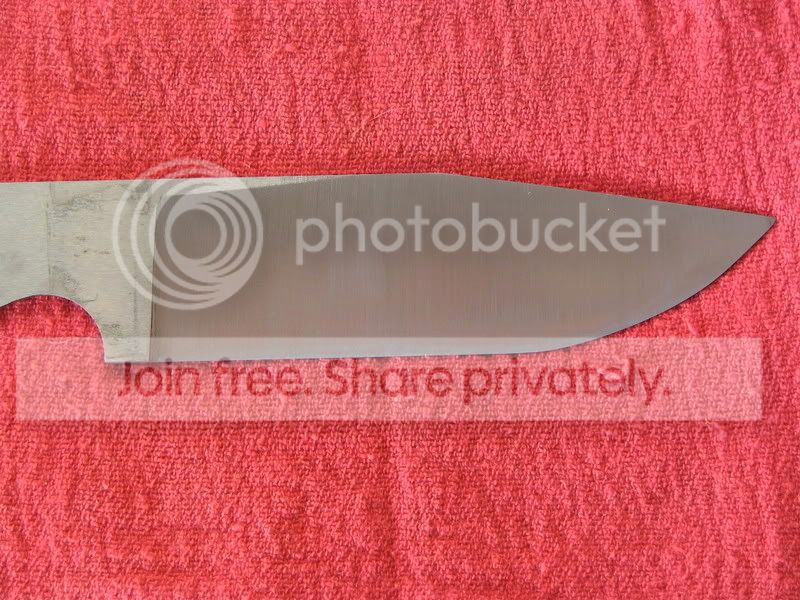
Please help me troubleshoot my terrible grinding

Rather than trying to learn to grind on expensive 'blade' steel, get some inexpensive mild steel and make letter openers for family and friends. The blades would have a dagger kind of shape meaning you would get the experience of 2 blades for the price of 1. There's no heat treating involved. And, if you want, you also get the practice of installing handles. Give away the successes and put the mistakes in the scrap bucket.
It's just a self-learned skill, like oil painting, hitting a golf ball or casting a lure - repetitive practice is the only way to learn.
Good luck -
Jacque
 
Yeah, I dream for the day of a variable speed control...even with step pullies. The Grizzly I'm using is direct drive and the only way to slow it down is to get a smaller drive wheel :(. It runs lightening fast now. I just imagine that maybe when I step up to variable speed, I'll grind like a natural just because of my experience with the Grizz. Starlight, starbright, first star I see tonight....

--nathan
 
Last edited:
Dope! Yeah, my head is full of jello from this sinus infection. Original post edited to correct.

--nathan
 
I picked up some paint sticks at Home Depot during lunch today; I'll give that a try. The letter opener idea is a good one too, although I don't remember mild steel at HD being all that much cheaper than the good stuff, and if I get lucky and grind a really good one...then it's just a letter opener! I'll see if I can get my hands on some cheap scraps to play with.
 
Two suggestions - OK three.

  • The platen on the 2 x 42 is hoplessly soft and flexible. Add a ceramic liner for big improvement.
  • If nobody else will admit it I will. Most of our grinds look like that. :o That's why you see so many knives with a "full to the spine" grind.
  • Knife making isn't about about how good you can make a blade. It's about how well you can fix your screw ups. :thumbup:
Rob!
 
Two suggestions - OK three.
.
[*]Knife making isn't about about how good you can make a blade. It's about how well you can fix your screw ups. :thumbup:
[/LIST]Rob!

You just told all the secrets right there. Next you'll be giving away the secret hand shake.;)
 
Sorry to bring this one back from the dead, but the desert summer heat has finally lifted and I'm getting back into the garage to pick up where I left off in the spring. Here are updated pics of the same blade that I worked on yesterday.

First, I tried draw filing the bevels the rest of the way in and after about an hour of not making much progress it hit me that if I'm going to make knives, I'm going to have to learn to grind better because I won't last long term filing everything.

It continued kind of like the earlier pics were going (maybe a tad better), and then towards the end I felt like I was really getting the feel of it. I'd appreciate any further advice or analysis of the updated pics. I notice that the grind line seems to go uphill, and that where the line curves from vertical to horizontal, there isn't much of a nice curve like the pros seem to get...not sure why on either count. I used a guide to keep the plunge area on track; could that have caused these characteristics?

IMG_1201.jpg


IMG_1202.jpg
 
Looks good to me too! Things will blend a little better when you do the hand sanding.:thumbup:
Mace
 
I spray on blue steel marking fluid and make my grind line, stay below the line. It really helps you concentrate. When you get to the finer grits its harder to make a big mistake.
 
Thanks guys, I guess I'm happy with it if you all think it looks good!

Do you stop short on the grinder when doing a full flat grind and assume hand sanding will take it the rest of the way, or do I need to keep going with one of the belts?
 
Thanks guys, I guess I'm happy with it if you all think it looks good!

Do you stop short on the grinder when doing a full flat grind and assume hand sanding will take it the rest of the way, or do I need to keep going with one of the belts?

You should be good with that grind if you go to hand sanding. I grind with the 2x42 too and that is about what I end up getting to before hand sanding. You'd be surprised how much that will blend when you start hand sanding. I like to go different directions when moving through grits while hand sanding, that way you know you got all of the previous grit scratches out. Also, the more flat and wide your hand sanding tool, the better. Especially when sanding the long ways. That grind looks pretty flat though. If you do end up with low spots from the grinder, you can file them out if they are not too deep. When I end up with a low spot at 2"...which is often, I use the file to even that area out. Keep it up, your grinds are looking much better now.
 
To me one of the biggest hurtles for a person to get over when learning to grind is trying to make a knife. The key is to decide if you want to learn to grind or to try to make a knife. The paint sticks and mild steel are great for learning to grind because you are learning to control the metal and the grinder and know that you are not trying to make a knife. It gives you the freedom to try to straighten out a grind without having to worry about where the edge is, how thick the blade is or the plunge cut. Learning the control necessary to straighten one out will give you the ability to grind one without screwing it up to start with. If you spend some time doing deliberate grinds on scrap that you have no intention of making anything out of, you will be amazed at what you can do when you try out a design on some good steel.

One other thing about grinding is that it will feel more natural to grind one side of the blade than the other. Start on the weak side first. Once you have developed some skill with your weak hand the strong hand will be much easier. If you start the other way, the weak side will be murder.
 
PJ,

Maybe it isn't obvious so I'll say it. The spine and edge are parallel, or nearly. The only way for the grind to not reach the top near the ricasso is for the grind angle to be steeper there, so the grind has a twist in it. You may also have a hump there running top to bottom.

A thing that I learn a lot from is putting marker or dykem on the blade, and either grinding a pass, or carefully and lightly placing the blade on the belt, flat and parallel, in one spot, or placing an area of the blade I'm wondering about on the belt with the machine off and dragging it down the platen an inch.

If I need to be really exact for part of the grind (last little bit of the plunge cut, for example), I hold the blade with thumbs and fore fingers or thumbs and first two and get the other fingers on the back corners, edges of the platen/platen frame for steadiness. That is what I do if I find a top to bottom hump at the ricasso.

Mike
 
According to the box it came in, the Craftsman spins at 4400 FPM. Unfortunately a better grinder isn't going to be in the cards for me for quite some time.

I like the idea of a push stick, but wouldn't this make it even harder to feel that the blade is flat against the platen? I suppose I should just give it a try and see what it feels like.

Thanks again to all!

======<br>
..a cheap way to slow down an AC motor is to use an electrical dimmer.. ..mind the wattage and cooling tho.
 
======<br>
..a cheap way to slow down an AC motor is to use an electrical dimmer.. ..mind the wattage and cooling tho.

A person can rob variable speed controllers out of wood working tools of higher HP, too... like routers. There are certain problems with torque and other things in doing this, I've heard. Me, I don't know enough to know.

Mike
 
Back
Top