Delta 3V is not tougher than standard 3V. Or at least I don't claim it to be. It is more durable. It seems tougher, to the user, because it stays sharp in rough use but the actual fracture impact toughness is largely baked in. That was actually the original reason I started doing the videos, it was to demonstrate I hadn't ruined that feature. I did not improve the toughness of 3V with my heat treat, I improve the durability of it in rough use. That toughness is baked in, unless you really screw it up. It is possible it might develop higher (3 point) bend fracture toughness, but I have not established that.
The abrasive wear resistance is also baked in.
My knives stay sharper longer because of edge stability. A concept a lot of makers don't comprehend or having a meaningful way to test for and develop.
CPM 3V is extraordinarily tough for steel at this hardness.
It's nowhere near as tough as mild steel. Which is basically like taffy. Meaning, the energy absorbed in a fracture impact, typically measured with a swinging pendulum.
I very strongly believe that it is the best 3V available in the market, and in my opinion, the best steel for a general purpose and hard use knife in the world. But, ultimately, at the end of the day, it is steel, not a magical material, and under the right circumstances anything can be made to break. I'm pretty sure I could duplicate this experiment with other knife steels and you might be surprised at how poorly a lot of popular materials would perform in this application.
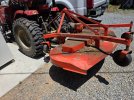
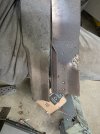
I think it was metal fatigue that did it in. Which is why we don't use these materials on aircraft landing gear. Millions of flexes and impacts per mow. I don't think this is a failure mode a typical user will encounter. In retrospect I probably should not have shown this because it's going to cause some confusion with people. This is a fringe use case.