Review my CA plan.

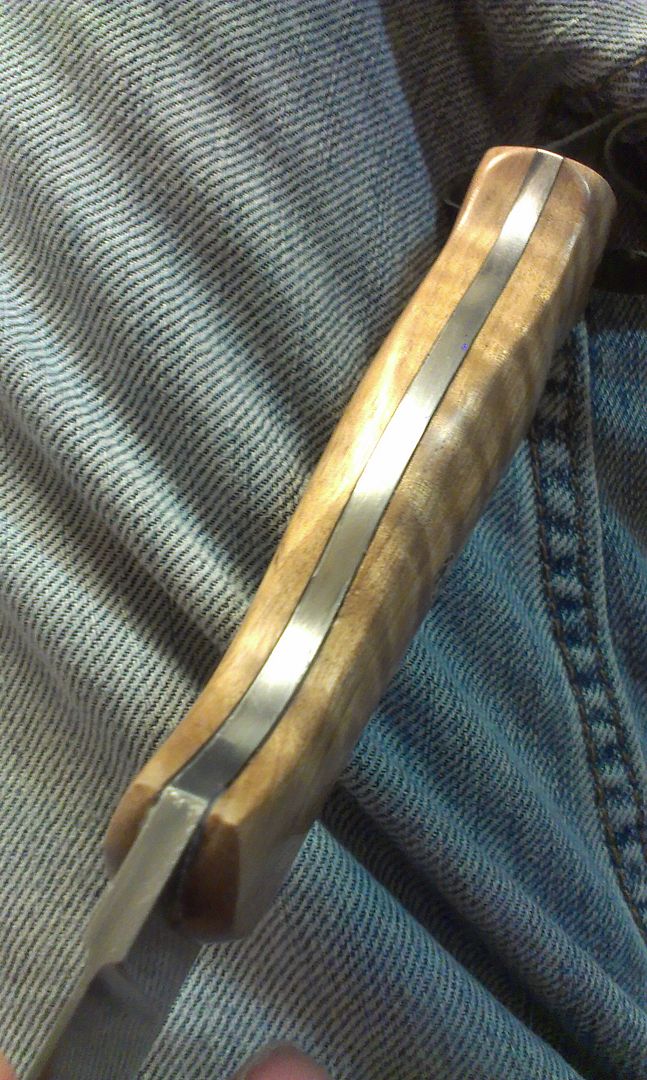
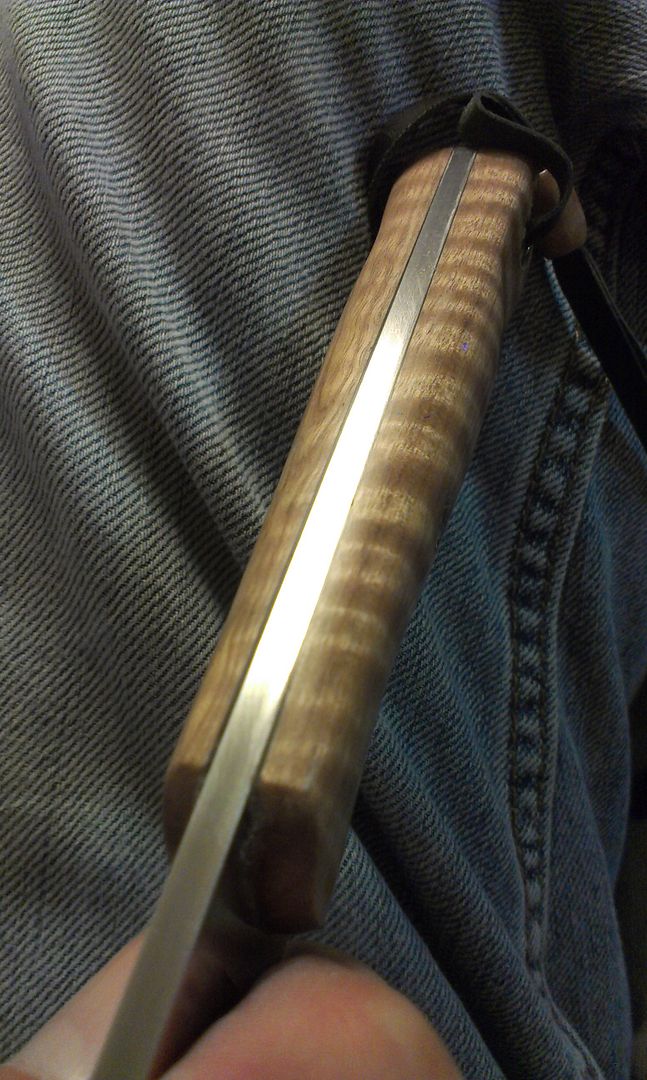
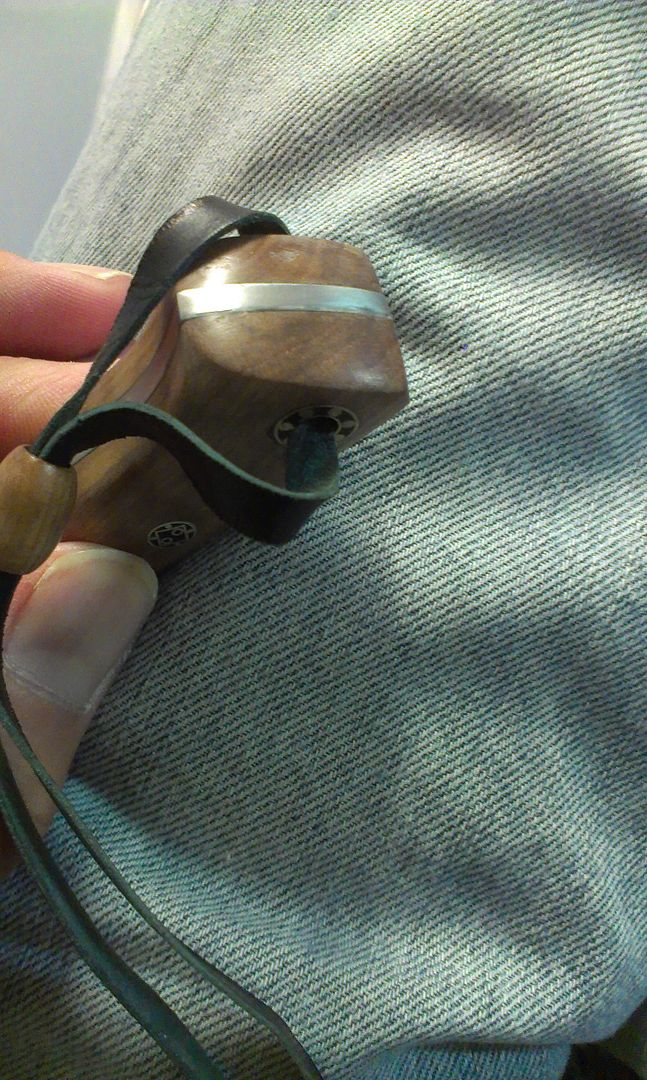
The best way to prevent those gaps in the future is to ensure that you are joining flat faces to each other. It could be uneven clamping pressure, but I bet the scales weren't quite flat on the glue side; this creates a tendency for the scale to rock in one direction or the other. I would also reconsider trying to chisel out the epoxy from those gaps. The epoxy on the scales should release if you heat it in an oven. You can do a search around BF for your brand of epoxy and probably find a good temperature to try. Then just sand everything flat and try again.
 
The thought of removing the scales did occur to me... The problem is that I did a *very* good job of making sure they weren't going anywhere, used every trick that I came across. Even if I got the epoxy to release in all of the holes, divots and grinds in the pins and lanyard tube, it might compromise the epoxy in the mosaics.

On one hand, I want to do it simply as a demonstration to myself that the effort is worth while, but in truth, I barely have enough time to do what is still left. I've got some other things that need done. In the end I feel that the flaws are acceptable for now. In fact, one of the things that I've learned doing this project that I value most is that I know I can go back and tweek the ergonomics or do a full re-handle any time I want, after all, I'm the one that made these. :) :proud:

After this is all done I'll be working on making some wood carving knives (for my friends) from 1084. I just need to get some of the supplies then I'll have a whole new set of questions for you guys to answer. ;)
 
If you do choose to chisel out the epoxy gaps, I would use thinly wedged slivers of the original handle wood to fill them. Cover these shims in glue and gently tap them in. This will be far harder to detect than an epoxy-sawdust mix, because the filler goop usually turns out a shade darker than the original wood and lacks any grain. That said, I know I would have a really hard time chiseling out those gaps without nicking or scratching the spine of the knife. If you don;t plan on selling it, I would use as is. Good Job, otherwise.:thumbup:
 
Oh hey, thank you. :)

I didn't realize that you were looking at the pics I posted in reference to the problems I mentioned. On the spine there it's a little misleading because I hadn't yet sanded all the way to the steel. It may not actually be as bad as it looks, but obviously there are issues.

Anyway, I still have a long way to go since the blade itself will require a full regrind to satisfy my personal objective (which is an acute edge) and being d2 it'll probably take some doing.

I'll be sure and post pics in this thread once I'm done.

Edit- oh yeah, I forgot to mention. I actually won this blade in a giveaway thread. I have no plans to sell it. I'll probably never sell anything I make unless it's perfect. This was an exercise in fun. It may get frustrating yet, but I'm not taking it too seriously. I'm just happy to have another knife for carving wood.
 
Last edited:
Thanks for your help guys, especially Stacy, and AKS. Your posts were very helpful.

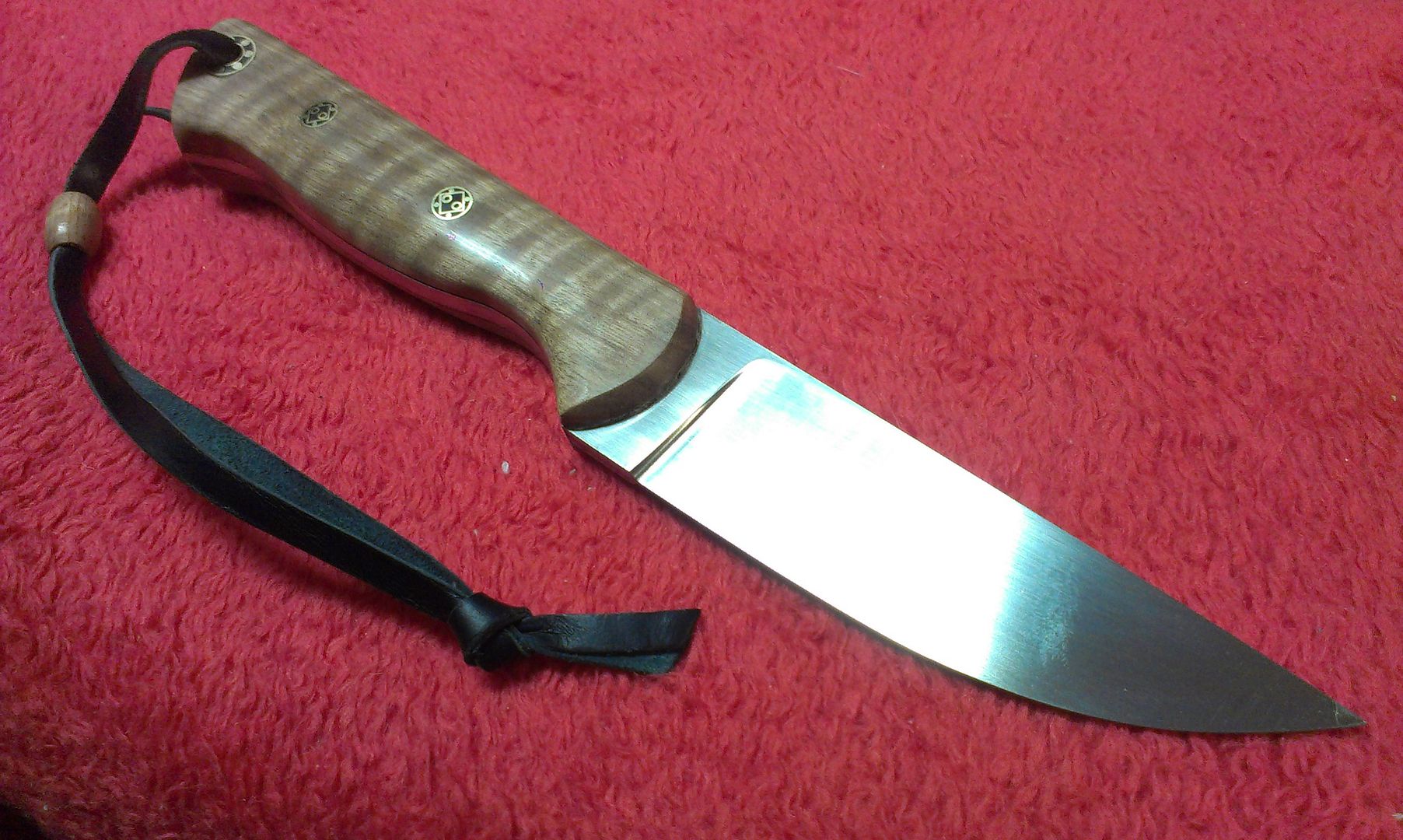
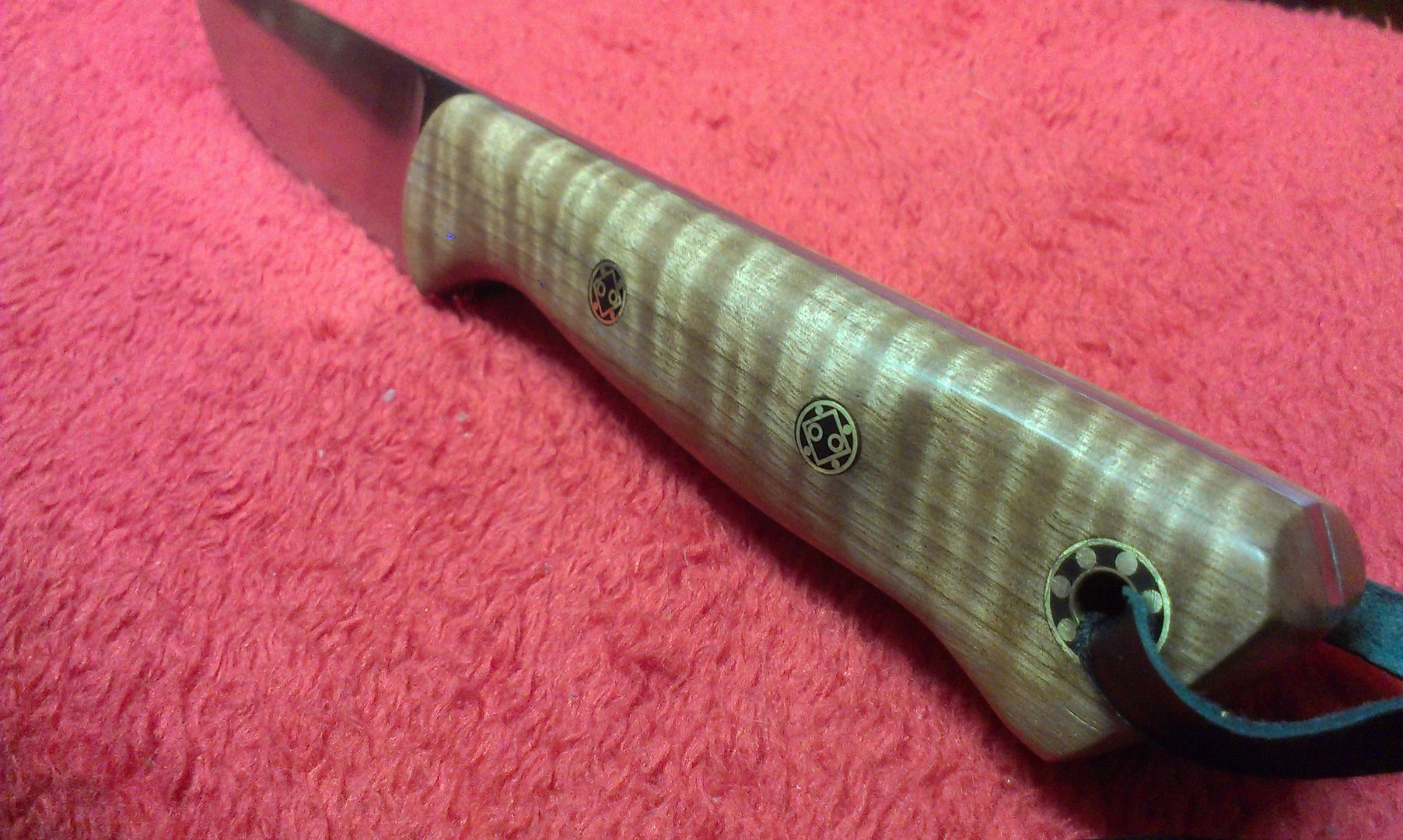
I tried sanding to 1000 grit then a polish, but I didn't care for the results. Decided to try the CA and I'm very pleased.

I took a few super crappy, fluorescent light pics and they really do the finish a disservice, but here they are anyway.

IMAG1529_zps5ec9ff73.jpg


IMAG1534_zpsefe42da0.jpg


IMAG1538_zpsb54932b0.jpg


IMAG1540_zpsb3c9ce3f.jpg


The bookmatched end grain is lovely in person, not so much in this pic. :(

IMAG1541_zpsb9b789f1.jpg


Is it perfect? Nope. Do I care? Nope. :)

The knife will be a user and is the first thing I've worked on in, oh 8 years or so.

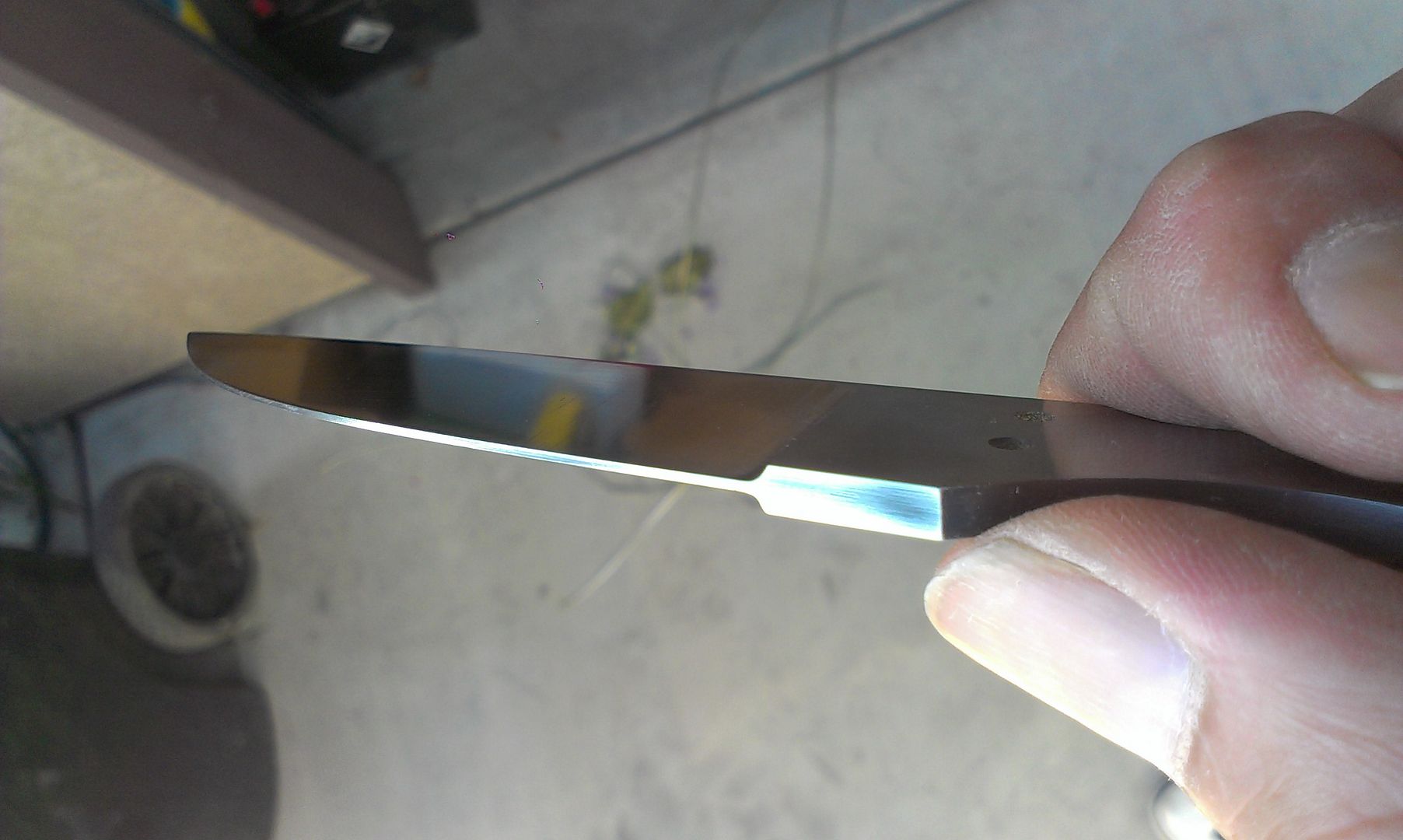
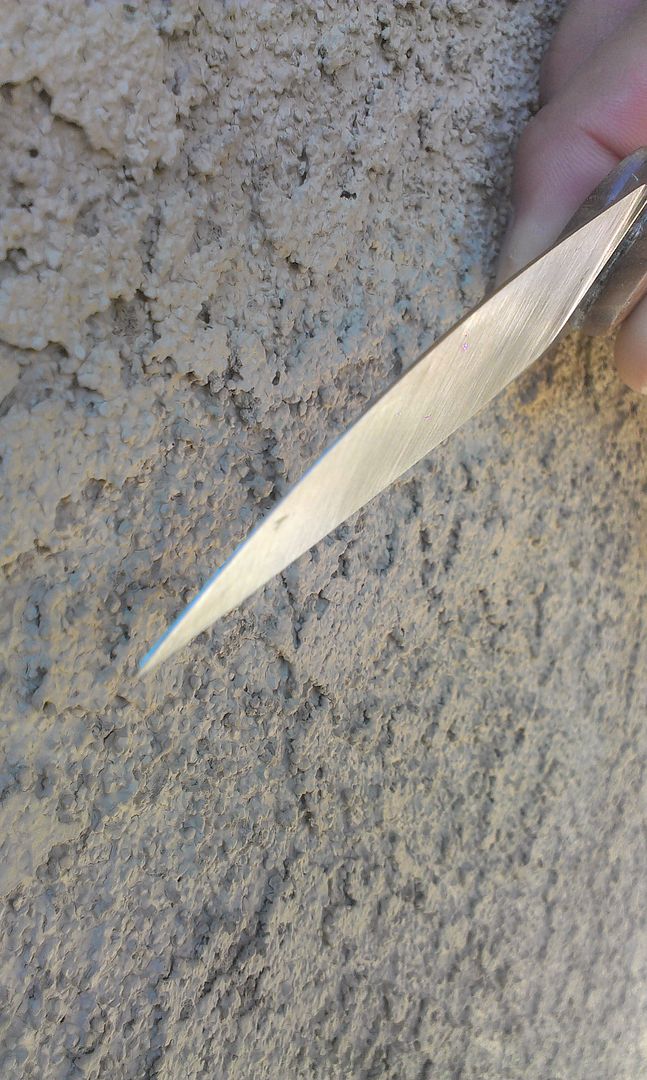
Next I need to regrind the blade. It's too obtuse to put an edge on, especially since I'll be carving with it.

The plan is to cut a 60-80 grit 2" AlumOx belt and strap it down to a steel bar, then go at it. That is, unless you guys have some advice? I'd love to hear an alternative!
 
It looks like your finish came out pretty darn good to me.

Thanks, I'm very happy with it. I may go back and do more to try to build the shine but it really *feels* good like it is. The finish is great, the errors are things that don't matter unless you look closely.

Now I'm trying to completely regrind the blade by hand. It's going very slowly being d2, but that's okay. :)
 
Wrap the handle in a paper towel, and wrap that in several layers of tape before starting to regrind the blade. That should have been done before the handle was installed, but "C'est la vie".
I would suggest using a coarse diamond plate or a coarse water stone to take down the bevel by hand. Sandpaper on a bar will work, but you will only get a few strokes before having to change the paper.
Question - Why aren't you using the grinder to take down the blade? If ground quickly, and dipped every pass, it should be OK. A new 120 grit blue zirconium belt will cut it is a few passes.
 
Wrap the handle in a paper towel, and wrap that in several layers of tape before starting to regrind the blade. That should have been done before the handle was installed, but "C'est la vie".
I would suggest using a coarse diamond plate or a coarse water stone to take down the bevel by hand. Sandpaper on a bar will work, but you will only get a few strokes before having to change the paper.
Question - Why aren't you using the grinder to take down the blade? If ground quickly, and dipped every pass, it should be OK. A new 120 grit blue zirconium belt will cut it is a few passes.

I didn't have a strategy for doing this before I mounted the scales. Even so, I'm glad they are on because it would be painful without the comfortable handle.

Actually, I originally planned to put a bevel on it and be done with it, but someone pointed out that the edge was too thick to begin with, and I realized that I'd have a fairly obtuse edge. I can't stand wide bevel edges, preferring every one that I own to be as acute as is reasonable for my chosen tasks and cutting media. In this case the knife will be used for carving wood and other relatively easy tasks.

I've re ground several blades by hand, the latest being a GEC whittler. I'm confident doing it this way and I have inadvertently destroyed a new knife on the grinder in the past (granted, I was drinking back then and much younger/impatient).

I've actually moved from the belt to a coarse diamond plate now and things are going well, if a bit slow. :)
 
On a knife like yours you want the edge to be about .005" when done sanding. I usually describe this as "almost sharp". That will give you just enough to sharpen the edge.
 
On a knife like yours you want the edge to be about .005" when done sanding. I usually describe this as "almost sharp". That will give you just enough to sharpen the edge.

Excellent. I have been wondering how far to take it before doing a final bevel. I don't actually have tools to measure the edge with, but your description of "almost sharp" explains it well.

It's funny, the spine (stock) didn't seem very thick when I got the knife, but it seems to be looking thicker and thicker as time goes by. ;) For the size of the knife it actually is fairly thick. I'll go look up stats because I'm curious now.
 
Hmm... Doesn't say on his site. It just says-

"The blade is 3½ inches, 8 ½ inches overall. Spine is straight."

Anyway, I'd say it's definitely thicker than 1/8". I guess you could make a guess by looking at the ricosso by the edge in the pic. It's a pretty stout knife for its size, and definitely has some heft too. I really like the design (although I'd prefer a sharpening choil), but I'll reserve judgment until I can use the thing.
 
Back
Top