- Joined
- Mar 1, 2010
- Messages
- 674
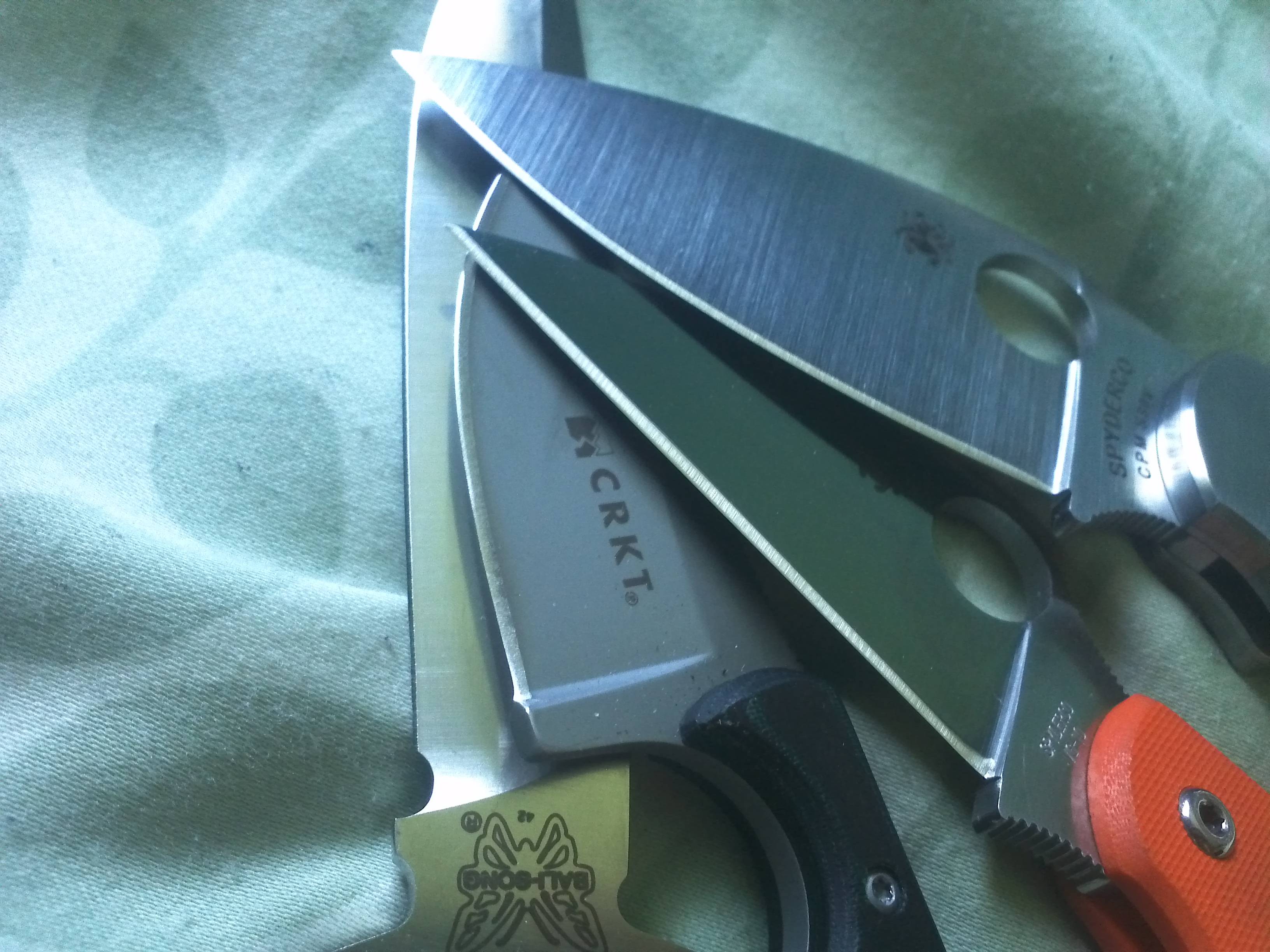
Every so often, I get a knife from a manufacturer (partial to Bussekins, ZT, and the like; all very reputable makers) that ships with an edge that is barely useable. I noticed that these edges to be somewhere around 40 degrees per side by rough estimate. This isn't a problem for people with Edge Pros or other very high quality sharpeners, but in my particular case, I'm stuck with a Lansky diamond hone set. It works very well for regular sharpening of smaller knives (~4" or less), but it's terrible for re-profiling. Ideally, I'd like to have my Scrapyard 511 around 30 degrees inclusive, but I'd spend the rest of the summer trying to get it there. As a result, I have to settle for shaving it down to 60 inclusive and not take full advantage of SR-101's ridiculous sharpenability. I'd love to get something better suited for the job, but it's just not in the cards right now.
Is there a reason why most manufacturers put such steep angles on blades from the factory? Or does it just depend on the person sharpening in the factory? I understand that it takes less time per knife and technically makes the edge more durable (thus freeing them from liability of people who abuse blades), but it's not a knife if you can't cut anything with it. In short, shouldn't a knife ship from the factory with ideal, or at least functional cutting geometry?
Is there a reason why most manufacturers put such steep angles on blades from the factory? Or does it just depend on the person sharpening in the factory? I understand that it takes less time per knife and technically makes the edge more durable (thus freeing them from liability of people who abuse blades), but it's not a knife if you can't cut anything with it. In short, shouldn't a knife ship from the factory with ideal, or at least functional cutting geometry?