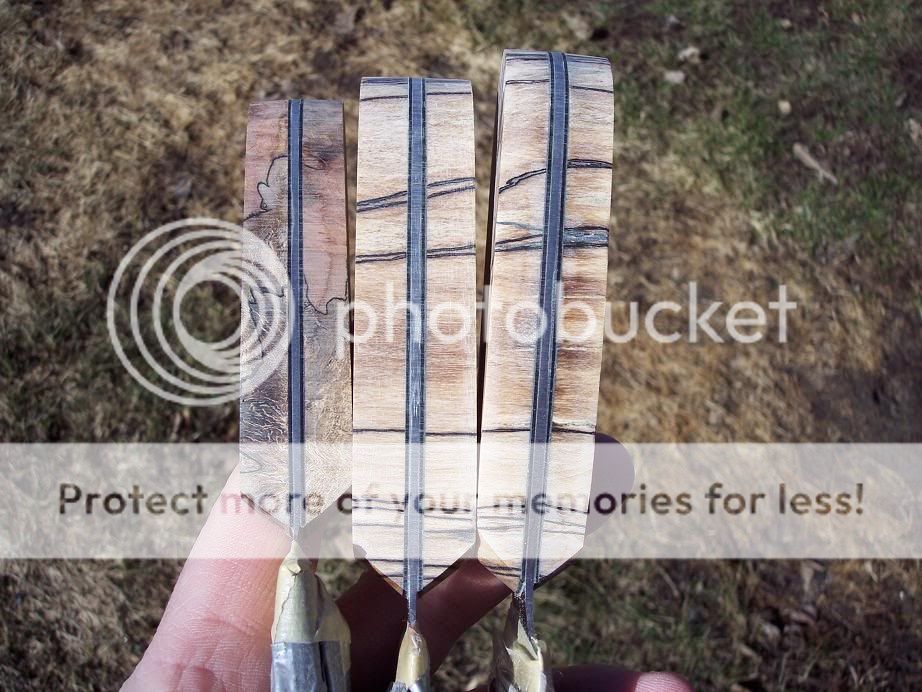
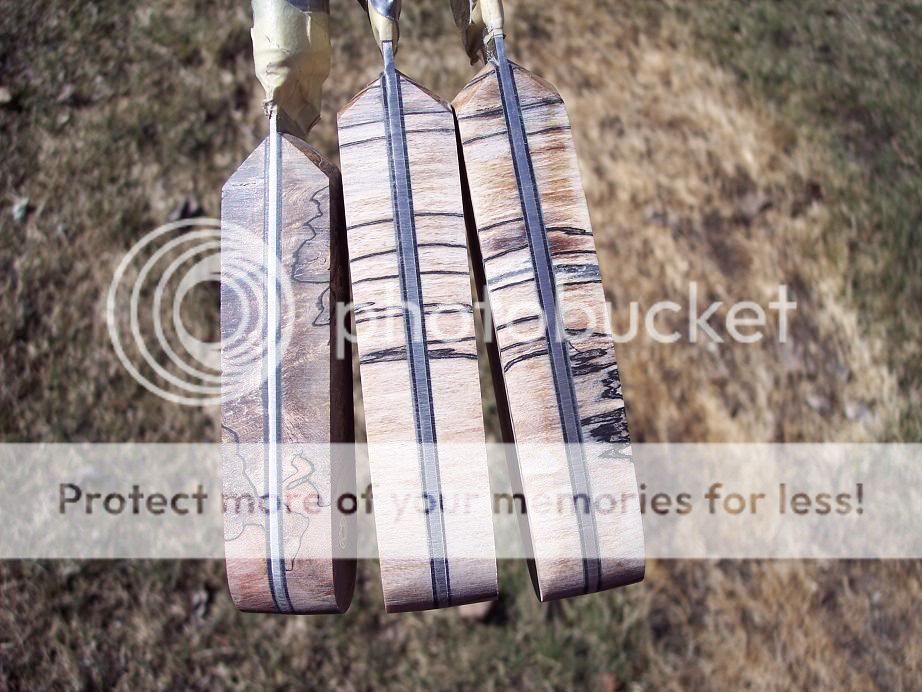
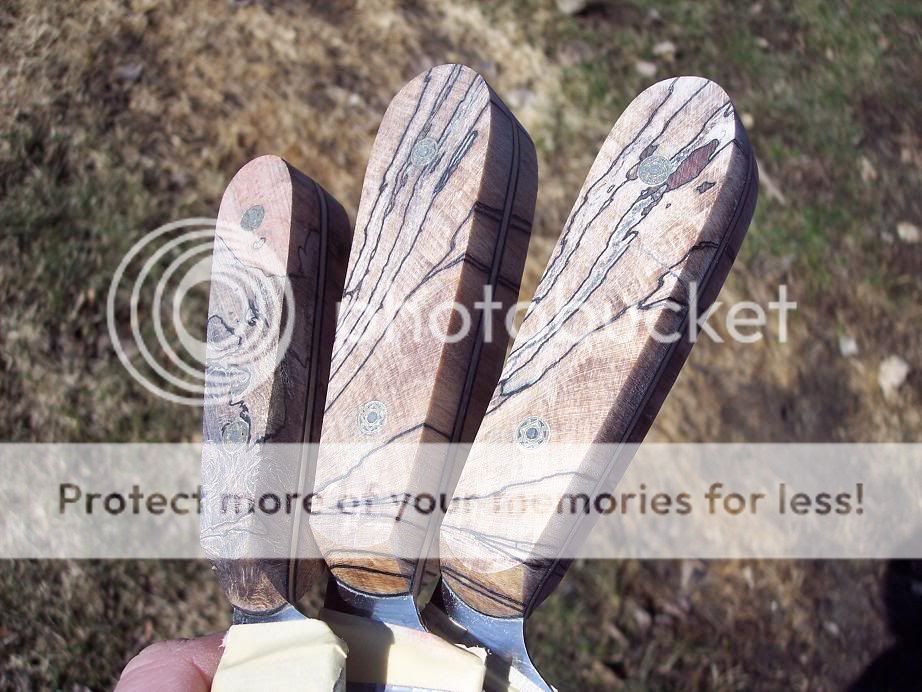
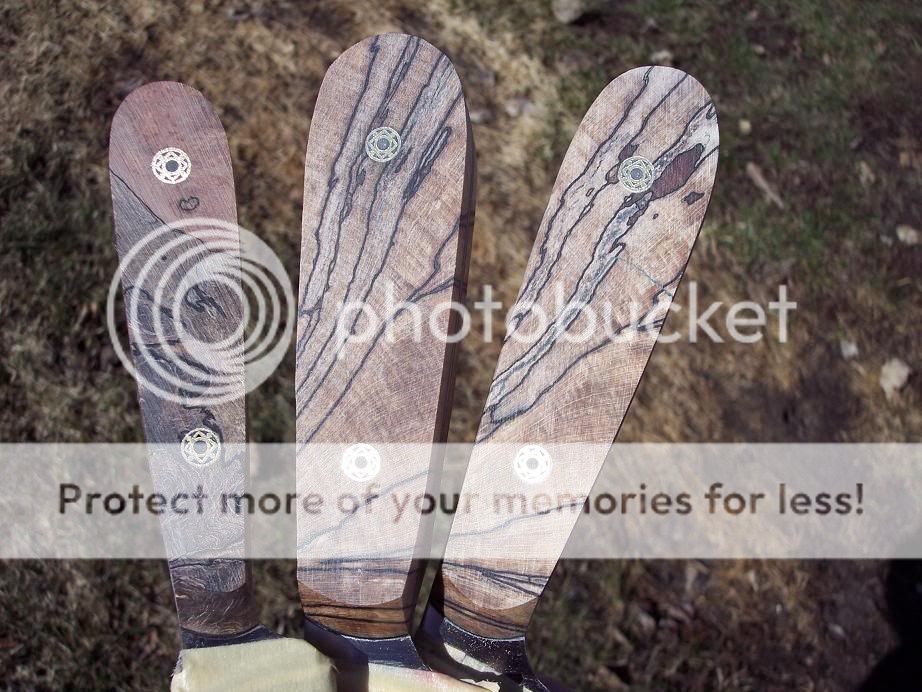
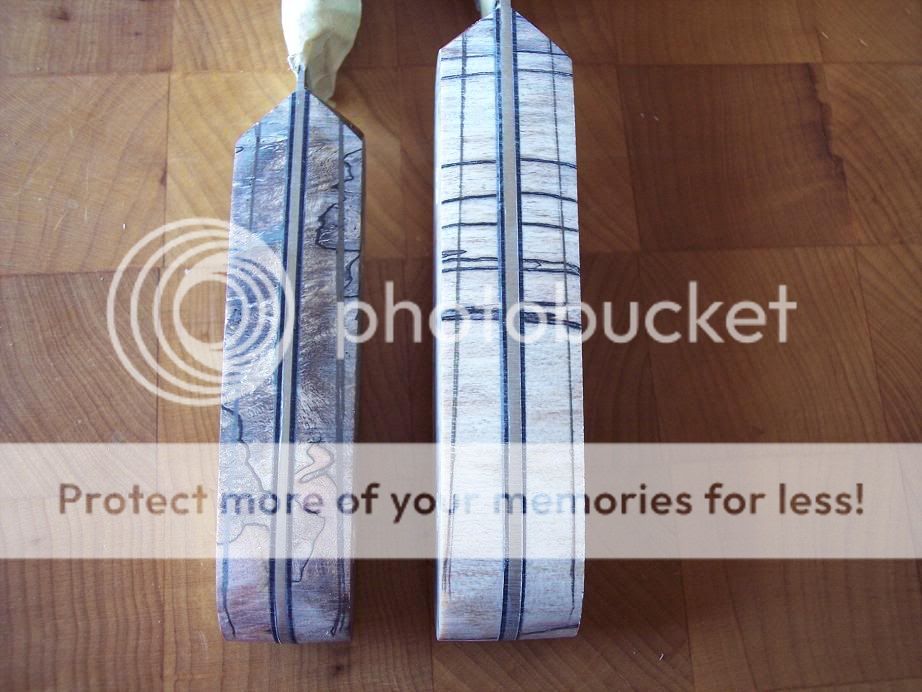
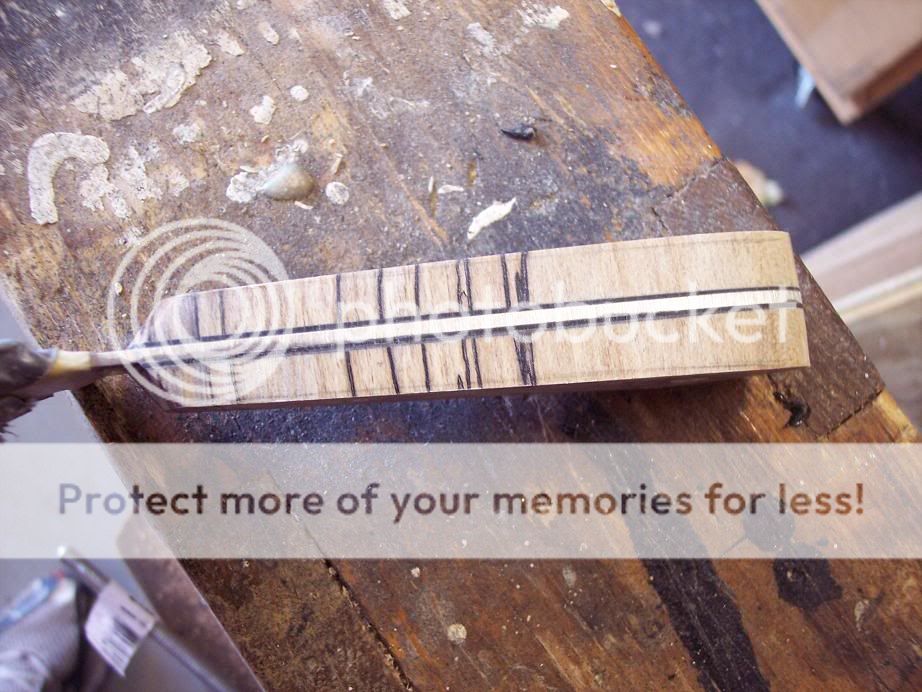
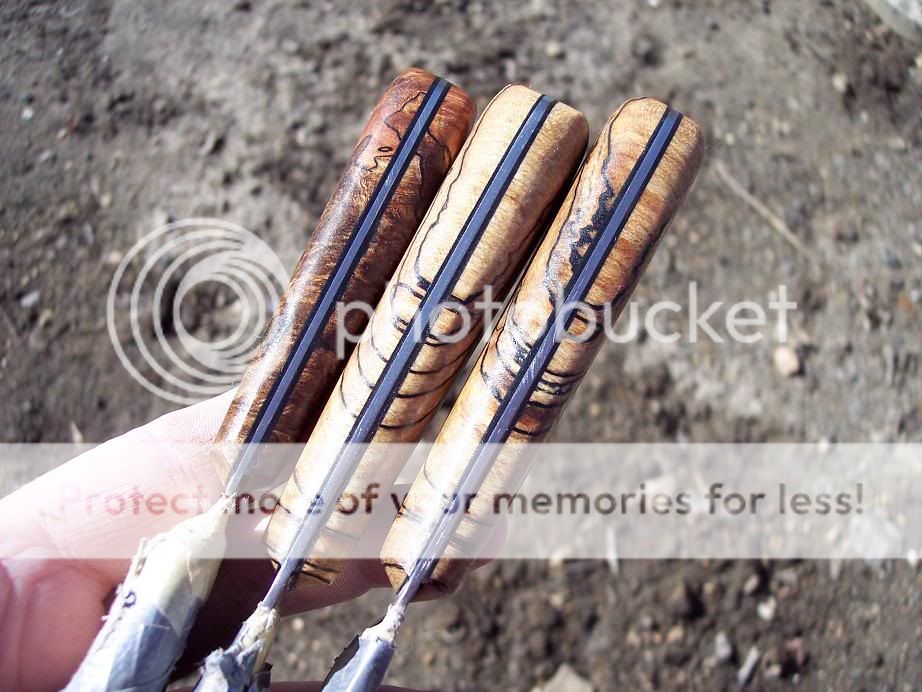
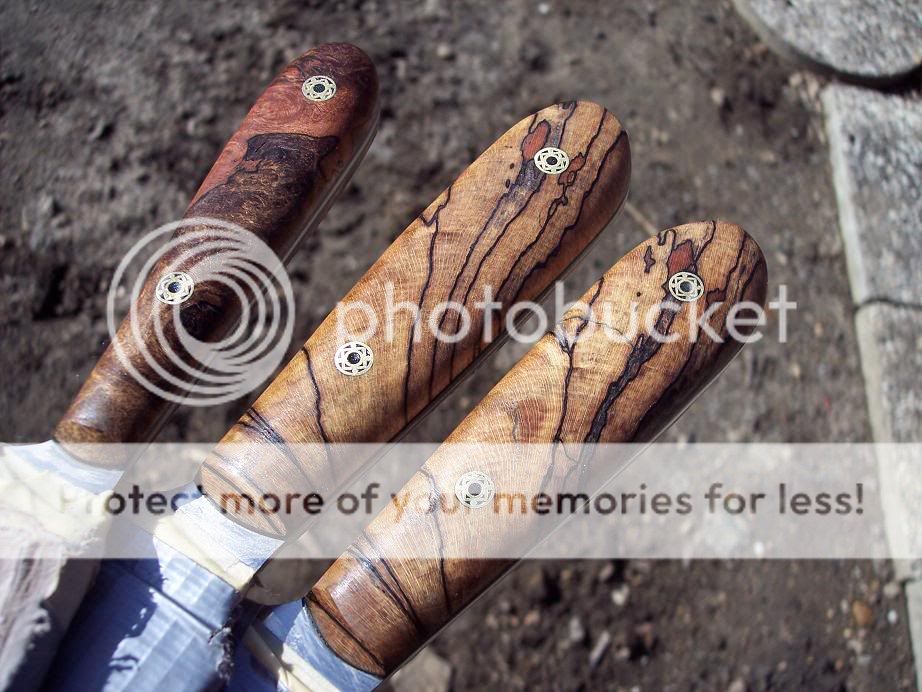
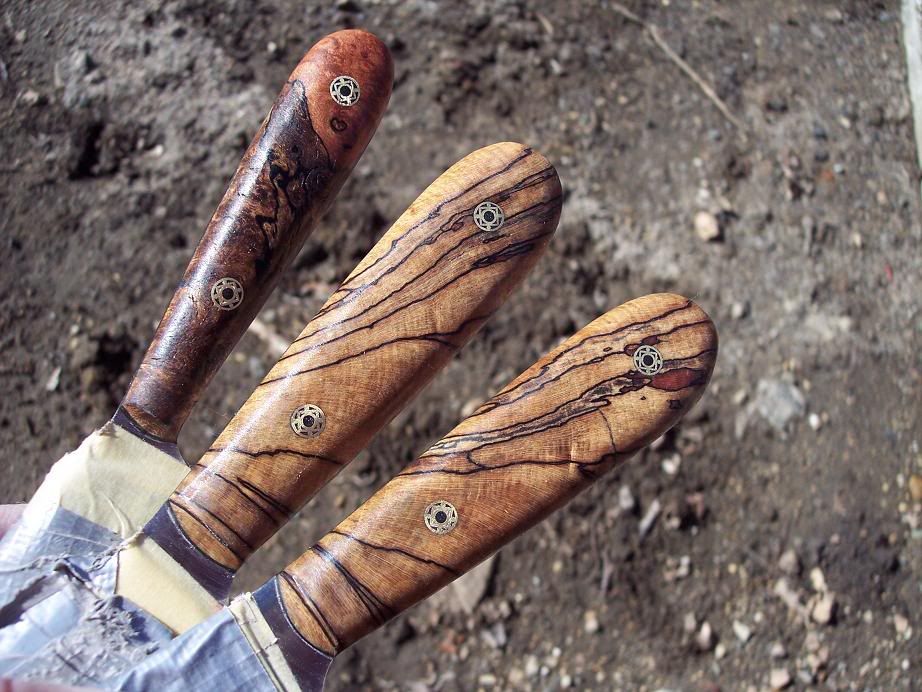
Scales WIP -

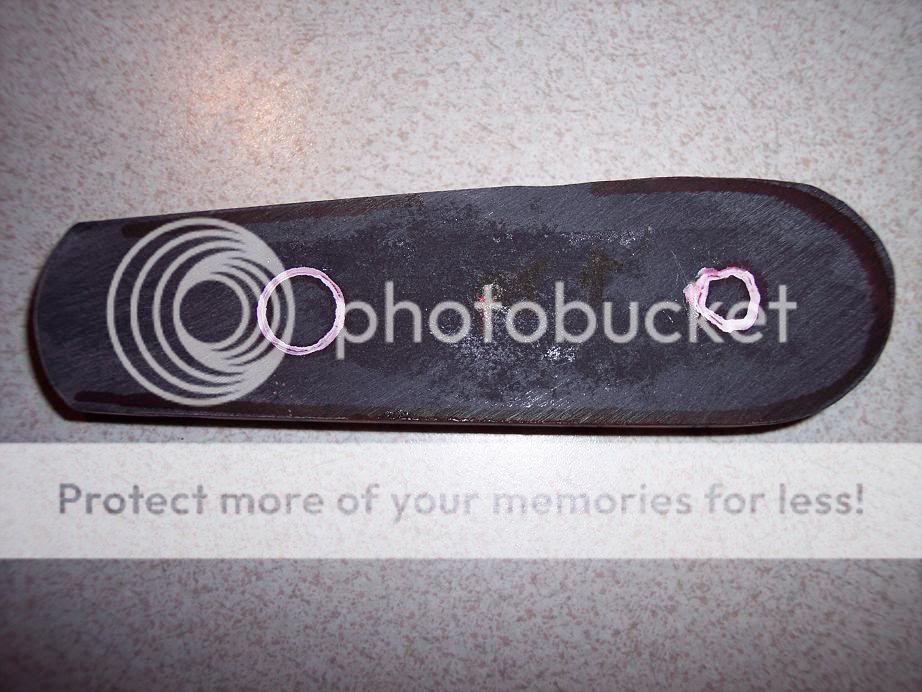
The next step in this process is to mark where the holes are and to outline the blade tang again on the liner this time. A clamp helps to hold the blade in place as you trace the holes and the blade handle.

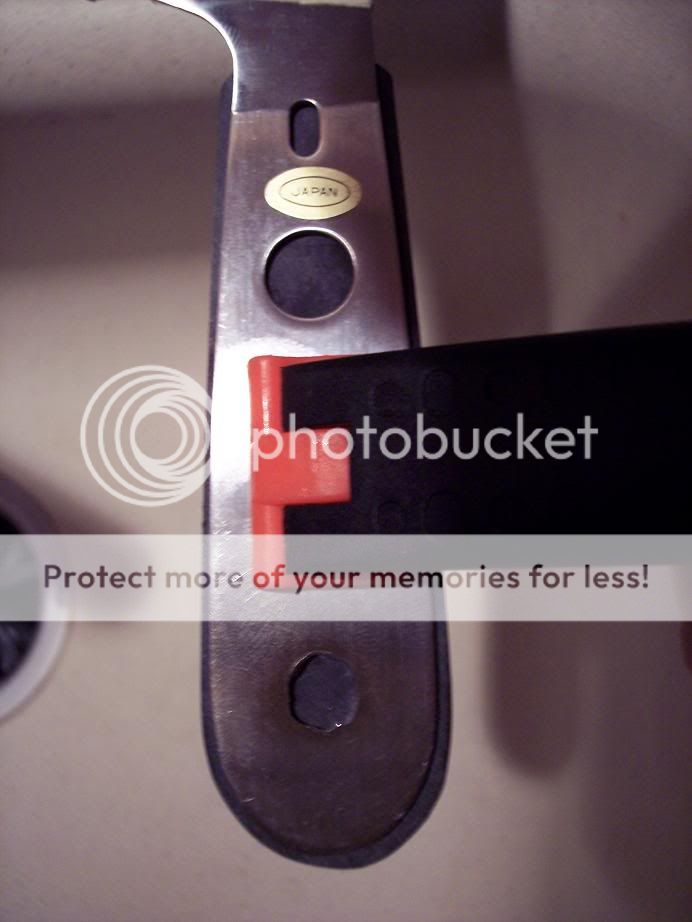
mark1.jpg

mark2.jpg

mark3.jpg


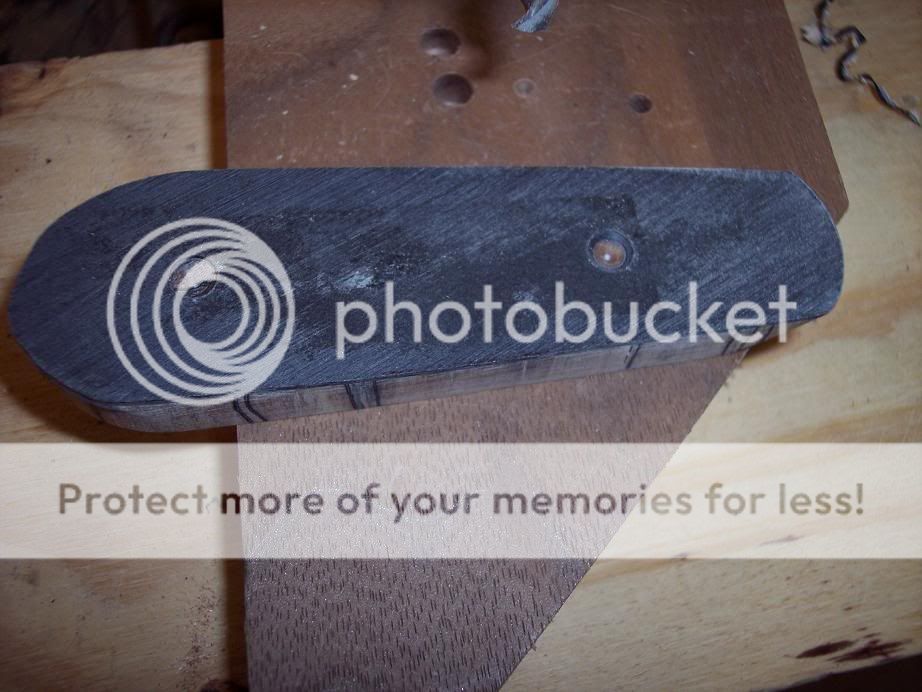
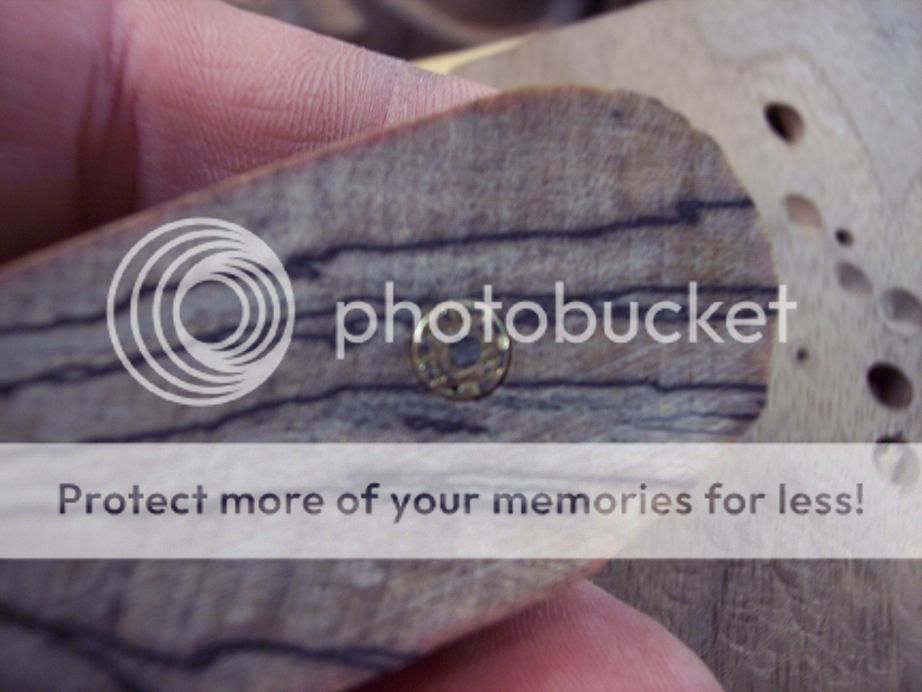
The next step is to drill your holes for your pins thru the mark scale. Always double check your drill bit size in a scrap piece of wood... Then you need to clamp the scales together making sure the front is lined up, and drill thru the holes you just made and into the other scale just a bit to mark it. Then you will drill completely thru the scale making a nice clean hole. The pins will be tight so you need to PATIENTLY and slowly use a needle file to clean the pin holes until the pin slides thru the hole, but is still snug. Check your fit....
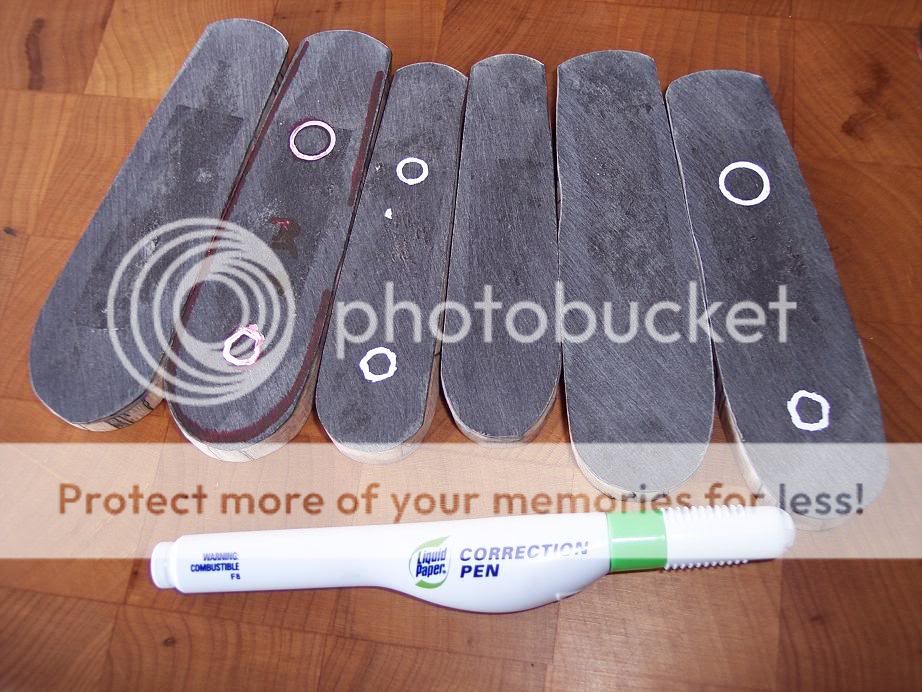
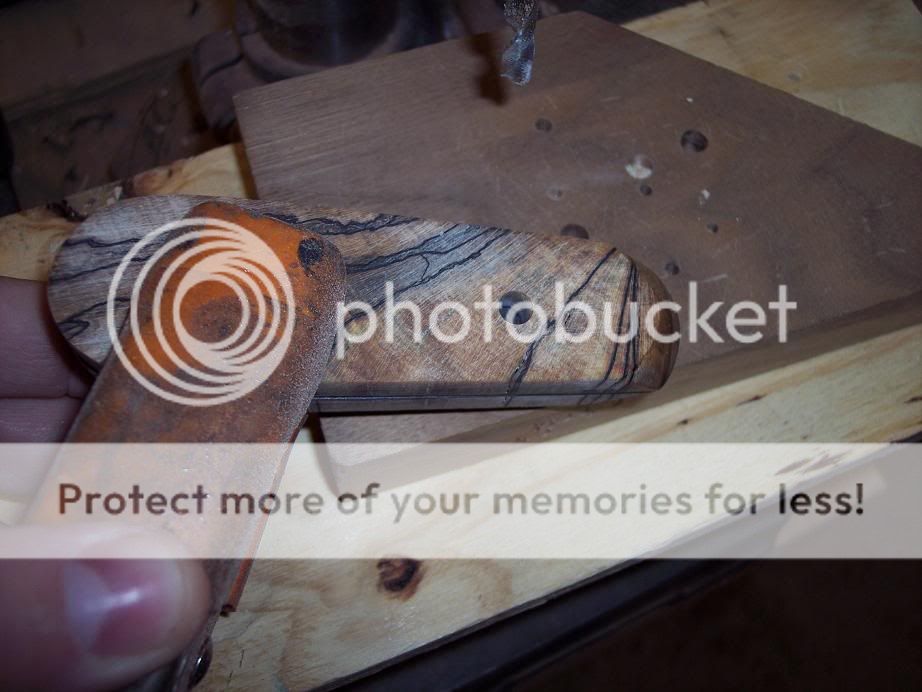
mark4.jpg

hole1.jpg

hole2.jpg

pinfit.jpg


The next thing I do is makes some dimples on the back of each scale for the epoxy to go. I think this is well worth the effort. Stay away from the edges.....
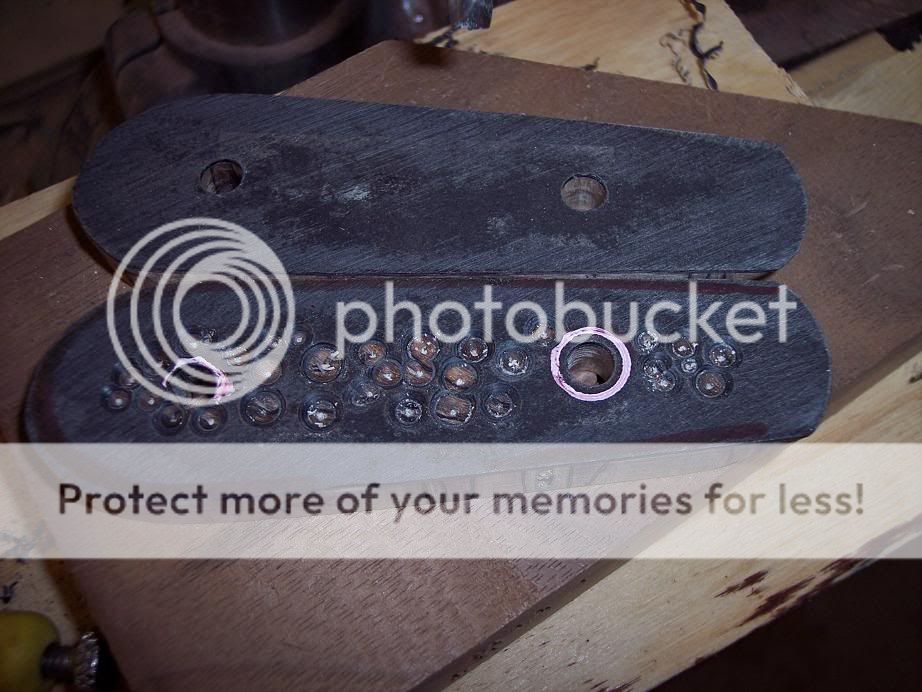
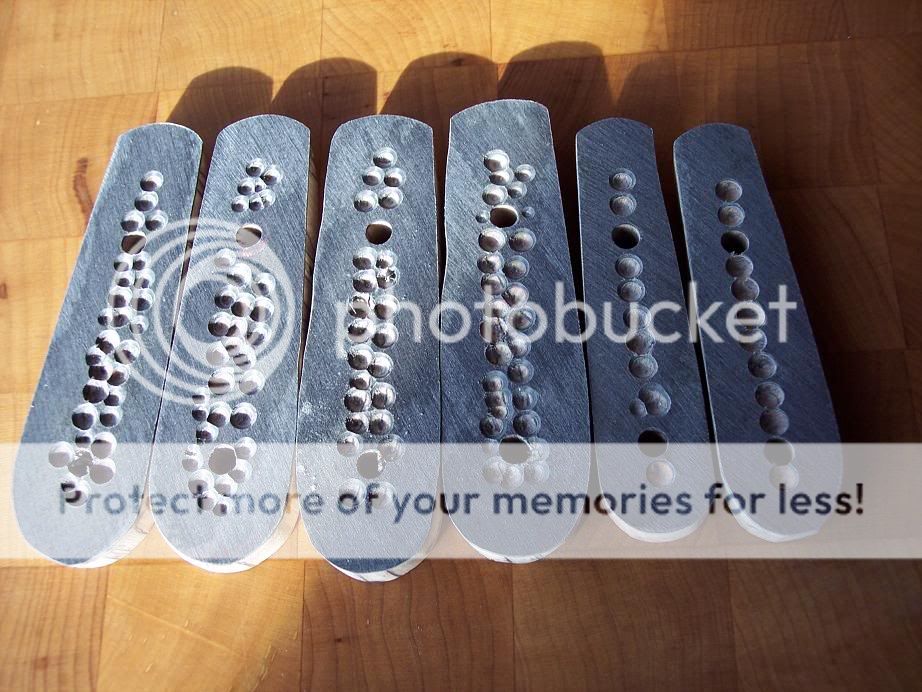
dimples.jpg

eopxyready.jpg


You also want to scuff up the handles and remove the sticker on the tang, and then wide the scale liners and tang off with acetone prior to glue up.
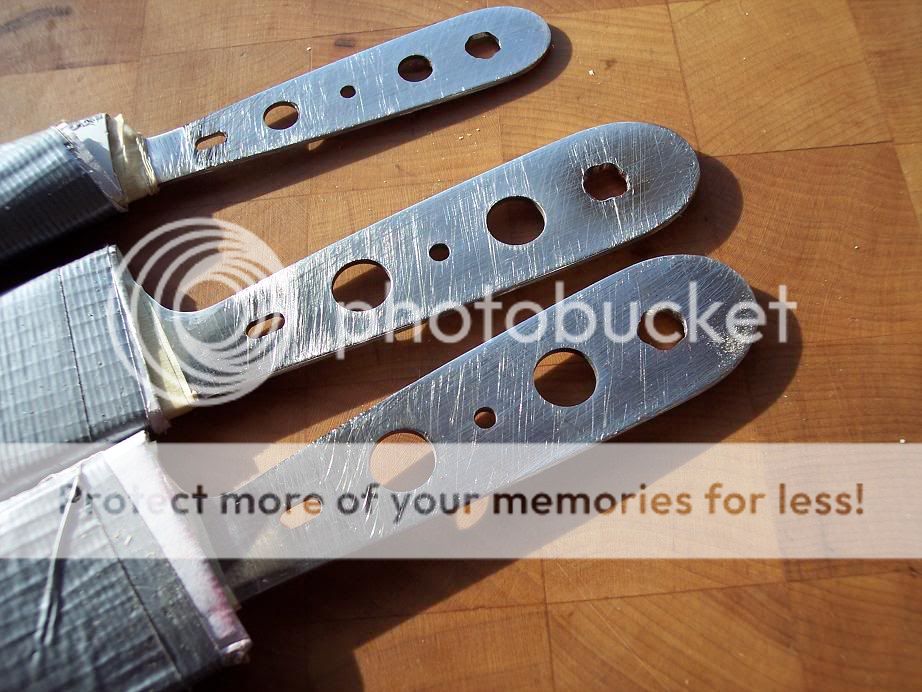
roughtang.jpg


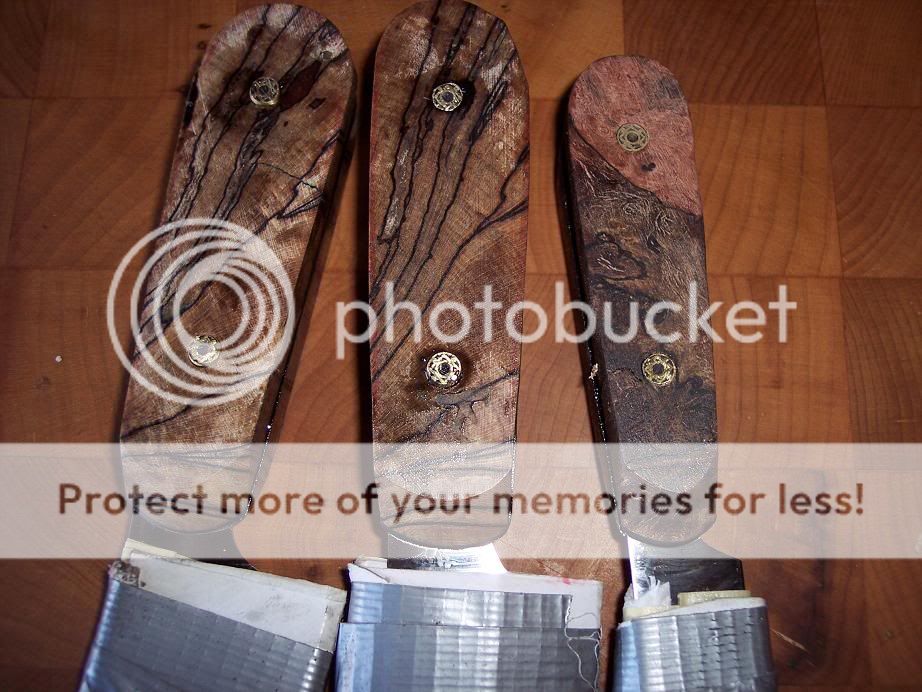
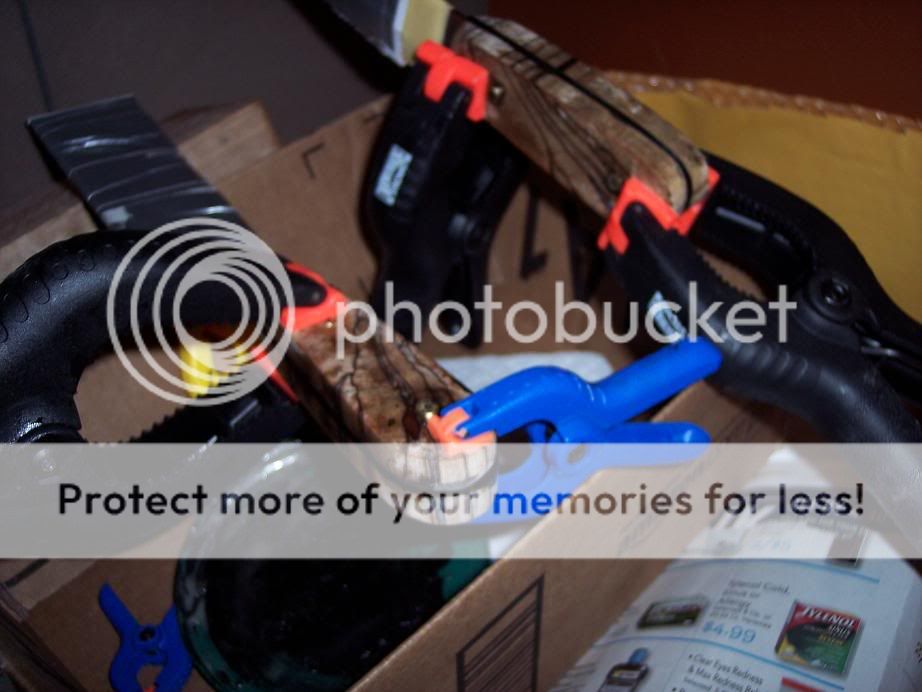
Here you have one side of the scales with pins in and they have been turned to match each other, and your now ready for epoxy. Again I use the plastic butter knife to trowel on the epoxy filling the dimples and then clamping the scales in place.
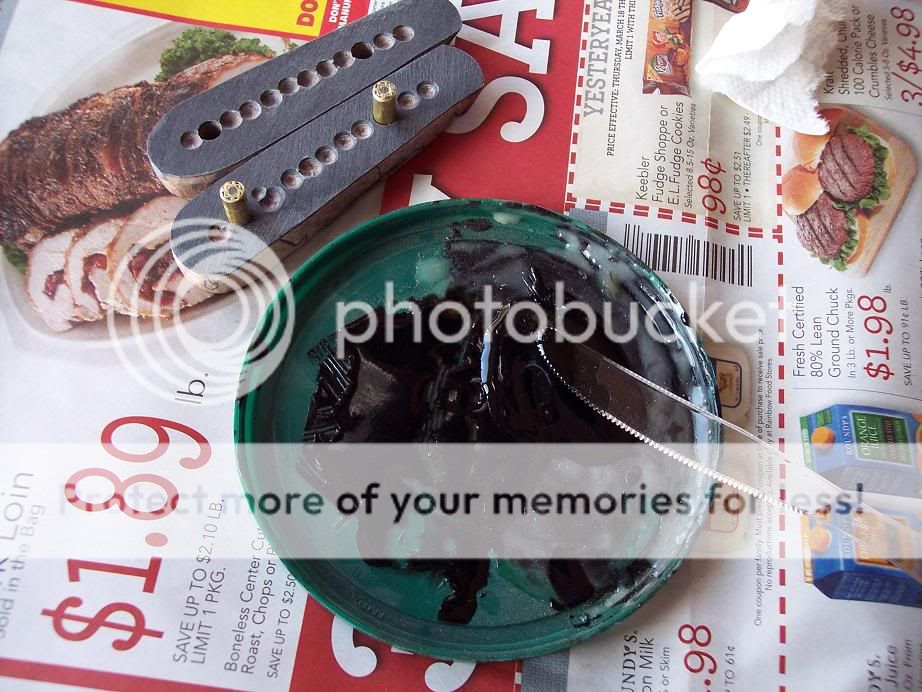
eopxying.jpg

clamped.jpg


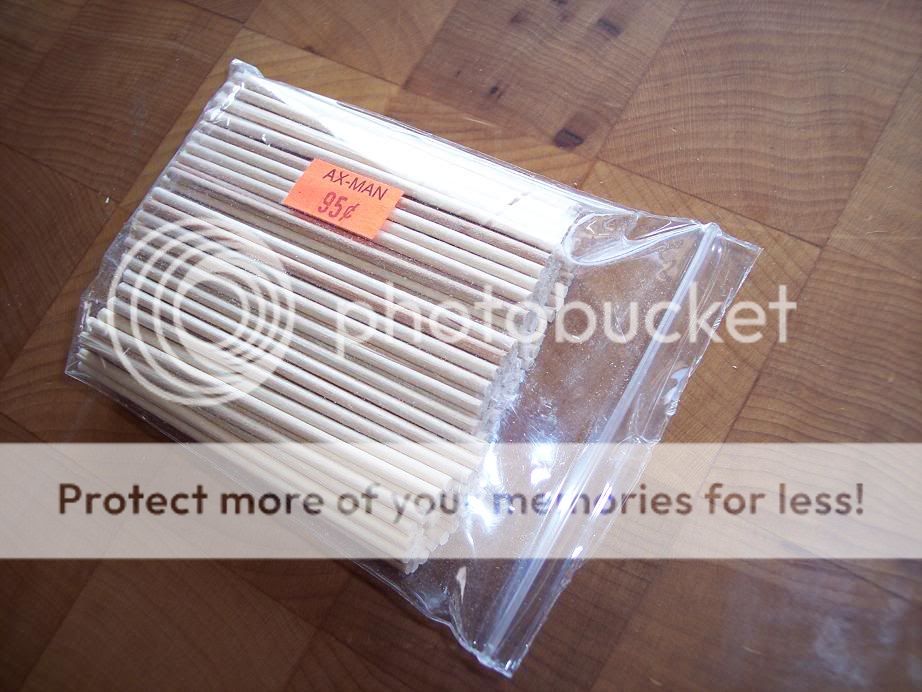
The last thing I do is use these little sticks with some papertowel soaked in acetone to clean up the epoxy that squeezed out in front by the finished bolster area. These I picked up at Ax man surplus...great store for surplus junk.
sticks.jpg
 
Last edited:
Thank you! Thank you! Thank you! Thank you! Thank you! Thank you! Thank you! Thank you! Thank you! Thank you! Thank you! Thank you! Thank you! Thank you! Thank you! Thank you! Thank you! Thank you! Thank you! Thank you! Thank you! Thank you! Thank you! Thank you! Thank you! Thank you! Thank you! Thank you! Thank you! Thank you! Thank you! Thank you! Thank you! Thank you! Thank you! Thank you! Thank you! Thank you! Thank you! Thank you! Thank you! Thank you! Thank you! Thank you!

Absolutely wonderful WIP! Very informative. Would you consider doing one with a guard (or just add the steps that would be different)? Is there a reason you use wooden sticks with paper towel instead of q-tips?
 
Thanks guys....I like the sticks just cuz they are smaller and you can sand them down to an edge if needed. but they work well with the soaked paper towel. Of course theres lots of ways of doing stuff, and this is just how I do it.

Larry
 
Thank you! Thank you! Thank you! Thank you! Thank you! Thank you! Thank you! Thank you! Thank you! Thank you! Thank you! Thank you! Thank you! ....

+1

Shaughnessy, thanks for this WIP, it's awesome. I will be looking forward to any other WIP/tutorial posts from you. Awesome pics and tips!
 
Awesome WIP, I always like seeing others processes, and this is really helpful to those that are just starting out, I had the hardest time figuring this process out, it was my biggest hurtle in knife making, wish this woulda been around when I started. Thanks again...
 
Thanks for your comments guys I appreciate it.

The saga continues.......Hope this isn't getting too long. :D

So heres where we left off. The scales have been epoxied onto the blades and clamped over night. The pic below shows them after the clamps have been taken off.

1unclamped.jpg


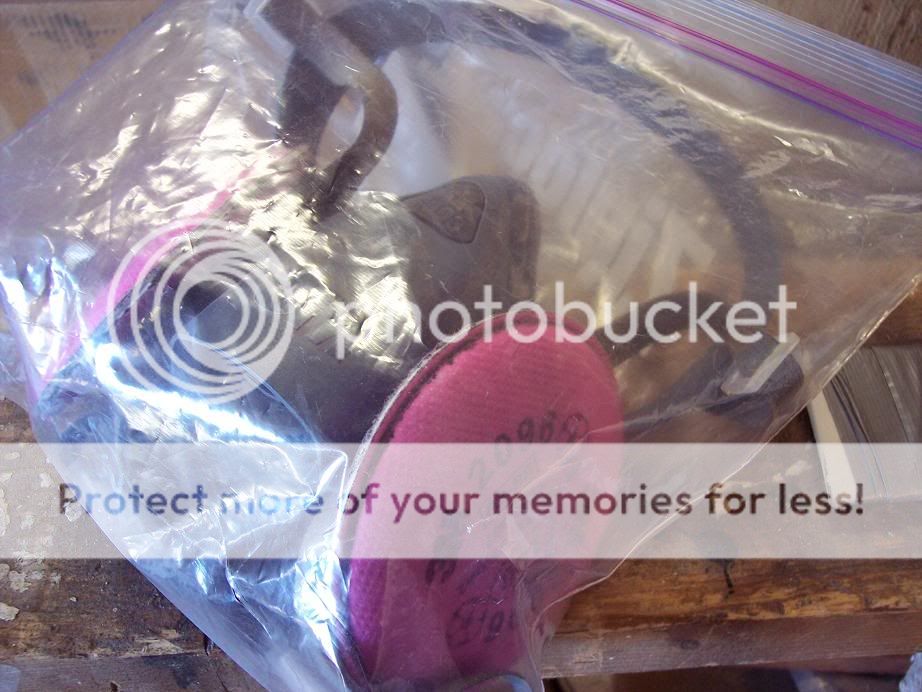
The next step is to cut off any nubs of the pins sticking out on the bandsaw, and then grind the pins flat. Remember those pins will get hot fast when your grinding them down.......Before I do any grinding I put on my mask to keep from breathing any of the bad stuff. The wood has chemicals in it and you don't want that stuff in your lungs. I keep my mask in a freezer bag to keep the filters cleaner and last longer.

1aMask.jpg


Heres the pins ground down flush with the scales....

2inssanded.jpg


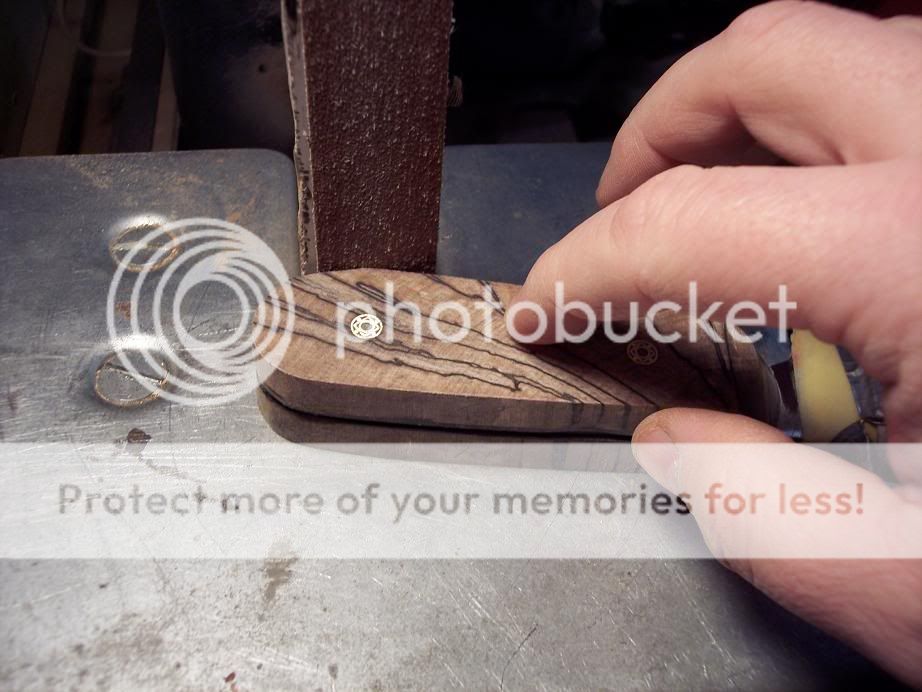
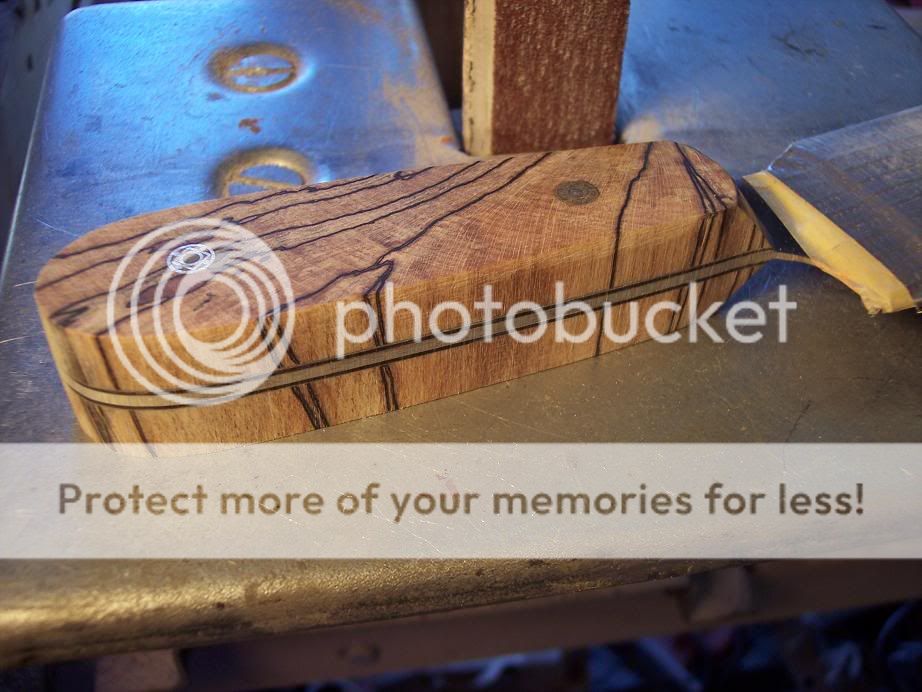
The next step is to bring the scales themselves down flush with the tang of the blade. I use my 1 x 42 to do that. Use a light touch once you get close, because you don't want to be grinding into the tang. The other thing you can do is use the slack part of the belt (above the platen) to very lightly clean it up, once your close to having it completely flush.

3flushtang.jpg


4flushtang.jpg


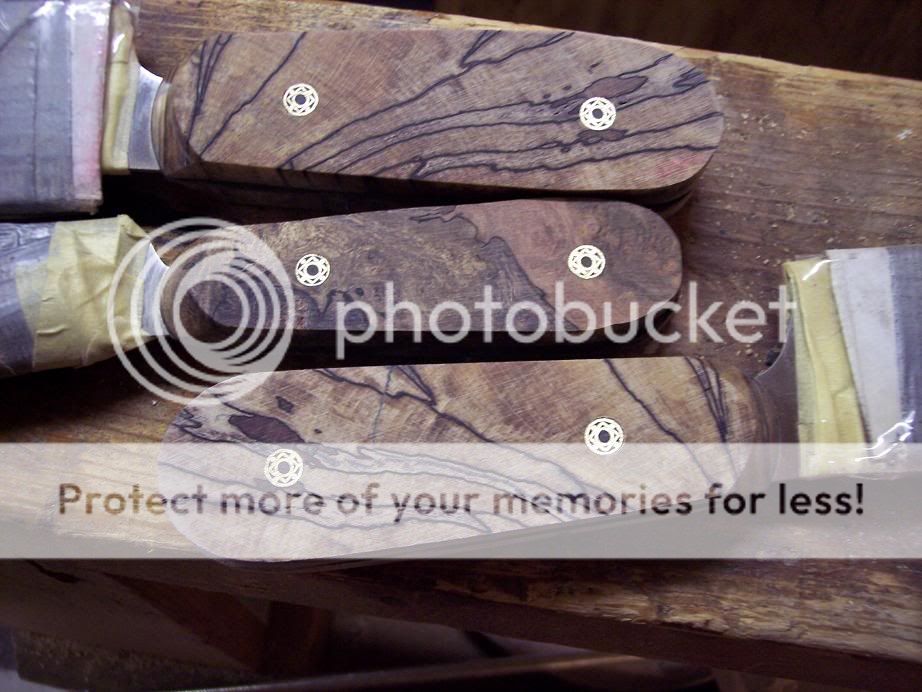
Heres some various shots once everything is flush. Heres a shot from the bottom.

7bottom.jpg


And from the top....

8top.jpg


And heres a couple from the sides...

5outside.jpg


6outside.jpg


The next thing you want to do is taper the scales from the back to the front, and shape them to get rid of the blocky look and feel. Lot of this stuff is personal preference so you can certainly shape and contour as you see fit. The soda bottle contouring is popular. I will probably just keep it simple with these and round the edges and taper them. Thats coming next....
 
Sweet, I'm just waiting on getting my belt grinders, mosaic pins and liners and I'll be able to finish that blade I got from you. Thanks for this how-to!
 
So I tapered the handles down. First I drew a line, which of course wasn't even on both sides, You have to eyeball it anyways to make sure both sides are even, but at least it gives you a little idea how your doing.

1.jpg


2.jpg


The rest of this I didnt really get pics of but basically you round the edges and then use the slack part of the belt to just round the handles as you like and try and keep them looking the same. These are now roughly shaped and you can begin your hand sanding. Heres a few shots of how they are coming along after the 80 grit on the 1 x 42.


Quite a bit of sanding and filling to go.....Might need to mix a little bit of black epoxy up to help with some of the cracks :D

5.jpg


4.jpg


3.jpg
 
Thanks for the comments guys, and following along with the whole process. Griz the pins are .25 in diameter. I probably should've gone with a smaller pin on the paring blade, but I wanted them to match. I got them from "Countryboycansurvive" - John, here on the forum.


Larry
 
Thanks guys, theres lots of ways of doing stuff, and probably better ways than what I got here, but I just figured I would try and take some pics along the way of how I do things with the tools I have right now. :D

Feel free to throw out suggestions or comments... I appreciate your feedback.

Larry
 
This may be out of bounds, but could they make this a sticky, or put it in the sticky for ***Newbies -- good info here***? This is so helpful, it would be a shame to get lost a few hundred threads down.
 
I am about to create my first set of handles for my recently purchased Koster bushcrafter 3v blank; I am printing this out and am going to use this as a basic tutorial. Thanks a ton for the work of getting this together and posting it! It is going to offer a lot of guidence.

Thank you again.
 
Back
Top