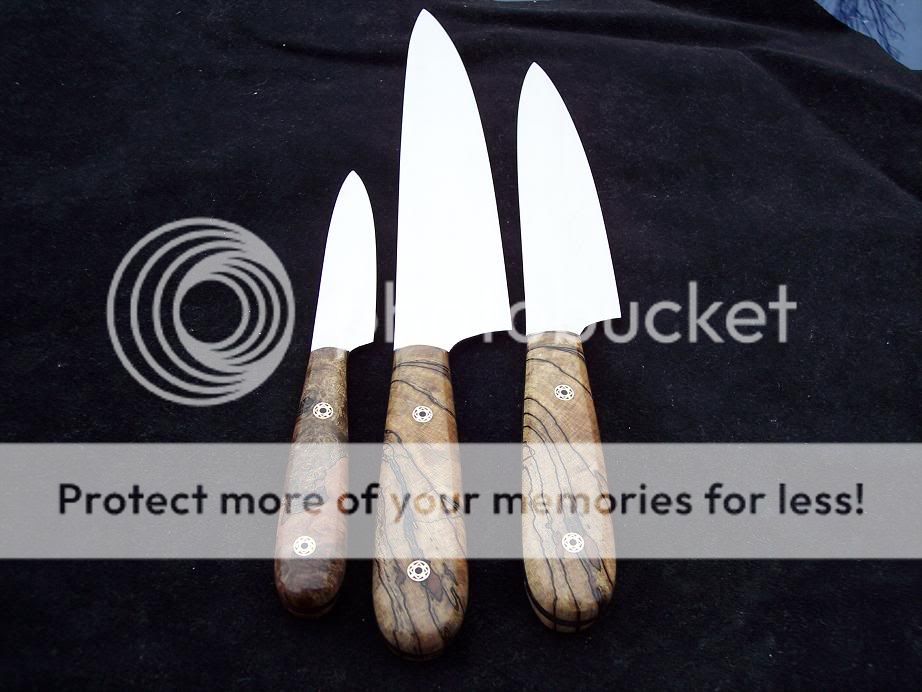
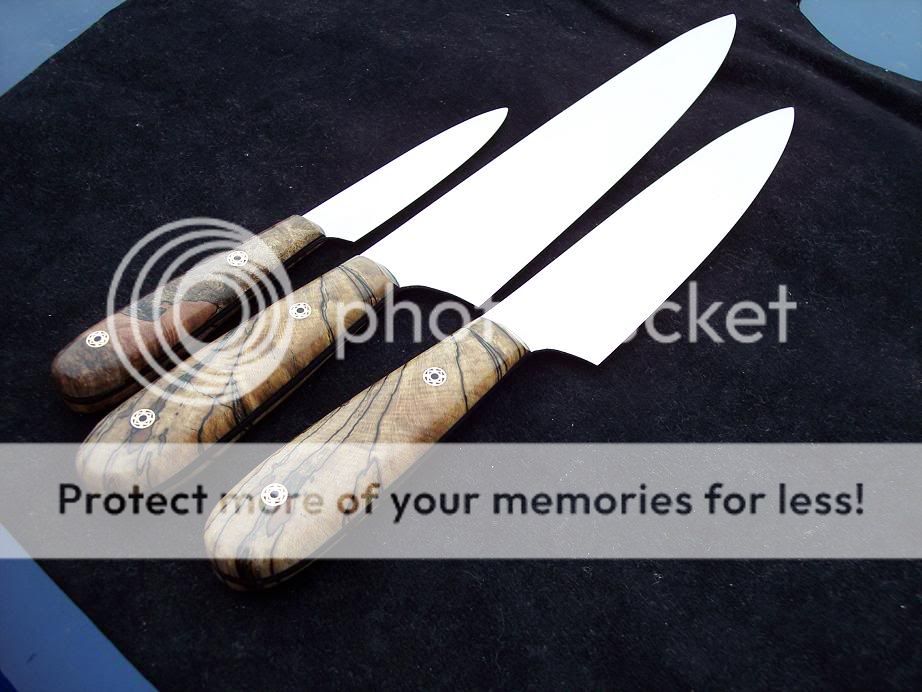
Scales WIP -

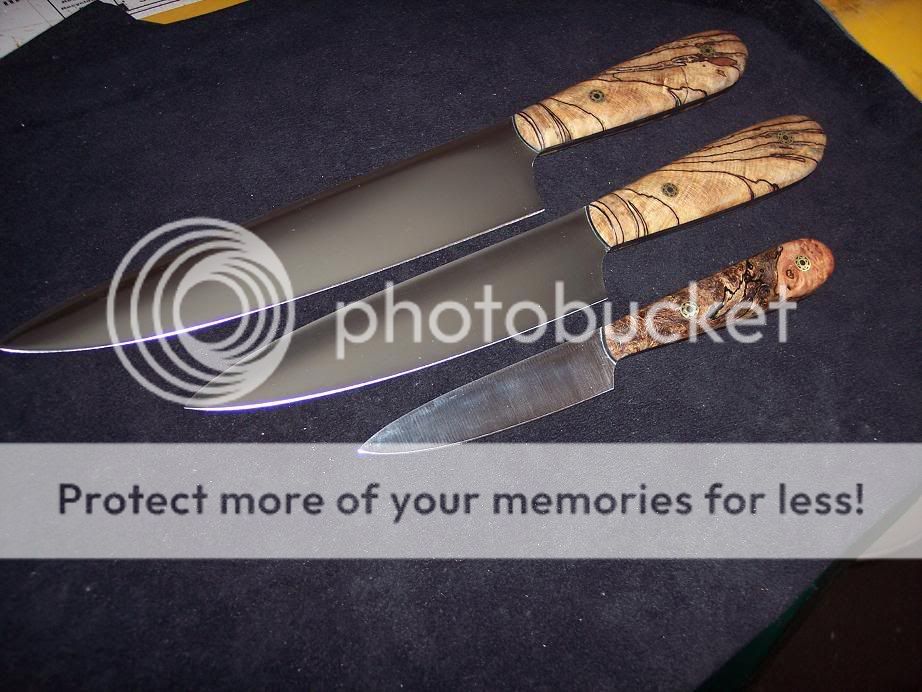
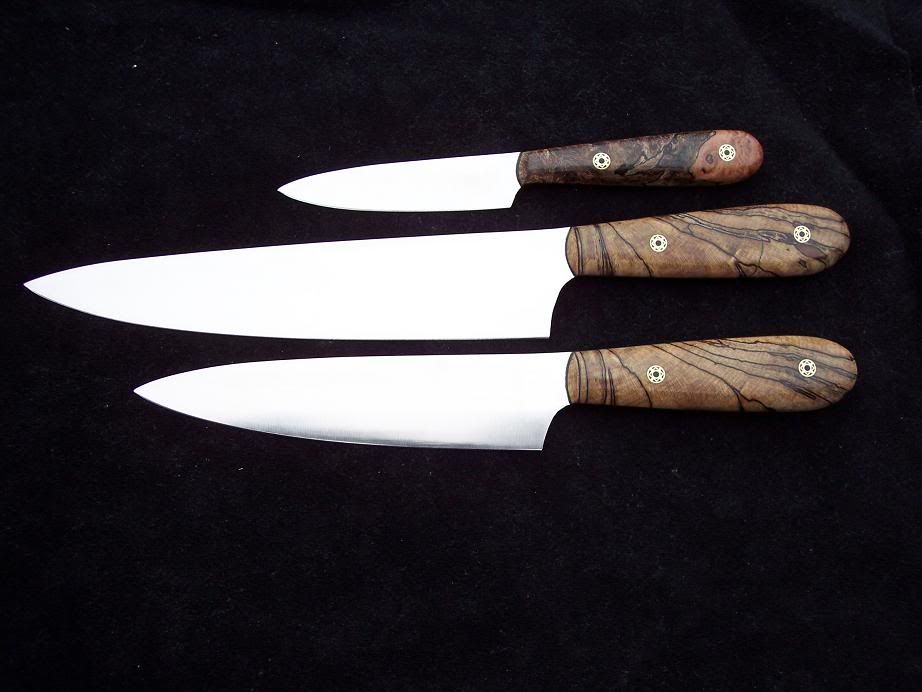
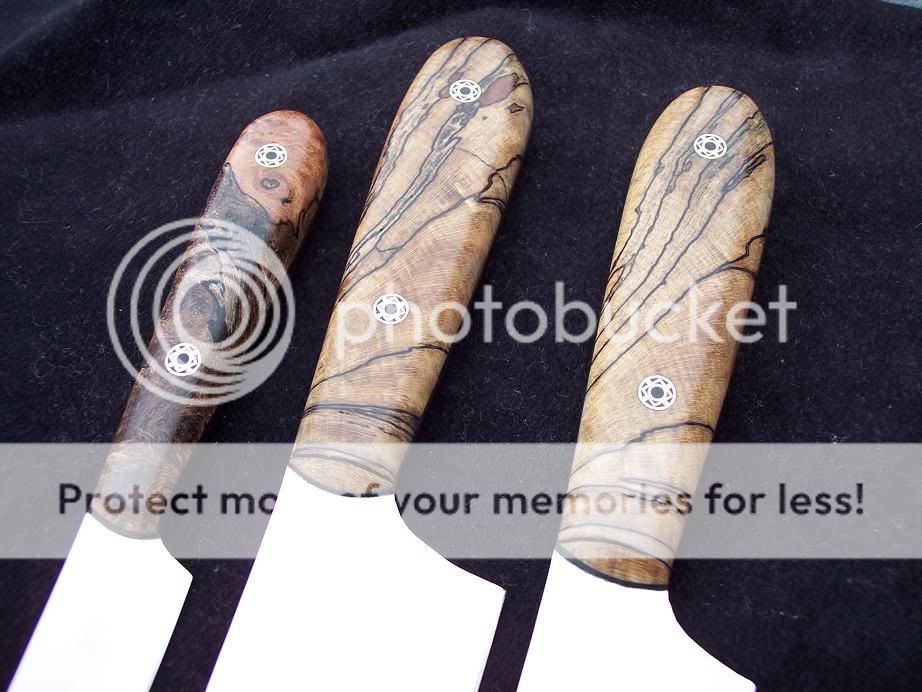
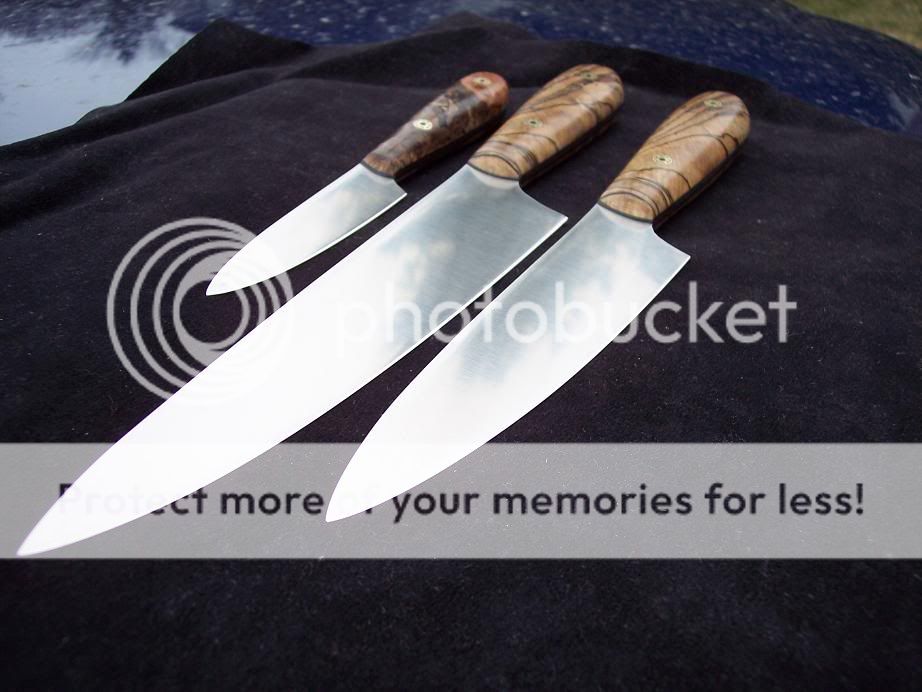
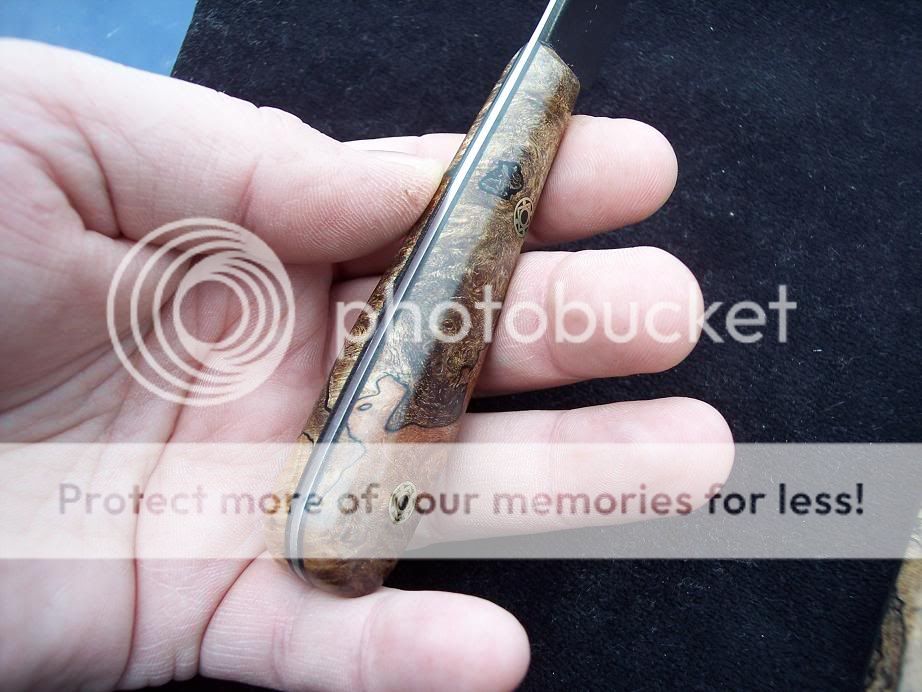
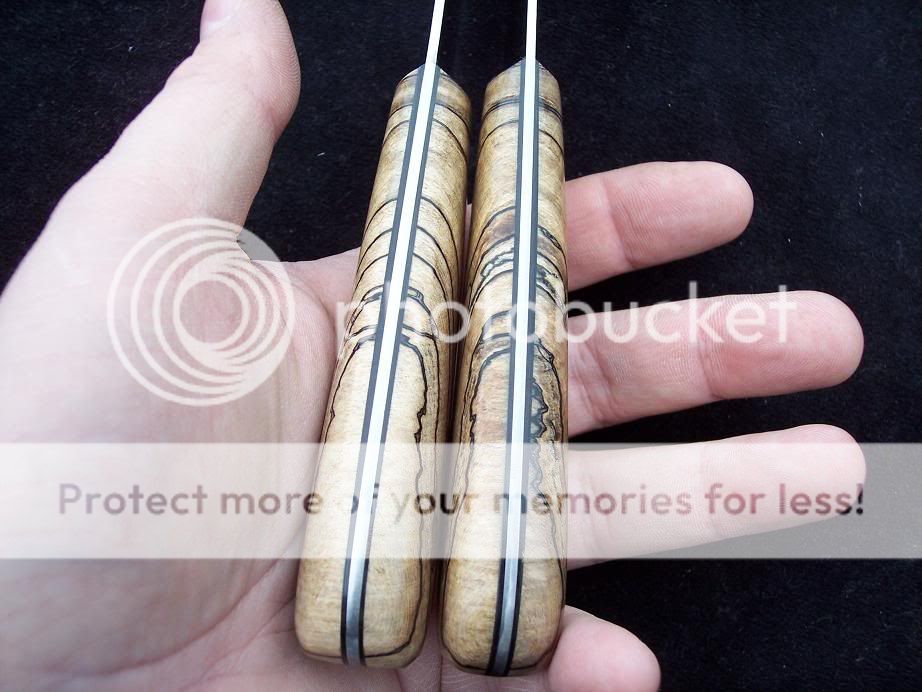
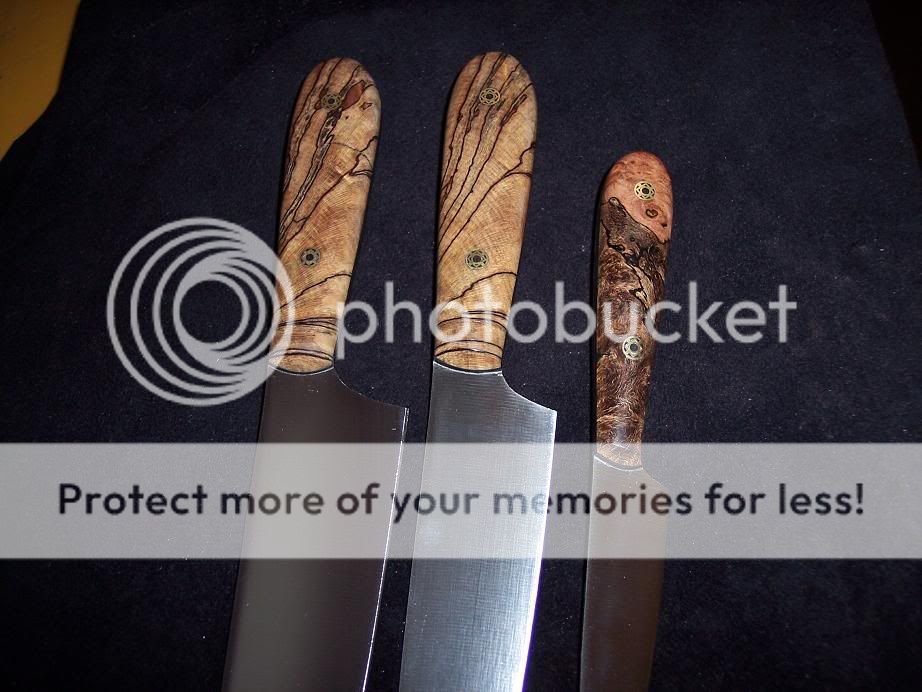
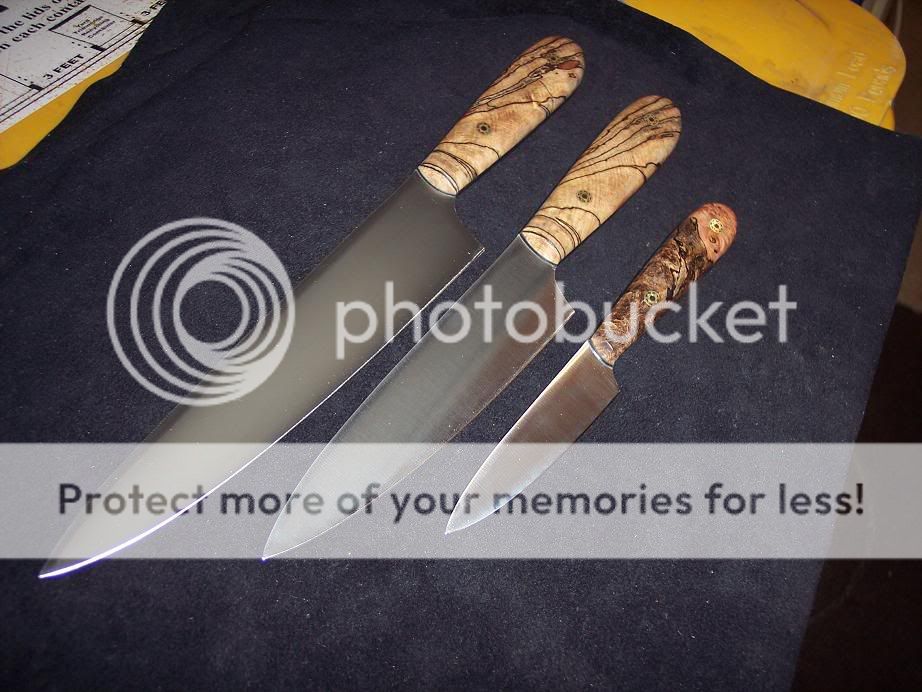
Got these sanded, and cleaned up....Heres a few final pics, and thanks for following along. -Larry
x007.jpg


x008.jpg


x010.jpg


x013.jpg


x014.jpg


x015.jpg


x018.jpg


x019.jpg


x020.jpg


x023.jpg
 
Great tutorial and beautiful knives.
Were there any final steps after the sanding? How fine did you go with the sandpaper grit? Any buffing or topcoat?
Just curious. This was one of the best step by step guides I have seen for scales. Thanks for sharing how you do it.
 
Thanks guys, I appreciate that. Yep, thats a 8" chef, 6" chef and paring blade. I sanded to about 600, then I used a little dab of oil (helps to see anything you might have missed) and final sand with steel wool at 000. Then a little Ren wax and buff. Thats about it really. I suppose the Ren wax isnt necessary, but I just got some, so I wanted to try it out. :D

Larry
 
Didnt think this one would come to the surface again. I went back and fixed the pics that got moved. They should all be there now. Thanks Larry
 
Im sure theres lots of ways to do scales, and if it helps to see pics of how I do it then I'm glad to help out. Thanks for following along through the whole thing.

Patrice, I think I actually used CA mostly, and never did use the epoxy on those scales, except to attach them. :o
 
Couple questions.

What angle degree is your table set at for making the forward bevel of the scales? I tried to free hand the last couple I have done and I either can't get it to the right angle I want or it's uneven.

And...concerning using CA as a finish. Do you use medium or thin? Is there any work that is performed on each coat after it dries (ie: sanded smooth, then next coat applied)? How long do you usually give it to dry before final sanding? And, what compounds are the best for buffing a CA finish?

I know that was more than a couple questions lol...thanks for the help!
 
Hey Craig,
The angle is not set I just guessed really. I set mine fairly steep, but you can use a scrap piece of wood (paint stir stick maybe) and see if you like it before you do your scales.

Far as CA goes, the use of CA was only to sand and fill cracks in the scales. The wood has been stabilized so I just sand to high grit and buff with a little oil or wax, after all the cracks are filled.

I know Bruce Bump had a thread with some BuckEye Burl on here that he used the CA method on. Might do a search for that one, it was a great tutorial.

Larry
 
I know it has been said before, but I must say it again, thank you for taking the time to do a great write up on these. Will def. go into my bookmarks. They look great!!

Just wondering, how does the owner like them?

Rob
 
Rob thanks for the comments, I appreciate it. The knives get used daily from what I am told and they like them a lot. They asked about a matching magnetic block, something like a longer wood block with a magnet on the inside. Right now the blades are in a kitchen block. That mag strip might be something they make on their own. So far, they're happy so I am happy.

Thanks Larry
 
Shaughnessy, what function (if any) do the mosaic pins perform, or are they aesthetic only? Is it possible to merely epoxy scales to a handle, or would that somehow compromise their stability? Thanks!

-Matt-
 
Matt,
The mosaic pins provide shear (front to back movement) protection while the epoxy sticks the scales to the tang. These could be plain pins, but the mosaics are a little fancier.

I think you should have both epoxy and some kind of mechanical help too. You could peen your pins to help the epoxy, and / or you could hide your pins inside the scales themselves. Lots of options.

Larry
 
I keep referring people to this thread.
Thought it should be bumped back up for those who might have missed it.
 
I know this is an old thread, but I searched for 2 or 3 days looking for a good rundown of how to make scales and finally found this one. I favorited it, but it should be a sticky or added to the how to make a knife sticky! This cleared up any questions I had about making scales, thanks Shaughnessy
 
Back
Top