So, I want to build a knife!

Joined
Apr 10, 2013
Messages
349
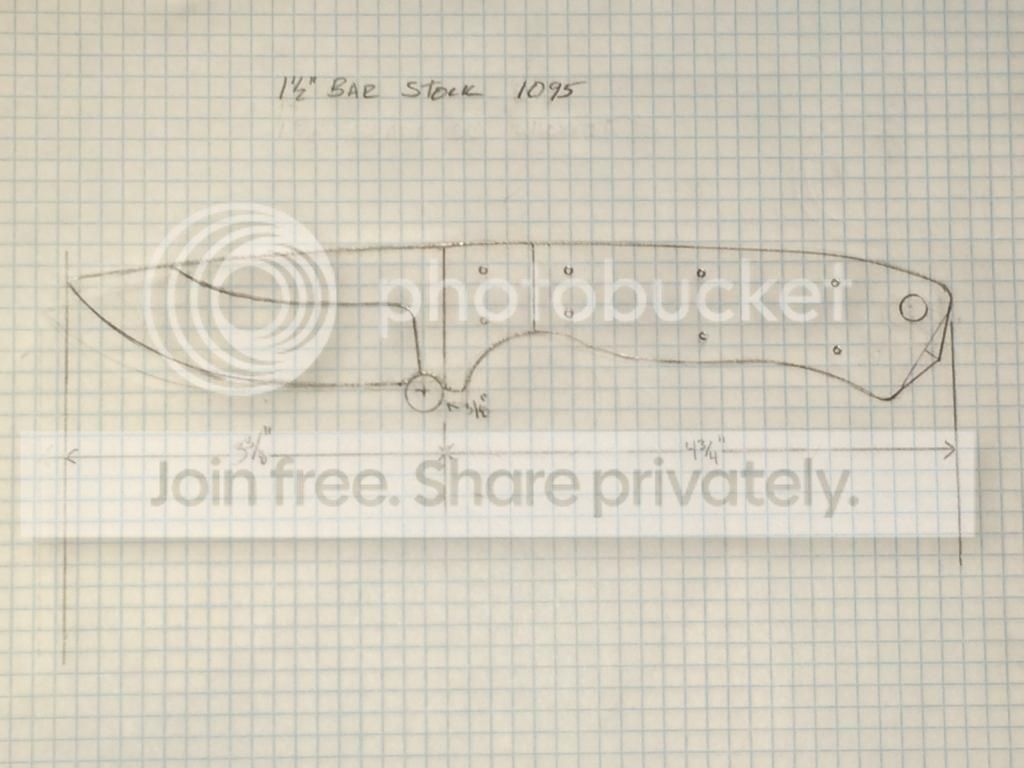
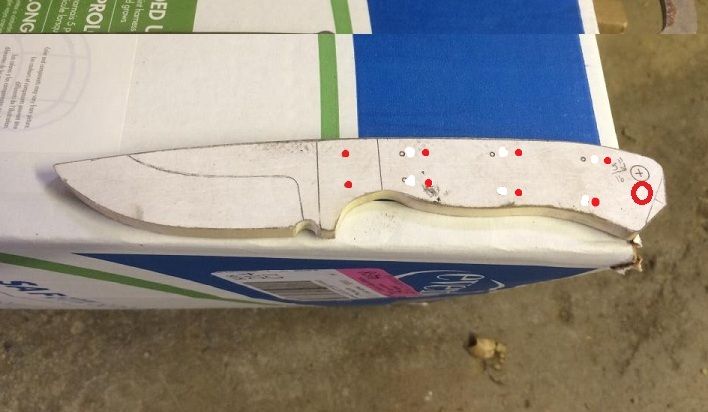
Hi, I thought it was time to introduce myself. My names Jake, and i want to build a knife. I've been lurking in this sub forum for a while, and i think i have a good grasp of the basics of knife building. The theory anyway. My day job is a Master Plumber, so i have a ton of tools, but not much suited for knife making. My intention is to do as much as i can with hand tools, no matter how long it takes. I got a couple bars of 1095 in various sizes and i hope to use Peters for heat treating. After weeks of drawing and changing, here is the layout that I'm fairly certain i will be using unless you guys see things i should change.

IMG_0153.jpg


I plan to use 1/8" x 1-1/2" wide 1095
 
Last edited:
Your image is showing but I followed it to photobucket, thats a nice looking design, go for it!
 
skip the glass breaker to start with and just make a knife, add "features" later as you gain experience. If you make an effective glass breaker it will bite your hand as you use the knife for normal tasks

other than that it looks like you have a clue, start cutting.

-Page
 
Does the pin locations look ok in the drawing? Im thinking there is probably more than i need, but i really want to use thin copper pins and liners, and maybe even bolsters. Im concerned that there should be more pins by the butt of the handle, but maybe the lanyard hole will do the job.

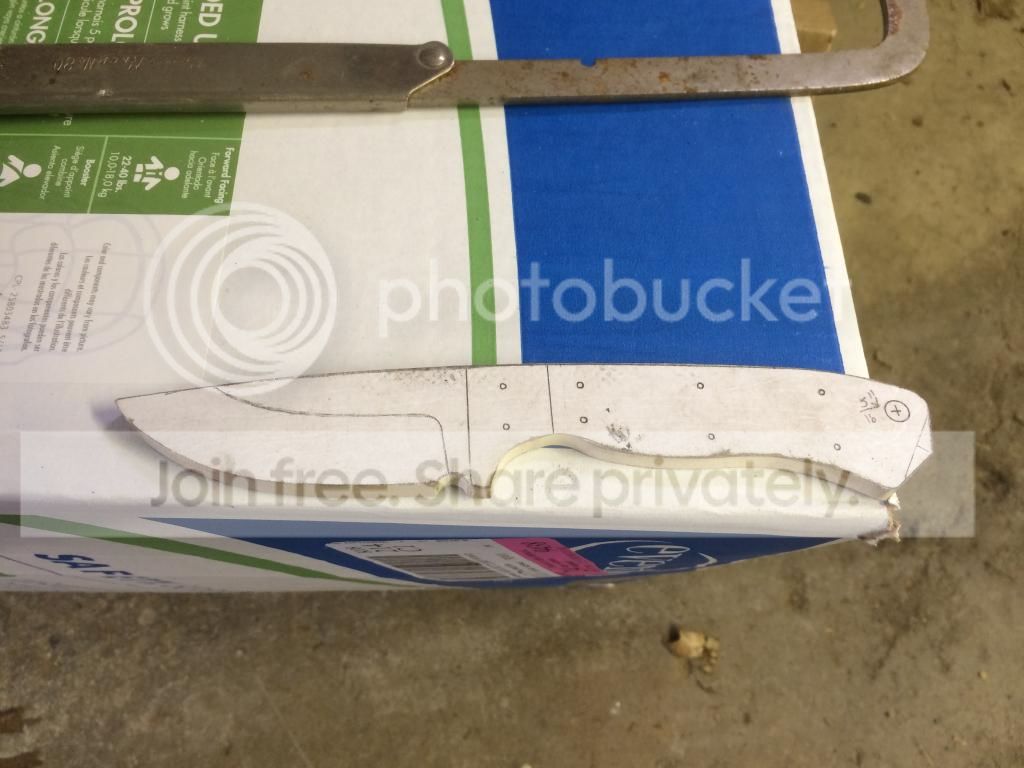
I made a copy of my drawing and glued it to a piece of 1/4 poplar i had laying around. Some files and a quick hit on a 3x21 hand held belt sander, I'm happy with the feel.

Also, i guess if it becomes an issue, i could always knock the glass breaker off later on?

IMG_0225.jpg
 
Last edited:
The pin locations look ok to me, multiple small pin arrangements instead of just 2-3 large pins are better anyway-results in less stress risers which is especially noticeable on natural materials such as horns, most woods, etc. Because if you would notice, on old knives-handle cracks generally start around the large pins that are in them and it is of my opinion that their pin size is a significant reason towards that.
 
The layout and design look great.

Two of the features are enthusiastic for a first knife.
1) A simple three pin and one piece handle would be far easier than bolsters and eight pins. What you have drawn is certainly doable, but will require much more work and precision.
2) The glass breaker may look cool, but in practicality will serve no function. Truthfully, it is a great rarity that any of the millions of knives made with one will ever meet a piece of glass needing to be shattered. I know EMTs that have never used one. In a great emergency, the normal butt of the knife will shatter the glass just as well.
What the glass breaker will do is make finishing the handle much more difficult.
 
The layout and design look great.

Two of the features are enthusiastic for a first knife.
1) A simple three pin and one piece handle would be far easier than bolsters and eight pins. What you have drawn is certainly doable, but will require much more work and precision.
2) The glass breaker may look cool, but in practicality will serve no function. Truthfully, it is a great rarity that any of the millions of knives made with one will ever meet a piece of glass needing to be shattered. I know EMTs that have never used one. In a great emergency, the normal butt of the knife will shatter the glass just as well.
What the glass breaker will do is make finishing the handle much more difficult.

Little ceramic points make better glass breakers anyway. I have used one many times, as well as knives with them designed in. Using a knife, your hand has a tendency to follow through the glass. It will even cut through gloves fairly easily. I now carry a spring loaded ceramic glass breaker for that purpose. (We break a lot of windows for various reasons.) People often underestimate the force it takes to break glass... especially automotive glass.
I like the overall design you have drawn up minus the point... looks doable and functional. I also think monolithic scales (no bolsters) with minimal pins would look very clean.
Now, if its a fighting knife, a nice point in the end can be used for some fun stuff... it would need to be a bit larger than that though.
 
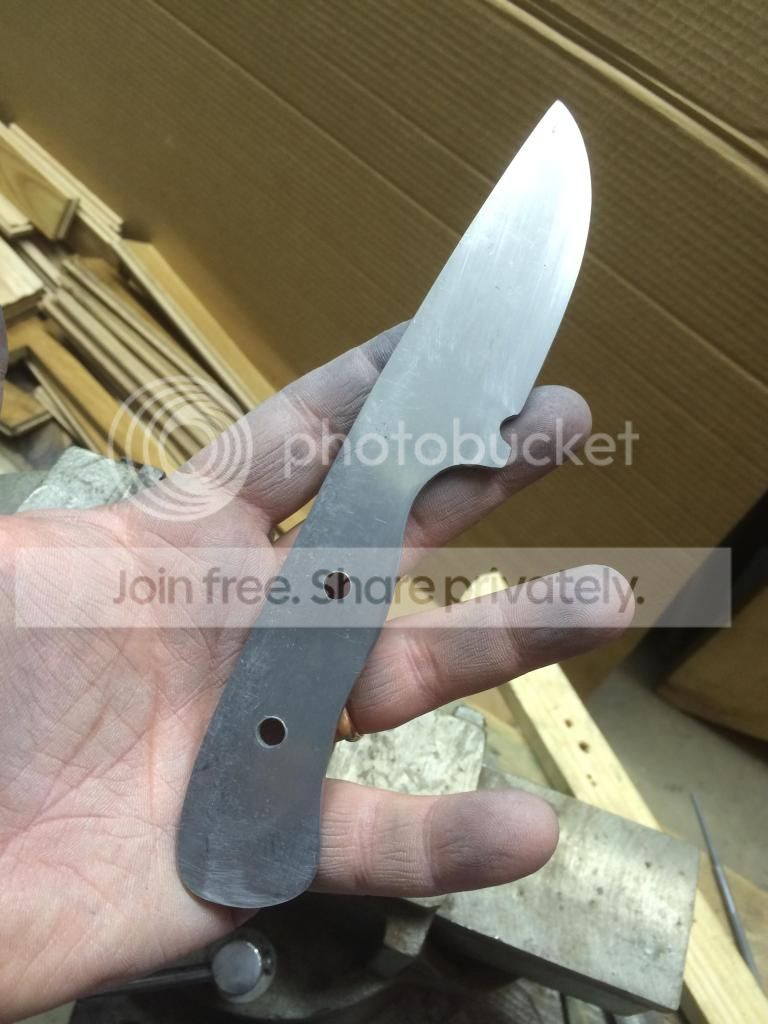
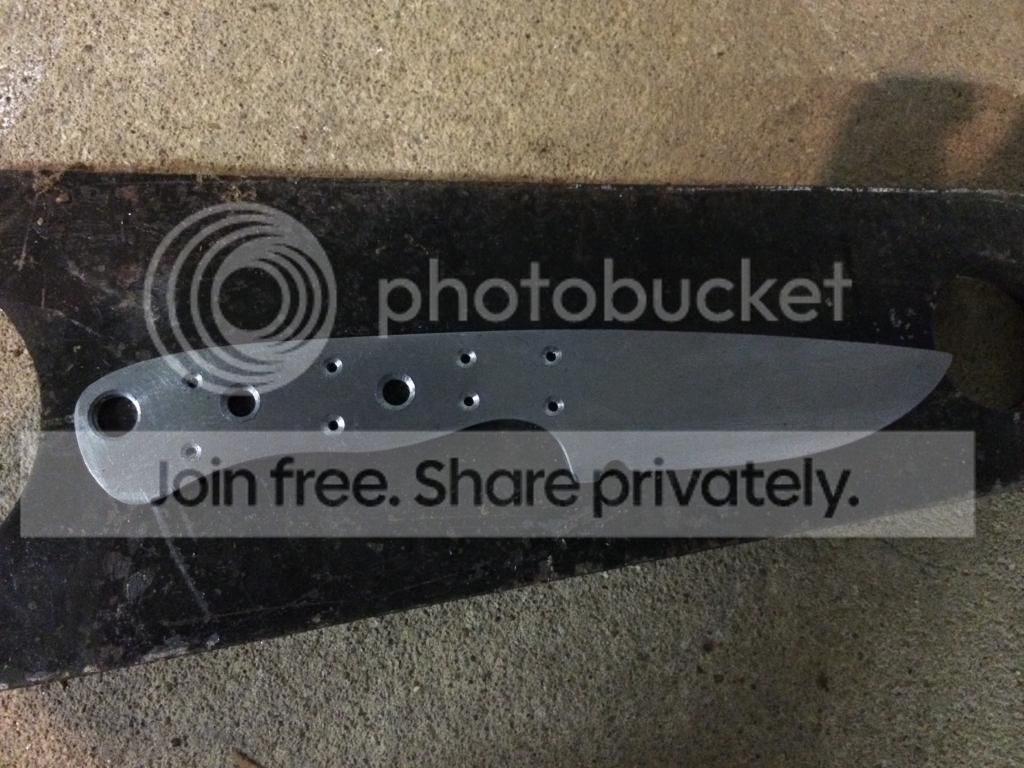
I had a little bit of time today to work with the steel and got the profile cut out. I appreciate the advice from everyone, and decided at least on this one, I'm going to skip the glass breaker. I drilled two holes in it so i could screw it down to a piece of wood clamped in my vise for now. I still plan on the eight pins, but that brings another question. Whats the best size hole to drill for a lanyard hole?

IMG_0261.jpg


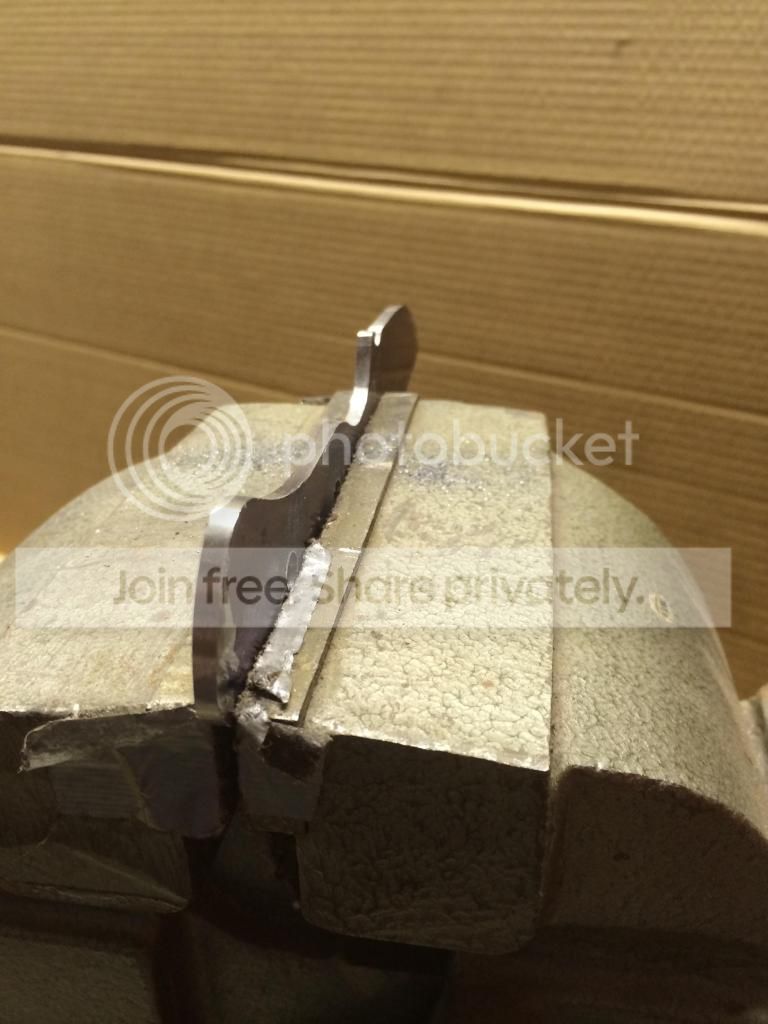
I tried my best to square the spine with files before using sandpaper. How far do you guys usually dress the spine. I worked it up to 180 grit. It seemed like it took forever to get the last nick out from the saw teeth right where your index finger would go. It looks good now that its sanded true in one direction (lengthwise) all the way around. How high of a grit do you guys sand the spine before calling it done? I've read that bevels and flats go all the way to 400 before heat treat, but i don't think anyone mentions the spine. Or at least i never noticed.

IMG_0258.jpg
 
I've got a carbide glass breaker on my edc knife. It definitely pokes me more than I'd like. Some guys have done tests with it and have had trouble breaking glass. I tried it myself on a bottle and struggled to break it.

I don't think yours will work.

Edit- that's what I get for rushing. :o

Looks great. :)

I think the tang should match the blade finish. If the bevel finish is different from the flats, match the flats. That's my thinking anyway.
 
Last edited:
I hope you don't mind, but there was something bugging me about the pin placement. Something about the lack of symmetry I think...
For lanyard holes, a 1/4" OD thong tube works well for paracord, etc. I think the two holes that you already have drilled would be good placement for two 1/4" pins or so in monolithic scales FWIW. And if you decide to not do bolsters, I would do the top pins equidistant from each other and the front and rear respectively, and the bottom following the contour so that they are perpendicular to the curve of the tang... Everyone has a different eye, this is just what mine prefers.

Edit: note that my placement isn't exact... You would have to measure that... I just popped it into paint real quick and did a little marking...

Cheers!

470a258e4676b833cbf7026d26db8f7d.jpg
 
Last edited:
I really like that suggestion Lucy, and kind of wish i would have read it earlier, My drill press takes forever to use, as its hand powered. So you don't think the pins should follow the contour of the bottom of the handle, just stay on an arc from front to back?


I did this today:

IMG_0268.jpg


Drilled all the holes, and counter sunk them with a oversized bit. It was my effort to eliminate any possible stress risers.

I put a 3/8" hole where the lanyard would go. I figured it was oversized, but epoxy could fill in any voids, and maybe help hold the scales. Most knives i see have the lanyard at the top of the handle, i just figured there must be a reason for it, and went with that. I really think they look cool on the bottom, but thought it would have more of a chance of interfering with your fingers.


The pins are perpendicular top to bottom, the angle of the camera really makes them look skewed. They are exactly like my drawing in the first post.

Thanks for the help. I really want to do this right the first time, i want to make a knife that my son will be proud to use twenty years from now.
 
No worries. I just like continued lines typically. Everyone has their own style... with the lanyard hole I see what you are going for. Should look fine.

I usually will have one constant line on a knife, say the spine usually. Then I use a french curve and try to use continuing arcs that dissect themselves for the lower handle, recurve of the blade, etc. Some will say 'no straight lines with curves/vice versa,' But I tend to like a combination of the two, in as much as a knife can resemble a woman laying on the ground if the knife is sat on its spine.

As it sits, I really like the design you have chosen. Of knives I own, those are my favorite, though I've only made one of that style for a customer... It should prove to be a good user.

For a lanyard, location oartially depends on handle length as to whether it will interfere with a finger or heel of the palm. I use dead center a lot as I've found it cuts a little bit of the whip action should the knife be slung out vigorously. Not enough to really matter probably, so go with what feels and looks right to you.

By all means, use this place as a resource and a sounding board, it will shorten your learning curve. I know it has improved me greatly and really set the bar high. But, don't compromise your artistic integrity. If you are making a certain style of knife, obviously adhere to the basic foundation of that style, but if you are just cutting loose creatively then do what YOU want to do. I live a uniform and structured life in my day job. This is my chance to be unique, and honestly without it I'd go insane..

And just a tip I had to relearn the hard way trying to get some stuff done for Christmas. .. If you aren't in the mood to work on, or frustrated with a project, take a break for an hour or two or the rest of the day. Seems like mistakes abound in our frustration.

Cheers!

 
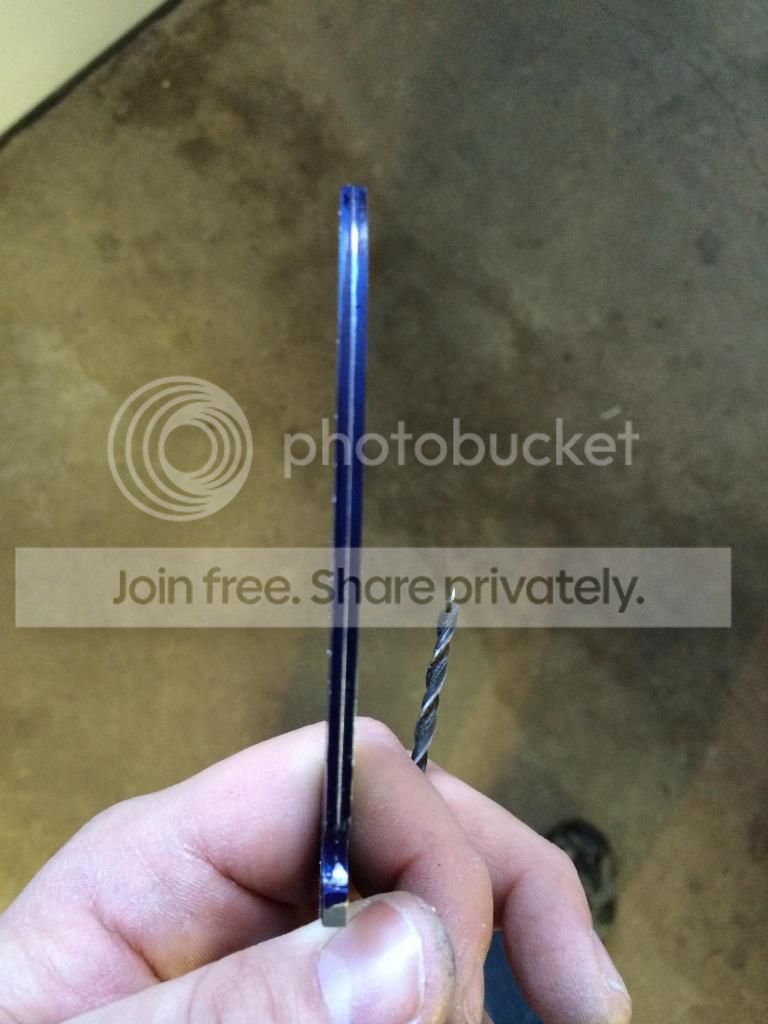
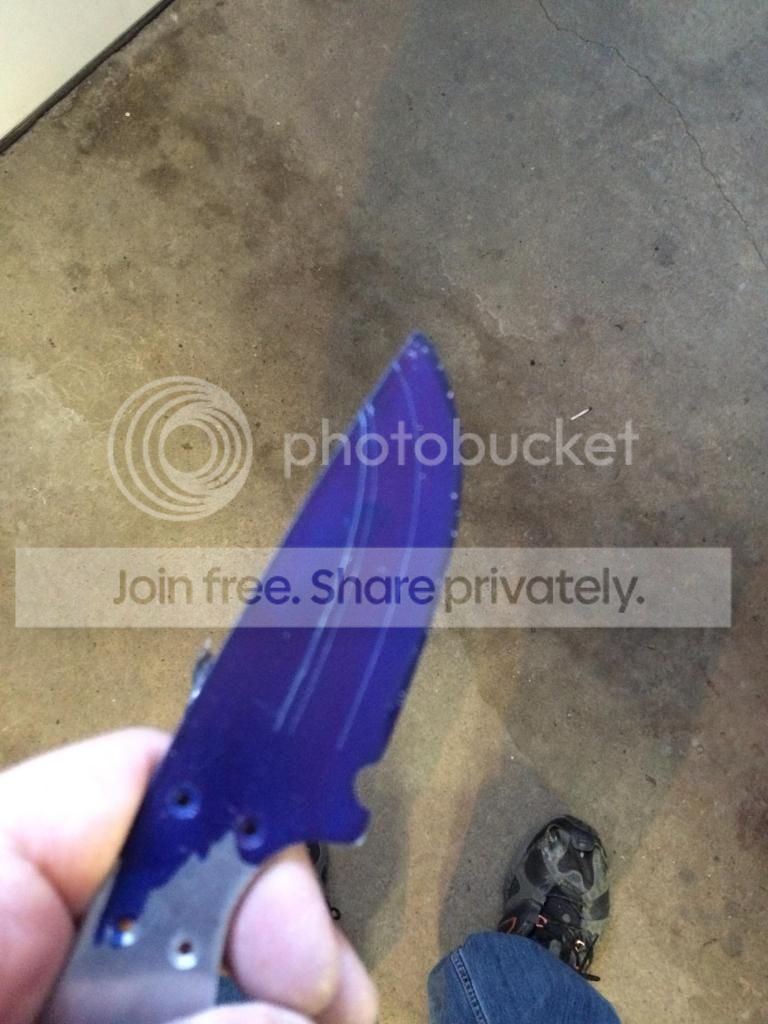
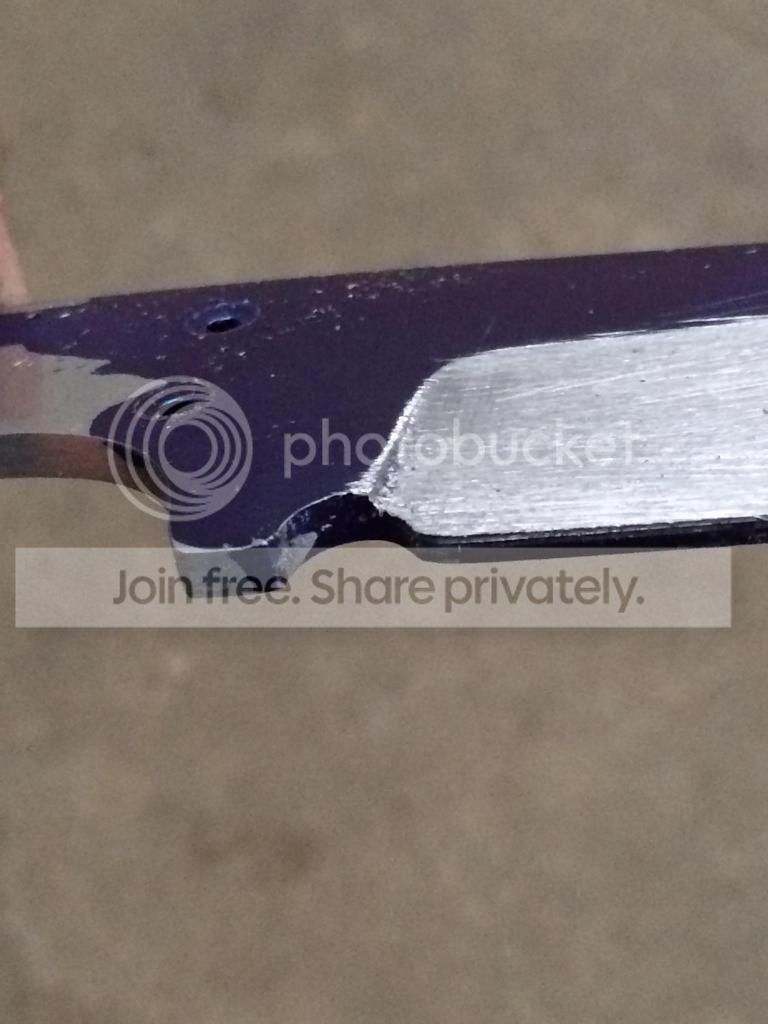
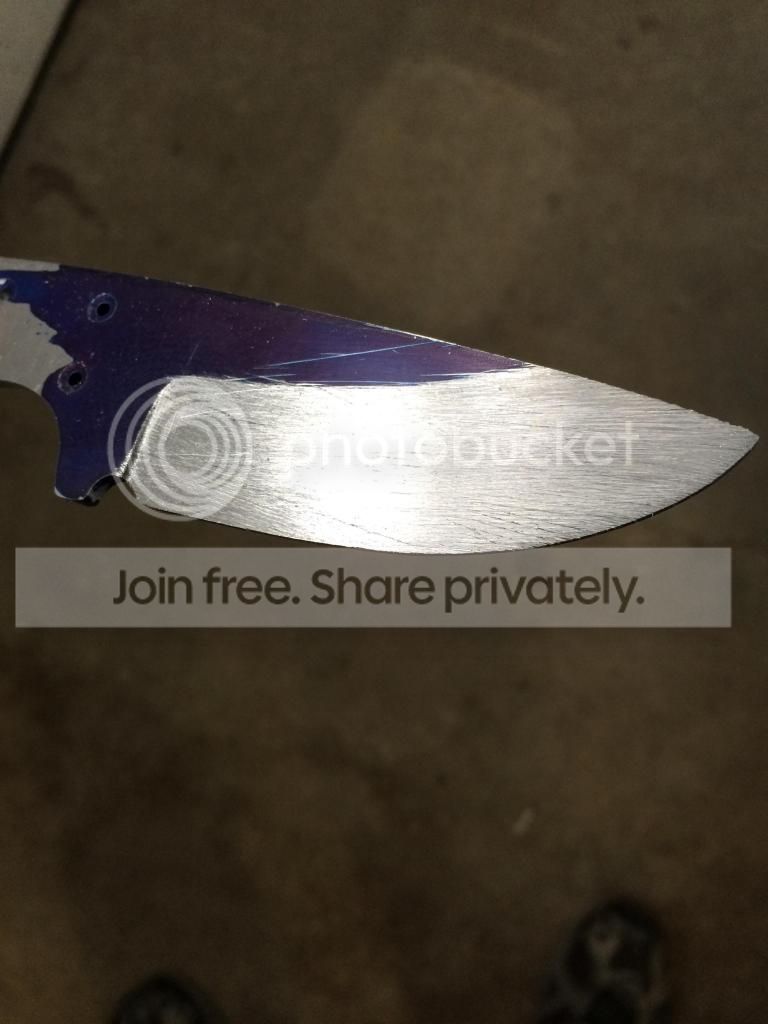
My scribing dye showed up yesterday, so this morning i was able to scribe a few lines for reference and begin filing. The plunge is almost crisp, but I'm afraid it should be rounded more instead of so squared off. What do you think?

IMG_0322-1.jpg


IMG_0323.jpg


IMG_0329.jpg


IMG_0330.jpg


My thought was i would file the bevel first, then go back in with a chainsaw file to clean up the plunge. Im not sure now, if that was the right thing to do? I don't want to screw it up. Thinking about it, i probably should have cut the plunge, then the bevel, then do the sharpening notch (mental note: remember this for next time).

Another question; Whats the consensus on using traditional materials with modern ones? Like copper bolsters and pins with micarta scales? Or should copper stay with wood and/or bone?
 
Back
Top