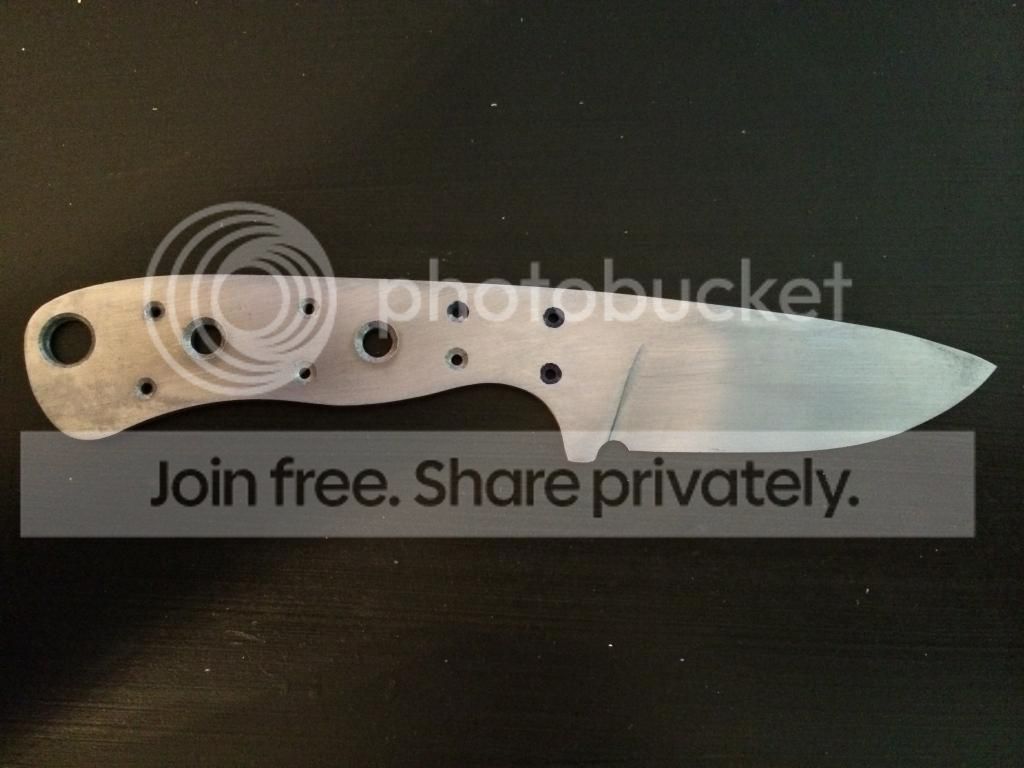
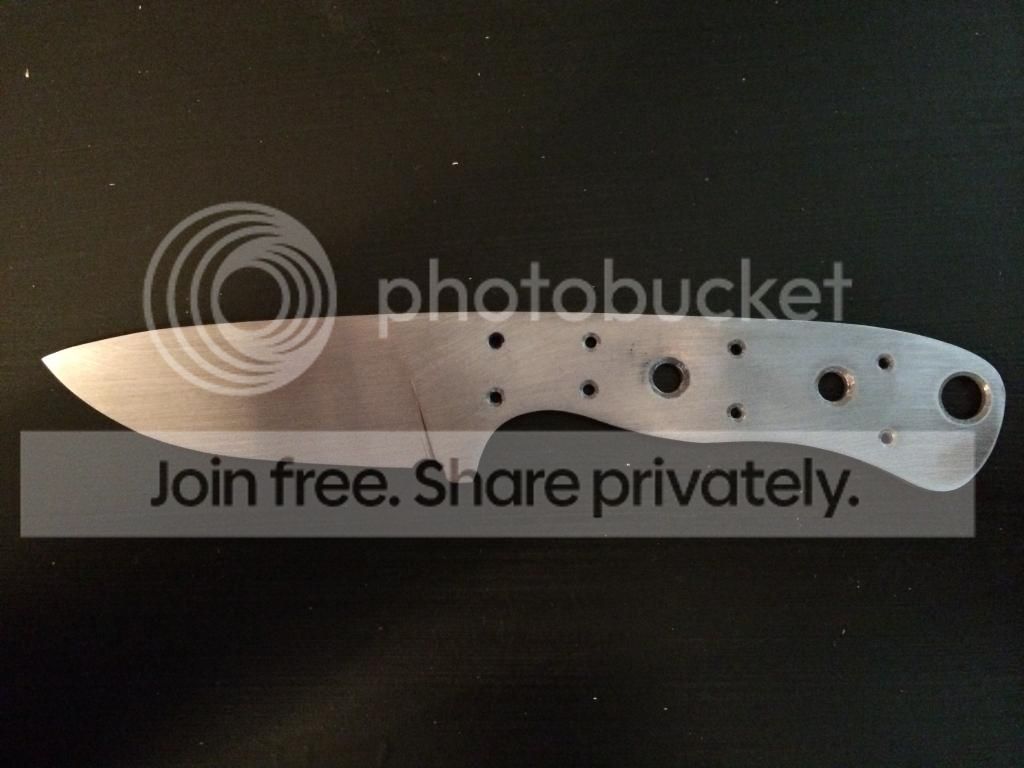
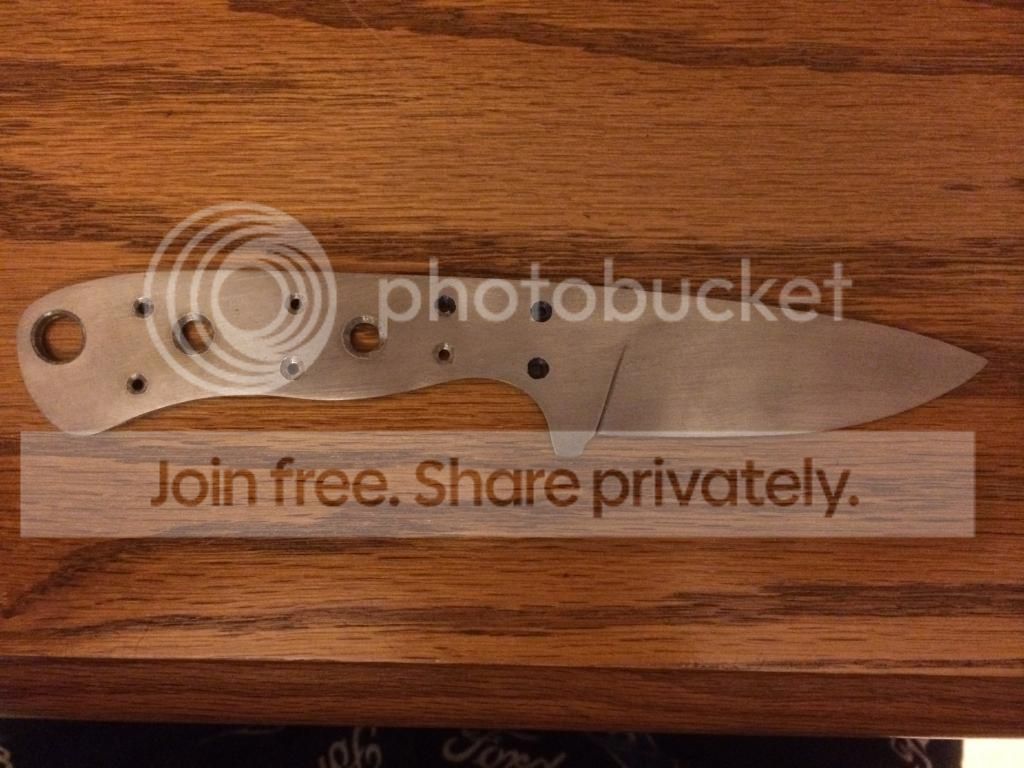
So, I want to build a knife!

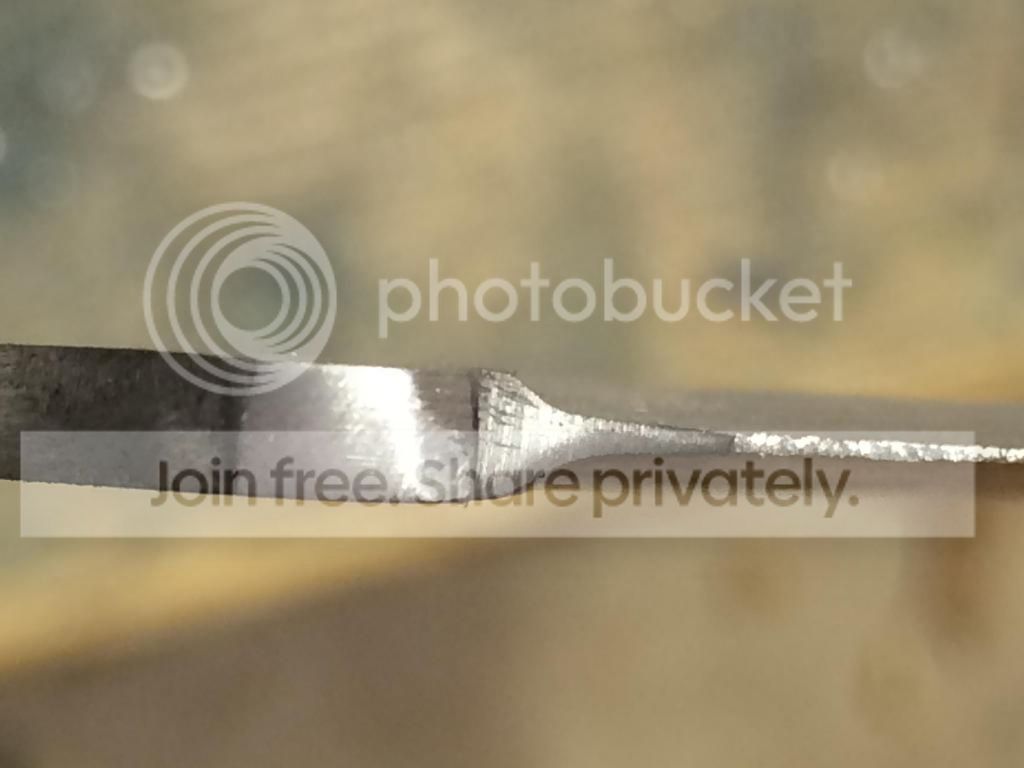
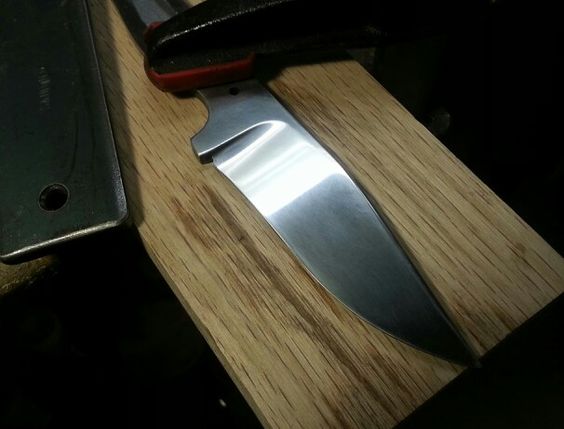
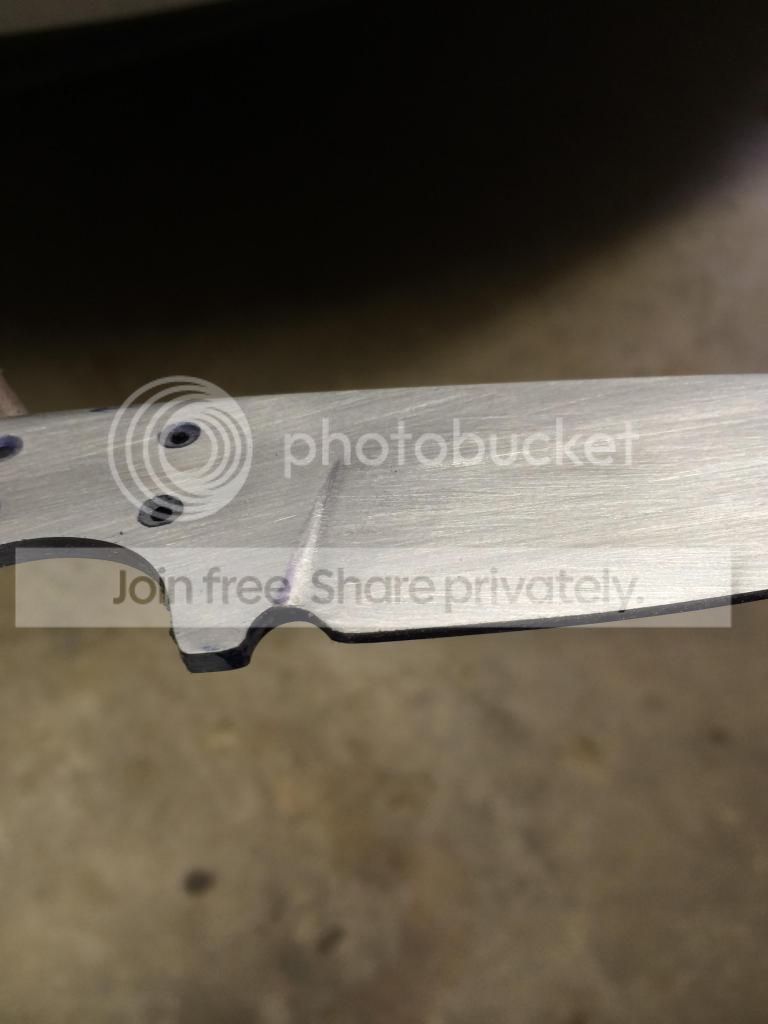
As long as the intersection of the bevel and ricasso isn't a perfect 90, you are fine. The idea is perfect 90's provide a spot for stress risers to stat during the quench. I do round plunges with either a chainsaw file or a very small detail round file.

This is what my plunges look like...
88cdb342745de9477a05fbf3fe5040a7.jpg


As for copper with micarta, etc, I say go for it. There are no 'rules' for style and I personally like mixing traditional with new school. If it looks good, do it. Copper seems to be very much en vogue at the moment, and I like it.

Looking good so far... Keep it up!
Cheers
 
finishing is really all up to you. scales could go either way. personally i lean towards simple scales for the first few knives. just to get the hang of forming the shape, setting the pins. i would expect you would want to "practice" with some simpler material like micarta, as opposed to some pricier stabilized wood or something.


i make the plunge first, but not to final depth. make it almost as deep as it needs to be then make the bevel. when i go near the end i would work on both at the same time making sure to keep the file slips to a minimum.
 
I worked on it some and quickly realized that I'm chasing the plunge line back the ricasso which wasn't something i really wanted to do. Im happy for the most part with it now. Although not exactly centered on the notch, Its not squared off at 90* like it was before. Its much more rounded. After the files, I hand sanded it some with 100 grit, and i think it will be ok. There are a few deeper file marks by the plunge. My hope is with some determined sanding, they will eventually come out. Now to file the other side the same and make it appear even.

IMG_1719.jpeg


Eric, do you do your plunges by hand or with machine? Whats the thickness of the stock? Looks more like 1/4"? What grit did you sand up to? I assume that is a hand finish, and not machine. Hope you don't mind the questions, It Looks great, and thanks for all the help!
 
finishing is really all up to you. scales could go either way. personally i lean towards simple scales for the first few knives. just to get the hang of forming the shape, setting the pins. i would expect you would want to "practice" with some simpler material like micarta, as opposed to some pricier stabilized wood or something.


i make the plunge first, but not to final depth. make it almost as deep as it needs to be then make the bevel. when i go near the end i would work on both at the same time making sure to keep the file slips to a minimum.

Thanks, Sounds like a solid plan for sure. I like the workability aspect of the micarta. Im just not sure how good it would look with copper.
 
I'm watching this dialogue with great interest, and loving that you are making progress. Not wanting to divert from the topic, as a beginner can I ask what is your functional purpose/benefit for the small choil at the heel of the blade?

I have not been able to find an answer to this as a general design feature, but why did you choose to go this way?

Thanks,
Gus
 
I worked on it some and quickly realized that I'm chasing the plunge line back the ricasso which wasn't something i really wanted to do. Im happy for the most part with it now. Although not exactly centered on the notch, Its not squared off at 90* like it was before. Its much more rounded. After the files, I hand sanded it some with 100 grit, and i think it will be ok. There are a few deeper file marks by the plunge. My hope is with some determined sanding, they will eventually come out. Now to file the other side the same and make it appear even.

IMG_1719.jpeg


Eric, do you do your plunges by hand or with machine? Whats the thickness of the stock? Looks more like 1/4"? What grit did you sand up to? I assume that is a hand finish, and not machine. Hope you don't mind the questions, It Looks great, and thanks for all the help!

The rounded cut of the plunge is actually a good thing. 90° angled plunges can become a stress riser.
 
Just gotta say. Looks fantastic man. Keep it up!

Thanks man!


I'm watching this dialogue with great interest, and loving that you are making progress. Not wanting to divert from the topic, as a beginner can I ask what is your functional purpose/benefit for the small choil at the heel of the blade?

I have not been able to find an answer to this as a general design feature, but why did you choose to go this way?

Thanks,
Gus

Hey, no worries! Believe me, I'm new at this too. It's not really a choil as it's too small for a finger. I think it's called a Spanish notch, and to me it serves 3 functions.

1: I like the way they look (probably most important).
2: during sharpening, it's much less likely to scratch the ricasso area, and I don't like when they get gummed up with little scratches.
3: I went with a 3/8" notch because I want the option to use it to strike a fire steel. Most times I'm out, I have a 3/8" steel with me (and a dedicated striker but hey, you never know).

Right or wrong, that's my reasoning.
 
I worked on it some and quickly realized that I'm chasing the plunge line back the ricasso which wasn't something i really wanted to do. Im happy for the most part with it now. Although not exactly centered on the notch, Its not squared off at 90* like it was before. Its much more rounded. After the files, I hand sanded it some with 100 grit, and i think it will be ok. There are a few deeper file marks by the plunge. My hope is with some determined sanding, they will eventually come out. Now to file the other side the same and make it appear even.

IMG_1719.jpeg


Eric, do you do your plunges by hand or with machine? Whats the thickness of the stock? Looks more like 1/4"? What grit did you sand up to? I assume that is a hand finish, and not machine. Hope you don't mind the questions, It Looks great, and thanks for all the help!

It is 5/32" stock on that one. I like a very shallow angle and a full flat grind for a slicey dicey blade. Less material following the edge through the material. I do mu plunges with the grinder initially, then I clean them up by hand. I like the same shape you have there. Like Stacy pointed out, I find that a nice curve like that reduces stress fractures induced by quenching. Any sharp 90 degree will give the blade a place to start little stress fractures.
I use the edge of my flat platen to initally cut the plunge. It has a tight radius on it that basically produces that plunge. I cut in with the belt squared up. Then once I am near where I want the plunge to be, I run the belt just off the edge of the platen and do a cut to get that radius... A file helps to make sure it is exactly where and what I want. Yours looks great IMHO.
My first several blades I cut my plunge solely by hand. Using the edge of the platen and pushing the belt over the edge is something that takes practice. Its very quick and can fubar a plunge in a hurry if its a little off. I have several diameter round files, thus allowing me to get the radius I want.

Yes, that was a hand finish, but I go to at least 600-800 grit on the belts. From there, its all hand finish with blocks. I go up to 800 prior to HT, cuts down on scale. In that photo it is post HT and being worked to 2000 before etching.

There was a thread a couple of days ago about final sanding. I dug up Nick Wheelers old tutorial on it and posted the link. That is exactly the final sanding method I use. Try to get your deeper scratches all gone prior to HT. It will be easier that way. Also leaves a place for scale to grab on...

Looking awesome. Cant wait to see the finished product. Keep us updated!
Cheers.

-Eric
 
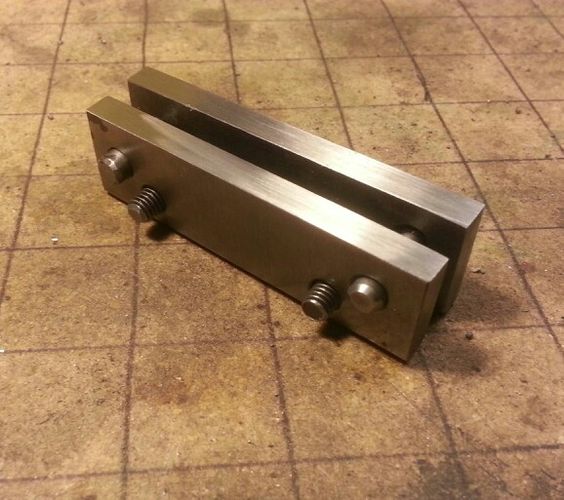
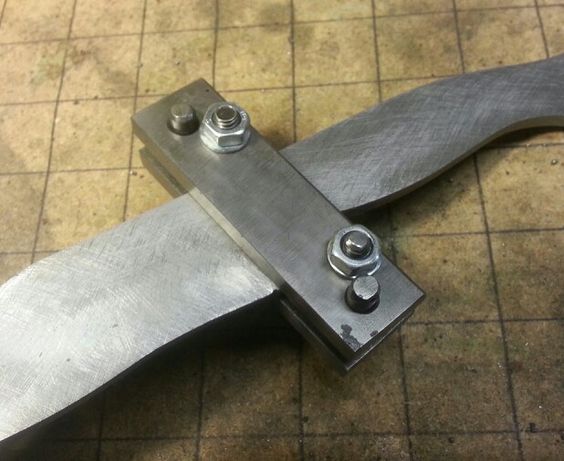
Incidentally, use of a file guide helps a ton. I used to do everything by hand, but decided to finally start using a file guide....

I made mine out of 5160. Easy enough to make. The pins are drilled to exact size, then welded from the bottom side and ground flush. Thd threaded portion is drilled oversize a bit and thread rod welded and smoothed also. Once all fitted up, I ground the edges dead flat together on the disk and smoothed on the flat platen vertically. HT of the 5160 after flush grinding obviously.

35419384cb94a398dc7345aee8e83e64.jpg


daab89cc4da13c1e4fb12c8f0580d2c9.jpg
 
I got a chance to work on the other side this morning. My plunge is not perfectly even from side to side, but I'm not sure i have the skill set to get it any closer.

After many attempts, this is the best picture i could get:

IMG_0351.jpg


Where i am right now after sanding up to 220 grit.

IMG_0359.jpg


I guess I'm going to have to contact peters heat treat and see what is the minimum width edge for 1095 before the heat treat process. I started sanding with 100 grit at .020-.025 edge thickness. When i got done, i realized that the edge was now between .013 at the thickest spot, and .010
 
IMG_1211.jpeg


IMG_0369.jpg


I see why this hobby becomes addicting. Perfection is right there waving at you, taunting you, and jumping out of your grasp every time you get close.
 
Looking really good for any knife, especially a first knife...A file guide would help the plunges, but they don't look bad..

I HT a lot of 1095 and about a dime width (.025ish) is all I'm comfortable with. Peters may be fine with thinner as they are practiced with it.

Yes, it is addicting. Especially if you are a gear junky, tinkerer, knifemonkey like me.... I am a visual satisfaction guy too, and being able to hold something you made is awesome...

Cheers!
 
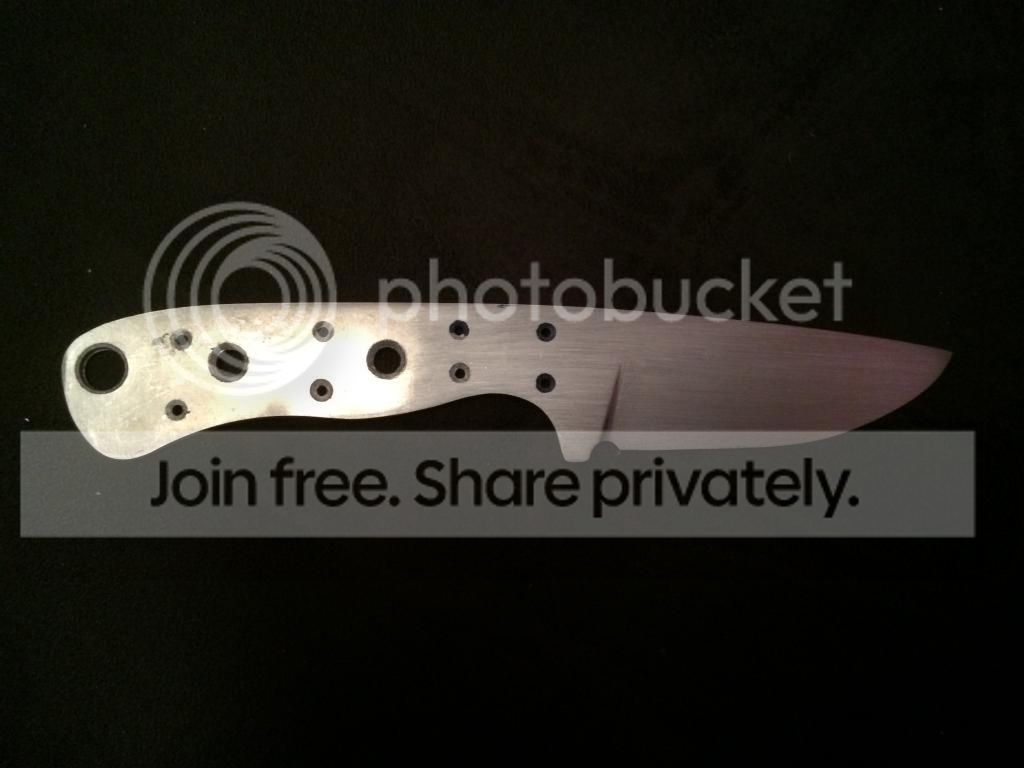
it appears that .015" is the safest minimum edge thickness Peters wants to harden. I took the edge back to .020 because i still have one scratch left to sand out, so it i assume it will be thiner before i send it out to get hardened. Although it looks different from my original drawing, i like it, even without the notch.

IMG_0382.jpg
 
Back
Top