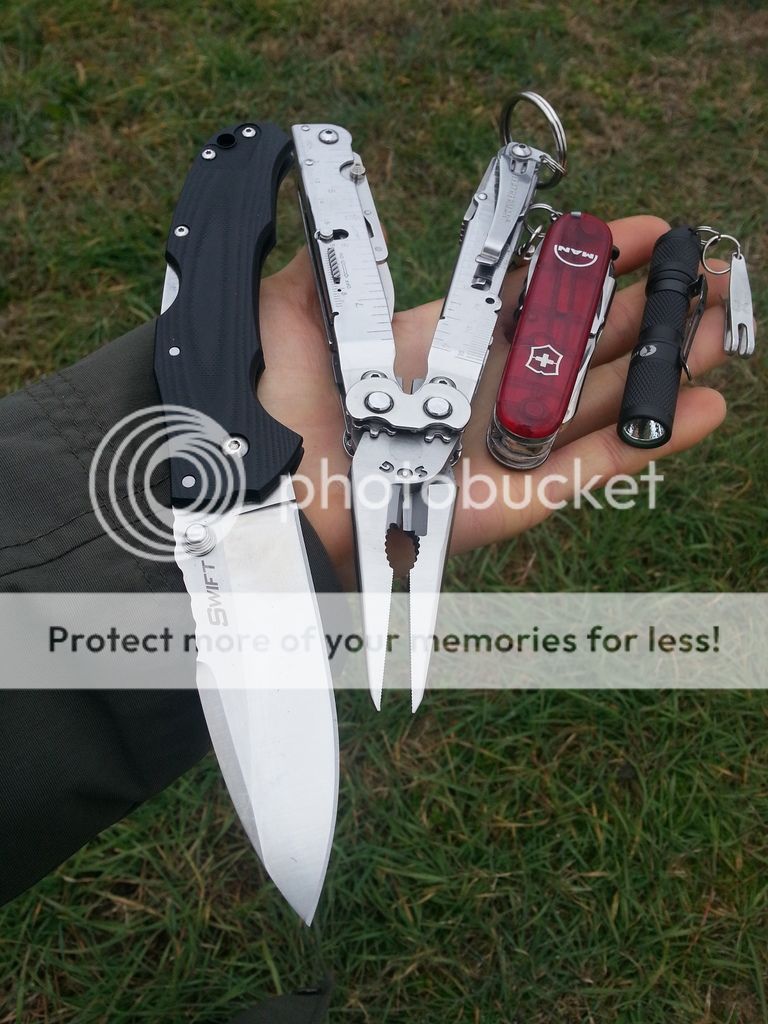
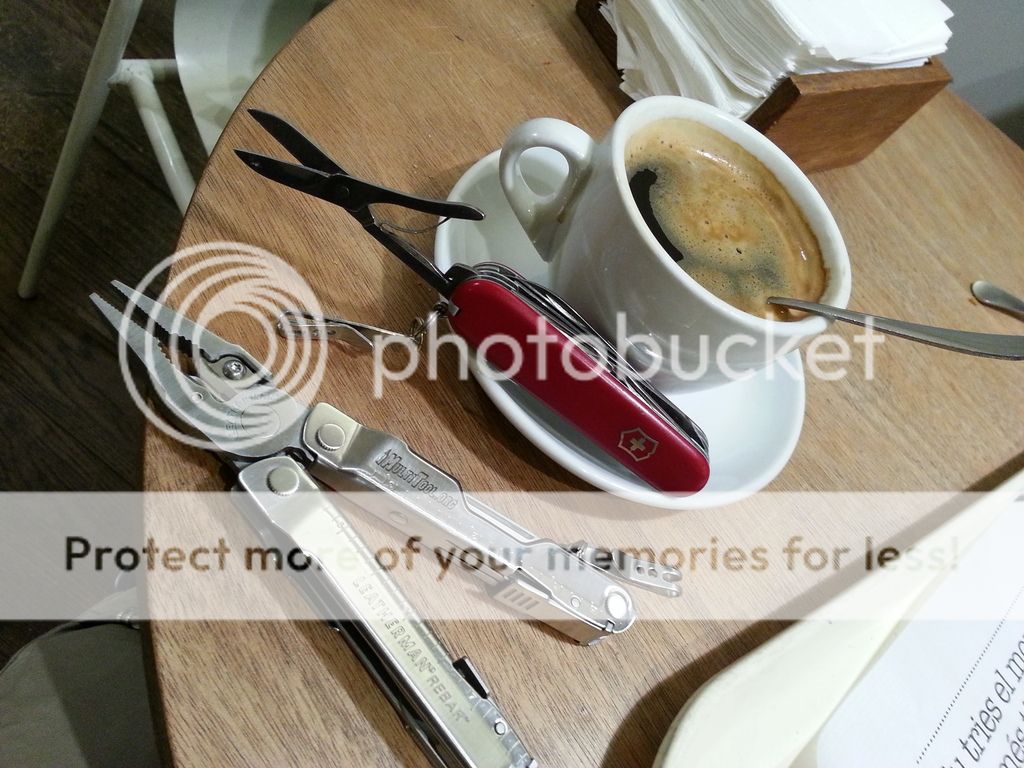
For years (all my life, I'm 30something now) I've carried modern folders, no specific style within that genre but always modern style folders. Last year I started to use fixed blades more and more till I'm now carrying a single 4-6" fixed blade daily as my only knife (I use to carry 2-3 folders) and while I've been happy with the change I miss having a super thin tip on my knife for delicate slicing.
I've thought about this a while, I've carried those folding replaceable razor blade knives but after thinking more tomorrow is day one of carrying a slip joint multi blade knife in my pocket along with my big FB...
Anyone else changing up their carry habits suddenly? Any regrets when you did? Wish you would of done it sooner?
RE:
"So it begins (tomorrow is my first day carrying a totally different style of knife)"
A fixed-blade accompanied by a multi-blade slip-joint could be a great combination (SAK, traditional, etc.). Some of my early slip-joints had at least one blade with an open-lock of some type. Something like a Case or Old Timer Stockman paired with a larger fixed blade an excellent combination in my mind.
Couple questions;
Is the 4 - 6 fixed blade the O.A. or blade length (you mentioned big, so assume blade length)?
EDIT: Blade Forums was down for me today earlier when I replied. Sending after site came back, I see there were additional posts that 4" is blade length ;-)
So, the "slip joint multi blade knife" is the "totally different style of knife"? Are the multiple blades on the slip-joint knife specifically different in shape, size, geometry, or just the style in that it's a multi-blade?
My curiosity comes from my first daily carry folder-knife having three different blade profiles and significantly differing geometry (a spey-blade, clip-point, sheepsfoot) and differing lengths. On any given day this was paired with a fixed blade based on daily activities (fishing, hunting, camping, working, etc.). Early on I learned an appreciation for different blade shapes from using them on various tasks. Also, optionally carrying together two single-bladed folders of similar blade profiles but in differing lengths (current day examples - say within the Spyderco line - PM2 paired with a Millie or a K2 paired with a S.B.).
So, kinda various differing qualifiers:
1. blade shape geometry (cutting edge shape & profile)
2. blade length (cutting edge & overall length including choils, etc.)
3. blade cutting geometry cross section (primary and/or secondary bevels & profiles)
I started with a single slip-joint with three blades (spey, clip, sheepsfoot), then combined that with a small SAK (for the added tools), then larger SAK (swiss-champ), then later the swiss-champ with a dedicated defensive blade (folding 4" dagger) for over a decade served me very well. Over the years have mixed in fixed blades (actually prefer them from an application and use perspective), and depending on the things going on in my life many times choose to include a fixed, but always also a pocket-knife (folder of some type).
It would be my guess that a fair amount of folks get into a rut of either not changing (because they have no real need for change based on daily applications), changing just for something different, or have simply found something that is good enough and might benefit from having experience to make changes and adaptations more related to the/a blade geometry and overall ergonomics. Say for example comparing how a knife with multiple bevels (primary & secondary possibly more) performs compared to one with one bevel per side (only a primary on both sides or maybe only one side) that extends to the cutting edge. Or, say how a sheepsfoot or Wharncliffe compares to a spey and/or a clip-point. Or how a blade with minimal belly compares to a heavy-front-belly or mid-belly blade. Given any/all comparisons the number of variables must be controlled/limited. Example: a number of those I know do not like scandi-grinds, but the only scandi-grinds they compared actually had small secondary bevels so they missed on being able to feel how easy it is to approach the cutting angle, and how the knife bites as soon as that transition is made, or perhaps they did not test the scandi at something it excels at like making interlocking joints in wood, etc. (tests where controlling the angle of attack to the cutting medium is paramount). Others have "tested" differences in knives without consideration for how thick the edge is at the shoulder of the transition between primary & secondary, or testing/comparing two different blade shapes when the knives also have significantly differing secondary edge profiles. In general, I have seen these users trade & exchange knives continually looking for something better many times without an understanding of the simplest functional differences between these tools.
Kudos to ya for making change(s) !!