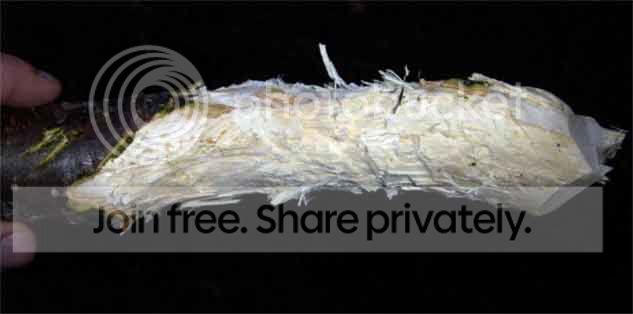
splitting wood with a small blade

Cliff Stamp

BANNED
Joined
Oct 5, 1998
Messages
17,562
With a small blade, with no premade wedges, no precut lumber, and no use of anything else to make wedges or gather the wood for batoning. The only thing artifical was the use of actual cut rounds for splitting because I wanted them to be of a certain type and I have hundreds of them to sort through.

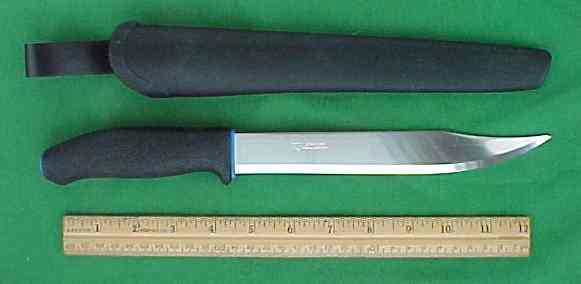
Starting off the problem is getting the initial wedges, using a very slim Mora, there is little prying ability so you can't just directly pry off a chunk of wood, and the blade can be far too short to baton off a piece directly either. So how do you split directly a large piece of wood.

Using a bunch of cracked off dead branches, a half a dozen small wedges were made, these were used to split a straight grained, very open and easy to split round. Most of the wedges were destroyed in the process, a rock was used as a baton :
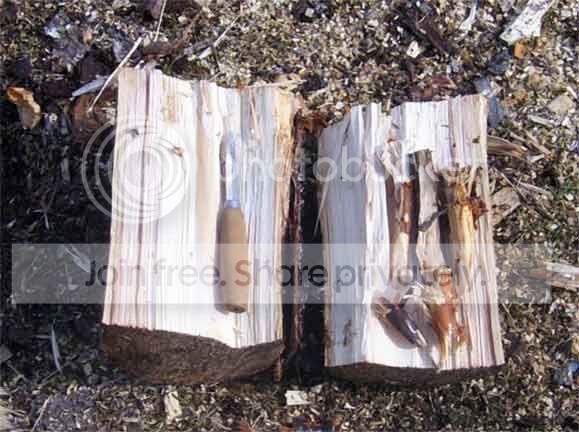
mora_split_initial.jpg


With the round split in half, a better wedge could be batoned directly with the Mora, which was then used to split off larger sections :

mora_split_continued.jpg


The primary edge is right alongside of the Mora. These larger sections made better wedges still, which enabled the splitting to be finished :
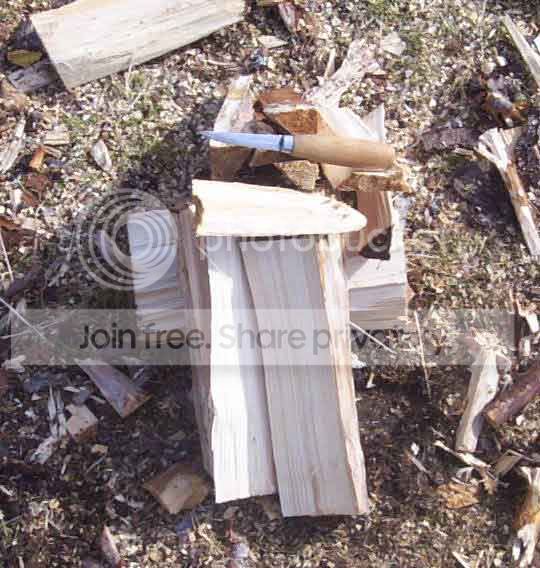
mora_split_finished.jpg


The wear on the wedge is visible. After each split it should be reshaped to remove any damaged wood to keep it going. With all the wood available for wedges it was now possible to split more difficult woods, including a piece with severe knots :
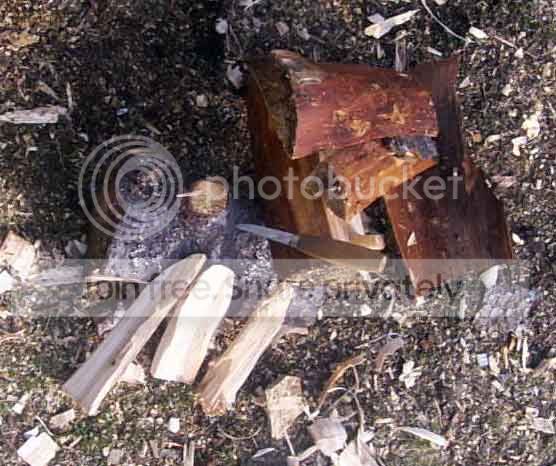
mora_split_knots.jpg


The process is much faster with a large knife because it can usually just baton off a small shim initially and skip a step in the process :
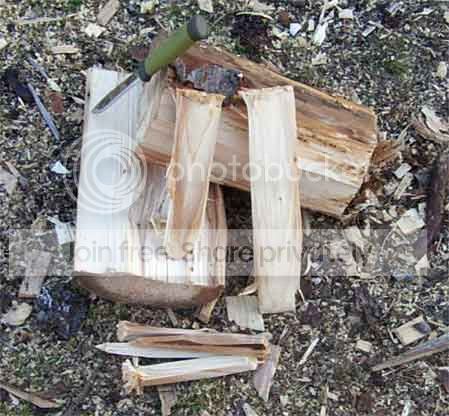
mora_2000_split.jpg


The small wedge enabled two larger splits to be removed which were cut into wedges, one of which broke during the splitting of the round in half and is the pieces at the bottom.

A much wider blade such as on the Mora 2000 also allows the blade to be twisted, so it can be batoned point first after a horizontal cut is started, and then twisted about the handle which can often split loose wood and is a lot less of a strain on the blade than lateral prying.

With all these soft wood wedges it is now possible to split a piece of clear hard wood, and once this is done, and you have a pile of hardwood wedges another tool upgrade.

Of course if you have a knife which is long and robust enough to just baton directly you don't need to do any of this, but the above can be done even with small paring knife, or with the lowest grade of fantasy knife on the market.

-Cliff
 
Good job Cliff words and pictures are always the best way to go. :)

I was surprised actually how robust these wedges can be. Did you consider a stone at all for the initial split?
 
If I read it correctly you used a stone all the time as your baton ? I am
such a wimp . I can,t imagine stone on spine unless there is no choice . Thanks for showing how you did it .
 
Very nice how 2 Cliff. I've used the M2K to do some bataning, but was a bit timid using a thinner blade. Now I think I'm going to experiment a bit. Thanks.
 
Cliff,

You seem to prefer the larger knives, and as such I was surprised to see this thread.
Nice pics and tutorial.:thumbup:

Jim
 
Temper said:
Did you consider a stone at all for the initial split?

Most times locally there isn't any available, you can spend some time attempting to break the larger pieces, but usually it is faster to carve branches and deadwoods, depends on what is available. On actual wood, not rounds there are different options because the wood is fixed in place so it is easier to pry.

For example start a cut in a standing log and then work a leather belt into the cut and pull the wood off. Almost anything fairly solid can be used, I have used the lip of a cast iron frying pan. It gets a lot easier once the first decent wedges get made, it is hard though in the fall after heavy rains because all the dead wood is soggy and you need to split wood then because everything is so damp.

Birch is one of the nicer woods locally because the bark burns well, it is very tight grained and strong but yet spits fairly well. It is really rare though and you can't count on it. Here is the above split continued :


mora_2000_split_final.jpg


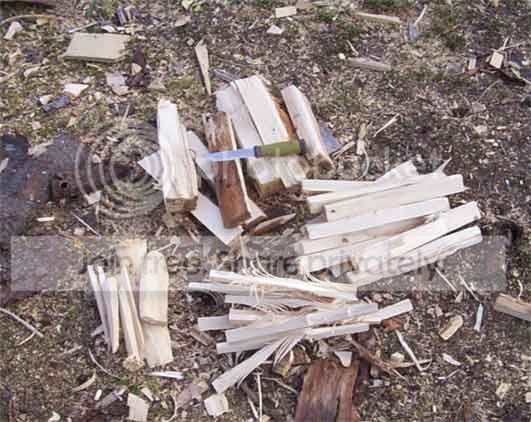
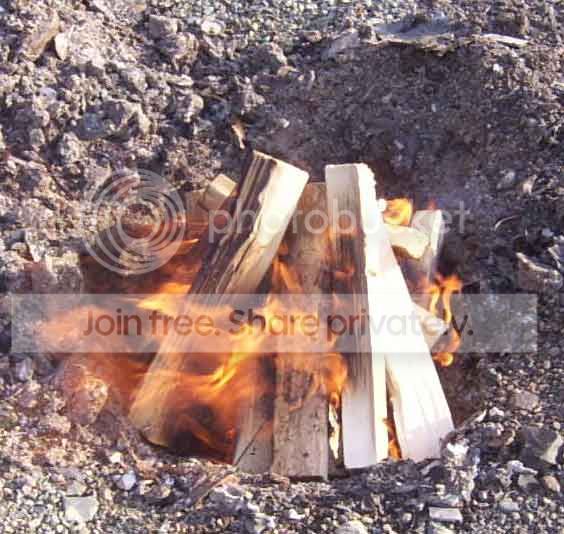
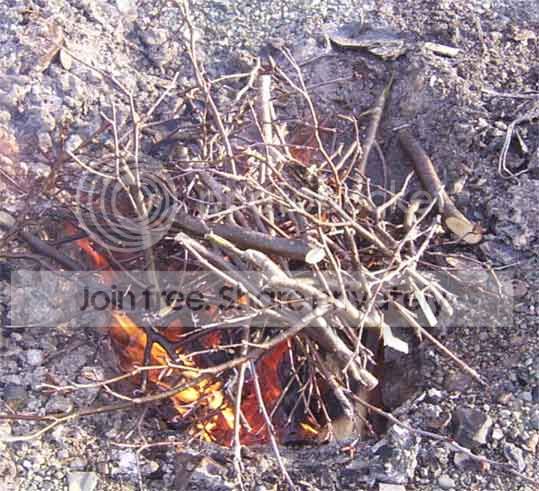
with the smaller pieces were carved to make shaving sticks. This enables a fire to be started essentially from a solid log with no tinder :

mora_2000_split_fire.jpg


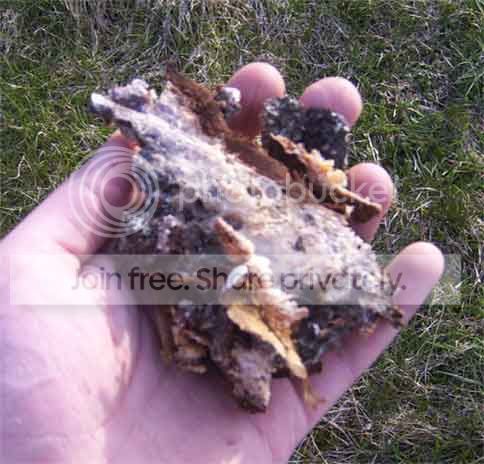
I also used a bunch of pitchy bark to keep the flame going in the beginning as the wood was not well seasoned :

mora_2000_pitch.jpg


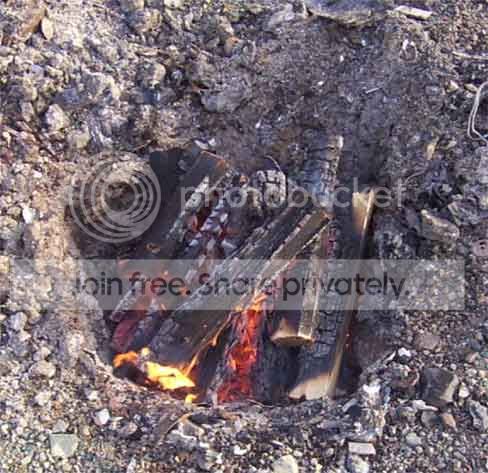
Once all the wood burns down to a nice coal bed :

mora_2000_fire_coals.jpg


there is usually enough heat to burn fresh wood, this is a pile of Alders :

mora_2000_fire_alders.jpg


There are really soft wood, not as soft as Balsa, but not much harder. The Mora 2000 can just clip off one inch sticks by chopping with a rear grip. It is a wet wood, it doesn't burn well, but at that size it dries readily in the flame and it is also really easy to debark so you can season it almost overnight.

It is useless for primary construction as it grows twisty and is so weak, but it can be used to fill out the walls of shelters fairly quickly. If you want to impress someone who doesn't know much about wood, just take a chopping blade to it, you can easily go through sections 2"+ thick with ease.

Kevin the grey said:
If I read it correctly you used a stone all the time as your baton ?

On the wedges usually, however the Mora 2000 is so slim it doesn't take much force to move it into the wood. That steel 12C27mod is also one of the tougher stainless so you are not going to crack it by tapping it with a rock. If your knife is really brittle and this is a concern you can tap on the pommel instead, or if you have a heavy boot use the heel. Most times you should be able to locate a suitable sized stick. You can also pad the rock by wrapping it in cloth or cord to dampen the shock.

longbow50 said:
I've used the M2K to do some bataning, but was a bit timid using a thinner blade.

I would be concerned about the tang, but mainly heavy batoning isn't much of an issue with this blade for me because the main reason I have to do it is to try to cut through knots and the edge and blade would just warp then anyway so the tang/handle strength isn't an issue.

Jim Craig said:
You seem to prefer the larger knives ....

For some things. I would tend to pick a parang or similar for most brush work if I was going blind as they work well from grass to solid wood and from carving to chopping to food. But in general would be comfortable with a quality axe or small blade + saw as well and would just do different things to achieve the same goals.

-Cliff
 
Cliff - Good post and pics.

Next time a maple or black cherry in my back yard decides to take a tumble I'm sending you a PM and a round trip ticket. You have more fun with splitting wood than anyone I know. I hope you have some great times sitting by the fire with some good booze enjoying the fruits of your labors.
 
Im a newbie in survival(well, at least some things..) and this batoning thing is a bit foreign to me...Do you somehow "split" fallen tree trunks, or how do you get the logs you need for ordinary batoning in the first place.Those logs looked like they were made with a saw or ax.

Me puzzled...
 
Cliff Stamp said:
Of course if you have a knife which is long and robust enough to just baton directly you don't need to do any of this, but the above can be done even with small paring knife, or with the lowest grade of fantasy knife on the market.

-Cliff

Great post, Cliff!
 
DGG said:
I hope you have some great times sitting by the fire ...

Stacking it is kind of boring, there is a zen like aspect to splitting and felling though.

Cynic1 said:
Do you somehow "split" fallen tree trunks, or how do you get the logs you need for ordinary batoning in the first place.

If all you have is a small knife then you do either one of two things, the first and ideal is find something like this :

mora_2000_birch_prying.jpg


These can be broken apart with the knife directly if it is strong enough. With a smaller knife, if there is suitable wood nearby it is usually a decent idea to make a set of prybars/diggers, as was done here producing the two pieces of birch leaning up against the stick which were cut to tapers on the ends. If the wood is soft enough the hardwood prying sticks can be used to break it apart directly. This type of wood can be filled with insects such as ants and as well dirt so the digging stick saves you fingers from bites and the edge of your knife from wear.

If the wood is too solid for the sticks to penetrate it directly then the knife is batoned into it to start a cut and the sticks can then be used to pry it apart, if the wood is really solid then you will need to shape a bunch of wedges and do similar to the above. If you can't find any dead logs like that and there is no small dead woods so then you follow the same basic idea as noted in the above. Cut a piece of wood with the small knife of the maximum size it can handle efficiently, you use this then as a baton to enable it to cut a larger piece of wood, and repeat this as often as necessary until you have a solid working baton.

You then use this baton and the knife to cut down the necessary size wood and section it to length. This is really time consuming. It isn't as bad with two people because while one is doing the felling the other is gathering the tinder, lighting the fire and doing all the light work such as clearing the branches and using the notches you cut to break the thicker wood. It is somewhat difficult to cut wood larger than the length of the knife, you have to basically run around the tree cutting notches, but in general it is rarely necessary to cut really large wood for burning or for shelter building. Even 2" sticks are more than enough for any shelter and 4" sticks, fresh, burn for a very long time.

The general idea of batoning on a knife to do hard cutting is really old, shop or hack knives are common tools for carpenters which would be used in this manner to cut putty off of old window frames and split shims off hardwood stock. It was first used on the forums to promote extreme durability as in "See how tough this knife is - you can baton it through woods by beating on it with another pice of wood." Jim Aston was one of (if not the first) to do a lot of work with it with really inexpensive, small and thin knives and show that it isn't very demanding in that respect.

Those logs looked like they were made with a saw or ax.

Felled with an Iltis, bucked to length with a bow saw.

-Cliff
 
I,m not the best stacker my ownself . Maybe you will have to make a cordwood house to get it out of your system . L:O:L

Cliff I am still trying to find a bit of land to set up a camp and try out more involved campcraft . Until then its the backyard and splitting firewood for now . Maybe one day I,ll have a camp fire to burn it in .
 
Thank you, btw. I just noticed that you mentioned the logs being sawed in the original text, I hope it didnt appear as if I was trying to catch you of cheating:):) I imagine that handling a large tree like that would be timeconsuming, but I venture to guess that practice hepls in this..I know I would hopeless.( i suck even at handling an ax fast and efficient, seen a lumberjack do it once in the army,WOW)
 
How odd. I was just think the other day, what the best way to make a wedge would be, using a small blade, to then be able to split logs.

I'm in Australia, where a lot of the wood 'outback' is a member of the Gum family, so it carries a load of sap. The smaller sticks tend too burn off fast and bright (light no heat) but, you tend to keep warm by collecting too much wood, I would rather have a small pile of split logs, that take longer to burn off, so I can enjoy a cold beer for longer and tell lies about the snakes, crocs, dingos I've had to fight off with my bare hands :-)
 
billy_cee said:
How odd. I was just think the other day, what the best way to make a wedge would be, using a small blade, to then be able to split logs.

Use it to pop open a can of beer and offer it to the guy next to you for his axe is probably the most efficient way.

I would rather have a small pile of split logs, that take longer to burn off, so I can enjoy a cold beer for longer and tell lies about the snakes, crocs, dingos I've had to fight off with my bare hands :-)

That's the best part of "surviving" the outdoors.

Kevin the grey said:
Maybe one day I,ll have a camp fire to burn it in .

One of the benefits to living in a pretty rural area, land isn't a problem.

Cynic1 said:
I imagine that handling a large tree like that would be timeconsuming ...

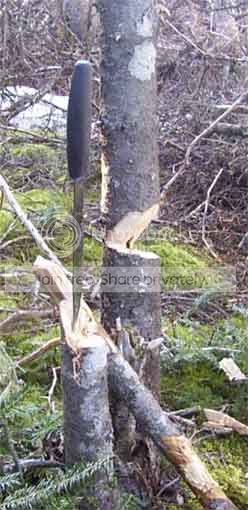
With a small blade kind of, here is the process with just the blade and no precut rounds to start with :

long_mora_small_stick_notch.jpg


The piece of hardwood was directly cut with the knife, which a longer Mora which has enough chopping ability to cut the baton shown directly. Both of the sticks in the picture were cut :

long_mora_notches.jpg


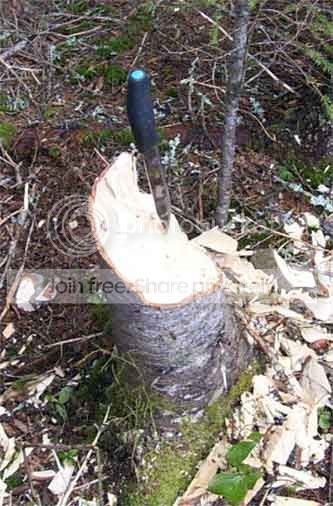
The larger one required multiple notches to open the front as it was to wide to cut in one pass, so it needed side relief notches, but it was still only a few minutes to clear the front and do a single cut on the back. Once felled they can be cut to rounds in the same manner and then be split directly :

long_mora_sticks_splits.jpg


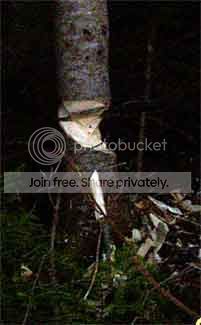
These are small, but if for some reason you want to cut much larger wood, it just takes more time :

long_mora_halfnotch.jpg


That is about half way through a six inch tree, takes awhile to baton that and it is a bit more wood than is needed, and the point at which you really start to be wanting an axe, but in about half an hour it is down :

long_mora_felling.jpg


Used a piece of alder as a baton, lots of impacts which wore it well away :

long_mora_baton_end.jpg


I sharpened the blade to a high polish before I cut the last tree, checked it after all the batoning, still smoothly push shaving sharp, not bad for a knife that costs less than twenty dollars.

Better shot of the knife from Ragweed forge :

749.jpg


This is sort of some kind of leuko/bowie hybrid, it is really thin stock, ~0.075".

-Cliff
 
.075 ? Twice the thickness of an arrowhead . Its got a nice profile . Where did you pick it up ? I just grabbed an old hickory butcher knife that kinda has the profile of a bowie knife . Its got enough weight to do light chopping . Thanks for showing the battoning of the tree . There are some juicy poplars hat I,ll try it on .
 
Considering my chainsaw got awful quiet about five ytears ago I think its very important to have an alternative . Not only that but practice makes necessity a lot easier to swallow .

If I ever do get a chance to set up a camp the more I can do myself the better . I think there is greater satisafaction in it . I am not saying that I will never rip open a beautiful calm morning in the woods with the sound of a chainsaw . It is just not my preference .
 
Back
Top