Strider SNG - This Thing ROCKS!!! A Brief Review w/ CRK Comparisons... (Pic Heavy)

Great review, seems like an awesome knife! But at that price points we really shouldn't see the issues you saw.

I don't expect and accept those at any price point.
My CRKT $17 Drifter is perfect and I exchanged my Böker Trance and is now perfect as well.
 
I don't expect and accept those at any price point.
My CRKT $17 Drifter is perfect and I exchanged my Böker Trance and is now perfect as well.

Just understand that this was my first Strider, and what I thought were F&F "issues" were actually purposeful design choices with the exception of the hand-stamped logo. Each of these make perfect sense to me now that I understand the functionality they provide. And regarding the hand-stamp, I don't have an issue with it now at all now that it was an actual human adding the mark vs. a machine. How often to you get that nowadays?? Besides, you don't really notice it with out a magnifying glass or macro lens anyway, but I actually like knowing it was hand-stamped.
 
http://www.emersonknives.com/ekKnifeAnatomy.php

It's how the Walker liner lock is suppose to be; what is STR talking about?

People get lost in the translations all the time. Sometimes when I try to convey what I'm picturing in my head it does not come across. Basically its like this. The link you provide shows the correct and incorrect lock up by one person's standard. What I see there is a picture showing the bare minimum requirement and what would be wrong if done that way on the other side and thats a bit deceptive because you can play with tolerances some and still be correct in building it. Let me explain. Look at that picture. Note the pic on the left showing where the correct spot the lock should connect at the arrow. Look to the right and note that the lock has two arrows and shows what would look like a 'full lock contact' touching the lock near the mid line of the pivot. This is incorrect. No liner or frame lock should have contact at or near the mid line of the pivot as this leads to what we term blade roll or where the lock connects but the blade seemingly rolls on the lock sort of up and down. Some of you that purchased the Buck Strider 881 models that exhibited this blade roll can attest to what happens when the lock connects too close to the mid line of the pivot. Many times I had a 881 or 880 model Buck mailed to me and all it took to correct the lock up and eliminate this blade roll was to simply wipe out the part of the lock that was connecting the blade near the pivot.

My contention is simply this. While its technically correct to have the lock connect as in the picture to the left, its also still correct and still well within tolerances if it connected covering the surface area of two arrows shown in the picture to the right. From the stand point of improving the wear rates of the lock so what if this adjustment means it is no longer a Walker lock! I'm not really all that concerned with that anymore than Chris Reeve was when he did the RIL folder. I don't think anyone would argue that the RIL is a vast improvement to the Walker lock. Imagine doubling the actual foot print of actual lock surface area connecting to the blade and still being within tolerances to still be deemed correct for how its built. Doesn't it make sense that a 2mm contact foot print would wear a little better over time than a 1mm or a .5mm contact surface area? The truth is you can spread that contact of the lock out so it connects over a larger surface area and push the limits of that until you notice the first signs of blade roll. Then back it off so you take out the parts of the lock contacting the blade near the mid line of the pivot area and once it locks up solid with no vertical play you have it! Even when the surface area contact of the lock is so big it covers two or two and half arrows in the picture to the right its still far enough from the mid line of the pivot for this type of folder lock mechanism to be correctly done. Both ways are correct. One, the picture on the left meets the minimum requirement to make it correct and all that really needs to be done to make a good lock up. If you want to make it better even a 'great' lock up you can. It goes a bit beyond meeting just the minimum and actually tries to take that even a bit further to step it up a notch more. In this mass produced world with a mass produced product the minimum is acceptable of course for mass produced knives.

So, the bottom line is that we have an area we need to stay within to be within tolerances for building this type of folder. There is margin for error or plus or minus one way or the other here and room for improvement. Some spend a bit more time developing that and feel they've got a good handle on things. If others feel its not necessary thats their choice. Both work. I just feel like some have really gone a bit further and created a lock that is less troublesome overall for actual track record for both how it works as in does it stick and bind terribly (most Sebbies don't) when you go to release the lock? These are the things that spreading out the contact some seems to alleviate and then there is the other issue of how well the lock wears over time. I still contend that there is a reason Reeves knives have locks that wear so well with a proven track record for smooth trouble free operation. Personally I think it is because Chris is just anal retentive enough to not stop at meeting the bare minimum for any area of how his knife is built.

Oh and basically guys the same principle is applied for the stop pin.. Look at the stop and imagine just the squared off end of the tang banging on that pin. In this case you have that flat surface for a tiny little line hitting the stop everytime you open the blade. To increase the surface area of blade coming into contact with the stop makers create a half moon cut out notch in the blade to actually at least in theory spread out the surface area to allow for greater wear. Thats all I'm talking about with the lock contact and if you think it can't be done well, think again. There is always room for improvement if one wants to spend the time and plan and map out the steps to build it in such a way.
STR
 
Last edited:
Just understand that this was my first Strider, and what I thought were F&F "issues" were actually purposeful design choices with the exception of the hand-stamped logo. Each of these make perfect sense to me now that I understand the functionality they provide. And regarding the hand-stamp, I don't have an issue with it now at all now that it was an actual human adding the mark vs. a machine. How often to you get that nowadays?? Besides, you don't really notice it with out a magnifying glass or macro lens anyway, but I actually like knowing it was hand-stamped.

Look at it this way, now you have a benchmark to judge any other Striders you might buy in the future. :)

Other than the stamp the knife is PERFECT so you know what you should expect them to look like now that you have one in hand.
 
Just understand that this was my first Strider, and what I thought were F&F "issues" were actually purposeful design choices with the exception of the hand-stamped logo. Each of these make perfect sense to me now that I understand the functionality they provide. And regarding the hand-stamp, I don't have an issue with it now at all now that it was an actual human adding the mark vs. a machine. How often to you get that nowadays?? Besides, you don't really notice it with out a magnifying glass or macro lens anyway, but I actually like knowing it was hand-stamped.

I wouldn't mind the stamp myself either, although it is a bit weird on such an expensive knife.
I was more talking about the sticky lock.
 
I wouldn't mind the stamp myself either, although it is a bit weird on such an expensive knife.
I was more talking about the sticky lock.

There is a break in period with Striders so that is normal, it will go away once the knife is broken in.
 
I wouldn't mind the stamp myself either, although it is a bit weird on such an expensive knife.
I was more talking about the sticky lock.

Yep - it sounds like there is an understood break-in period for Striders. I've only had it a little over a week and the stickiness is already starting to go away. I haven't done the pencil/marker trick yet but don't think I'll need to.
 
Yep - it sounds like there is an understood break-in period for Striders. I've only had it a little over a week and the stickiness is already starting to go away. I haven't done the pencil/marker trick yet but don't think I'll need to.

Yeah, that's sounds about right, about a week. :)
 
Welcome to the wonderful world of titanium frame locks.

Interesting, I have 3 Sebenzas (2 small and 1 large) and not a single one has ever been the least bit sticky or even remotely difficult to close. Admittedly, I did purchase the large used, but both smalls were brand new, and neither one needed any break-in to make closing easier.
 
Interesting, I have 3 Sebenzas (2 small and 1 large) and not a single one has ever been the least bit sticky or even remotely difficult to close. Admittedly, I did purchase the large used, but both smalls were brand new, and neither one needed any break-in to make closing easier.

For me too. I bought a large Sebenza 21 brand new and have never had a problem with the lock. It's the smoothest knife I have by far.
 
For me too. I bought a large Sebenza 21 brand new and have never had a problem with the lock. It's the smoothest knife I have by far.

CRK grinds the tangs to a finer grit so that could cut down on the galling some.
 
I have one of six Sebs that's a bit sticky.

CRK grinds the tangs to a finer grit so that could cut down on the galling some.

Yes, and the Striders are well off on the other end of that spectrum. :D Mine work fine, though...only one is sticky to the point of being noticeable.
 
http://www.emersonknives.com/ekKnifeAnatomy.php

It's how the Walker liner lock is suppose to be; what is STR talking about?

Technically speaking Ernie is not using a "Walker Liner lock". If we are talking technicalities now then technically speaking Ernie's lock stopped being a "Walker" lock the day he stopped using the active detent ball on the lock side and went to his double detent using the tab with the ball in the non lock side to defeat gravity. That is not the Walker lock set up since the Walker lock should have a ball bearing in the lock that defeats gravity and keeps the blade tip safely down between the liners during carry. The ball bearing in the lock is not activated in the Emerson knives made after Ernie started using the tab detent so therefore it is something else in his knives other than a 'Walker' set up or design.. It has to be something else because it is different in how its put together and how it works. Technically speaking another patent is involved in Ernie's set up. So from my stand point only the earliest Emerson knives like my original 98 SpecWar and a few others by Emerson were the actual Walker lock before he invented and patented the double detent system incorporating that into his folders from that day forward. When Chris Reeve changed early liner locks to a frame lock it became the RIL because it is technically different than a Walker lock in more ways than just thickness. I see nothing different here with Emersons. It is technically different than a "Walker" lock in how Emerson knives are done so therefore it can't be called a Walker lock anymore from that standpoint. It either is or it isn't, you can't have both. From the stand point of the actual details it is clear to me it is not a Walker lock anymore in Emerson knives.

Another thought. If changing the foot print of the contact to cover more surface area is technically enough to change it from being a Walker lock to no longer being a Walker lock since you spread the contact out some to make it wear more evenly then certainly changing the detent and how it works qualifies to change this also. :thumbup:
 
Last edited:
People get lost in the translations all the time. Sometimes what I try to convey what I'm picturing in my head it does not come across. Basically its like this. The link you provide shows the correct and incorrect lock up. What I see there is a picture showing the bare minimum requirement and what would be wrong if done that way on the other side. Look at that picture. Note the one on the left showing where the correct spot the lock should connect at the arrow. Look to the right and note that the lock has two arrows and shows what would look like a 'full lock contact' touching the lock near the mid line of the pivot. This is incorrect. No lock should have contact at or near the mid line of the pivot. My contention is simply this. While its technically correct to have the lock connect as in the picture to the left, its also still correct if it connected covering the surface area of two arrows shown in the picture to the right. Imagine doubling the actual foot print of actual lock surface area connecting to the blade and still being within tolerances to still be deemed correct. Even when the surface area contact of the lock is so big it covers two or two and half arrows in the picture to the right its still far enough from the mid line of the pivot to be correctly done. Both ways are correct. One, the picture on the left meets the minimum requirement to make it correct. The other goes a bit beyond meeting just the minimum and actually tries to take that even a bit further to step it up a notch more. In this mass produced world in a mass produced product the minimum is acceptable of course for mass produced knives.

So, the bottom line is that we have an area we need to stay within to be within tolerances for building this type of folder. There is margin for error here and room for improvement. Some spend a bit more time developing that and feel they've got a good handle on things. If others feel its not necessary thats their choice. Both work. I just feel like some have really gone a bit further and created a lock that is less troublesome overall for actual track record for both how it works as in does it stick and bind terribly (most Sebbies don't) when you go to release the lock? These are the things that spreading out the contact some seems to alleviate and then there is the other issue of how well the lock wears over time. I still contend that there is a reason Reeves knives have locks that wear so well with a proven track record for smooth trouble free operation. Personally I think it is because Chris is just anal retentive enough to not stop at meeting the bare minimum for any area of how his knife is built.

Oh and basically guys the same principle is applied for the stop pin.. Look at the stop and imagine just the squared off end of the tang banging on that pin. In this case you have that flat surface for a tiny little line hitting the stop everytime you open the blade. To increase the surface area of blade coming into contact with the stop makers create a half moon cut out notch in the blade to actually at least in theory spread out the surface area to allow for greater wear. Thats all I'm talking about with the lock contact and if you think it can't be done well, think again. There is always room for improvement if one wants to spend the time and plan and map out the steps to built it in such a way.
STR

That's exactly my thoughts on the matter, though I'm not a knifemaker or aerospace mechanical Engineer. I think doing lockup at the angle is just a way of ensuring the good lockup with minimal effort, because if they try to grind it flat and messup even a little bit doing the opposite angle, then point of contact will move close to the pivot (BAD) and will be there till lock wears in and spreads more evenly. If they mess up more than a little bit, then lockup will never wear in correctly. I think it is a good decision to do it at the "right" angle to be safe, but the good flat lockup is closer to perfection and will "serve" longer.
 
That double tap on Strider tang stamp seems to happen often but it sure doesn't have any effect on the knife. I've seen a few examples of that recently.

Regardless of that or any other derog toward Strider, I think their knives rock and I plan to have more than the one I have now. Granted, I got my SMF CC SW from another fine BF member ina trade so I knew I was getting a good one but I fully plan on buying a brand new Strider soon as well. Not sure whch one yet but I promise I will have another.

Yes, I think they cost too much but I doubt Strider will lower the price just for me so if I want one, I have to pony up :)
 
That double tap on Strider tang stamp seems to happen often but it sure doesn't have any effect on the knife. I've seen a few examples of that recently.

Regardless of that or any other derog toward Strider, I think their knives rock and I plan to have more than the one I have now. Granted, I got my SMF CC SW from another fine BF member ina trade so I knew I was getting a good one but I fully plan on buying a brand new Strider soon as well. Not sure whch one yet but I promise I will have another.

Yes, I think they cost too much but I doubt Strider will lower the price just for me so if I want one, I have to pony up :)

Good for you.:thumbup: I have never got a less than perfect Strider new or used. I love them. You either understand what a Strider knife is all about or you dont.

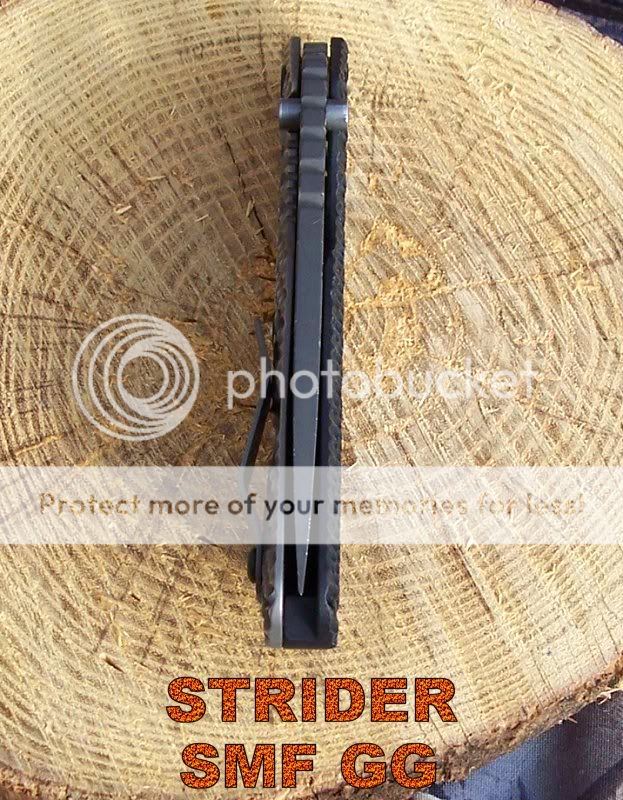
SMFGGBladecenter.jpg
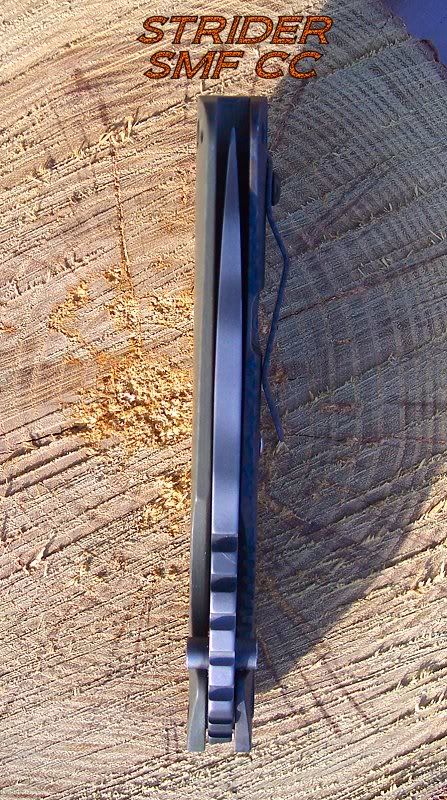
SMFvbladecenter.jpg
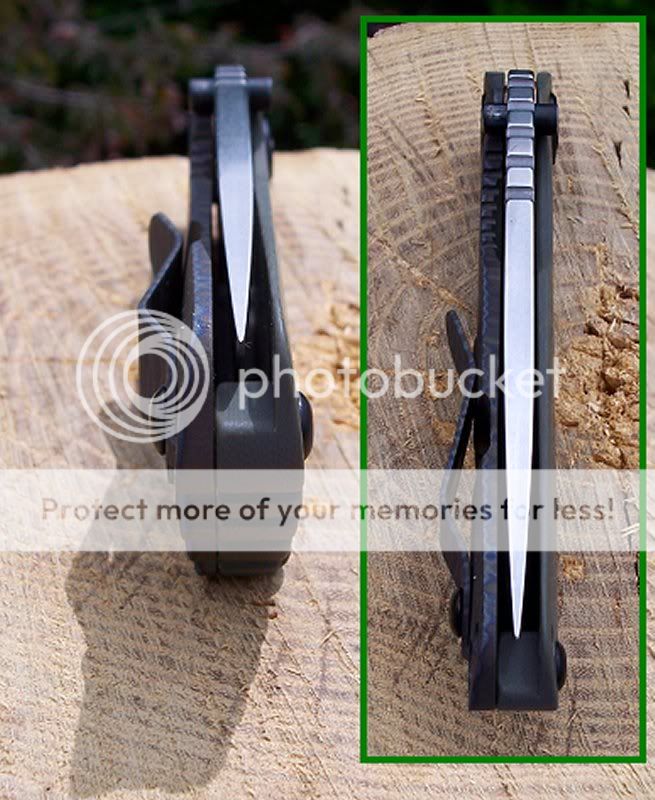
bladecenter.jpg
:D
 
Back
Top