Surface Grinder Electrical Problems (RESOLVED)

T.Saslow

Periodic Thinker
Joined
Jun 12, 2013
Messages
479
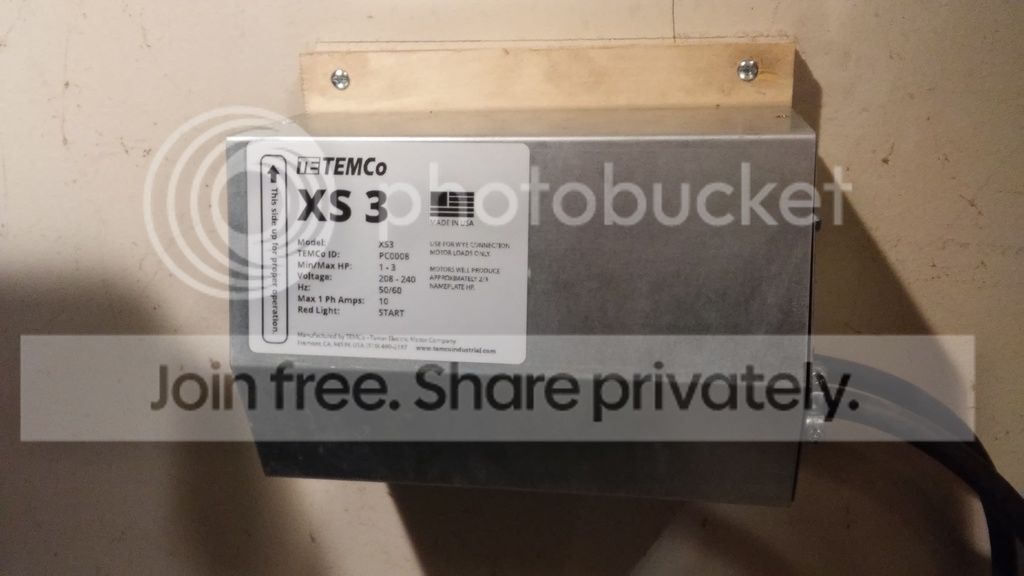
I was recently at the receiving end of a very generous offer of an old 6x12 DoAll surface grinder; it's in very good condition as far as the mechanisms and surfaces go, but I'm having some serious problems with the the switch operating the spindle motor. I knew I would need a phase converter- the motor runs 220 volt 3 phase- but for some reason, that's just not doing the trick. When I turn it on, the thermal overload relay on the left side starts smoking and the switch shuts itself off. Before I knew what was smoking, I took the entire switch apart and determined that the thermal overload relay was at fault; it was completely brown. The other two were normal. Having ordered a new relay and installed it, I tried it out again and more smoke, more heat, and the switch turned itself off again. I have been talking to a good friend of mine who is more adept in the world of electronics and we thought we found the problem. The generated phase coming out of the converter (the one not connected to the incoming lines from the wall) wasn't hooked up the the central cell of the switch, the only one that doesn't have the mechanism to trip the switch if the relay gets hot. I switched the wires around, turn it on, and it shut off again. Does anybody have any idea what's going on here?

I can verify that there is 220 volt, 20 amp, single phase coming into the converter and the three contact points in this switch are clean. The motor is runs 220-440 volts and is 1 HP
Here are some pictures;
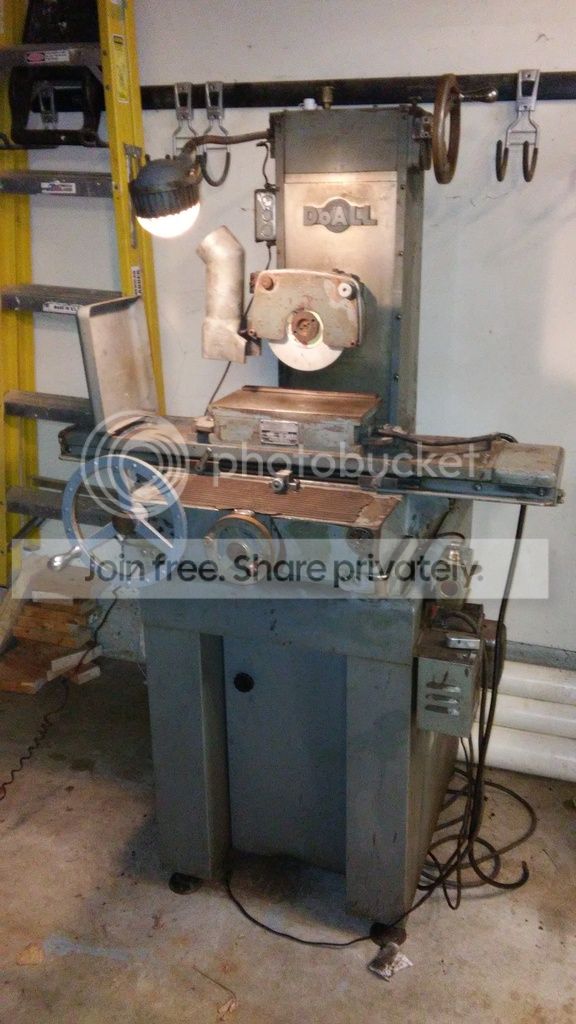

The switch in question
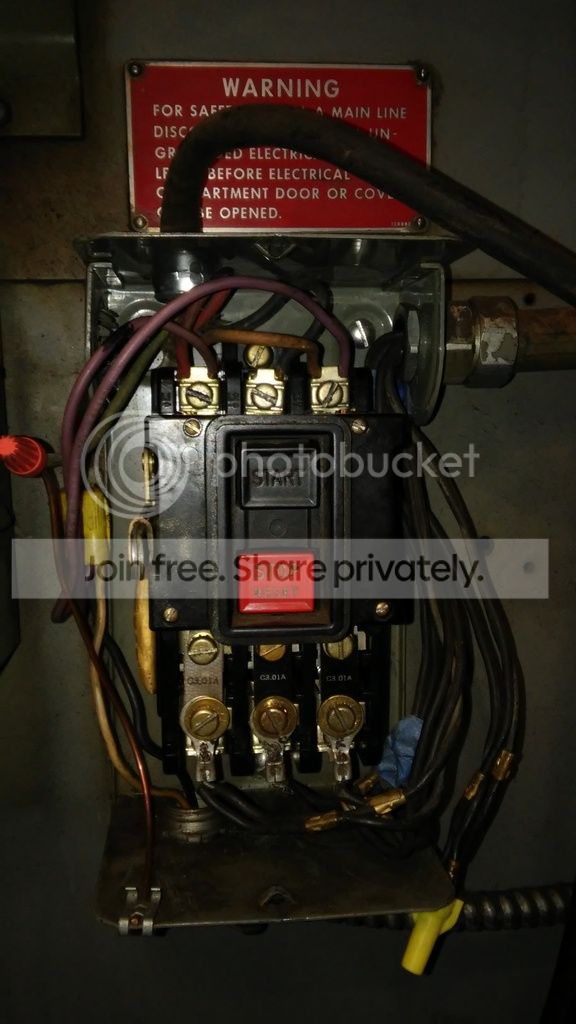


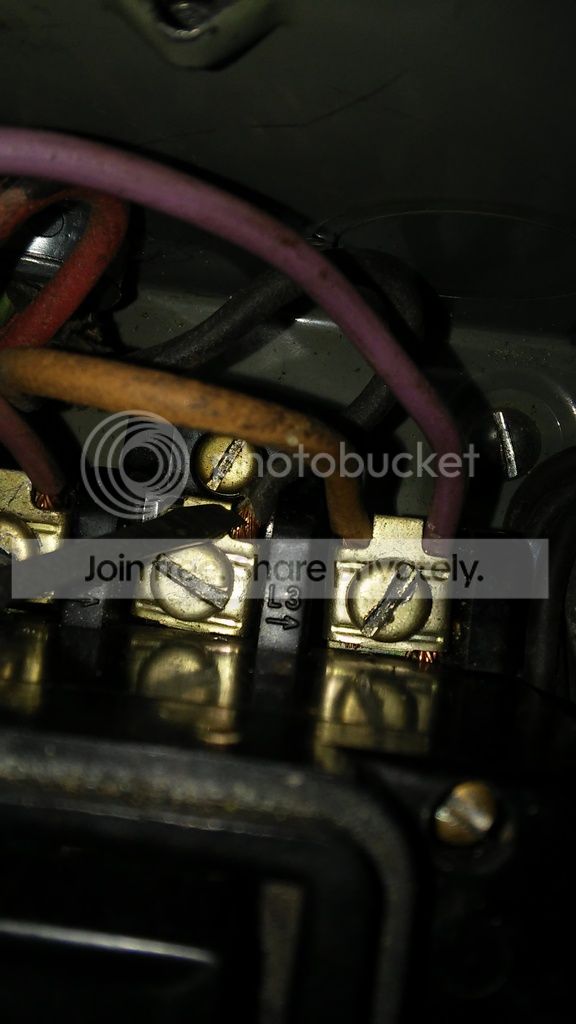
The wire I'm pointing at is the generated phase
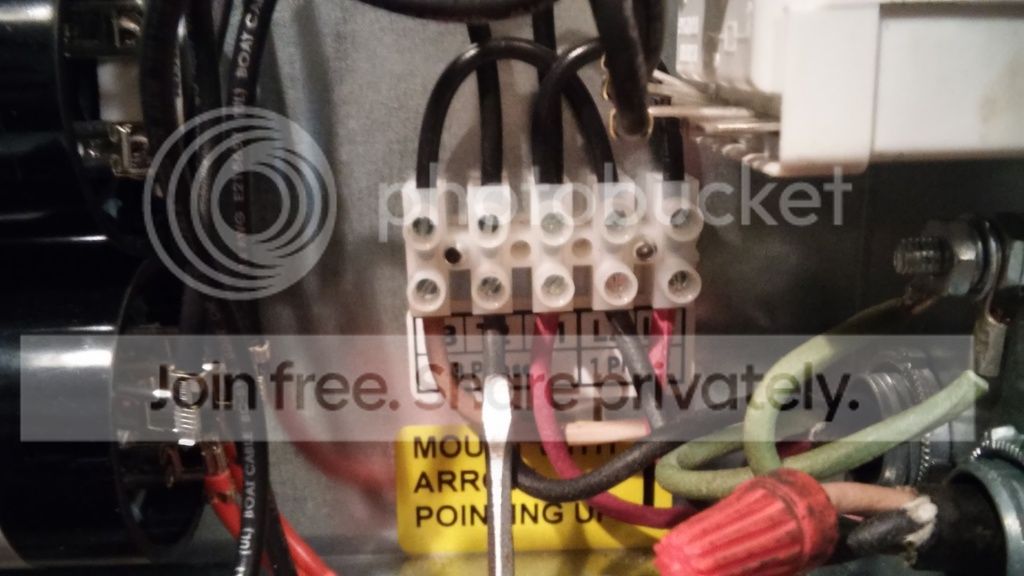

I matched the black wire with the generated phase to the middle cell, the one without the thermal relay.

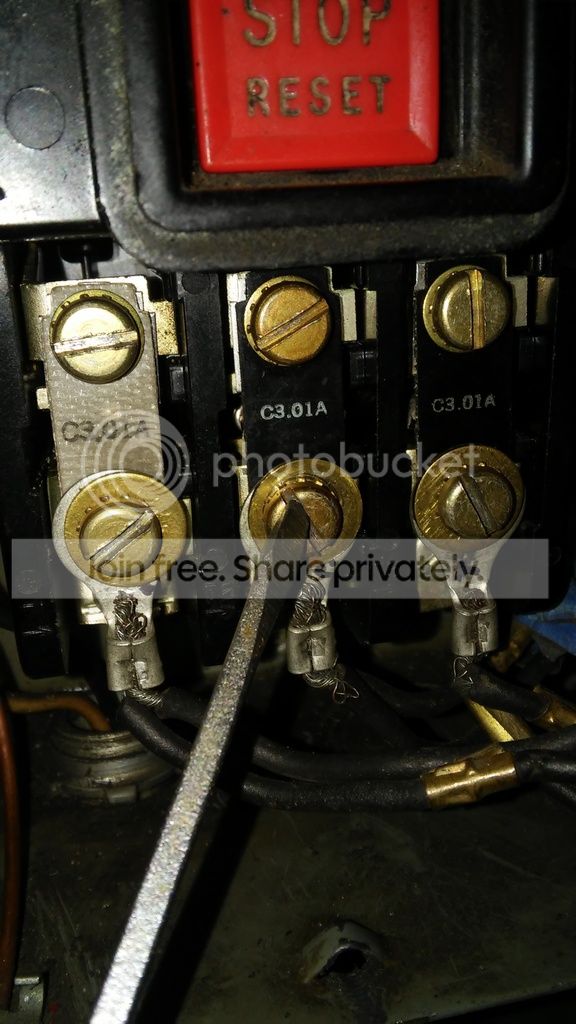
The white rectangle is the relay that was burning. The one I'm pointing at is the output for the generated phase.

I apologize if my terminology is wrong or my description isn't clear. Electronics isn't really my forte.

Tanner S.
 
Last edited:
Is your motor a "Y" (WYE) connection motor? Your phase converter says that's all it's good for. I'm not at all familiar with phase converters, mostly you'll find VFD drives used for conversion to 3 phase.

I didn't see any wiring hookup info on your phase converter. Sorry, I can't provide much help,

Ken H>
 
That looks pretty much the same set up I have running my surface grinder. I use a phase o matic to supply power and it is a similar setup to yours and the only issue I ran into was the motor running backwards if I recall correctly, the thing is dead simple to setup.

I've read up just enough on 3 phase conversion to hook up my VFD and the solid state converter I use on my SG. The only thing I can think to check would be to put a volt meter on the 3 phase generated legs and see what they read. Perhaps you got a bad converter. I'm also suspicious of the 10amp max, could you really run a 3HP motor without pulling 10amps of single phase? I did have a strange anomoly where if I tried to start it with the wheel lowered to almost touching the table it would make a buzz and not power up. I shut it off and raise the wheel and it poweres right up and lets me drop the wheel to the chuck again.

Sorry I can't offer more help. I know there is a British guy on here I think his name is Tim Gunn, he seems to know quite a bit about this stuff, he may chime in. If you can't get help here I recommend going to practical machinist and post this question in the electronics sub forum. There is a guy with the handle jraef that builds converters for some company and seems to have experience with just about every type of converter and vfd out there. Keep us posted.

-Clint
 
Is the VFD trying to apply DC braking voltage on startup?
 
Thanks for the advice. I have yet to check the volt readings between the three legs, but I think that would be a good idea. I'll try that out tomorrow and see what I get. I have had this thing in my garage for two weeks and it has yet to run for more than 45 seconds. The suspense is killing me!
 
Is the VFD trying to apply DC braking voltage on startup?

I'm not entirely sure what you mean. Could you explain? I'm not using a VFD, just a physical on/off switch (as opposed to a magnetic switch).
 
No, I have not, but considering the lower voltage listed on the motor is 220 (technically it's 208), I can't imagine having insufficient voltage would cause smoke in the switch. I could most certainly be wrong here though. The strange thing is the motor runs incredibly smooth and consistently for the 30 seconds it had power. I will check with the guys I got it from and see what voltage they ran it on when they got it.
 
All good. Could be interesting to get a VFD for it and mess around with speeds and feeds. Thanks for the idea!
 
A pic of the motor data play would help. That heater element is rated at 2.15 amps. Remove motor leads and check voltage from ground to each leg. The generated leg could have a weird reading, it's more important that you have proper voltage from leg to leg. A and B should be 208-240, as should B to C and A to C. Improper voltage on the generator leg could lead to higher amp draw causing the thermal to burn out. Could very well be the windings in the motor as well. Definitely check that the motor is wired to the proper output voltage of the controls.

If that all checks out, an ampere check would be best if you have an amp meter. Also checking voltage under a load. That may be hard though if it constantly trips.

If your motor is around 2HP, you could do the ol' treadmill swap for next to nothing.
 
Have you verified that the motor is wired for 220 using the low voltage diagram ?

No, I have not, but considering the lower voltage listed on the motor is 220 (technically it's 208), I can't imagine having insufficient voltage would cause smoke in the switch. I could most certainly be wrong here though. The strange thing is the motor runs incredibly smooth and consistently for the 30 seconds it had power. I will check with the guys I got it from and see what voltage they ran it on when they got it.

Are you certain that you're wired for 220 and not 480 on the motor?


Yes
Read the data plate
Check how the wires are connected in the motor


Show us all the data plates.
 
Also might check the rotation of your motor. If it's turning the wrong way, swap 2 leads on the load side of your contactor. Doesn't matter which.

ETA: what are the two red wires that are connected to a black and white wire exiting the bottom of the enclosure?
 
Last edited:
I believe the amperage for the motor is between 1.1 and 2.3 amps. I will post a picture of the motors data plate and double check the amperage when I get home from school. There is a slight problem with opening up the motor though....There is a 500+ pound machine two inches from the wall measured from the back of the motor. I will see what I can do in terms of checking out the inner workings of the motor. I'll check the voltages for each leg when I get home and report back.
 
Also might check the rotation of your motor. If it's turning the wrong way, swap 2 leads on the load side of your contractor. Doesn't matter which.

ETA: what are the two red wires that are connected to a black and white wire exiting the bottom of the enclosure?

I have the wheel spinning the right direction. That was the first problem I found and fixed :p The extra wires you speak of go to a transformer on the side of the grinder that is hooked up to an outlet. I think it steps it down to 110 volt single phase though because I am able to run the magnetic table and light off that outlet.
 
If that's the case, then I wouldn't rush to check the motor. If you haven't done anything to it then chances are it should be correct unless something is loose. This is under the assumption that it worked properly when you bought it. I'm only assuming this because that transformer for the light would have been a 480v to 120v and would not be working right if applied input is 240 0r 208. If you added the transformer after the fact then this theory can be thrown out lol.

My first inclination is the generated third leg isn't supplying high enough voltage. Drop in voltage raises amp draw and burns stuff.
 
Yeah, I was told that it ran well when they got it. I'll have to check the voltage. What would be the expected values for the different legs? Should the two non generated phase legs be 220 and the middle one be slightly less?
 
Was this machine ran previously on a static phase converter, or true 3 phase power?


Sent from my iPhone using Tapatalk
 
I think it would be 3 phase. They run several milling machines and lathes in the shop so I would assume they have 3 phase.
 
Back
Top