
- Joined
- Jan 28, 2009
- Messages
- 2,687
I find the secondary tip very useful as a sort of xacto knife for cutting things on a flat surface. just a good blade shape for utility use.

The BladeForums.com 2024 Traditional Knife is available! Price is $250 ea (shipped within CONUS).
Order here: https://www.bladeforums.com/help/2024-traditional/
Do tanto blades have any real practicality? They seem so inferior to drop point blades for just about every use.

I find the secondary tip very useful as a sort of xacto knife for cutting things on a flat surface. just a good blade shape for utility use.

That is darn near a drop point. Not quite as angular with some useful belly.

It's a traditional styled tanto with a yokote.
I guess I'm speaking more about the American tanto then.
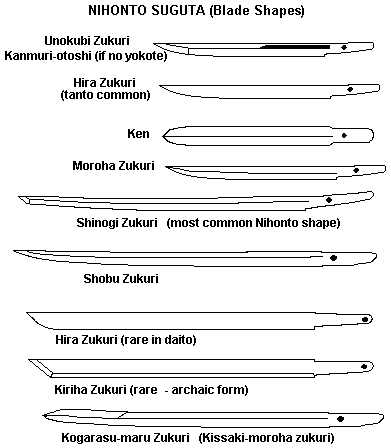


I was watching Murray Carter's Advanced Blade Sharpening, and he actually recommended just grinding off the corner and smoothing out the curve/adding belly... The tip is still as strong, but it adds substantial slicing ability.
Looked pretty cool actually.

You would be surprised, some of them want to do you harm. People will adjust commercial door closers to ludicrous tension to slam a problem door. I remember one call I got last year where the front door of an apartment broke a woman's arm when she was carrying in the groceries. It's not infrequent for a person to put their hand through the glass trying to stop one that is improperly adjusted. It also plays hell on the hardware. When the deadlocking pin on a spring latch is solidly bound or breaks I've used a kobun to "slip" latch's that have mangled dedicated latch knife tools. One time it saved the day at a grade school when a teacher and her students got locked inside the classroom. I find it useful as a wedge, light prying tool, chisel, etc. Abuse that would do serious damage a finer tip, or when I need a chisel's edge but a chisel is too thick to reach.What Picksmith is doing is very similar to the original purpose of the tanto, actually. It's just that his doorframes don't fight back!
I have a couple tanto blades that I EDC sometimes. The point where the two bevels meet is handy for starting cuts, because I don't have to bend my wrist so far over to engage the point. The more stable tip also means that I don't have to worry as much about snapping the blade if I do something wrong.
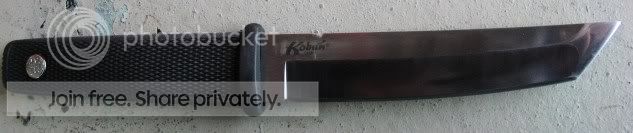
With a grizzly bear attack, you drop the knife and run. The bear stops to smell the fear on your tanto blade, giving you time to jump into your Kia Sportage.
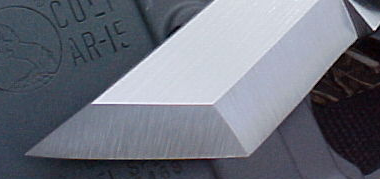
What about thick, chisel ground tantos with a zero edge? Those do seem genuinely tough and simple to maintain. They won't be prepping any fruit salad, but it seems like a solid hard-use combat blade. But in general, I agree. Most American tantos look cool but are a bit gimmicky. Blades like the below picture are one implementation of the American tanto that I really feel has merit, though.

Lets not forget, that they can still cut stuff. As an edc knife cutting mundane everyday stuff, theyre just as good as any other style of blade.

What empiricle evidence are you basing this off? Have you used a tanto blade for any extended period of time? The knife that Hark has posted is no where near a drop point, makes me wonder if you know what defines a drop point.Do tanto blades have any real practicality? They seem so inferior to drop point blades for just about every use.
That is darn near a drop point. Not quite as angular with some useful belly.

