testing the water with building folders

Joined
Aug 28, 2012
Messages
150
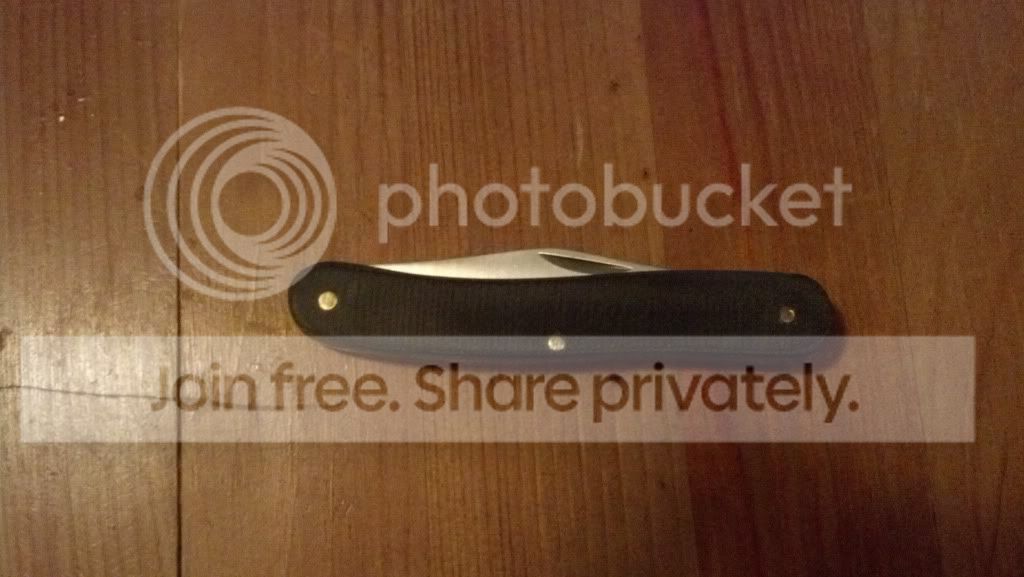
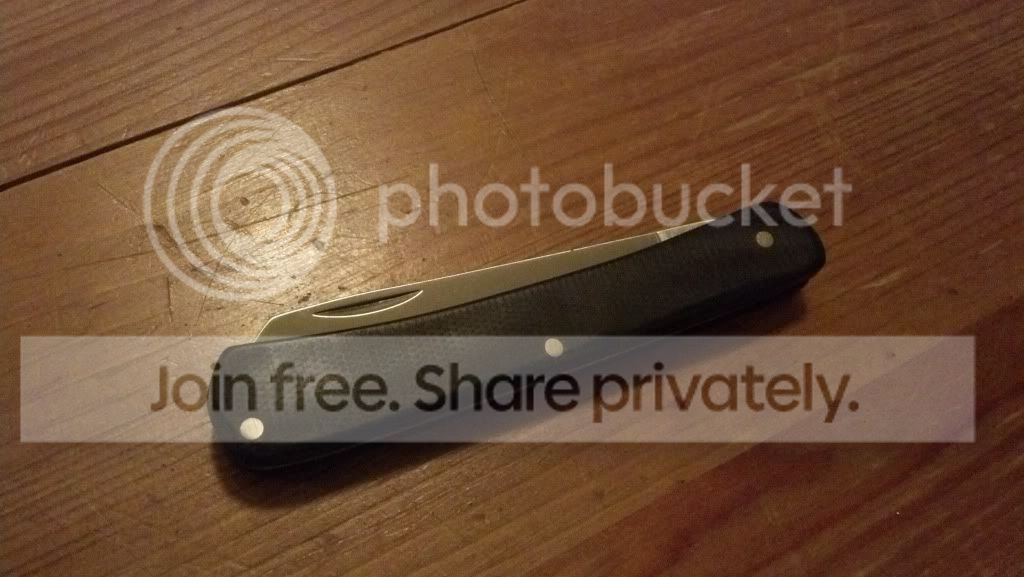
I have decided to learn to make slipjoints. After a great deal of research I have decided to begin with a rough rider custom shop kit. I do not, however, like heavy slip joints so I attempted to make a linerless slip joint with g10 handles.I Used the spring and blade from the kit and copied the pin pattern from the supplied liners. Here are the results.
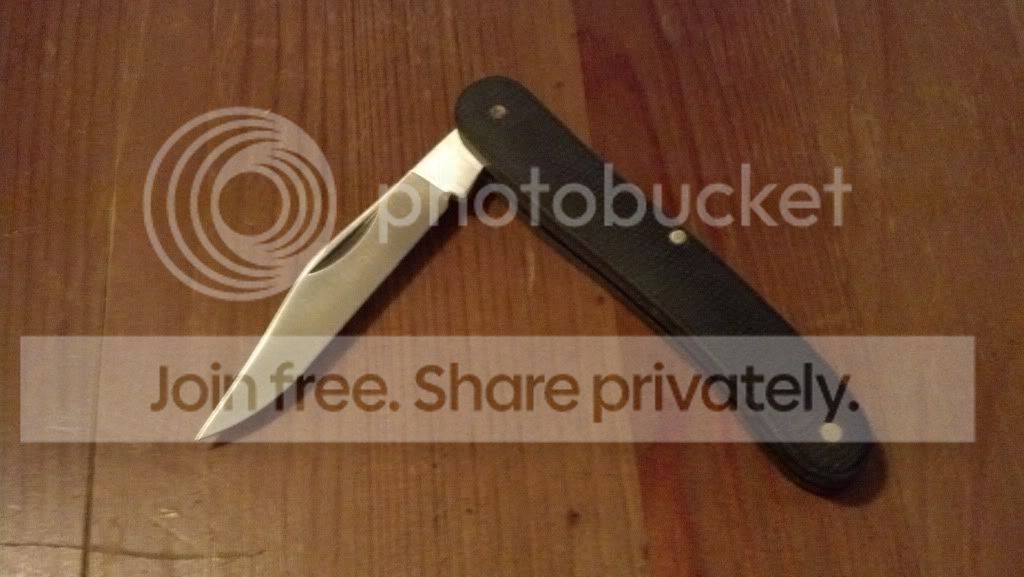
IMG_20130701_185159_528_zps4afdbc51.jpg

IMG_20130701_185125_656_zps13dc39f8.jpg


My question however is what might be a good intermediary step between this and building one from scratch. Once I've done some more of these of course because they are great fun.

PS I know I botched the pivot pin but its a first try and so.... in the pocket it goes after a bit more sanding, sharpening and a good polishing
 
I don't know what your experience level is but heres my suggestion.
Start making some fixed blade knives first. Actually make a lot first.
Slipjoints are not easy knives to make at all. In fact they're really very hard to make well.
 
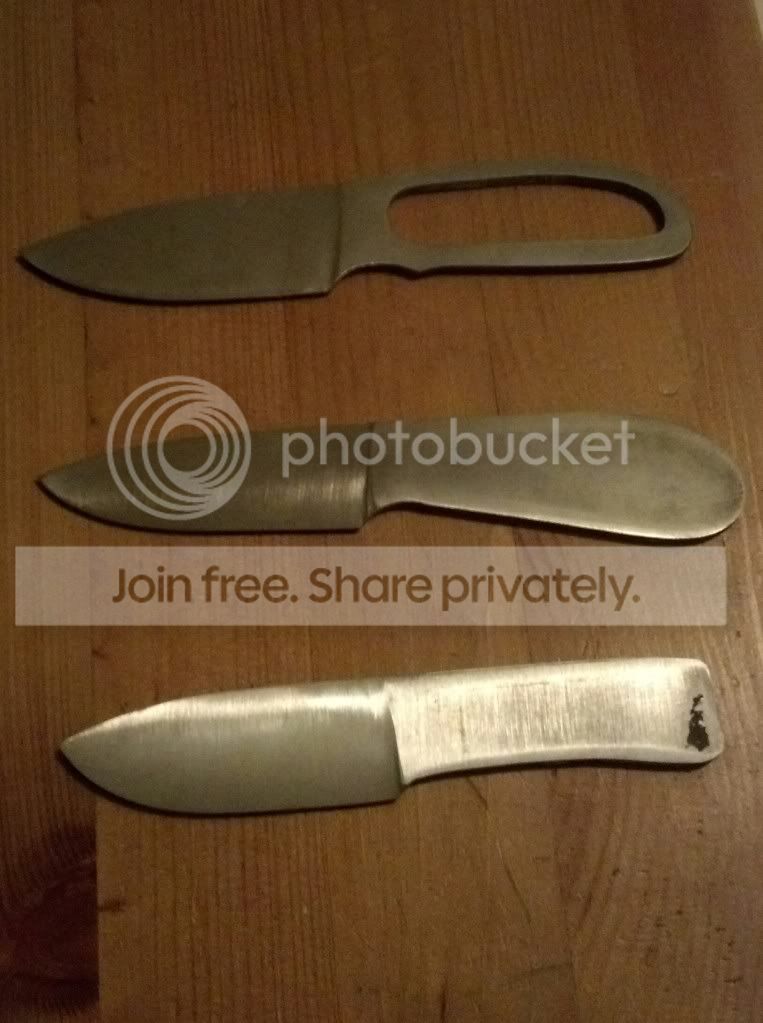
I have some experience making fixed blades but I've never finished one. As of now I have 3 blades that need to be heat treated . I'm trying to build up enough to make it worth sending them out for heat treatment.

IMG_20130627_213328_308-1_zps1d4e89f1.jpg


I appreciate the warning about making slip joints . I figure it will be difficult but I believe that is the point.
 
Last edited:
Hey just to let you know, your blanks look good, but if you are going to pin some scales on them after heat treat you might wont to think about drillin the holes before HT, HSS steel bits wont touch them after HT....
 
Depending on what type of steel that is, you may be able to heat treat those yourself for pretty cheap. A one brick forge is simple and very effective for certain types of steel (1084 and O1 is what I have used it for). Do a search for it if you're interested.
 
The steel is 1095 my research tells me that precise temp control Is needed to get the most out of it
 
To the OP either take a kit like that, or a junker from a knife or gun show. Scribe the parts
and drill the holes exactly, heat treat the blade and spring and wrap a knife around it. I started
that way 12-13 ish years ago. Little did I know what I was in for. Most straight blades can be
modded as the steel dissapears, many parts of slipjoints there is 0 room for error. Good luck in
your endeavors.
Ken.
 
To the OP either take a kit like that, or a junker from a knife or gun show. Scribe the parts
and drill the holes exactly, heat treat the blade and spring and wrap a knife around it. I started
that way 12-13 ish years ago. Little did I know what I was in for. Most straight blades can be
modded as the steel dissapears, many parts of slipjoints there is 0 room for error. Good luck in
your endeavors.
Ken.

This. I have a feeling Ken knows what he's talking about. ;)

Taking a junk knife and using it for a pattern works really well. Also, just something to think about; I bought Don Robinson's book "Slipjoints my Way". It is a step by step guide to making slipjoints. He gives you a pattern to work from in the back of the book, but the steps work for any slipjoint. Is like a really, really good wip. I think it's about $20 on the web. Plus, Don is a nice guy.

Ken is right, there are places in a slipjoint where, if you mess them up, you scrap the knife. Just keep on trying. Don't let the guys who say you must make fixed blades before slipjoints. Fixed blades are boring to me. If I had to make 20 straight knives before trying one folder, I'd have gone nutso.
 
There are things done on the kit for you that you would have to figure out how to do on your own. Cutting a nail nick is not easy. Tracing a kit or junk knife for the first couple is fine but eventually you will want to try different patterns and that would require more kits or junk knives to trace.

There are kits out there with everything profiled and that is it. You have to drill your holes, grind the blades, heat treat ect. They are more challenging but sound like what you are looking for.
 
Just keep at it, that's what matters most! Nice work...

Here's a link to some WJ'd parts... not really a kit but you have your lines close to start. It will save you from rough profiling which is about 1% of the work but with the lines being close you are off to a great start! ----------> http://usaknifemaker.com/kit-knives-blade-blanks-c-73/folder-kits-from-glwj-c-73-89.html

I'd also consider using the kit or a knife as a template then working from there.

Remember, you are going to need good holes (reamed probably) and flat parts... the rest is easy! (kidding but getting the basics right on a folder is the challenge)

Fast14riot here on BF did a great work in progress restoring/redoing a slipjoint...
 
When I started making slipjoints a few years ago I had never seen a knife made and still have not. Some would say "it shows!"! Just try to figure out how the damn thing works and go from there. The more you make the more you will screw up. The pile still grows on my bench. But.......you will learn on every one of them and soon you will like the results. Just make them....that's the best you can do now. It is very habit forming. Try not to make ones with expensive scale materials yet. Use Micartas, wood, etc. Leave the ivories, shell, and stag alone for now.

John Lloyd
 
Not to hurt but to advise and educate: if the work on the folders was to be of the same quality you have done on the straight knives, you will not make one that will work properly or look good. Making a smaller blade does not mean it is easier to do. For most to make good folders a bunch more of equipment is needed. Keep at it on the straight knives until the "quality" shows and then give it a try. Straight knives will allow you to learn as you go; folders do not. That taking a folder apart and making another the same may sound easy, but it just ain't so. Frank
 
Not to hurt but to advise and educate: if the work on the folders was to be of the same quality you have done on the straight knives, you will not make one that will work properly or look good. Making a smaller blade does not mean it is easier to do. For most to make good folders a bunch more of equipment is needed. Keep at it on the straight knives until the "quality" shows and then give it a try. Straight knives will allow you to learn as you go; folders do not. That taking a folder apart and making another the same may sound easy, but it just ain't so. Frank

I agree...

Keep at it though, you can do it! Work you way up and hey, it might be your niche to make folders. The work you did on the slipjoint scales looks great.
 
Not to hurt but to advise and educate: if the work on the folders was to be of the same quality you have done on the straight knives, you will not make one that will work properly or look good. Making a smaller blade does not mean it is easier to do. For most to make good folders a bunch more of equipment is needed. Keep at it on the straight knives until the "quality" shows and then give it a try. Straight knives will allow you to learn as you go; folders do not. That taking a folder apart and making another the same may sound easy, but it just ain't so. Frank

That's for sure. I'm just now getting my rise/fall indicator made, and my steady rests are about finished. I love my carbide faced file guide from Bruce Bump and my bubble jig from Fred Rowe. All this stuff isn't really necessary, but it makes me much more efficient.

However, all the tools in the world won't do you any good if you can't grind a decent blade. Refining your grinds will help you overall. Attention to detail must be your watch word in folder making. I've junked more steel learning to make slipjoints than I have finished knives. I ruined a weeks worth of work in 10 seconds by making a stupid move on the grinder and ruining a spring by grinding the bolsters into the spring. Made me sick? Sure. Learned a lesson? Oh heck yes.

I believe it's possible to learn to make slipjoints before straight knives, but it is a heck of a lot steeper curve. Be prepared to ruin a lot of steel before you get a usable knife. Then ruin more steel making the usable knife into a nice looking knife. It will make you crazy and want to quit. Make sure this is the way you want to start before you go down this road.

I'm not the expert here. You've had two guys that make $1000+ folders give you (and all of us) dang good advice. Listen to them.
 
Have u considered starting with friction folders? I'm starting to appreciate friction folders lately and I wouldn't mind crafting one. First I need to work on the basics of grinding and working with different handle material s before making a folder.
 
Thanks for the advice and encouragement guys I have a feeling I might make quite a few more of these kits before I move on to anything else. They are lots of fun and I'm learning alot . Here is my latest a spey blade from a trapper kit this time I used the same g10 but first cleaned up the back of the spring on the grinder and got some little reamers so I got the pins right. Perfect spring strength and walk and talk. Love this single speyblade.
IMG_20130703_213508_460_zps8850a6d2.jpg


Also I may try to get some old slip joints and restore/ upgrade them. I really enjoy the process of searching for them at flea markets, garage sales, and yes even flea bay.

IMG_20130703_213648_807_zpsa7a559d0.jpg
 
Once you get serious about making one from scratch, see if you can get a hold of Chris Crawford's DVD: "How to build a slip joint". It has been a great source of knowledge for me, and has helped a LOT!
 
Back
Top