
-
The BladeForums.com 2024 Traditional Knife is available! Price is $250 ea (shipped within CONUS).
Order here: https://www.bladeforums.com/help/2024-traditional/
You are using an out of date browser. It may not display this or other websites correctly.
You should upgrade or use an alternative browser.
You should upgrade or use an alternative browser.
The good stuff Delrin & Stagalon
- Thread starter Ebbtide
- Start date


- Joined
- Jul 2, 2013
- Messages
- 7,037
I think this is delrin.

....
Ed J
I think it's probably "yelrin"....


tongueriver
Gold Member
- Joined
- Dec 28, 2007
- Messages
- 5,629
This article is from the research of another member: "Delrin is an acetal thermoplastic resin (PolyOxy-Methylene or POM) which has a semi-crystalline structure, is machinable, and possesses excellent strength and dimensional stability, high lubricity (low friction characteristics), and good wear resistance.
Dupont’s advent of Delrin came about from their post-WWII search for wider applications of their popular nylon. When Department director Frank McGrew and their chemists in the Polychemical department searching for a plastic replacement for metals first came across the formaldehyde derivative which we now know as “Delrin”, they named it “synthetic stone”. This was circa 1952. It took another four years of development to refine the process for production and in 1956 they were granted the patent for Delrin. Another four years and twenty million dollars was invested in a facility to manufacture Delrin, and in 1960 the plant in West Virginia opened and began large scale production with a twenty million pound annual capacity.
After a total fifty million dollar investment, Dupont cited patent disputes and competition for shallow profits on the material. Bad for Dupont, but a boon for the knife industry as Delrin quickly became a premier handle material for many companies, Schrade and Camillus included. Nearly fifty years later, Delrin is still an important material in the cutlery industry.
Along with the properties of Delrin already mentioned, another very important one exists which makes this plastic such a winner for knife handles. It can not only be colored as a base material, but it can be dyed after molding to add accent colors. This is what gives “Staglon” it’s stag appearance, and “Genuine sawcut Delrin” it’s sawn bone appearance.
After the Delrin handles are molded, sprues and gates (sometimes called runners) trimmed, they had to be dyed. Two heated dye tanks are used, one brown for OT covers, and an additional black for the UH covers. The tanks were heated to 180 degrees, far below the melt temperature of Delrin. but hot enough for the dye to penetrate the surface and set. I am not familiar enough with this particular dye to tell you what the color base material and mordant are, but most dyes (as with most paints) have mineral base ingredients. A mordant is a chemical (usually acid or alkali) which acts as a penetrating agent and carrier solution. Like the vinegar used with Easter egg dyes. In this case, it could well have another type of mordant.
The covers were dumped into the first dye vat and an operator stirred the parts every few minutes to prevent the parts from streaking from dry spots, and weakened dye, or contact with the vat. They also occasionally lifted some parts with the stir paddle to check the color. If the dye was fresh, time in the dye tank was about 25 minutes. When the dye was weakened from use, dying times were extended by the operator to compensate, until they judged the dye needed replacement.
This whole operation was dependent upon the judgement of the operator. When the parts reached the desired color, they were removed from the dye vat with a shovel and are placed in a basket in the rinse tank. After rinsing clean, the basket was lifted and drained, and the parts spread on a drying table. Ours in the machine shop are perforated stainless with reversible air flow for updraft heated air, or downdraft cool air, depending on the part.
At this point, the covers would be a uniform dark brown color. For the UH covers, they went from the brown dye (approx. 15 min, or until the proper reddish brown color is achieved) then to the rinse, then to the black dye tank for another 10 minutes or so, depending on dye strength. They were again rinsed, and went to the drying tables.
The fact that Delrin takes and holds dyes so well made the material a good substitute for celluloid handles of ad specialty knives also. A heated die was pressed onto the handle over a dye tape, scoring the handle and filling the impression with dye. In 1975, the resident Schrade artist, a very talented man by the name of Frank Giogianni, bored with the commercial art he created for packaging, logos, and commercial ad knives, presented Henry Baer for his consideration a cream Delrin handled scrimshaw knife of his own design. Baer enthusiastically approved and the commercial art became creative decorative art and the popular Scrimshaw series was born."
Dupont’s advent of Delrin came about from their post-WWII search for wider applications of their popular nylon. When Department director Frank McGrew and their chemists in the Polychemical department searching for a plastic replacement for metals first came across the formaldehyde derivative which we now know as “Delrin”, they named it “synthetic stone”. This was circa 1952. It took another four years of development to refine the process for production and in 1956 they were granted the patent for Delrin. Another four years and twenty million dollars was invested in a facility to manufacture Delrin, and in 1960 the plant in West Virginia opened and began large scale production with a twenty million pound annual capacity.
After a total fifty million dollar investment, Dupont cited patent disputes and competition for shallow profits on the material. Bad for Dupont, but a boon for the knife industry as Delrin quickly became a premier handle material for many companies, Schrade and Camillus included. Nearly fifty years later, Delrin is still an important material in the cutlery industry.
Along with the properties of Delrin already mentioned, another very important one exists which makes this plastic such a winner for knife handles. It can not only be colored as a base material, but it can be dyed after molding to add accent colors. This is what gives “Staglon” it’s stag appearance, and “Genuine sawcut Delrin” it’s sawn bone appearance.
After the Delrin handles are molded, sprues and gates (sometimes called runners) trimmed, they had to be dyed. Two heated dye tanks are used, one brown for OT covers, and an additional black for the UH covers. The tanks were heated to 180 degrees, far below the melt temperature of Delrin. but hot enough for the dye to penetrate the surface and set. I am not familiar enough with this particular dye to tell you what the color base material and mordant are, but most dyes (as with most paints) have mineral base ingredients. A mordant is a chemical (usually acid or alkali) which acts as a penetrating agent and carrier solution. Like the vinegar used with Easter egg dyes. In this case, it could well have another type of mordant.
The covers were dumped into the first dye vat and an operator stirred the parts every few minutes to prevent the parts from streaking from dry spots, and weakened dye, or contact with the vat. They also occasionally lifted some parts with the stir paddle to check the color. If the dye was fresh, time in the dye tank was about 25 minutes. When the dye was weakened from use, dying times were extended by the operator to compensate, until they judged the dye needed replacement.
This whole operation was dependent upon the judgement of the operator. When the parts reached the desired color, they were removed from the dye vat with a shovel and are placed in a basket in the rinse tank. After rinsing clean, the basket was lifted and drained, and the parts spread on a drying table. Ours in the machine shop are perforated stainless with reversible air flow for updraft heated air, or downdraft cool air, depending on the part.
At this point, the covers would be a uniform dark brown color. For the UH covers, they went from the brown dye (approx. 15 min, or until the proper reddish brown color is achieved) then to the rinse, then to the black dye tank for another 10 minutes or so, depending on dye strength. They were again rinsed, and went to the drying tables.
The fact that Delrin takes and holds dyes so well made the material a good substitute for celluloid handles of ad specialty knives also. A heated die was pressed onto the handle over a dye tape, scoring the handle and filling the impression with dye. In 1975, the resident Schrade artist, a very talented man by the name of Frank Giogianni, bored with the commercial art he created for packaging, logos, and commercial ad knives, presented Henry Baer for his consideration a cream Delrin handled scrimshaw knife of his own design. Baer enthusiastically approved and the commercial art became creative decorative art and the popular Scrimshaw series was born."


- Joined
- Feb 7, 2000
- Messages
- 6,696
My all-time favorite Delrin - brown sawcut on the Old Timers

Love this pic. It just says "serious hard work."
-- Mark

- Joined
- Jul 30, 2006
- Messages
- 45,477
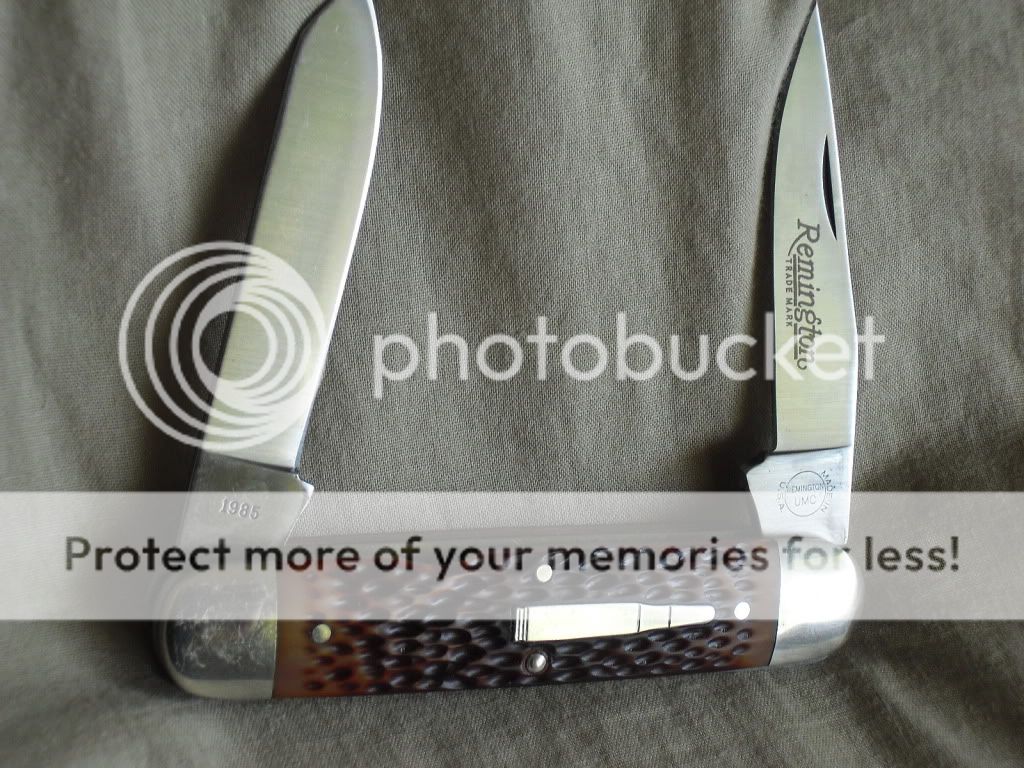
I like this Remington reproduction, but why is the Delrin always cracking?
It used to be common to toughen plastics by incorporating plasticizers into the batch of plastic. It is still common for some types. Plasticizers are low molecular weight chemicals which stay in the interstitial spaces between the strands of polymer. They act as internal lubricants and help the strands to flex when put under stress, as when the plastic part is impacted.
Plasticizers don't actually cure in the plastic. They migrate around in it. Over time they can be lost and the plastic becomes brittle, cracking more easily.
I'm not certain that this is what has happened to yours. But, it is a possible explanation.


- Joined
- Jul 12, 2012
- Messages
- 10,280
I carried a 108OT for about 23 years, lost it on a jobsite in 2005; when I finally replaced it I went with a 34OT - just a little more heft. OH


- Joined
- Sep 11, 2009
- Messages
- 12,130
That seems to be common with older Remingtons handled in delrin.
I like this Remington reproduction, but why is the Delrin always cracking?
Never seen a crack on a Schrade,but plenty of the older Remingtons have them.

orca8589
Gold Member
- Joined
- Jan 27, 2007
- Messages
- 6,518
Camillus-made Buck 317 and a Stanley Trapper pattern from a United Cutlery contract, also made by Camillus.

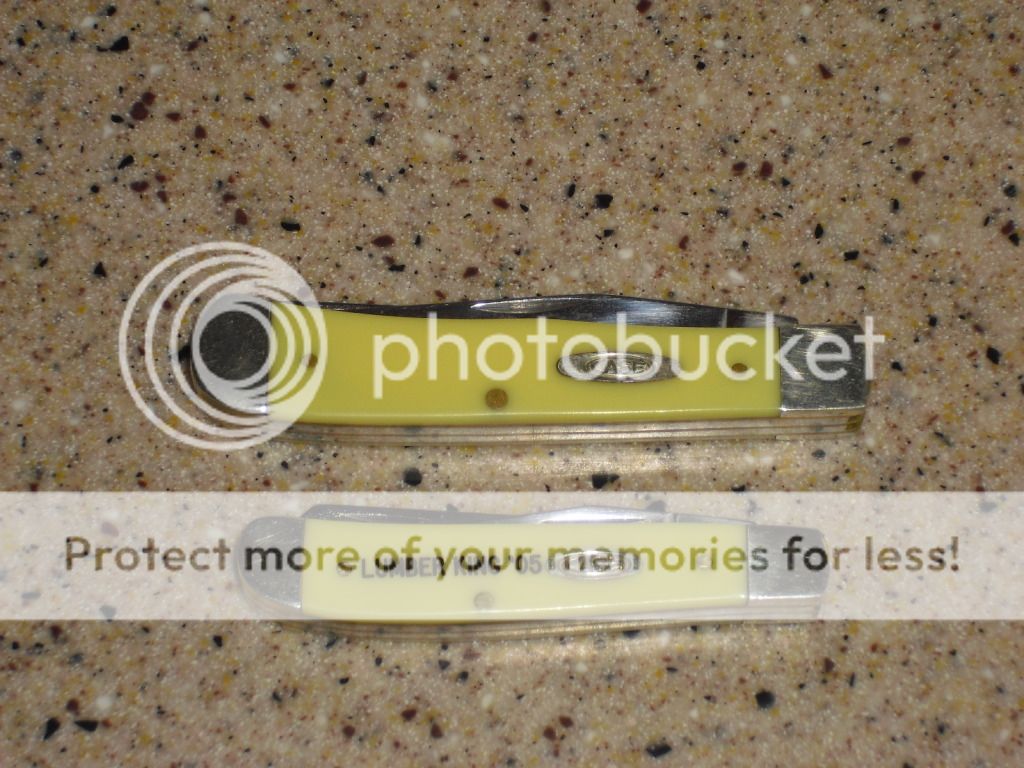
Case #3254CV and #3207CV yeller Trappers:
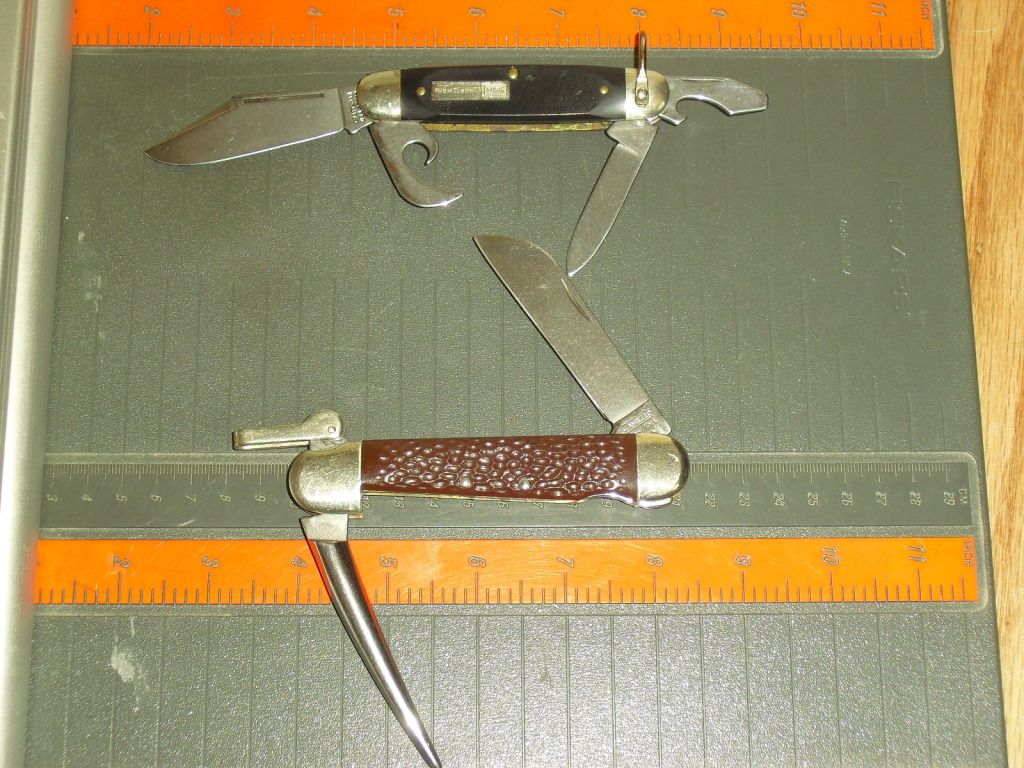
Craftsman #95043 Camp/Utility (made by Camillus) and a Camillus #697 Riggers knife:
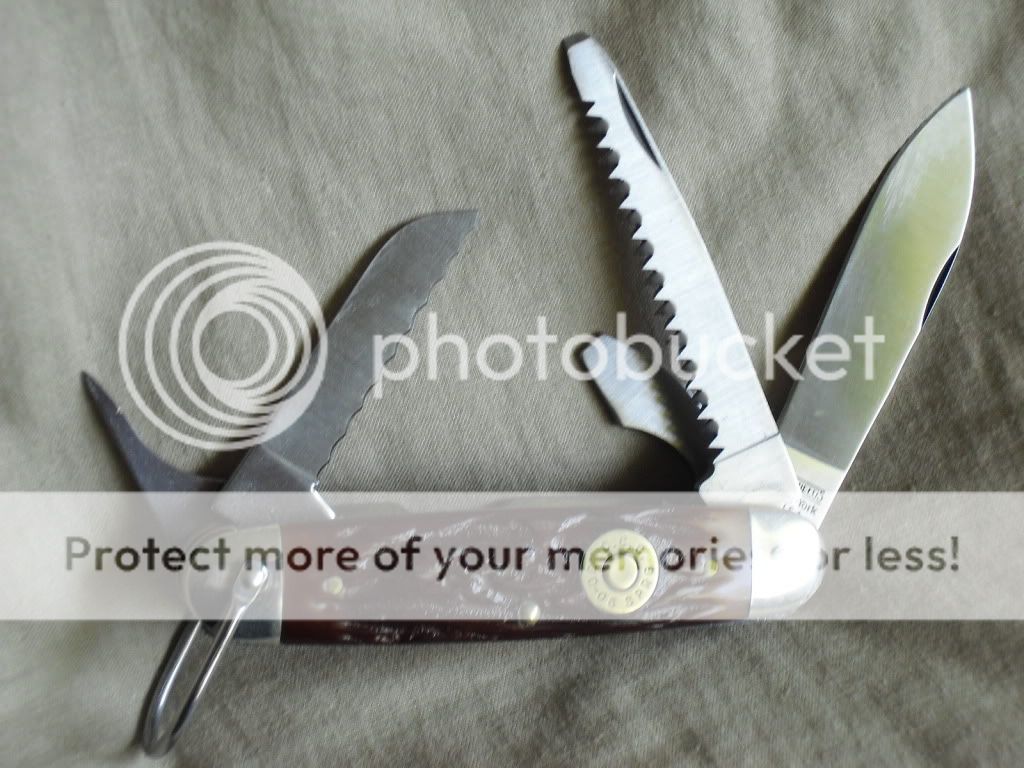
Camillus "Cartridge Series" #C4 Camp/Utility:
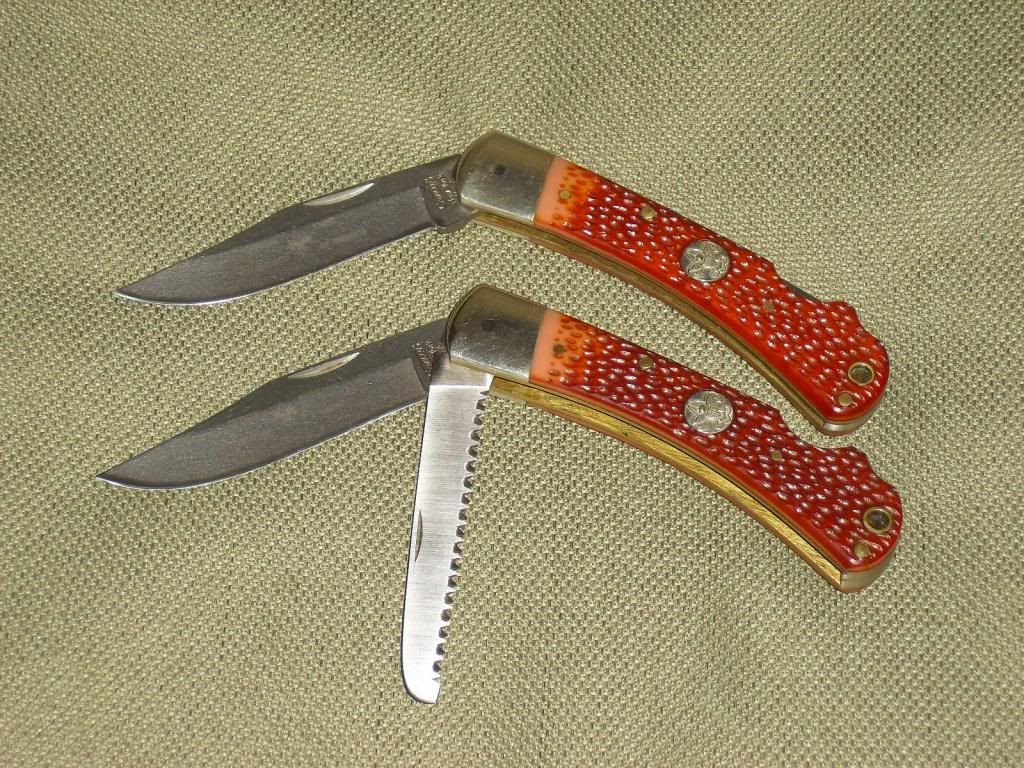
Camillus lockback Scout knives:
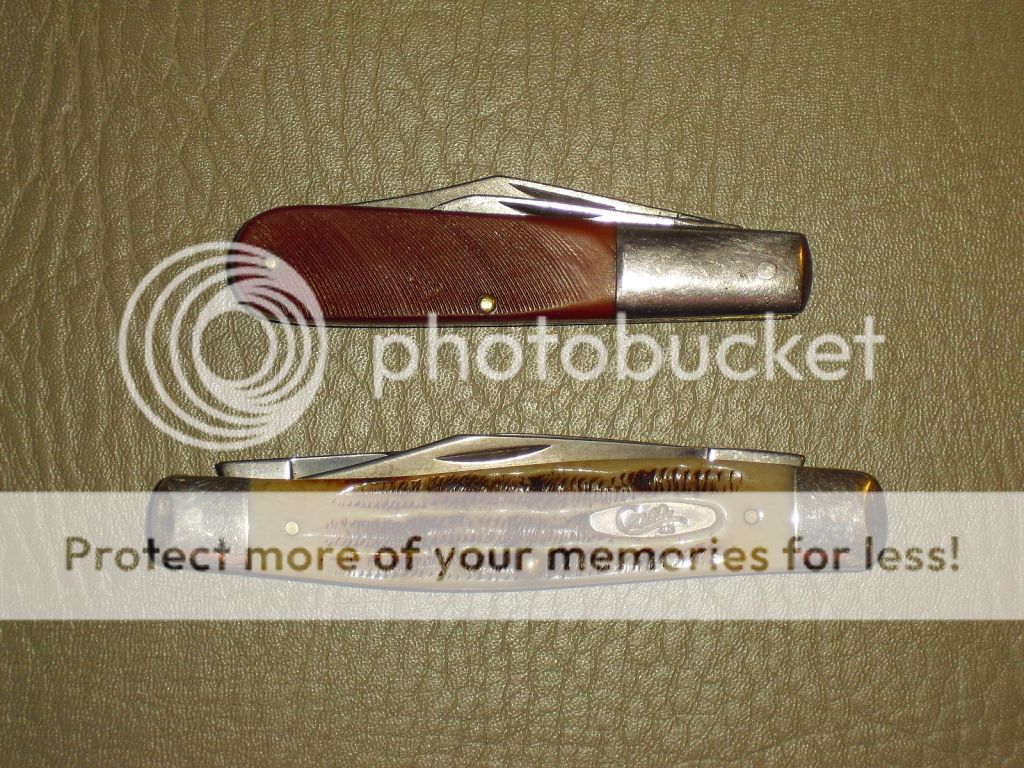
A Kabar #1013 Barlow in sawcut delrin: (top knife)
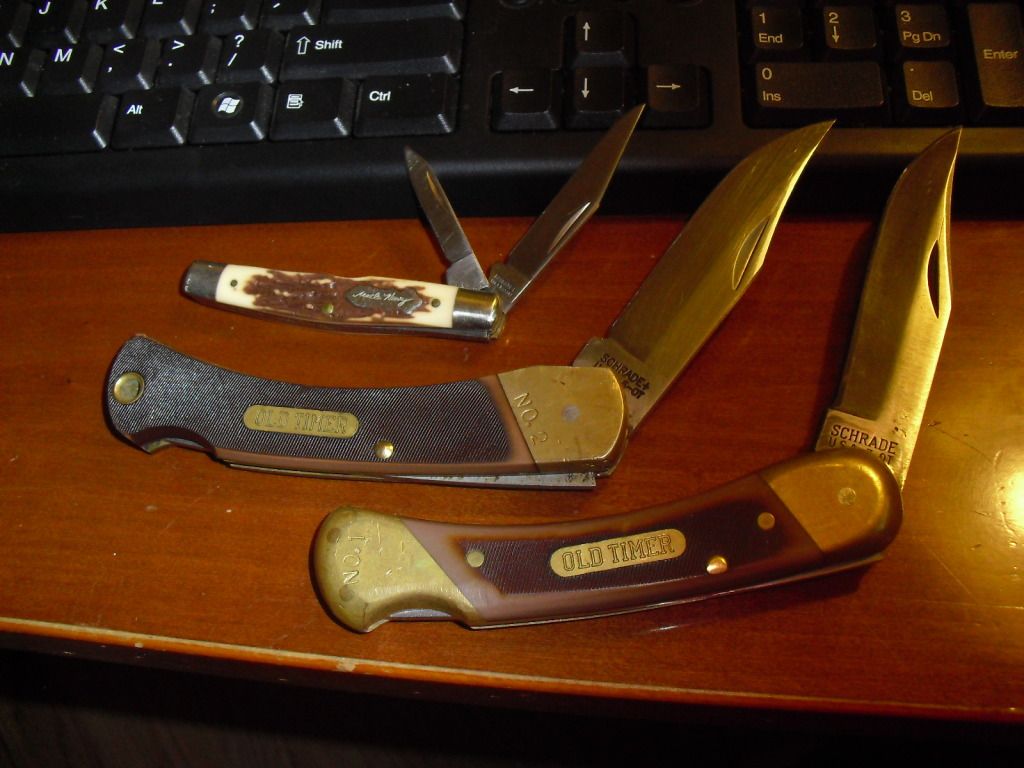
U.S. Schrade Uncle Henry 834UH, and 6OT & 7OT lockbacks:
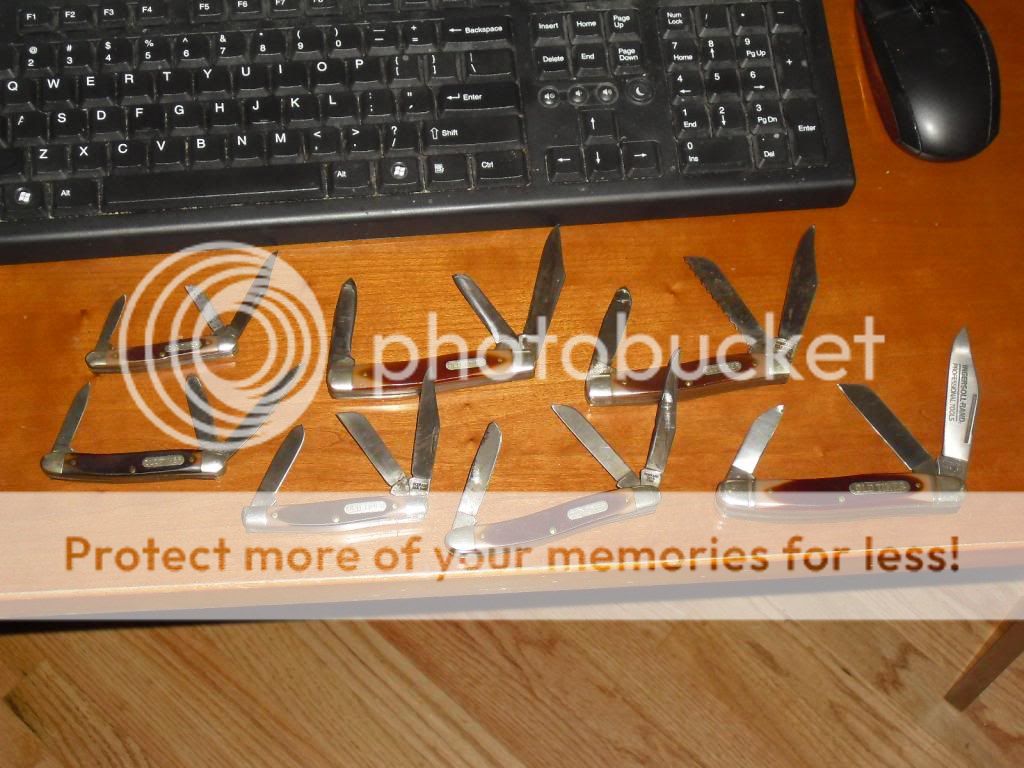
U.S. Schrade-made Craftsman Stockman (made on the 897UH pattern) and an 895Uh and 833UH:

And last, but certainly not least: my all-time favorite delrin style, U.S. Schrade's sawcut delrin on the Old Timer series:
~Chris

Case #3254CV and #3207CV yeller Trappers:

Craftsman #95043 Camp/Utility (made by Camillus) and a Camillus #697 Riggers knife:

Camillus "Cartridge Series" #C4 Camp/Utility:

Camillus lockback Scout knives:

A Kabar #1013 Barlow in sawcut delrin: (top knife)

U.S. Schrade Uncle Henry 834UH, and 6OT & 7OT lockbacks:

U.S. Schrade-made Craftsman Stockman (made on the 897UH pattern) and an 895Uh and 833UH:

And last, but certainly not least: my all-time favorite delrin style, U.S. Schrade's sawcut delrin on the Old Timer series:

~Chris
Last edited:
orca8589
Gold Member
- Joined
- Jan 27, 2007
- Messages
- 6,518
Camillus-made Remington large lockback Toothpick:
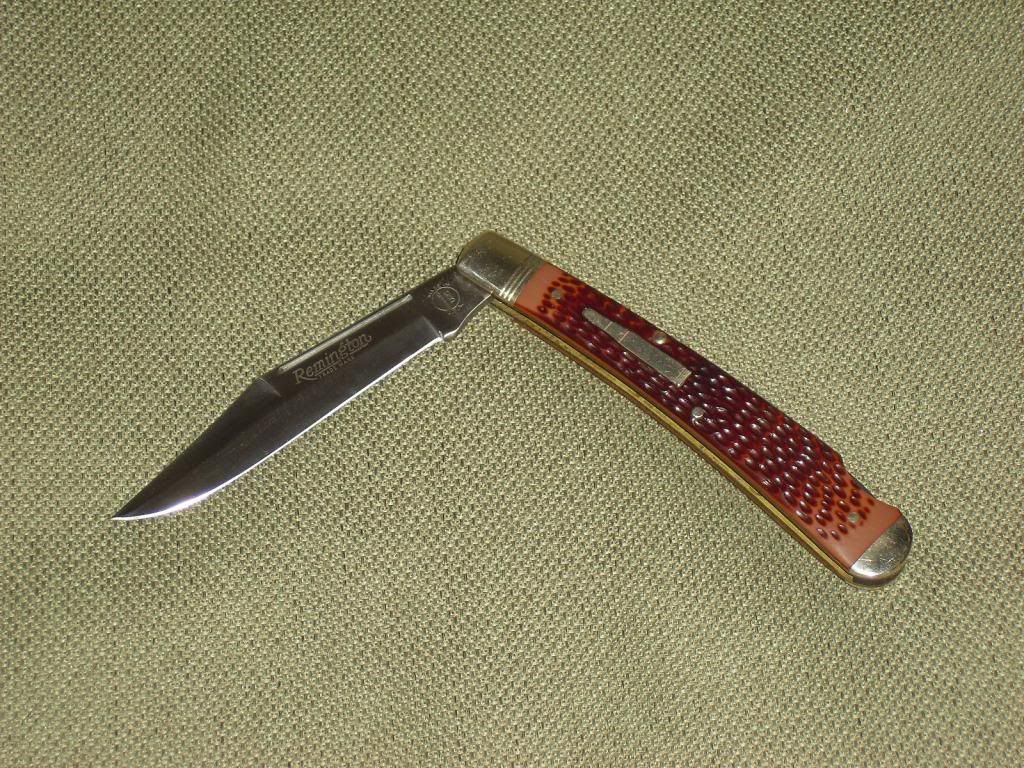
Camillus-made Remington #R4353 Equal-End Trapper:
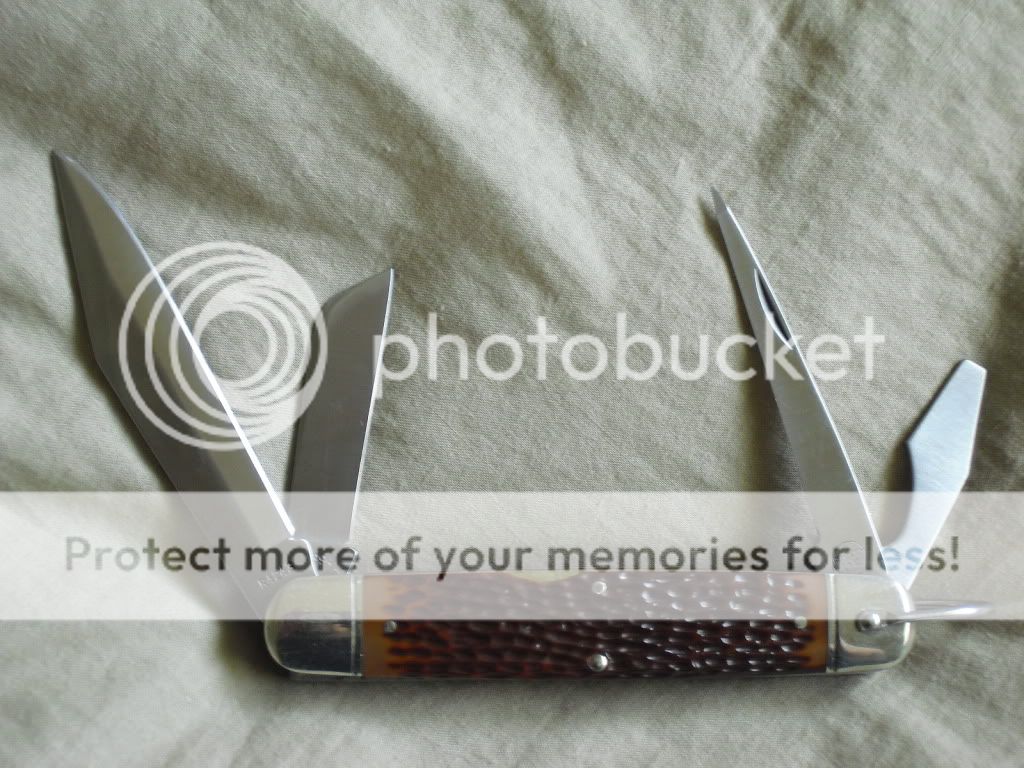
Camillus-made Remington #R4243 "Camp":
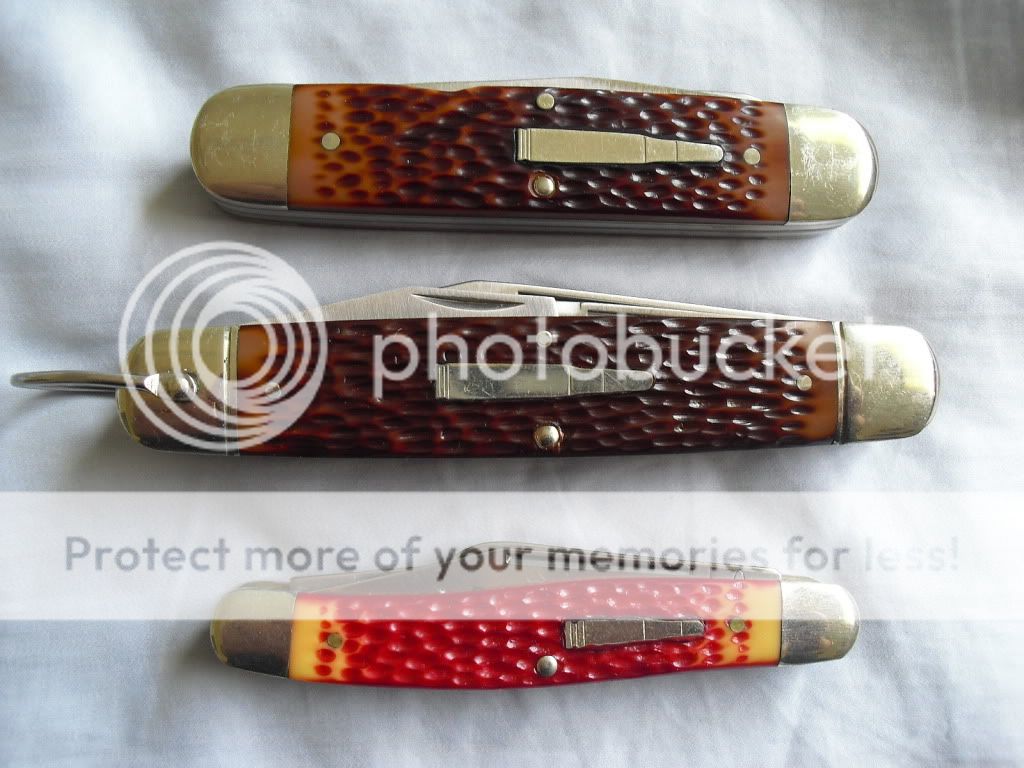
The same Camillus-made Remington's listed above, with a Remington #R314 Stockman on the bottom:
Camillus-made Remington #R9502 large Stockman with yellow & green delrin scales, and a Camillus-made Remington #R4 Camp/Utility pattern:
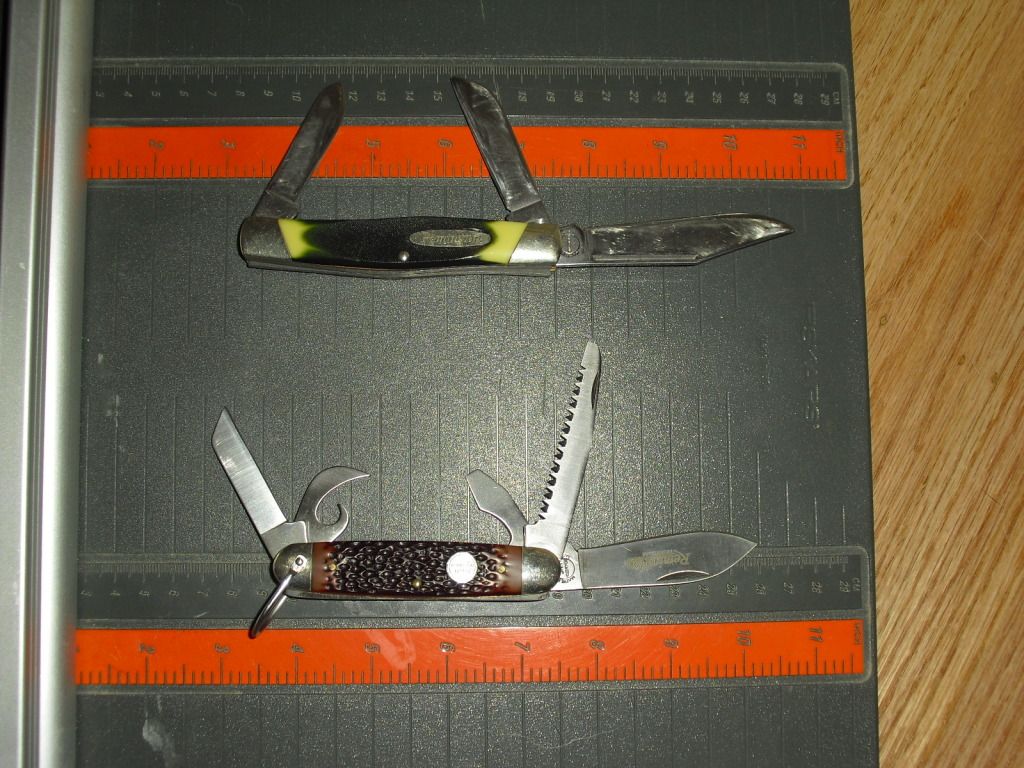
And two Camillus-made Remington patterns, the bottom one is a Remington #R1123 that was made under a contract for Bowen.
Here's a thread on the Bowen-Remington from awhile back:http://www.bladeforums.com/forums/showthread.php/1065389-Did-Camillus-make-this-Remington-Trapper
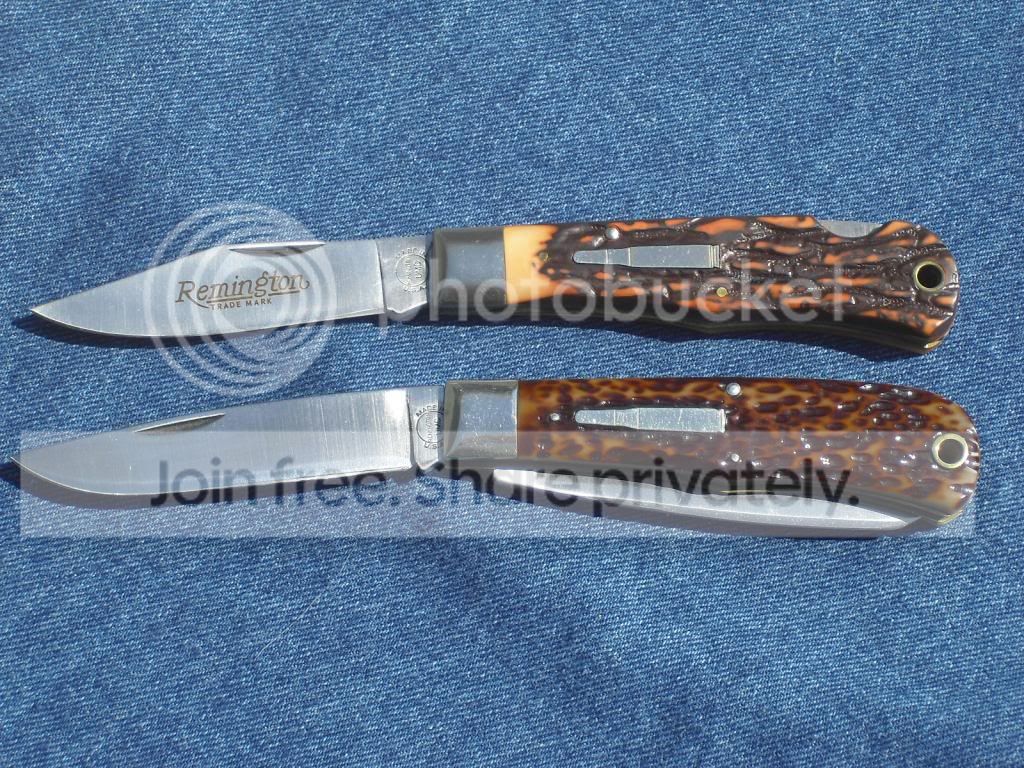
~Chris

Camillus-made Remington #R4353 Equal-End Trapper:

Camillus-made Remington #R4243 "Camp":

The same Camillus-made Remington's listed above, with a Remington #R314 Stockman on the bottom:

Camillus-made Remington #R9502 large Stockman with yellow & green delrin scales, and a Camillus-made Remington #R4 Camp/Utility pattern:

And two Camillus-made Remington patterns, the bottom one is a Remington #R1123 that was made under a contract for Bowen.
Here's a thread on the Bowen-Remington from awhile back:http://www.bladeforums.com/forums/showthread.php/1065389-Did-Camillus-make-this-Remington-Trapper

~Chris
Last edited:


I love saw cut Delrin! Here is my person go to pocket knife, it gets more use than any other in my shallow collection (on days I'm not in slacks when I carry a canivetes lan aka executive edge). A buck 303, can't even remember who gifted it to me. I once gutted a deer with the spey blade (used a larger knife for the hide, the buck for all the internal work). I just pulled it from my pocket and snapped this. Since we're on the topic, anybody have a tip on removing the oxidation from the scales? I am also curious, what do they call it when it has this long straight groove for the thumb pull? I just won an ebay auction for a boone and crocket edition but it has the half moon cut and after trying them both I like this one a lot better. (blades are also layed out different).

Last edited: