The Little Necker That Could - Round Two

Joined
Jun 27, 2006
Messages
2,331
I just heat treated a batch of neckers and didn't like the grind on one so I decided to test it to destruction.

Blade steel is 3/32 O1 heat treated in my oven, quenched in peanut oil, and tempered three times at 400

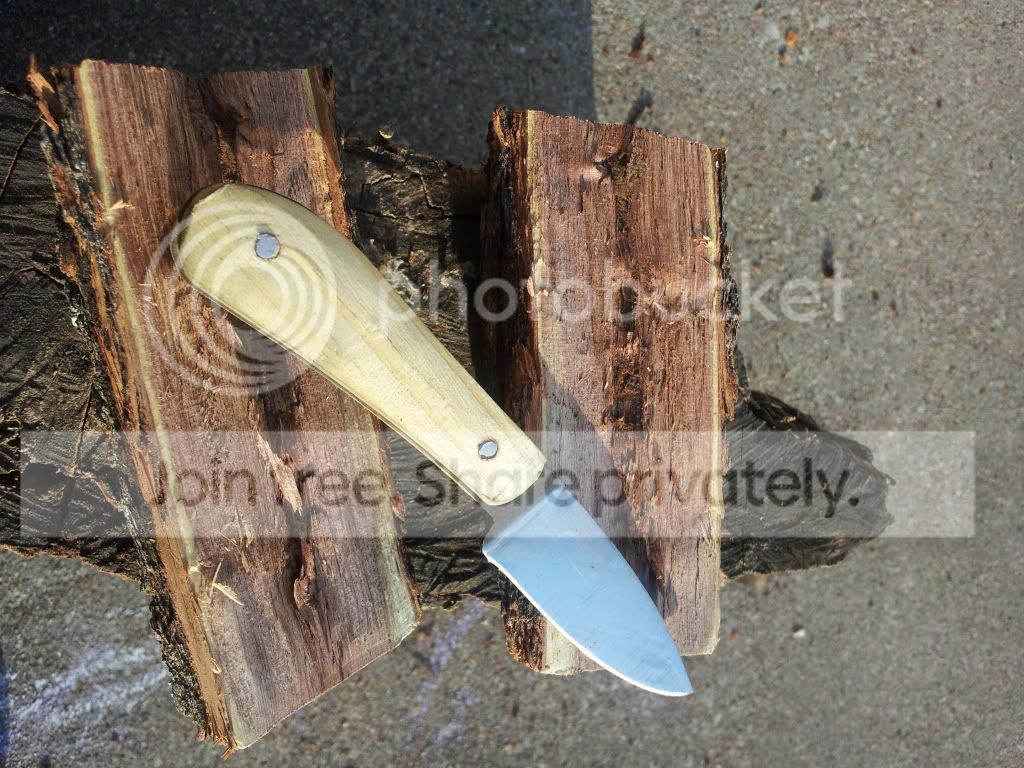
Here is the test knife. I had put a swedge on it but didn't like the way it came out and now that I've tested it, I really don't like it as it cuts into your thumb when you use it for leverage on push cuts. It has a quick pine handle with screws. I didn't want to spend too much time on the handle since it would be destroyed anyways
20121128_175643.jpg


After sharpening, I decided to cut corrugated cardboard. I was able to get 50 cuts at a time before it needed light stropping. But after stropping it would easily shave again. This is after 200 cuts and would still shave after stropping.
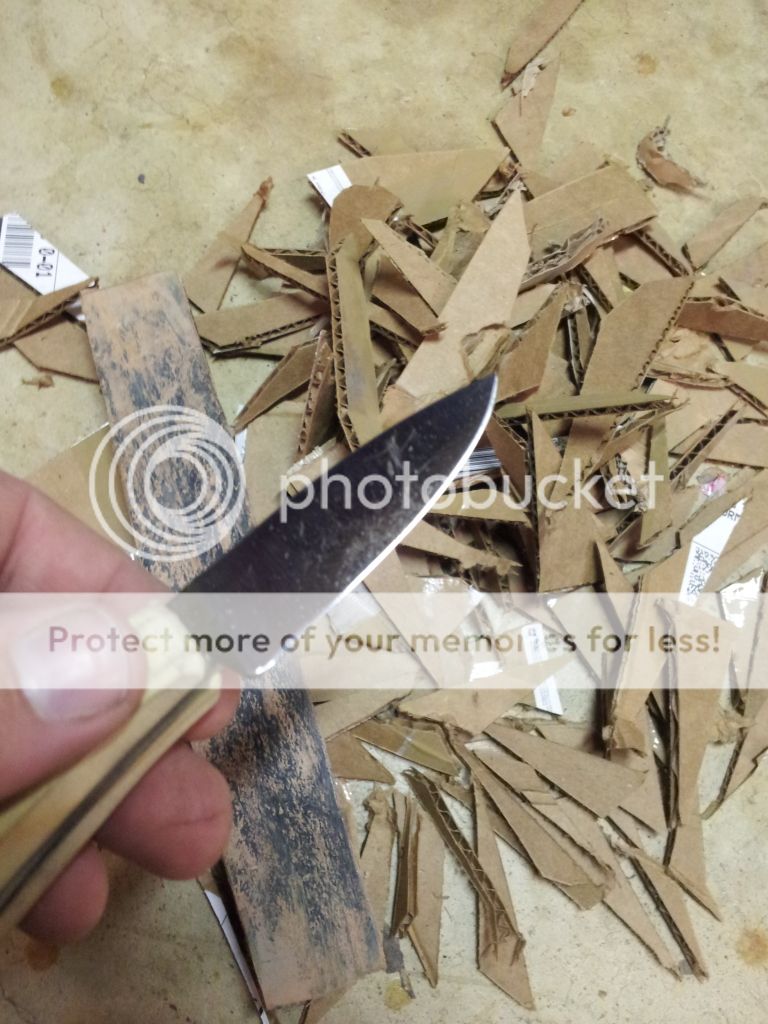
20121128_180729.jpg


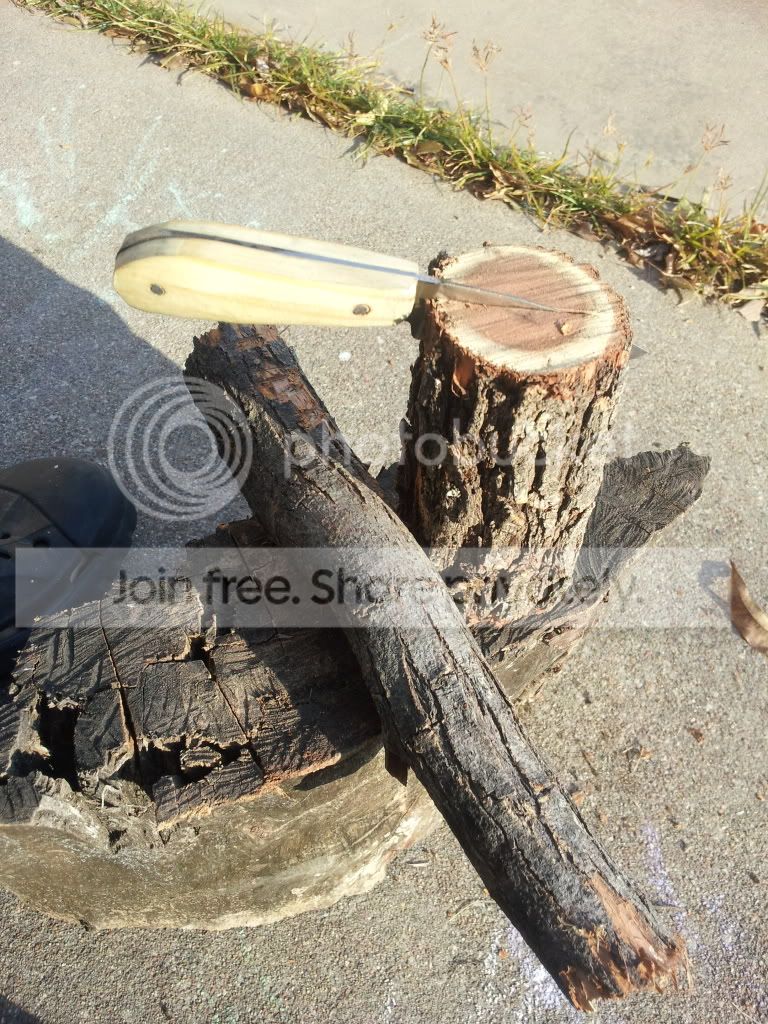
My next test was to push cut this piece of seasoned pine. It handled fine, even when I would pry the blade sideways to pop the new cut off. I expected it to fail here but it performed great. My hand gave out after a while. It would still shave without stropping
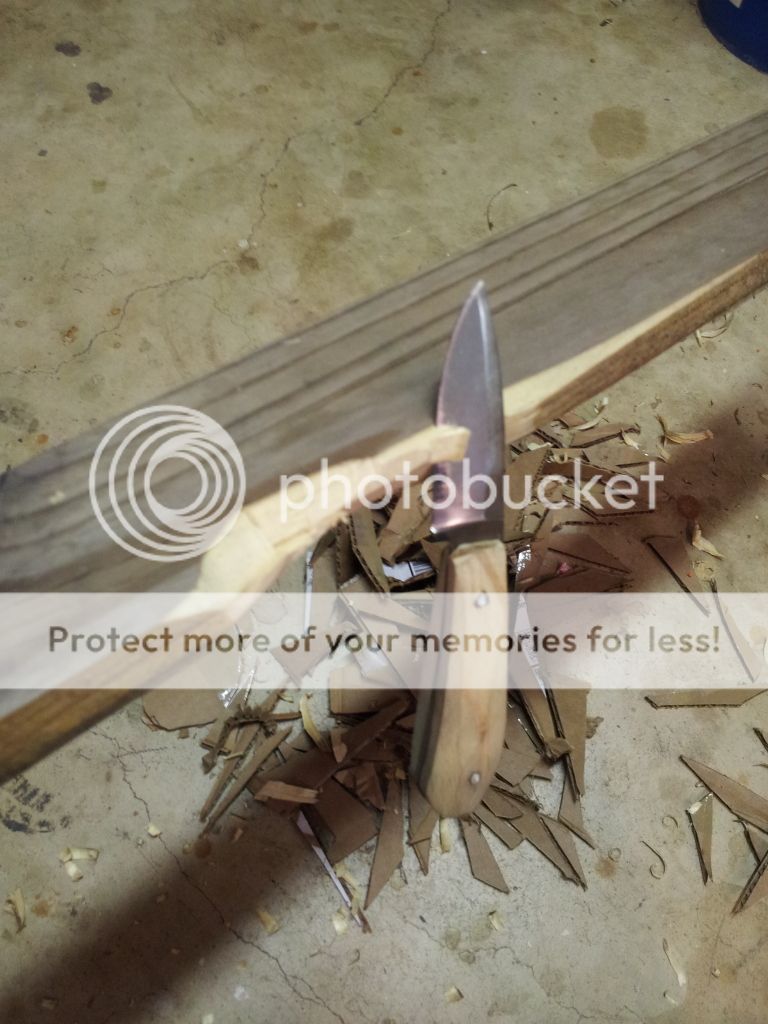
20121128_181044.jpg


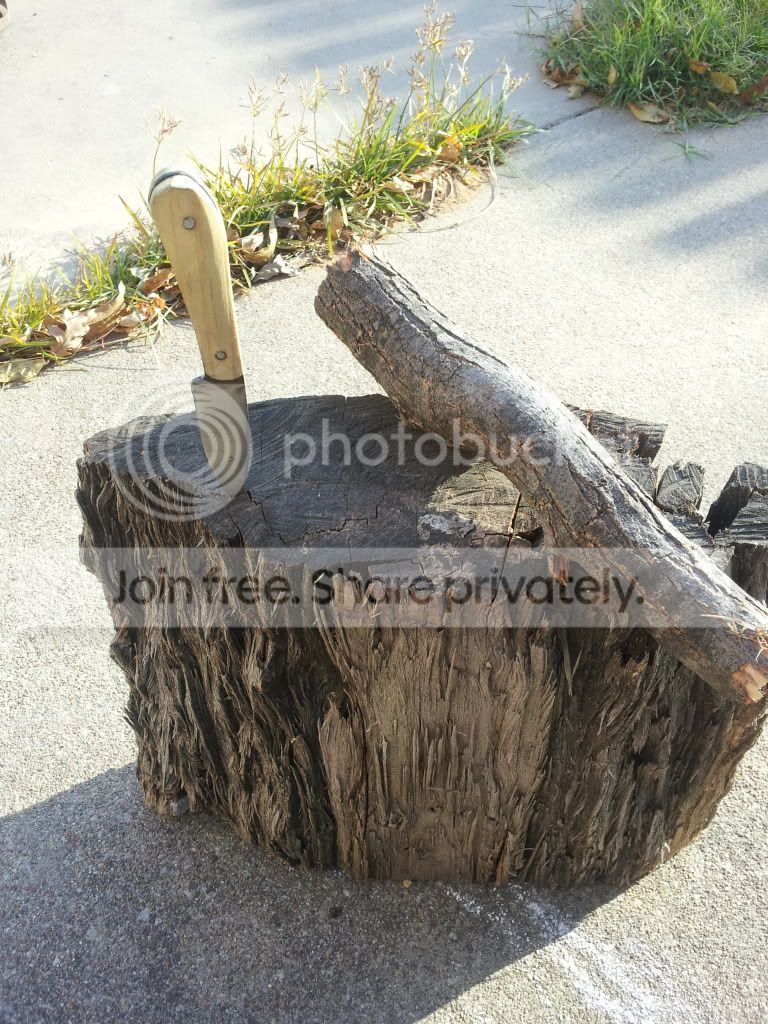
So now I decided to batton through the piece with this mesquite stump
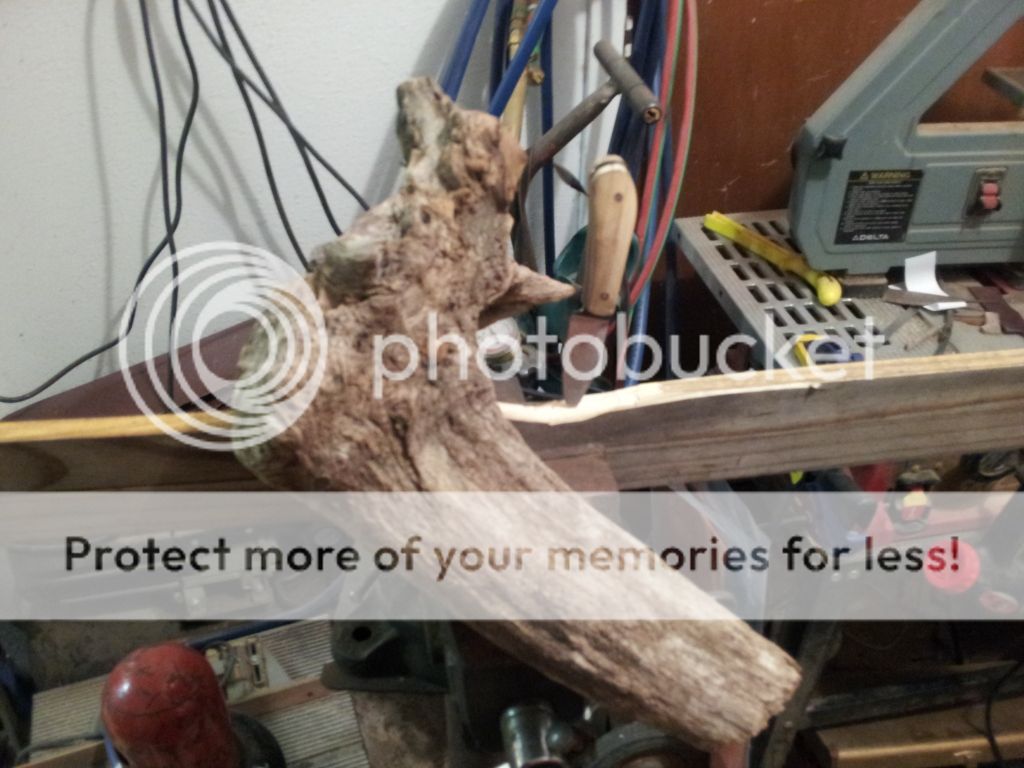
20121128_181546.jpg


And as you can see it is still shaving sharp after going through it - no stropping
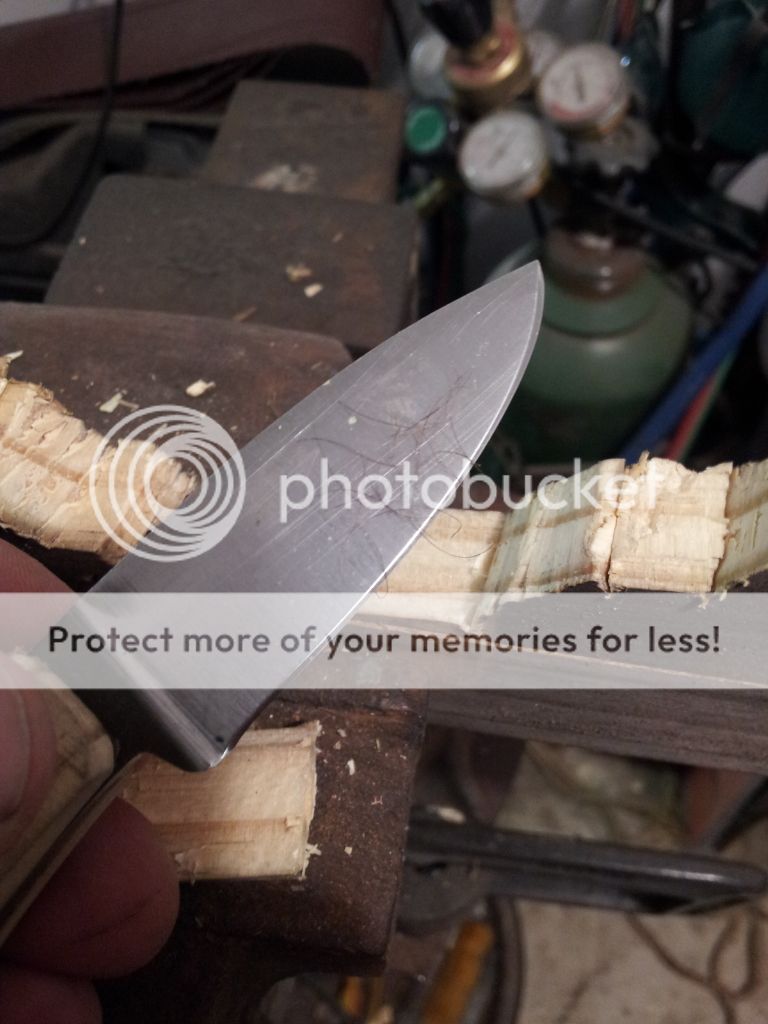
20121128_181932.jpg


Now I decided to carve some antler. This is a skull a buddy gave me that he found on his ranch down here in West Central Texas
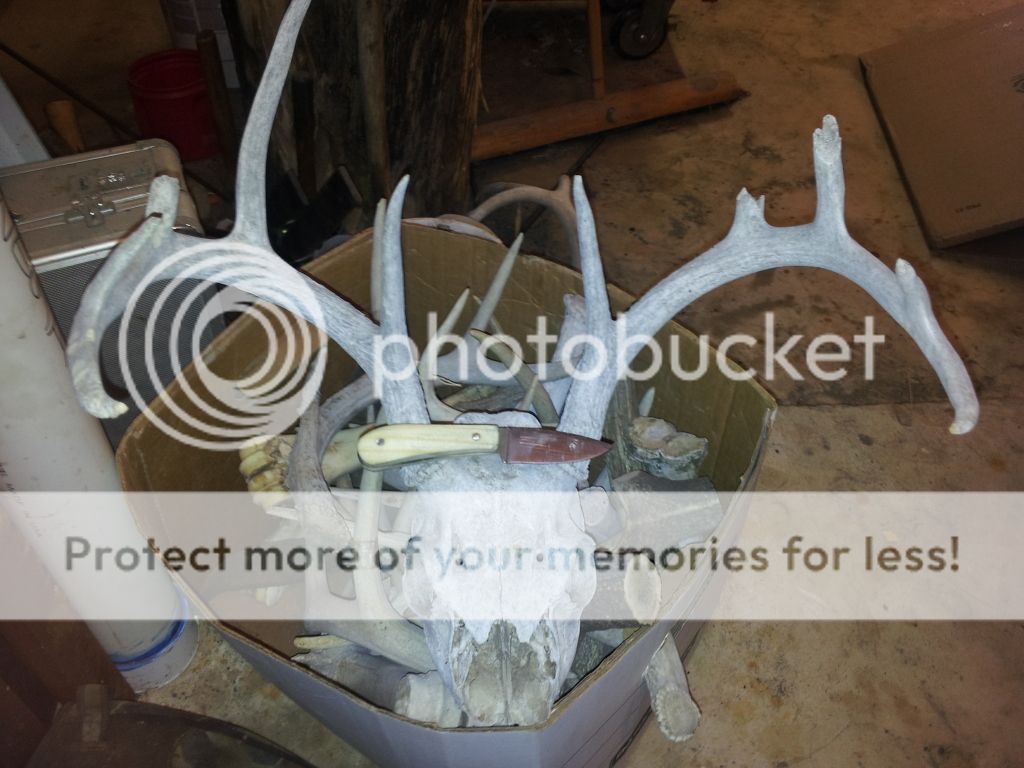
20121128_182056.jpg


It carved quite nicely and needed no stropping after cutting to shave
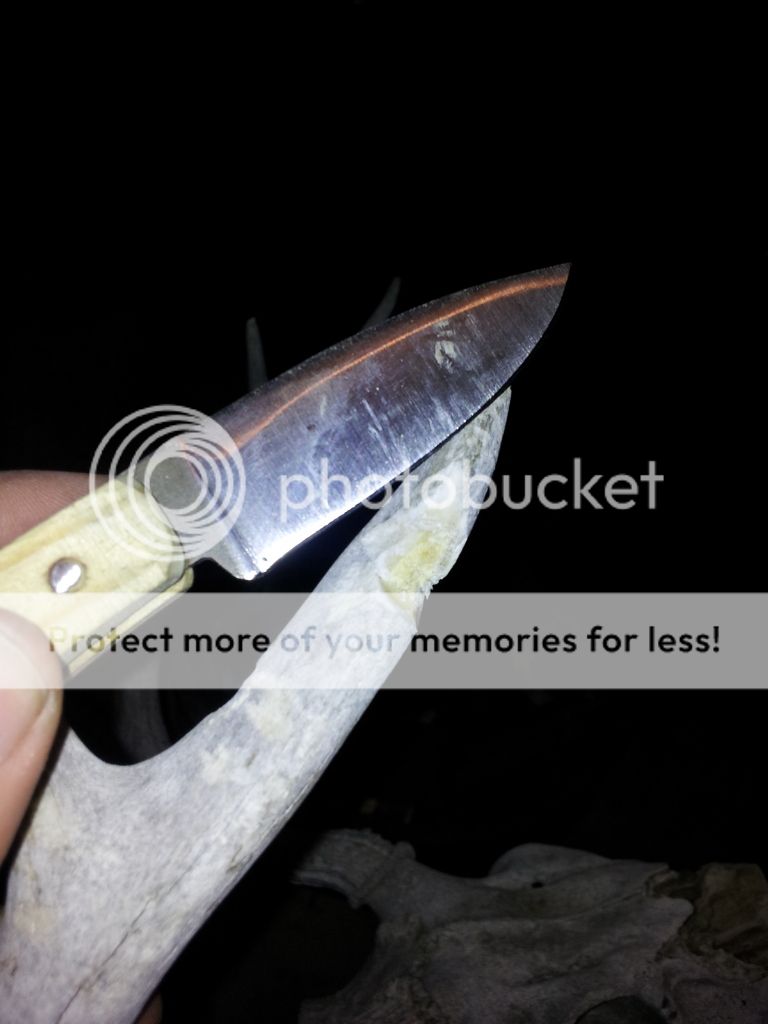
20121128_182259.jpg


I also decided to hack at the antler and got some very fine micro chipping but didn't take pictures of it as my camera couldn't zoom that close. It was barely noticable.

Finally I decided to stab the same piece of pine and dig out the wood to see if there would be any tip damage. I expected it to snap here but was surprised when it didn't.
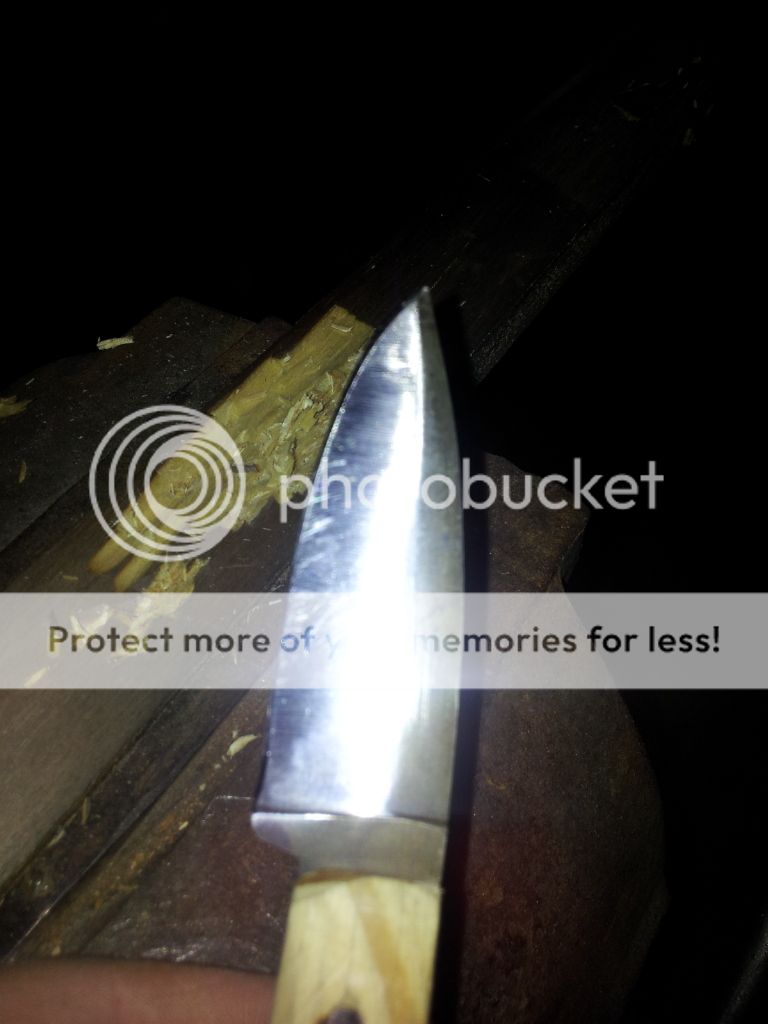
20121128_182724.jpg


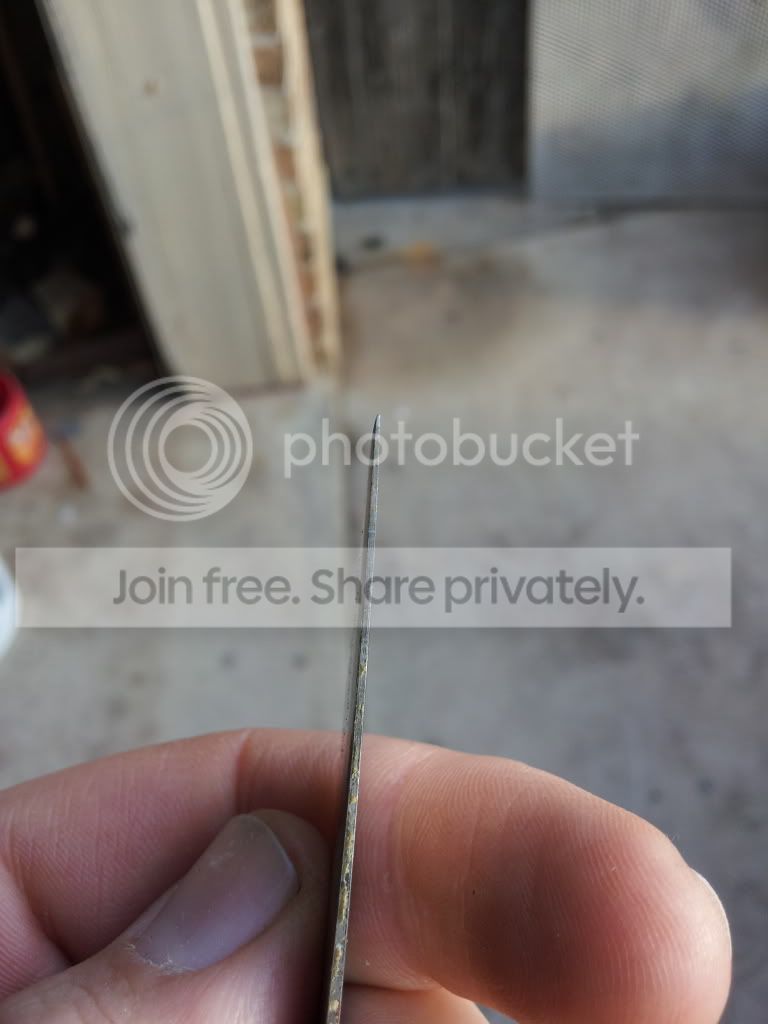
Although there was no tip damage, I did notice that the blade bent slightly, which wasn't a total shock due to the massive swedge I ground in the already thin blade. Here you can see that the tip slightly bends toward the left.
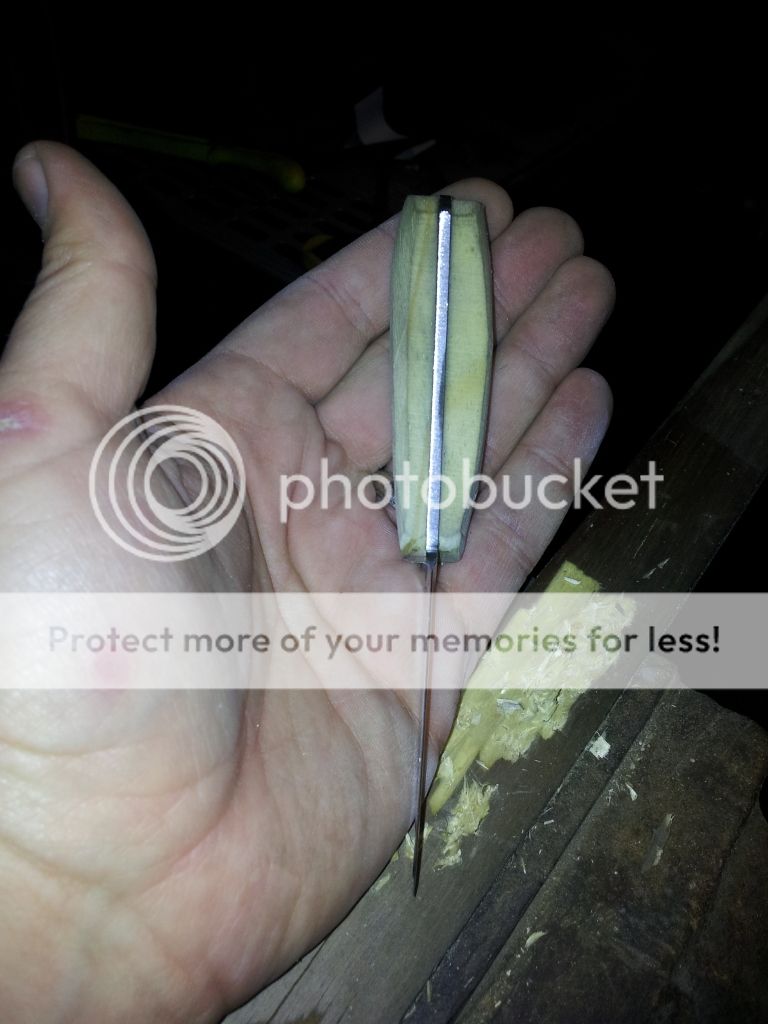
20121128_182714.jpg


I'm not really worried about this bend as a knife, especially a thin necker, shouldn't be used to pry anyways and wouldn't be covered under my warrenty.

I'm looking for more test ideas before I snap the blade to look at the grain. Any suggestions? What do you think so far?
 
Last edited:
This is why I love simple designs. There's nothing radical about that knife, it just works :)

I think you've tested the blade, HT and edge very thoroughly. The only thing I would add is, how's your hand feel after all that cutting? Might not be a totally valid test in this case since you understandably just put a rudimentary handle on it... but my opinion is if you can do that much work without hotspots, cramps or a blister, the handle design is good to go :thumbup:

Bust it and see how it looks. At this point I would guess your temps and quench worked pretty well and you have a nice fine grain.
 
Yeah, the scales kept slipping on the blade since I used no epoxy and have small screws through 5/16 holes. But I had no complaints other than that. I'm thinking of putting another handle on it and taking it outside for some camp chores.
 
I like your knife. I'm a beginner I'd kill to have the skills to make the knife you made. I'm left handed and when I'm filing my blanks the left side of the blade is always flat vs the right side which is slightly rounded. You have any clue what I'm doing wrong?
 
Cyanide45, If I had to guess, I'd say you are lifting the handle of your file either as you approach or leave the blade. Try draw filing and work the length of the blade rather than sideways if that makes sense. And make sure that you approach both sides of the blade the same way.
 
What you said makes sense and I have noticed that I do raise the file. Thank you for the great insights jawilder.
 
Hey jawilder what type of belt sander do you use making your blades? Did you make the same mistakes in the past with with filing? I thought it was interesting you knew what I was doing to cause my problem.
 
I started with files and still use them on occassion. I then moved to a Craftsman 2x42 and now have a 2x72 "Grinder in a Box".

I did make the same mistakes as well.
 
That is funny because I started with files and I now have a craftsman 2x42 sander. I am confused what type of grind would be the easiest to do with my 2x42. It has tma disc sander on the side heck we probably have the same sander. What grind was easier for you using the craftsman? I'm sorry if I'm asking too many questions but I keep making the same stupid mistakes and that's making me loose interest in making knives which I don't like at all.
 
have you seen the knife test noss guy (youtube channel) does? he's straight brutal on anything he tests... I'm not sure if you want to go that far though
 
Hi Jay

nice test. Dont destroy it yet.
I suggest to make a similar piece with a slightly tweaked heat treatment and then repeat the same test with the different HTed knife.

THEN destroy both and make direct comparison. I am not really an expert but i think you can squeeze out a little more with a tweaked heat treatment.
 
i suggest the following

after grinding , heat to 1200 F, hold for 2 hours at temperature, slowly reduce heat to 950F, then let it air cool. for stress relieve

hardening (in foil), preheat to 1200 F again, then raise to 1520F hold time 30 mins at temperature

temper (after it has cooled down to 150 F) 2 times to 400 F hold times each 2 hours, with intermediate cooling to room temp.

temper (1 time), to about 350 F hold again for 2 hours. for stress relieve

expected end hardness : 61/62 HRc.

maybe an experienced HTer can chip in here for adjustments of these suggestions.
 
Let the testing continue:

I took three suggestions from this and another forum and want to show the results of this "little knife that could"

First, we have the "one stick fire"
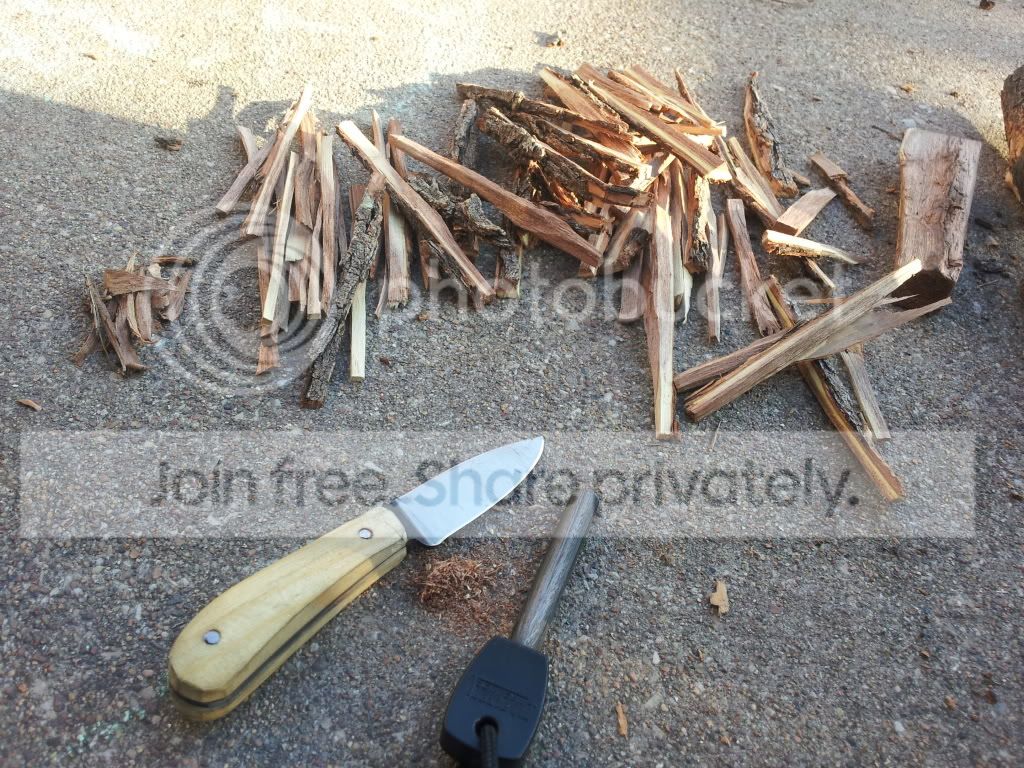
Ok, so when Shane suggested this, I had to look it up on youtube and found out that it is a challenge to make a fire using nothing but a knife, firesteel, and one stick batoned into several smaller pieces, and then fuzz shaved off for the tender.

Since I didn't have the time to go out to the deer lease, and didn't want to disturb my future dinner, I decided to do this in my back yard with the wood I had on hand that I use for smoking
First up is this piece of Pecan
20121129_152716.jpg


But I took too big of a bite in the wood and had no room to baton, so I chose a smaller piece of Mesquite
20121129_152931.jpg


The thin knife went through with no problems. Who said you need a camp knife to do camp chores?
20121129_153154.jpg


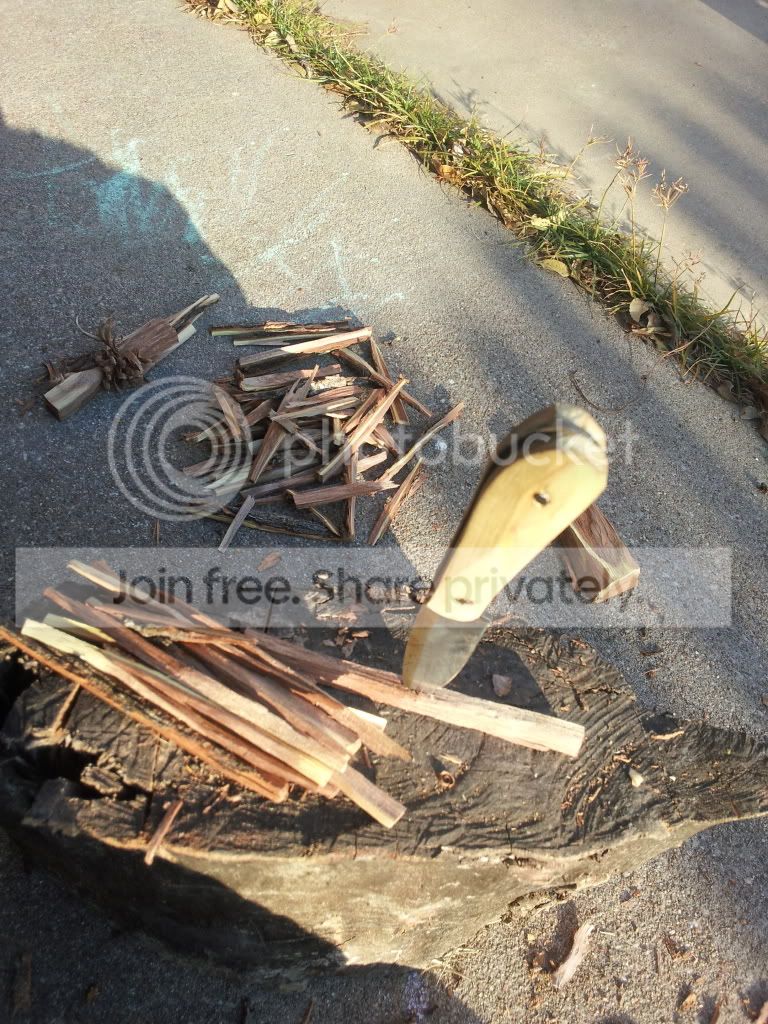
I had the wood split in no time. Here I am poking the tip into the small pieces and prying sideways to split. Even though the Mesquite was super tough, it gave little resistance
20121129_154915.jpg


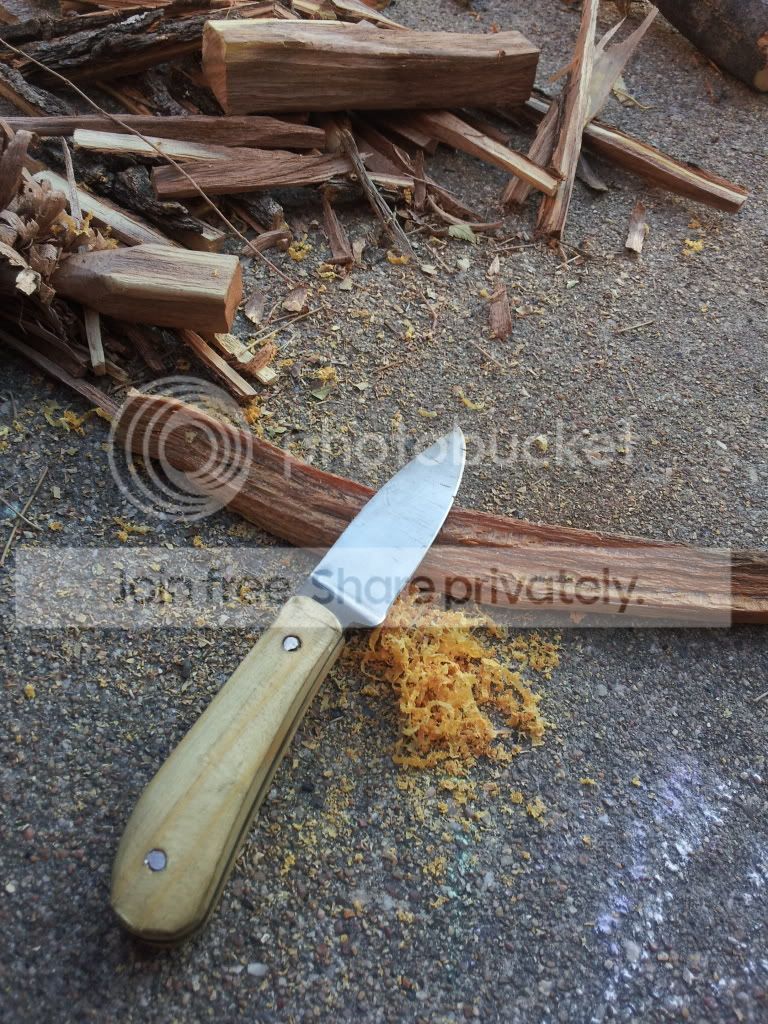
I don't guess I took any pictures of the fuzz sticks but here I have scraped piees of fuzz of for tender and have the firesteel ready
20121129_155827.jpg


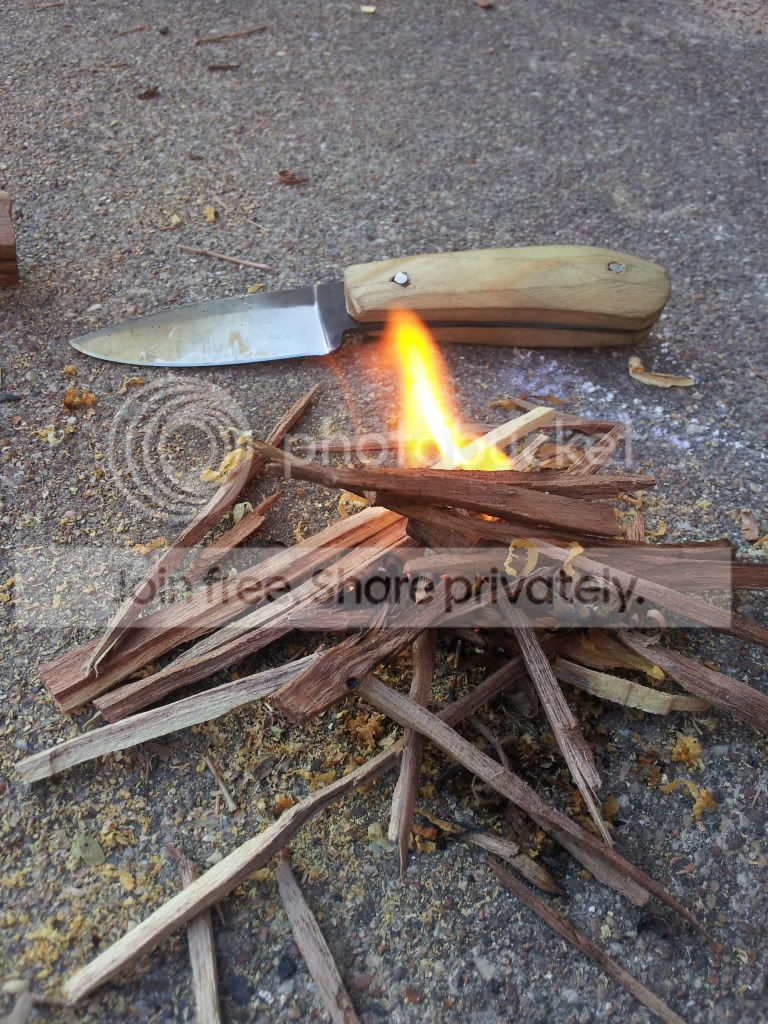
I felt like Tom Hanks "FIRE"
20121129_162351.jpg


OK, so I call BS on my own thread. The Mesquite shavings would catch but not spread around. Either the wood wasn't dry enough yet or my skills just suck, so I had to use shavings off a piece of "fatwood" - pine stump... OK, so it was a two stick fire, but who's counting. The knife did fine even though the user didn't.
20121129_161218.jpg


I suppose I could have made this test easy on myself and used pine or other soft wood, but there's more hardwood where I live and Mesquite is tough as nails so I really wanted to put the knife through it's paces.
 
Second
It was suggested that I do the much dreaded drop test on concrete floor. So I measured a distance of 48" and let her fall.
20121129_162638.jpg


I suppose this is to make sure the tip is tough enough to take a fall and the HT is spot on so that the blade doesn't bend too much or break.

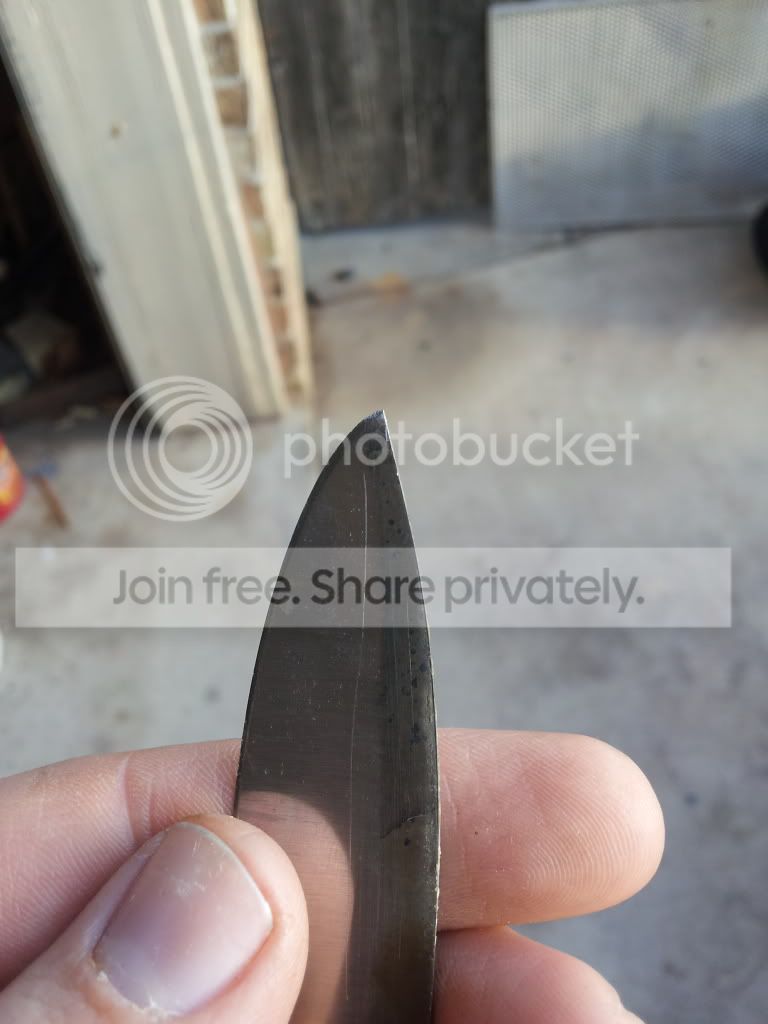
Here are the results: I'm not going to say that it was unharmed b/c there was a tiny bend in the tip, but it didn't break
20121129_162814.jpg


It looks worse here than it actually is. Remembe the bent blade is from prying on the pine. This is just to show the tip.
20121129_162821.jpg
 
Third (and I've always wanted to do this)

It was suggested that I try to shave mild steel, but I took it a step further.

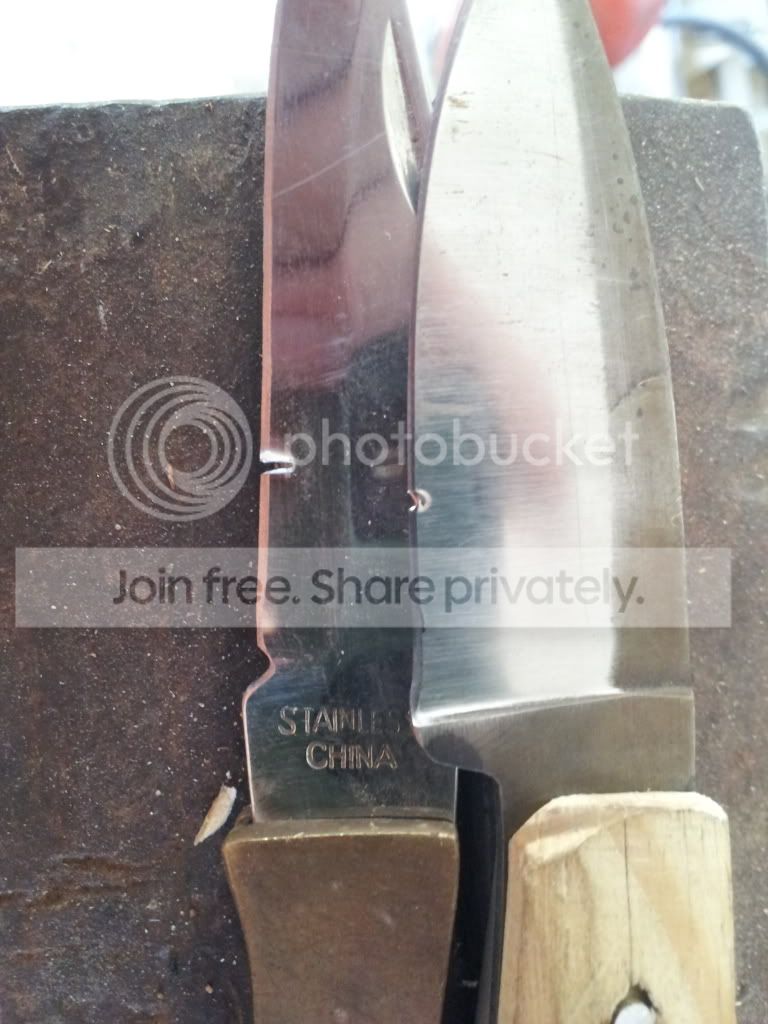
I can't tell you the number of times I've heard, "Why should I pay more for your knives when I can run down to the gas station and buy a $10 knife". I decided to baton through "440 surgical stainless" or whatever they call it.

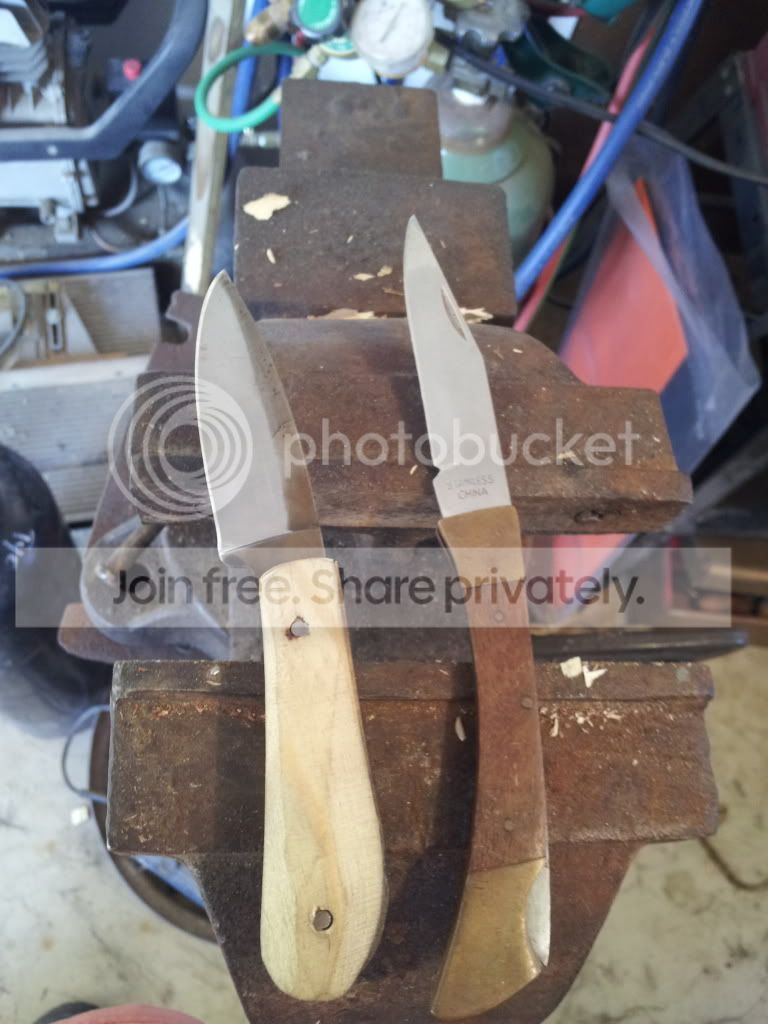
This is a knife that I got a long time ago from who knows where. All I know that it says "Stainless China" and is going down
20121129_162925.jpg


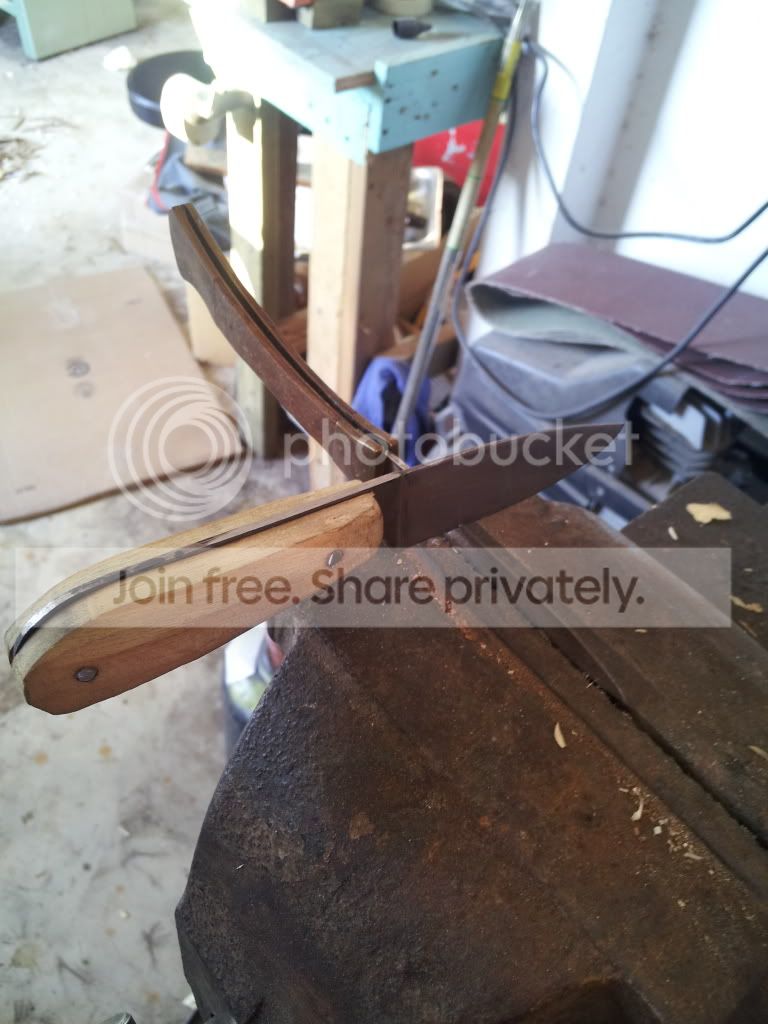
After I tightened the chinese knife in the vise, I put mine on top and have it a few good licks with a 3 pound hammer.
20121129_163135.jpg


The results?
20121129_163620.jpg

Sure, mine has a nick in the blade, which I was expecteing, but not nearly as bad as the other one. I imagine I could have gone all the way through it if I really wanted to.

More to come as I find time.
 
i suggest the following

after grinding , heat to 1200 F, hold for 2 hours at temperature, slowly reduce heat to 950F, then let it air cool. for stress relieve

hardening (in foil), preheat to 1200 F again, then raise to 1520F hold time 30 mins at temperature

temper (after it has cooled down to 150 F) 2 times to 400 F hold times each 2 hours, with intermediate cooling to room temp.

temper (1 time), to about 350 F hold again for 2 hours. for stress relieve

expected end hardness : 61/62 HRc.

maybe an experienced HTer can chip in here for adjustments of these suggestions.

Thank you for the suggestions.
I did stress relieve for 15 minutes at 1250 and so far am happy with the result as I've had no cracks. Is there any benefit for the super long stress relief cycle?
I normally hold at 1475 for 20 minutes but decided to only hold for 15 minutes and took this one up to 1490
I did 3 one hour cycles at 400. I might drop the next one to 390 to get more edge holding.
 
Hi

i cannot chemically explain it (yet), but i have read in many data sheets that 2 hours is the recommended time.

http://www.bucorp.com/files/aisi_o1.pdf

is an example where you find the mentioned 2h.

the 10 degree F might not be sufficent to see much difference. Maybe 360 F would make it visible. Recommended is 50F difference to last temper as far as i know

edit: the idea is to have 2 different temper temperatures. 2x 400 1x 350
 
Last edited:
You probably could have convexed that edge and made it fatter and gone right through the China garbage with no nicks. That's an awesome and entertaining test though.
 
When I suggested the one stick fire you could have chosen one stick of fatwood lol! Good job and yes you need to scrape a larger pile of fine shavings. Hold the blade like a cabinet scraper and get after it. Still I was impressed with the job you did bro. Awesome job on the heat treat and being open about the findings
 
Back
Top