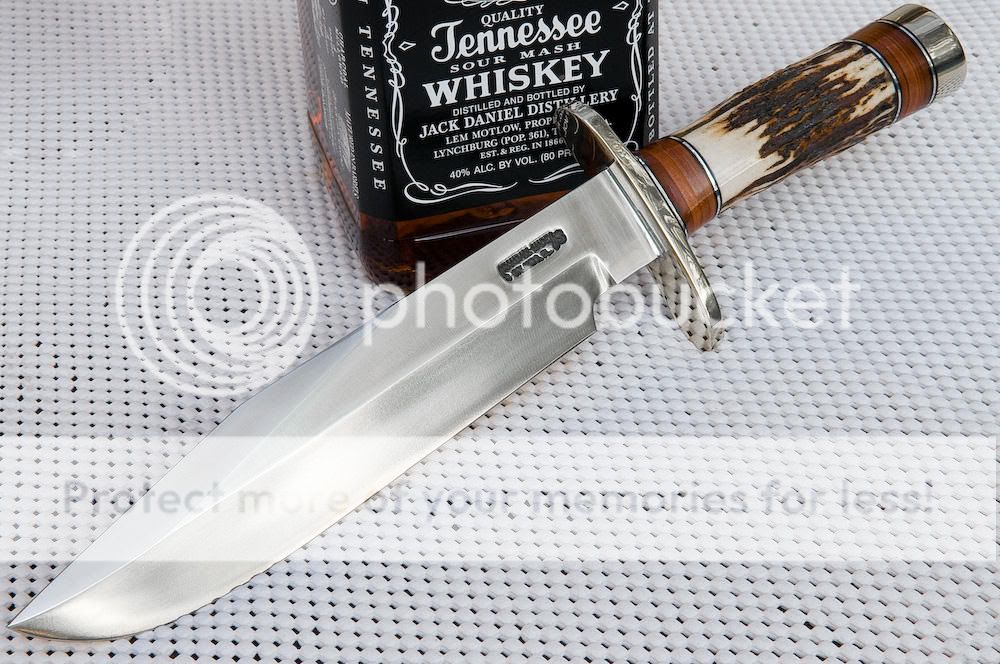
Maybe it's the schools nowadays, but you probably didn't get any education of what the US Space Program was like, it's not just the Astronauts that are rigorously tested before qualification.
Thank you, my education is fine, and even though I have masters deg. in Math and comp science, I did get pretty good education on US Space program, mainly because I was interested in all things space related. Having said that, I have never seen any accounts of knife testing for space program, which would be very interesting.
NASA qualified tools and equipment are selected like everything used in Space Missions, they get beaten worse than some skoolkid with a wooden baton could ever do.
Unfortunately, that is not always the case. Still, I'd rather know some facts vs. generic "rigorous tests". Especially that a knife is not astronauts primary working tool. At least in their "astronauty" work, they try to stay away from all things sharp, because the gloves on space suits are the most vulnerable parts, small tear could be potentially lethal.
They were issued so Astronauts can cut themselves out of a space capsule and then possibly survive in a hostile environment until help arrives. The testing is far worse than actual use could ever be.
Cut themselves out of space capsule? As in through ceramic plates, titanium alloys and such? I doubt that

As for the survival of the astronauts using aforementioned knife, that would be on earth, and probably in the conditions other knives and humans would face as well. O1 at 56GRC is still O1, in space or on earth, same for 440B.
Anyhow, point is it all was about 40-50 years ago, and Randall knives have not changed much since then, while tons of new alloys appeared. I don't buy an argument that because a knife was used in space program, it is a still top choice today, 50 years later. Yes they are part of history, and have considerable value for collectors, but other than that, from performance point of view, that're not the top choice.