Tools you own... But don't know how to use

Joined
Jan 10, 2010
Messages
1,818
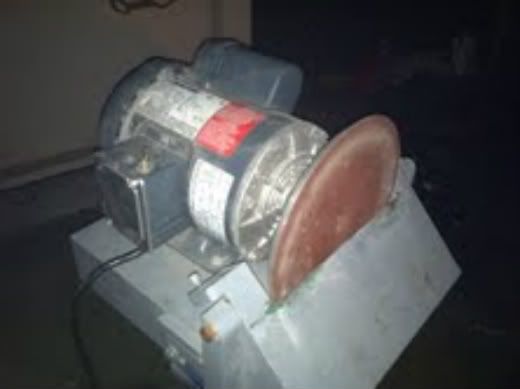
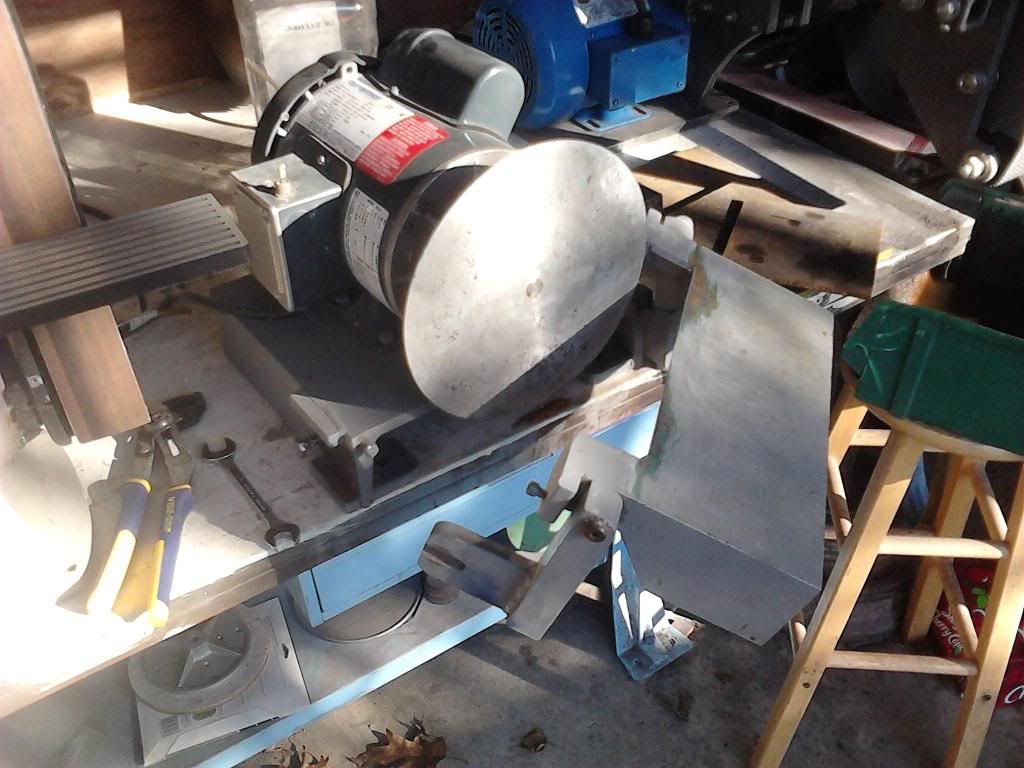
I recently received some money from my local Arts Council to help develop my work... and I used it to buy a disk grinder. I now have it running with VFD and forward/reverse switch. I've started playing with it... but am now a little lost on how to make best use of it. Same thing happened when I picked up a free mill last year from Craigs List. I use it to slot guards... but other than that.. I don't have enough experience to make the best use of it. And once I bought a cork belt for my KMG. Still haven't figured a use for it.

So.... who else encounters this phenomenon of feeling like you NEED a new tool, you buy it.. only to find out that you don't how to use it?

Seriously though.... how do I use my disk grinder? :-) Or... More to the point: How do I make the BEST use out of my disk grinder? Which, by the way, is the unit Wayne Coe sells with magnetic interchangeable disks. I have the flat and 1 degree bevel.
 
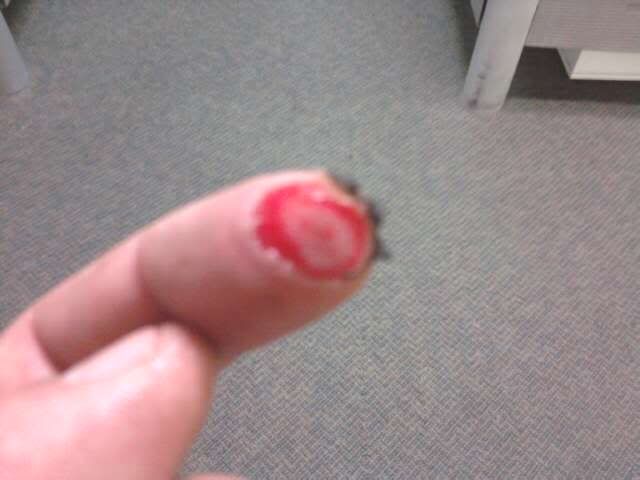
It's not meant for trimming your fingernails. But you probably will anyway :p
 
I inherited a router. I understand how to use it...sort of. Would I feel comfortable using it? Probably not.
 
It's not meant for trimming your fingernails. But you probably will anyway :p

Or in my case your index finger pad.

SNC00138.jpg
 
yeah... I think that thread may have been what got it in my head to buy one. I've been meaning to go through it again. But it's hard to set the time aside for the vastness of it. Thanks for linking me directly to what I need.

How many folks use them to establish rounded, swoopy plunges?
 
I think of my disc grinder as a combination between a grinder and surface plate. I tend to rough in my bevels on the 1x30 and move to the disc for truing things up. Some people like their disc verticle and some horizontal, I use verticle. One thing to watch out for is when placing your work to the disc, I tend to make sure I bring it to the middle of the disc first and then lay it flat. If you lay it on the outside of the disc first it will leave either a divot or deeper scratches than you want.

Swept plunges are easier for me on the disc than the belt because I just move the blade up or down on the arc to get the angle I want.


-Xander
 
Honestly, I mostly use mine with the tool rest for squaring things up, grinding light chamfers and getting matching angled surfaces for things like "dovetailed" mortised bolsters and the fronts of non-bolstered full tang scales. Especially with small parts, it can be tricky to bring them straight to the disc and avoid a divot or being out-of-square. Many guys use a footswitch so they can line up the workpiece barely touching the disc, then turn it on with their toe.

I haven't worked up the courage to try beveling on mine, but the fellows who do that, swear by it.

One big advantage is of course you can use any kind of paper you want on a disc, from 50-grit to ???? polishing papers.
 
Last edited:
I think it's something a lot of us experience Scott. I've had to make a concentrated effort to figure out which tools to acquire based on a specific need, vs just having a vague idea that I need a tool. I've also started committing time to setting up, learning, adjusting, or in the case of many of my machines, refurbing them enough to put them to proper use.

I spend more time fixing machines, moving them around, running infrastructure, making jigs, accessories and tooling, than anything else. That's fine for me, because I enjoy that. I'm a full time "maker" but knives are only one small part of the things I make, and I'm into evolution, not specialization, so it works out. However, it's really easy to get carried away with acquiring more tools, based on vague ideas that you need "something", and end up spending a lot of time trying to haphazardly figure them out, and sacrafice any time you might have saved.

If you want to focus on making knives, my suggestion would be to not buy any new equipment until you've identified a specific need for it. If there's an issue with some aspect of all your builds that needs to be addressed, maybe there is a specific tool for the task. Maybe its just a technique problem, and I think its important to learn to be honest about that. It's really easy to let yourself think that a problem you're having is due to not having the right tool, instead of not yet having acquired the proper technique.

There is a prevailing philosophy amongst our community that justifies all "tool" use as being inherently good and more efficient. It certainly can be, but tools can also be a hinderence in less obvious ways. They're only time savers if they actually save you time. In order for them to do that, you have to know how, amd when to use them, and in such a way that they don't cause you problems later.

A disc grinder is a great example of a nice tool to have, but depending other available tools, potentially far from "essential". It just depends on *your* needs. I'm not aware of any task a disc grinder can do that can't be done on a belt grinder. Although there are a few that are slightly easier or more convenient on it.

A full sized milling machine is possibly the most useful shop machine you can have, I'm without mine at the moment and I need it 20 times a day, however for the way I make knives, the only knife building specific task I need it for is slotting guards or handles. However, I don't make folders.

The big question really is; What do *you* expect from these machines? You got the mill for free, so no obligation there, but what did you buy the disc grinder for? Once we/you know that, we can determine how to "use it". ;)
 
Thanks folks.. James... what kind of tool rest do you have?

It's just the stock one that came with my 2x42. It's a pretty simple set-up; I imagine you could build a similar one to mount on or next to whatever vertical disc sander you may have; a rest for a horizontal disc might be a little more tricky.
 
I recently received some money from my local Arts Council to help develop my work... and I used it to buy a disk grinder. I now have it running with VFD and forward/reverse switch. I've started playing with it... but am now a little lost on how to make best use of it. Same thing happened when I picked up a free mill last year from Craigs List. I use it to slot guards... but other than that.. I don't have enough experience to make the best use of it. And once I bought a cork belt for my KMG. Still haven't figured a use for it.

So.... who else encounters this phenomenon of feeling like you NEED a new tool, you buy it.. only to find out that you don't how to use it?

Seriously though.... how do I use my disk grinder? :-) Or... More to the point: How do I make the BEST use out of my disk grinder? Which, by the way, is the unit Wayne Coe sells with magnetic interchangeable disks. I have the flat and 1 degree bevel.

Scott
My disc grinder sat in my shop a long time because I could never get used to it. I decided to learn how to use it so I cut quite a few knife blanks out of mild steel to practice. I practiced, practiced and practiced some more. Now it is my most used grinder in my shop. In fact I have 2 of the Rod Neilsen disc grinders. I do my heavy grinding on my 2" x 72" with 50 grit and 120 grit. Then i go to the disc grinder from 180 grit to whatever grit I want to finish with. If i want a 600 grit satin finish I will go to 800 grit on the disc grinder then hand sand with 600 grit. If i want a mirror finish I will use the disc grinder to 1000 or 1500 then straight to the buffer with green compound then white compound.
I used to spend hours hand sanding each knife, now it is minutes only.
Jim
 
Ah yes.. the old 2x42. I still have mine and I still use it.

Thanks for the comments Javand. I bought my disk grinder because I'm trying to get more efficient at getting true surfaces... flat surfaces. Which I realize that I could be doing with my mill whenever I get to acquiring the proper tooling. I also want to use it to get flat, true bevels on long blades like swords.. and perhaps some swooping plunges on knives. I was also thinking it would make nicer machine finishes for a smooth transition to hand rubbing.

Jim... Thanks a lot. That is what I was envisioning when I bought this. Do you use it to reshape your plunge after grinding on the belt??? Are you using sheet paper or buying pre-cut ceramics? By the way... does anybody know if it's worth buying the ceramics? Or go the route of bulk, cheap, change often?
 
javand- I think if you spent 30 minutes in a shop with a guy who uses a 9" disc a lot, you'd be shocked at what that 9" disc can do. :)

Scott- I usually feel like I don't really know how to use most of the tools I own. :foot:
 
I think I've done things by hand for so long that by the time I get a nice tool I'm
more than ready for it even though it may be one operation I use it for. Having said that
I have 2 VS rev. discs that see use every day and on every knife. Before I made folders
I really don't think I used a disc any less (they are fantastic for folders). If theres any
way you can rig rests like these they are sweet, dead square in seconds, any angle,
or out of the way. Ken.
102_0836.jpg

102_0838.jpg
 
Scott,

I bought a few of the Blaze 60 and 120 grit pre-cut discs.... They last FOREVER! So, I believe they are best suited for using with the Nielsen disc system. I have torn off a couple 60 grit discs well before they were used up when I needed to go up in grit.
I bought a few 50 packs of Rhinowet paper so I can change it out when needed without tossing a $5.00 disc.

I have a disc table by RW Wilson. It comes on a stand that can be bolted to the floor, the rest swings away, or can be indexed from 90 to 45 with pre-set stops, and can stop at any angle between.

DiscGrinder1-1.jpg


Picture655.jpg


A C Richards work with a disc is amazing. I do really like his sweeping plunges. The nice thing is with a disc you can really nail even plunges with a good file guide, and, they can be either sweeping, or match the angle of your guide depending on how you do them...

Honestly, I'm still learning just about every tool I own.....

Congrats on the grant from the arts council. That's really cool.
 
thanks a lot folks. I'm really wondering about the tool rest. It would be great if I could adapt the MAP rest I have coming for use on the disk. But will I really achieve better results SQUARING things on the disk than my belt? If I have a state of the art work rest for my KMG... and I find I don't need the disk for squaring.. then I attempt to make the disk grinder work for me on getting my bevels true and prepared for hand rubbing. Is this a good plan?

Nick.. I would love to hear more about how you use the disk grinder that don't know how to use. :-)
 
Back
Top