Touhest stainless knife steel

I forget what it's called, but the toughest steel currently is difficult to produce, expensive and mostly used by the government on very particular applications.

There's that one knife maker that uses it to make his knives.

Hope that helps.

That would be Rasta Frei I presume?
 
Repeatable testing gives parameters and controls exactly so that it can be repeated.

Yes.

But the fact that a test is repeatable is no guarantee that it is predictive of field testing.

If you want higher degrees of confidence you'll need to get into peer reviewed journals but the industry in question then needs to be important enough to merit very high levels of funding for that.

Absent that, you're left with a comparatively underfunded combination of vendors, professional associations, trade magazines, fringe academics, and the occasional hobbiest.

We see this all the time in performance consumer products like bikes, skis, cars, cameras, and audio equipment.

The only thing worse than a lack of data is misunderstanding the limitations of data.

I'm a mathematician turned scientist/engineer, have taught the stats courses and usually the one advocating for trusting scientific results. But I wouldn't hold my breath hoping for data driven results on this topic and would give careful consideration to anecdotal results from the field.
 
From what I've gathered here, it looks like the lack of concrete results because of the lack of a set controls is pretty much understood amongst makers which is the reason it's been said that they don't like to give or go by any set numbers for those very reasons. Cause people get caught up in those set numbers. So the testing in the less formal manner is just a giant road map to follow where accuracy is still important and can be of use depending on direction.

Or for people that don't know like me.

So it is science.. but it's not.
 
Yes.

But the fact that a test is repeatable is no guarantee that it is predictive of field testing.

If you want higher degrees of confidence you'll need to get into peer reviewed journals but the industry in question then needs to be important enough to merit very high levels of funding for that.

Absent that, you're left with a comparatively underfunded combination of vendors, professional associations, trade magazines, fringe academics, and the occasional hobbiest.

We see this all the time in performance consumer products like bikes, skis, cars, cameras, and audio equipment.

The only thing worse than a lack of data is misunderstanding the limitations of data.

I'm a mathematician turned scientist/engineer, have taught the stats courses and usually the one advocating for trusting scientific results. But I wouldn't hold my breath hoping for data driven results on this topic and would give careful consideration to anecdotal results from the field.

I agree with pinnah on this tangent that we seem to have gone off on. But amongst all this talk of data: there is precious little data about what the OP asked about. Namely, what is the toughest stainless steel. In this entire thread, I don't see a link to any charpy impact test data comparing the various stainless steels. If you search really hard, you'll find a few web pages with some of that data. Nothing very comprehensive, however. I might have some results bookmarked. If I find them, I'll post them here. As far as I'm aware, 440A is pretty tough. It's probably among the toughest stainless steels. But it's not as tough as carbon or tool steels, like 1095, A2, or 5160.
 
Here is a chart from a knife maker comparing some steels, including 440C. http://www.relentlessknives.com/Details.html
Notice that it's 440C, not 440A. I don't recall ever seeing any charpy results on 440A. These results will obviously depend on the heat treat used by the maker. For instance, A2 is 40 ft lbs at 60 Rc, which is very tough. But it's completely different at other Rc hardness levels, and the heat treat determines that. Anyway, on this chart, 440C is not as tough as 1095. Anecdotal evidence certainly suggests that large stainless choppers are not as tough as large carbon steel choppers. I have always avoided large bowie knives in stainless, for example, because I don't think they're tough enough for heavy work. The largest stainless outdoors knife I have is a Muela bowie with about an 8 inch blade. I don't chop wood with it though. IMO anything larger than that, stay with carbon or tool steel.
 
Condor uses 440c in some of their axe heads, that's pretty tough territory. I know there are some used in hammers like 17-4ph that are very tough but have never heard of a cutting tool made from from the stuff, it might not be able to reach a suitable hardness for edge retention.
 
So who else makes S30V, who else makes S110V, who else makes 3V? Have you ever seen any performance data on cpm steels published by anyone other than Crucible? Nope no one. Crucible also sells non pm steels. They publish that data as well. Have you ever asked crucible about any facts on their charpy testing? I have. They could not tell me anything about their testing. Not even a date. not a location, not anything. I tried, but to no avail.

I find cpmS30V to be the biggest sham pushed onto the knife world in all my years of collecting. I have owned more knives of it than any other steel and it is so over hyped it isn't even funny. S35vn is what s30v should have been. I do not for one minute believe the numbers posted by crucible on s30v. It is not tougher than ATS34, it is not tougher than 440C, it's edge chips out faster than both of those steels. Those are user based fact based on 15 years of use with multiple knives. I would basically take any stainless steel over s30v.

I agree S30V is poor, even with the best heat treat. I also think CPM 154cm is even worse in edge-holding, regardless of what separates them.

I also agree about scientific data being very questionable for translating narrow parameters into performance reality: People think that because it has the mantle of science it is gospel... There are a lot of potholes between theory and reality...

For instance, the FW-190A has 50% more wing loading than a same period Spitfire: Let me re-iterate this: 50%... Any aerodynamic engineer will tell you this means the FW-190A is not even in the same universe in horizontal turning ability compared to the Spitfire, this especially so in sustained horizontal turns at low speeds: All existing computer simulations are designed on this basis and nothing else...

Well, wouldn't you know it, the FW-190A was best used exclusively as a low speed turn fighter, this was recognized as a general method by its enemies, and the Spitfire's top ace Johnny Johnson felt the Spitfire could not compete at all with it in slow speed sustained turns, no matter who was at the controls, and no matter what you did...: Several credible pilot accounts verify this, and, significantly, NONE the opposite... To an aerodynamic engineer, this is flat-out an absolute scientific impossibility...

The problem with anecdotal evidence is that if a mouse verifiably kills and eats a cat, it's dismissed as anecdotal... Sorry, but if a mouse did eat a cat ONCE, it means you have to at least revise your theories on mice... Sadly, most scientists like neat quantifiable concepts that are easily tripped by various unseen, but real, factors, and the success of theories in various applied fields does not mean they don't have huge blind spots elsewhere...

Gaston

 
Bwahahaha...this is precisely why I buy 440A-C and use the shit out of them....I don't CARE how hard they are ! Have fun!
 
Except first hand experience is filled with statements of faith, assumptions, uncontrolled variables, biases, incomplete information, a total lack of controls just to name a few. The fact that something 'feels' authentic makes it even more insidious because it makes drawing false conclusions so very, very easy. That's the whole reason we have the scientific process. As a species we badly want to jump ahead, to reach conclusions quickly and for things to work out in ways that make sense to us and make us happy. Anecdotal evidence isn't useless, but repeatable testing is vastly more reliable.

Reliable to what end? Scientific process may say something firm, but in this case it also can offer the illusion of fact to the marketing and selling of a product, like steel. Equally problematic as "my impression"... But at least the limitations of my impressions are obvious.
 
[...] I'm a mathematician turned scientist/engineer, have taught the stats courses and usually the one advocating for trusting scientific results. But I wouldn't hold my breath hoping for data driven results on this topic and would give careful consideration to anecdotal results from the field.
The problem here is that the anecdotal results are often a result of die hard fans which destroys their credibility.
 
I'm glad everybody is taking & giving criticism in a constructive manner. This is an interesting thread.

So who else makes S30V, who else makes S110V, who else makes 3V? Have you ever seen any performance data on cpm steels published by anyone other than Crucible? Nope no one. Crucible also sells non pm steels. They publish that data as well. Have you ever asked crucible about any facts on their charpy testing? I have. They could not tell me anything about their testing. Not even a date. not a location, not anything. I tried, but to no avail.

I find cpmS30V to be the biggest sham pushed onto the knife world in all my years of collecting. I have owned more knives of it than any other steel and it is so over hyped it isn't even funny. S35vn is what s30v should have been. I do not for one minute believe the numbers posted by crucible on s30v. It is not tougher than ATS34, it is not tougher than 440C, it's edge chips out faster than both of those steels. Those are user based fact based on 15 years of use with multiple knives. I would basically take any stainless steel over s30v.

In my industry, not mettalurgy, scientific proof & acceptance follows this path:
1. Somebody runs an experiment using a certain technology.
2. They publish the results in great detail, leaving nothing out. Contact information is published, so those wanting to test the results are able to confirm details that were not published.
3.A completely independent person runs an identical experiment, & publishes the results.
4. If the two independent experimenters find essentially the same result, it receives a practical acceptance, until proven otherwise.

In Cobalt's experience with Crucible, Crucible doesn't meet a scientific standard at all, IMO.

However, testing a steel in a laboratory is never going to be comparable with testing a knife in the field. They are two different things. One will never disprove the other, & they don't have to. They are only what they are, extrapolation will not always lead to the truth.
 
Definitely agree on that last bit especially... Testing steel and testing knives are very different. And yeah, good discussion guys.
 
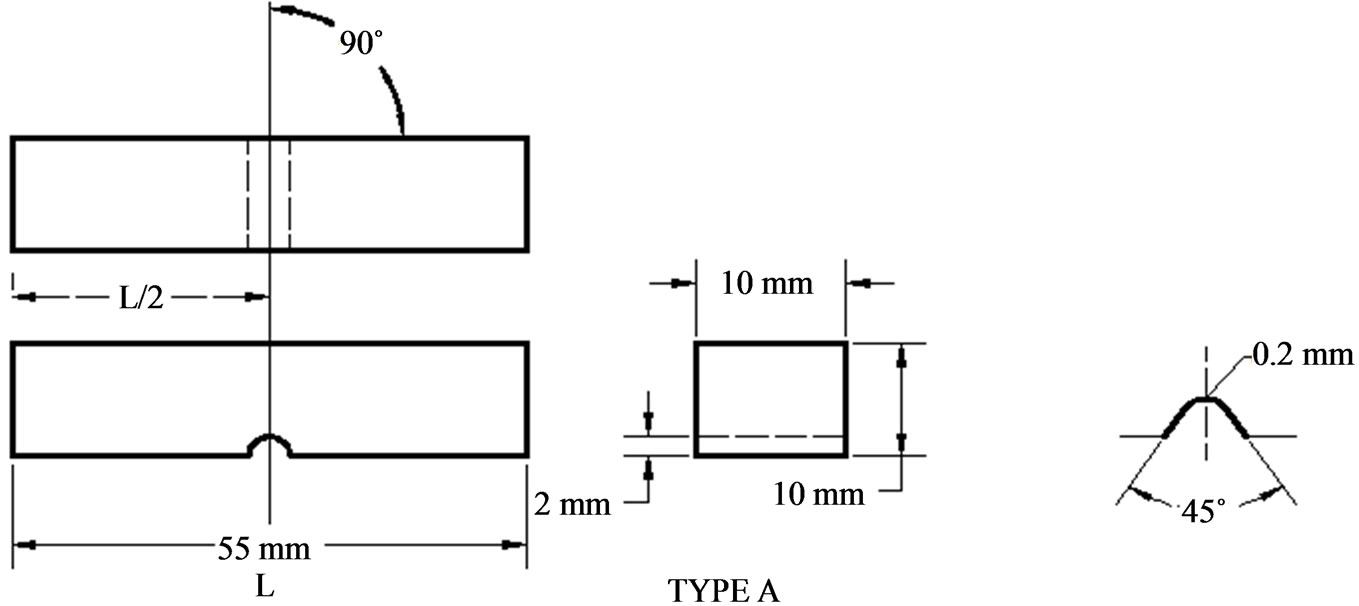
Another problem with C-notch is that knives are not designed like blocks of steel. They thin out and the crystal structure in a HT'd knife will behave differently in a knife shape than a rectangular block. S30V may well perform as stated in square block shape and it may be a total failure when thinned out. Just saying this is a possibility as well.

This is not representative of a thin edged knife.

5-2710137%5C4b7bd344-17b3-437c-a5fc-982a6d27c0ed.jpg


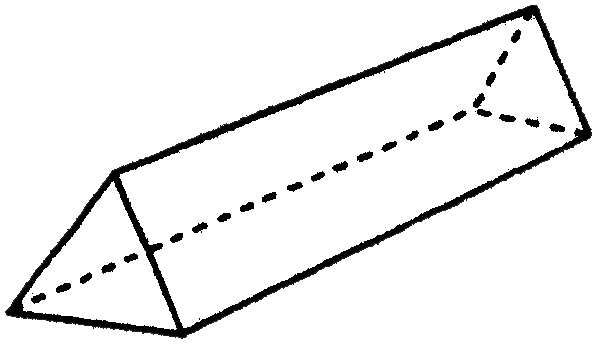
Maybe the knife industry should have a different c-notch testing sample that looks more like this

3d6.gif
 
I don't get the OP question, but am bad with my English. I do like AEBL, if I understand it correctly.

Maybe someone could help me by rephrasing it as "I want a stainless knife to do this...???...what should stainless steel should I use?"
 
I don't get the OP question, but am bad with my English. I do like AEBL, if I understand it correctly.

Maybe someone could help me by rephrasing it as "I want a stainless knife to do this...???...what should stainless steel should I use?"

He want's a big chopper. It is just as difficult for English speakers, since "toughness" is ill defined.
 
Back
Top