- Joined
- Dec 19, 2006
- Messages
- 8,210
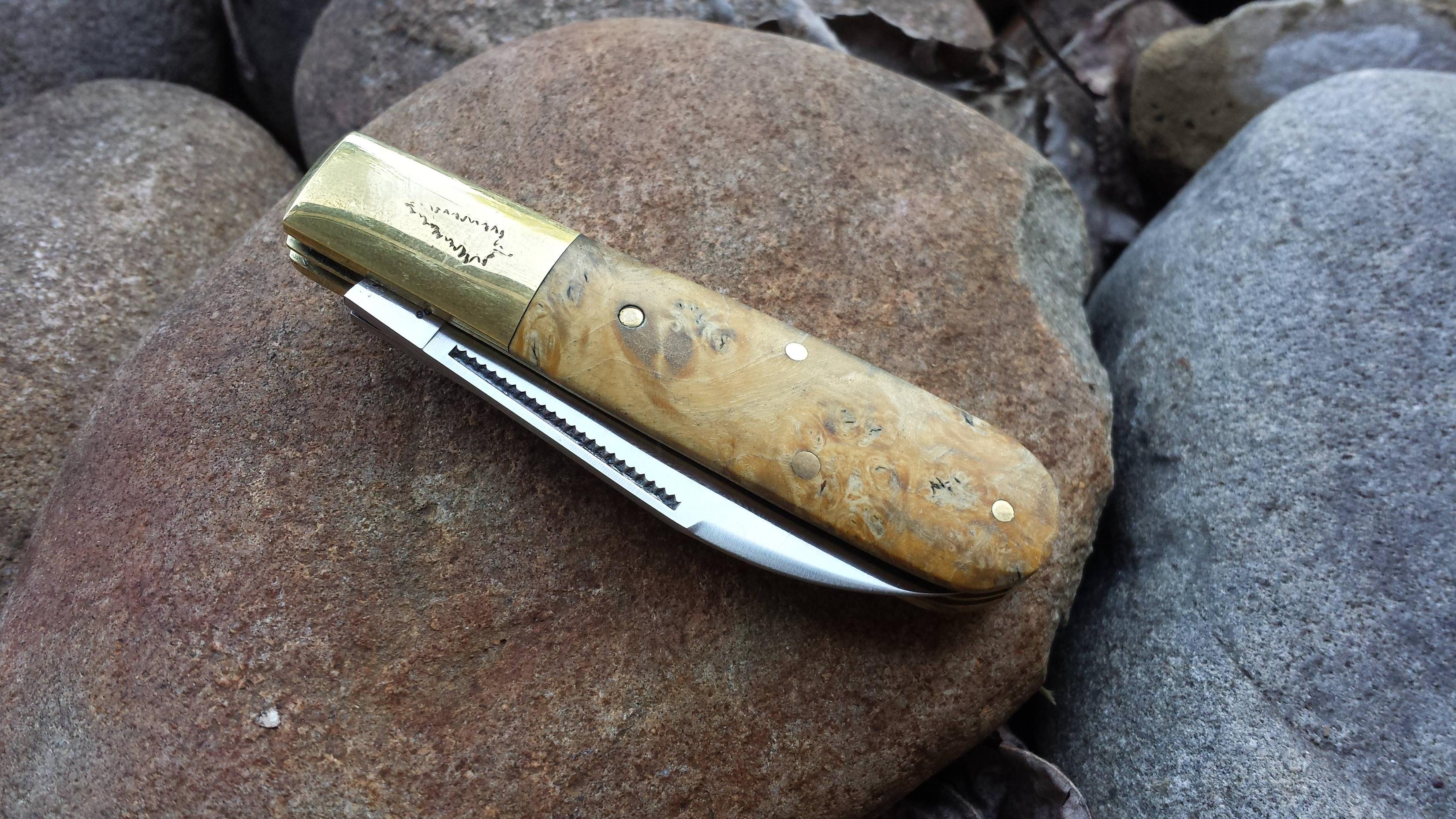
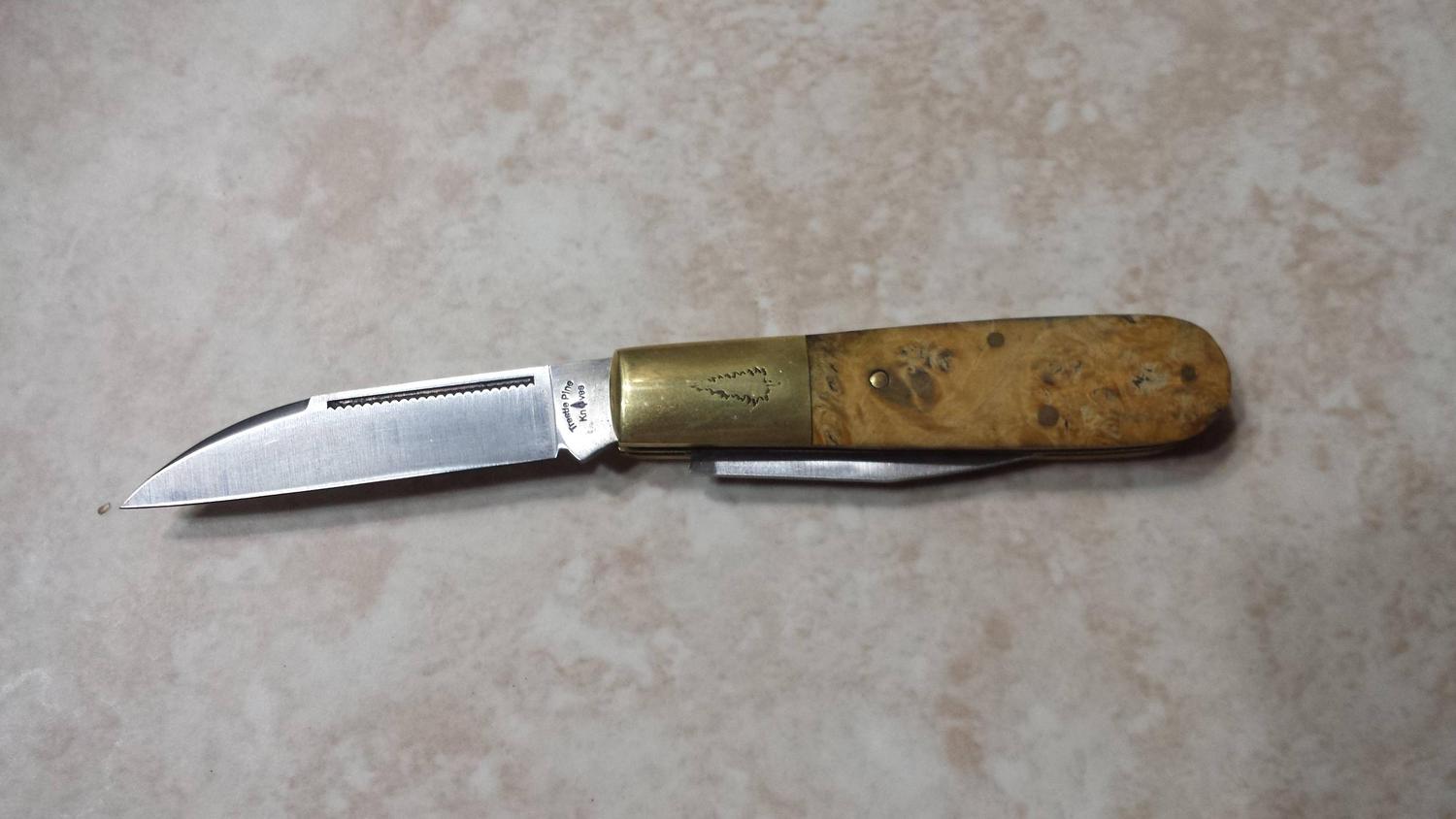
Is it just me that a wharncliffe in this design looks weird? Finger down a blackboard weird.
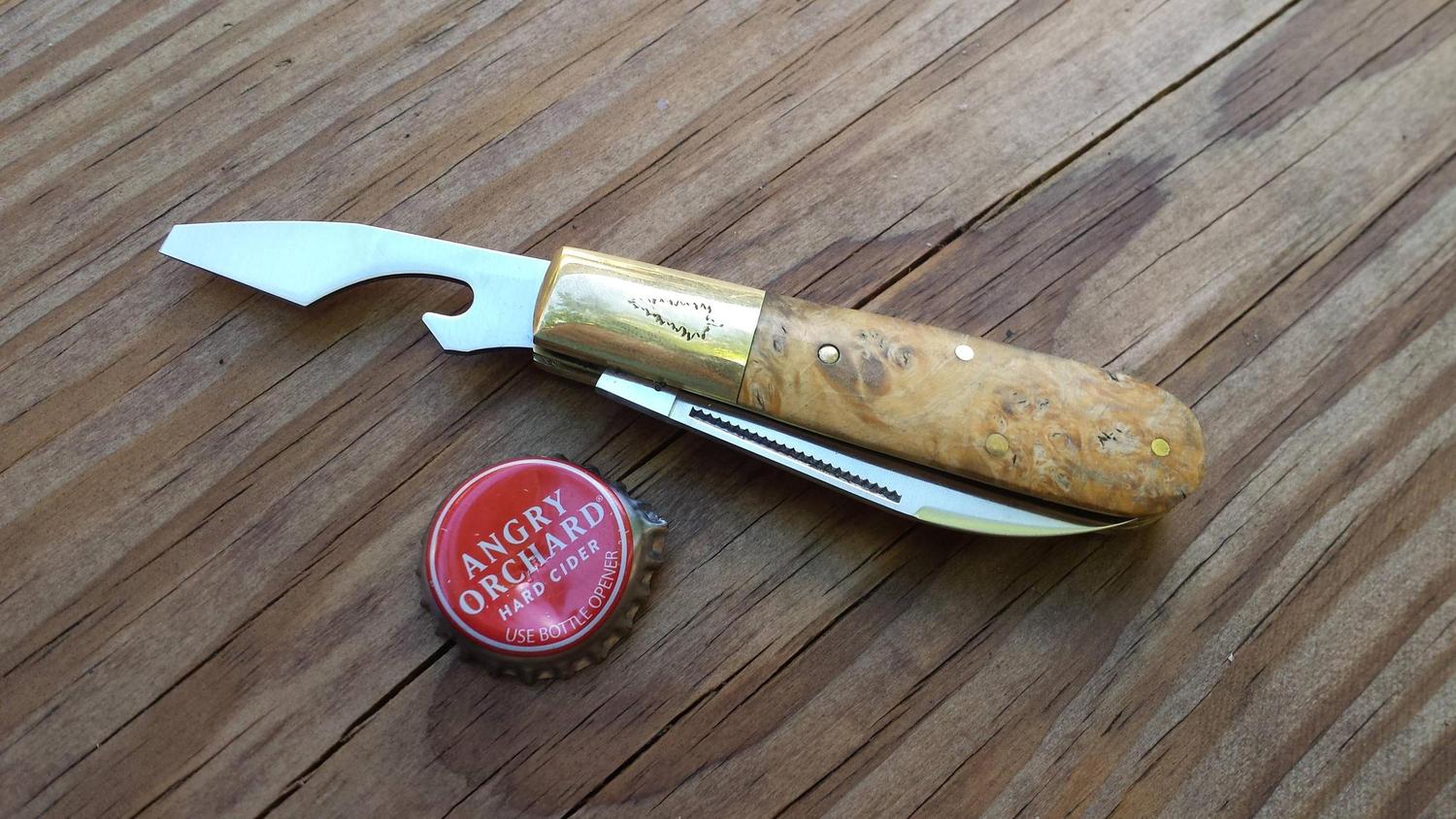
It's not traditional for a barlow but neither is GEC's use of Wharncliffe blades on many patterns. A cap lifter is also not traditional. Functionally/practically I don't think there's anything wrong with a Wharncliffe on a barlow. You would need to point out any design flaws to me. I don't see any.
I like everything about this knife except the tree on the bolster. I dont know if it's just the pictures but I doubt it because it's looked the same in every one I've seen. I dont get how this would look good to anyone but thats really just my opinion and I know what that's worth lol . Seriously though other than that tree I'd buy one in a minute.
Over on his blog, Greg (who owns the Trestle Pines brand) said of the tree, "The pine tree on the bolster is designed to give a worn look to the bolster."
The stamp could be deeper and clearer. It's interesting that the the bolster was intended to look worn. I think most of the wear on the bolsters of old knives is from "cleaning" or a modification rather than actual wear from use.
Pricewise (original retail), the knife is in the same ballpark as the GEC 15 barlow. It's more expensive than the GEC 15 radio knives, beer scouts and boys knives. So it has some tough competition.
Here is the GEC "beerlow" from the rendezvous (knife on the right). It has a sheepfoot instead of a Wharncliffe and a steel bolster instead of brass but its a similar knife. And it sold quick.
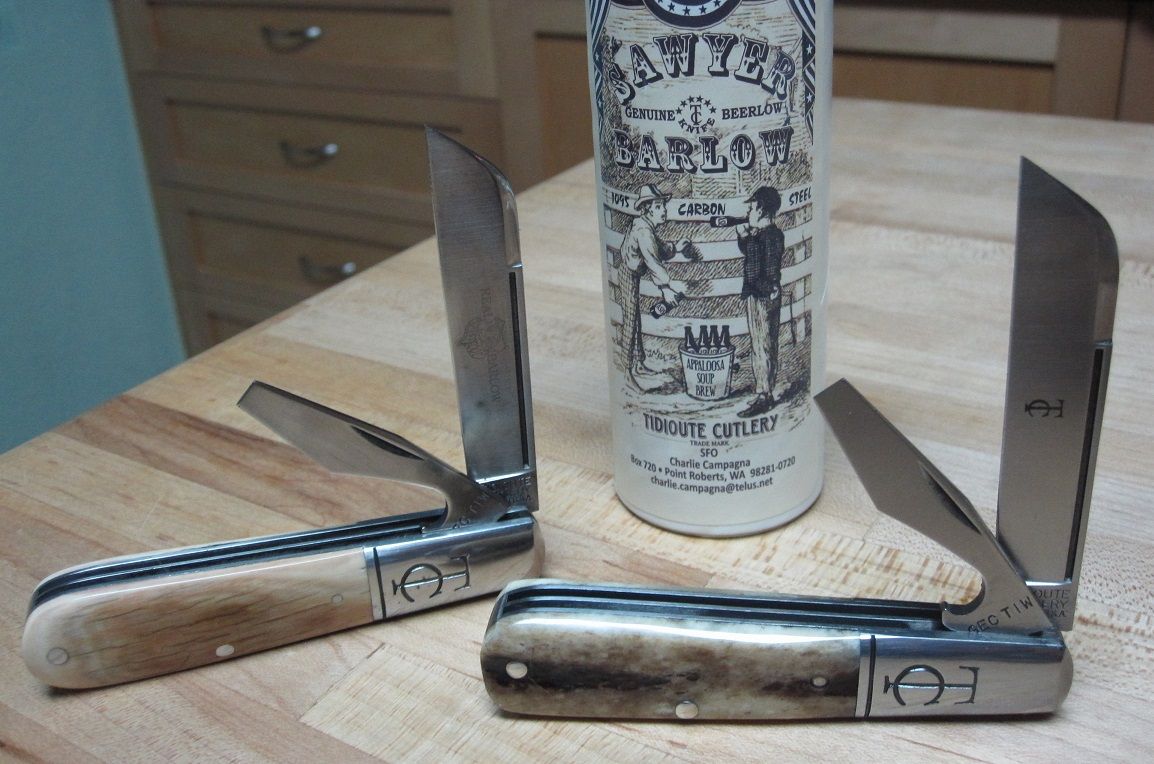
Trestle pines for comparison


Last edited: