

- Joined
- Dec 11, 2006
- Messages
- 1,659
Doesn't matter whether it is a mora, a Koster, Helle, or any other number of scandi ground knives, IMO this is the way the edge should be, yet many don't take the time to get them to.
Many other grinds, convex, v-grind, or even a slight convex on a flat grind can easily be taken to a high polish. The scandi is super easy knife to sharpen, however, getting to the same level of polish the first time can take quite a bit of time. The reason is you are in contact with a lot more steel during the sharpening process.
This is a very tough thing to show in pictures, but this is my best attempt.
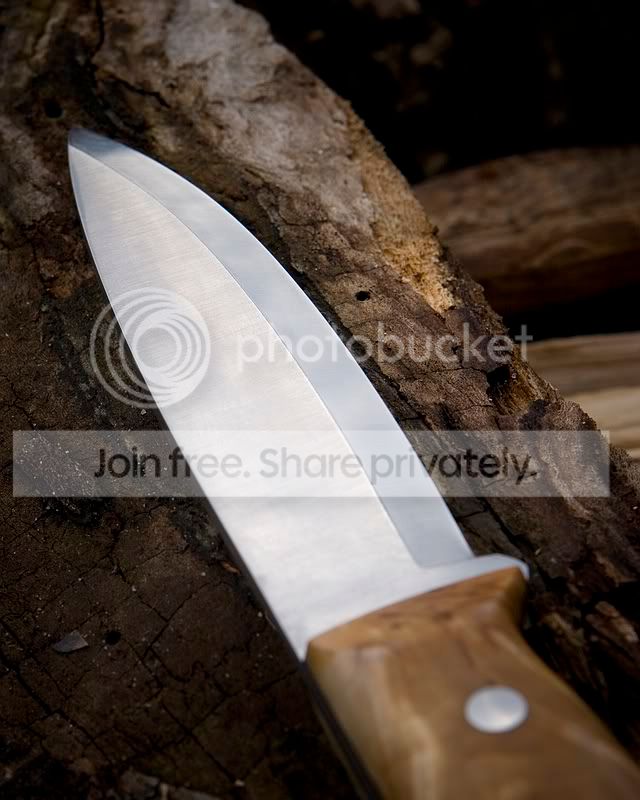
Here is a picture of the blade in focus. You can see the scratchy finish on the blade.
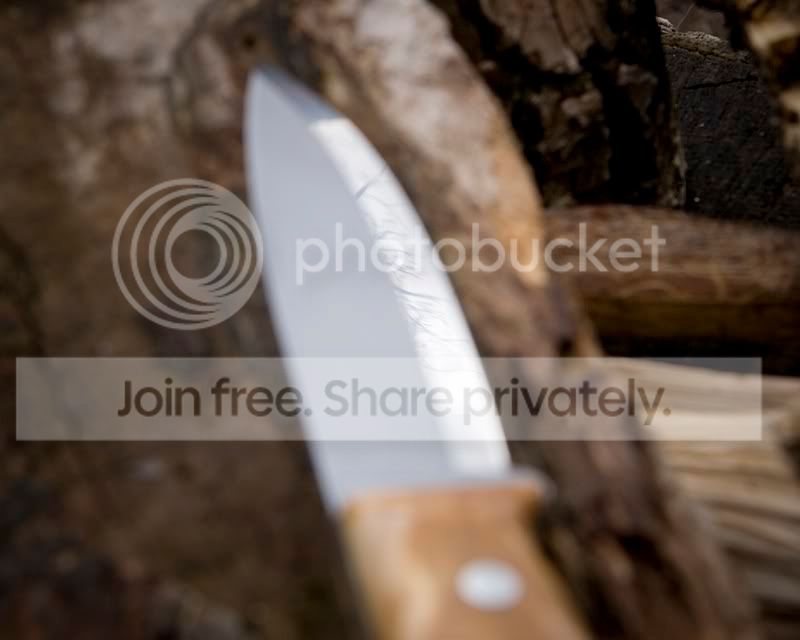
Now, a LONG distance away there is a reflection in the edge. There is a reflection because it is so highly polished. It was very difficult, but I tried to focus on the reflection, and not the knife.
The only way I know to get that kind of polish is through elbow grease. If anyone else knows another way, please let me know. This is pretty time consuming, and I took this particular knife through the waterstones all the way up to 6000 grit.
I have been doing this with my scandi's for awhile. Ironically, Ray Mears has a video on scandi sharpening with water stones. Even funnier is that my water stones are the identical brand and grits that he uses in the video.
If you want to watch the video, the waterstone part is about halfway through.
[youtube]bQN4jcXDjbE[/youtube]
This high polish does several things for you.
- It increases durability.
- Extends periods between sharpening.
- You are sure the edge is flat, and therefore the most efficient it can be.
- It is much sharper!
It is hard to explain, but for a given angle, the knife will be much sharper. The particular knife in the photo is ground 25 degrees inclusive, because that is a classic "woodworking" angle. For that reason, that is why it is popular with bushcrafters. Woodworking. Still, 25 degrees is durable enough to handle batoning, carving and other stuff that can be tough on the edge. Yet, most carbons can be thinned even more and hold up. Yet at 25 degrees, this thing cuts like a much sharper knife.
If you touch it with your finger, you can feel it picking up tiny pieces of skin Just the way I like it.
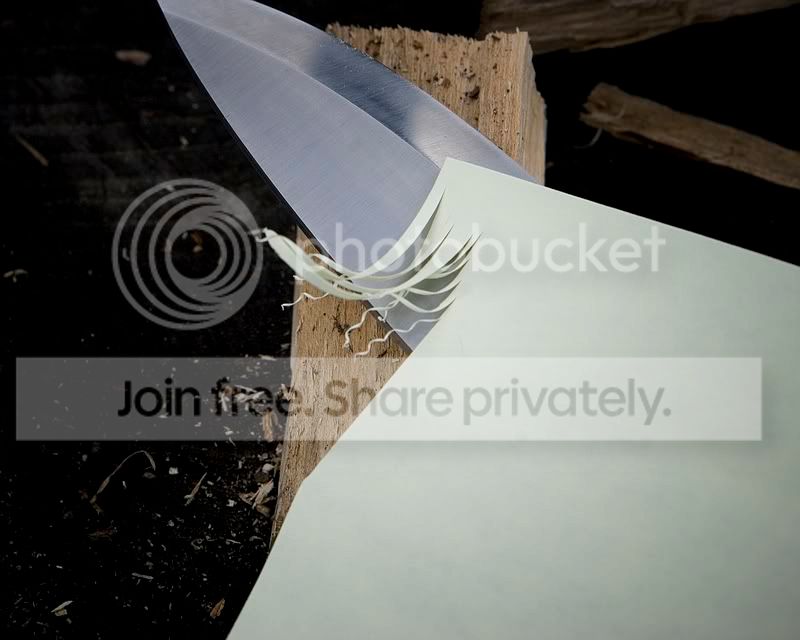
This post it note doesn't do it justice, but if you can do it, the knife can make the tiniest hair fine curls.
Please note, this has nothing to do with the particular knife used. I am just trying to show a way to maintain a scandi edge in a way that most people don't.
Once you get it set up this way, the majority of your work is done. Maintenance will be a breeze from this point forward.
Any thoughts?
B
Many other grinds, convex, v-grind, or even a slight convex on a flat grind can easily be taken to a high polish. The scandi is super easy knife to sharpen, however, getting to the same level of polish the first time can take quite a bit of time. The reason is you are in contact with a lot more steel during the sharpening process.
This is a very tough thing to show in pictures, but this is my best attempt.
Here is a picture of the blade in focus. You can see the scratchy finish on the blade.
Now, a LONG distance away there is a reflection in the edge. There is a reflection because it is so highly polished. It was very difficult, but I tried to focus on the reflection, and not the knife.
The only way I know to get that kind of polish is through elbow grease. If anyone else knows another way, please let me know. This is pretty time consuming, and I took this particular knife through the waterstones all the way up to 6000 grit.
I have been doing this with my scandi's for awhile. Ironically, Ray Mears has a video on scandi sharpening with water stones. Even funnier is that my water stones are the identical brand and grits that he uses in the video.
If you want to watch the video, the waterstone part is about halfway through.
[youtube]bQN4jcXDjbE[/youtube]
This high polish does several things for you.
- It increases durability.
- Extends periods between sharpening.
- You are sure the edge is flat, and therefore the most efficient it can be.
- It is much sharper!
It is hard to explain, but for a given angle, the knife will be much sharper. The particular knife in the photo is ground 25 degrees inclusive, because that is a classic "woodworking" angle. For that reason, that is why it is popular with bushcrafters. Woodworking. Still, 25 degrees is durable enough to handle batoning, carving and other stuff that can be tough on the edge. Yet, most carbons can be thinned even more and hold up. Yet at 25 degrees, this thing cuts like a much sharper knife.
If you touch it with your finger, you can feel it picking up tiny pieces of skin
Just the way I like it.This post it note doesn't do it justice, but if you can do it, the knife can make the tiniest hair fine curls.
Please note, this has nothing to do with the particular knife used. I am just trying to show a way to maintain a scandi edge in a way that most people don't.
Once you get it set up this way, the majority of your work is done. Maintenance will be a breeze from this point forward.
Any thoughts?
B


