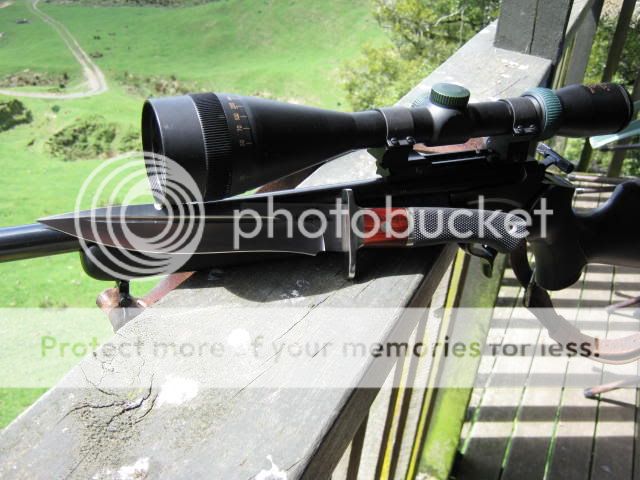
What do you do with a 7+ inch knife besides baton anyway?

Have several large knives I like. RD9 , Scrapyard 711, etc. Very handy in a survival situation when the extra weight gives it chopping power. Also handy for improv. building entry when used as a prybar, chopper, spike,etc. Just depends on what you do as to what makes it right for you.
 
What do I do with a 7+ inch knife? Cut food in the kitchen (i.e., a chef's knife). Got no use for a large knife like that in the woods. 3 or 4 inches, drop point or spear point blade. Sometimes a skinner. Unless you are starting a bonfire, you don't need wood thicker than 4" anyway. And if you do, you're much better off bringing an axe or a saw. As you can see, I am not in the "camp knife" camp. :D
 
I have a 9" kukri style blade that I love. I use it to chop vegitation while bushwhacking. But it's main chore is taking heads off, seriously. Takes off heads in 1 swipe, real clean like. I don't like suffering and this is the quickest way to take em out, clean death. Oh.. and yes, it is fish who get the clean death. Right out of the live well, the kukri takes there heads off, quick death, and makes filleting of the yummy little guys easier. I hate it when guys just gut the fish right there and then without killing them. Sure they die eventually, but man, just imagine having your guts pulled out and then be left to die.... not fun.
 
Thats indeed a good question. Ever since I got a stripped Condor Kumunga, it's nearly always been in my toolbox and started to contact-rust like crazy.

Aside from that it's seen use as theater prop and halloween prop (fake blood, hocky mask, coat, 10" knife, scaring those brats that wander unto my backyard from the shadows).
Also, door and window wedge. No, it's not sharp anymore and I don't remember why I thought I needed such a big knife in the first place.
 
On a recent camping trip with my kids my Sawvivor handle got bent trying to saw through a 16 inch stump of fatwood, It would no longer hold the blade. Busse B11 to the rescue. We took turns chopping until it was free. If I could only take one tool into the woods it would be a 10 inch or bigger fixed blade (generally) specifically the Busse B11.
 
Never go out in the middle of nowhere without something on your belt you can jam deep into anything that requires that sort of attention. ;)
 
Zombies. Bigfoot, defensive and decorative value aside, large knives were and remain the rule in most places. Unfortunately, urban society and modern law prohibits most of us from discovery how useful these tools are. However, we can still notice that our home knife block still contains many larger knives; that commercial butchers, slaughter houses, and chefs have traditionally used very large knives. Until recently, people haven't been so shy with knives. Butchers had meat cleavers instead of folding knives. One peak at Stone's classic glossery of arms (A Glossary of the Construction, Decoration and Use of Arms and Armor: original published date 1920s), or any similar period catalog, will reveal photos of thousands of large knives from all around the globe throughout wide spans of time. The contrast in utility is like comparing the saw on a SAK with a proper carpenter's saw. Ease of maintenance, safety and ergonomics of use, and the abilty to make longer single cuts, and to cut materials at a greater reach and depth, tilt towards the efficiency of the fixed bladed knife over the folder, especially with larger knives. That's not to say that smaller knives are any less useful. A surgeon would do better with a scapel then a bowie. But, efficiency and quality comes from using the right tool for the job, and that tool can frequently takes the shape of a larger knife.

n2s

 
I like the big and the little combo, and leave out the middle size.

If I need to chop, split, or clear out brush or anything like that, I want something 13"-20" long
Anything else can be done with a 3"-4" knife.
I usually bring some sort of machete type blade(sometimes heavier like kukri, golok, parang, if necessary for the terrain) and small camp knife, or even a folder.

I gave up on the 7"-8" stuff as "neither fish nor fowl", and not a good compromise.
 
I find the 7" size range is too small to chop and too large to do small work, though my newly aquired Cold Steel Scalper may change that. I often use a 12" knife for yard work like trimming bushes and such. It was a machete, but now it's a knife, since it has a newly applied primary bevel. About a 6" blade or less gets most of the utility work, but for chopping, 10" or greater.
 
My Junglas chops as well as my Estwing Long Camper's Axe and holds an edge longer when using it in hard or well-seasoned wood. The handle on my Junglas fits my hand very well so it's a pleasure to use compared to a lot of the smaller knives I own. It's great for batonning through wet or larger wood to prep it for fires and it works well as a draw knife and to remove bark. I can also use it as I would a machete for some things, although a machete does work better for most things one would need a machete for.

I think for me, I like the versatility of a large knife for lots of things. I don't like the idea of having to carry around a axe/hatchet, folding saw and a knife. I can just tote my Junglas and be good to go because I know what it can do and I know how to use it.
 
You haven't discovered milk jugs and cartons full of water?? :)

The objective is to slice them and leave the bottom part standing there, missing the top you just cut off.

It's a blast. Have competitions with friends. Just make sure everyone stands clear and you hand a properly secured wrist lanyard.

Works best with swords, but I often use my 12" Livesay WASP or a Becker BK-5.
 
It's good to hear I'm not the only one cutting empty bottles. I had a first a couple of weeks ago. I reground 2 machetes, putting 3.5ish degree primary bevels on them, with 15 to 20 degree cutting edges. With one of them, I was able to cut the top off an empty bottle (2 liter) and leave the bottom sitting on the table. Never before, and hasn't happened since.
 
I had this question several years ago. After buying/trading/selling many large knives I ended up with a couple of good machetes a folding saw and a hatchet. For me, and what I do for fire prep, I found that with a machete, a folding saw and a small axe that I can do all the wood prep I'll ever want, and do it much easier than with a heavy 10" knife.

NOW, on the other hand, a lot of folks have discovered that with a big heavy duty 10" bladed knife they can chop wood, split wood and also do many finer more delicate tasks while keeping weight/number of tools down to a minimum. Of course were not talking about chopping and splitting 10 cord of wood with a knife. But just enough for a few camp fires.

Of course if I'm going to be stocking up fire wood for the winter I'll use a husky with a 36" bar and an 8lb maul. If I'm lucky I may even have a teenage nephew to help.

Yes, I agree. If you want to try going out camping, packing very light, using very few tools and maybe only one bladed tool, I think a 7+ inch blade is a good option. Chop, split, use as a draw knife to remove bark, sharpen sticks, cut shavings and small sticks for fire, cut string or rope, anything really. Good to have on your side, to access whenever you need it.
 
Kitchen use.....bk-9 for knocking heads/tails of salmon, and any butcher knife use which the bk-9 basically is. I also like using my helle lapplander(8.25in),Koster survivor, my RtakII has done pretty well for large slicing tasks with the grind.

Outdoors.........I have 10 acres 5.5hrs north of vancouver in cougar and bear territory. Heavily treed with a couple of km of trails that need clearing every spring melt. A lot of limbing that I prefer a 8in plus blade for with some chopping as well. The only time I would be batonning would be for dayhike fires, axes and saws at camp. My wife and I like following game trails in crown land and parkland near our property that need a fair bit of light clearing as well. Afterwards the trail is usually atv friendly.

Backpacking and dayhikes in unmaintained trails my fiskars slidesaw and my Helle Laplander attatched to my pack handle trail clearing and fires. Tons of overgrown blackberry/salmonberry on trail with Devils club as well.

If I am fishing in the boat I prefer a 4 to 6in blade for comfort with the low seats.
 
I use this one for pig hunting...8inch blade....works well....FES

ariawheel506.jpg
You can't just post a pic of a pretty knife like that without telling us others it's name and where you got it. :D
 
Zombies. Bigfoot, defensive and decorative value aside, large knives were and remain the rule in most places. Unfortunately, urban society and modern law prohibits most of us from discovery how useful these tools are. However, we can still notice that our home knife block still contains many larger knives; that commercial butchers, slaughter houses, and chefs have traditionally used very large knives. Until recently, people haven't been so shy with knives. Butchers had meat cleavers instead of folding knives. One peak at Stone's classic glossery of arms (A Glossary of the Construction, Decoration and Use of Arms and Armor: original published date 1920s), or any similar period catalog, will reveal photos of thousands of large knives from all around the globe throughout wide spans of time. The contrast in utility is like comparing the saw on a SAK with a proper carpenter's saw. Ease of maintenance, safety and ergonomics of use, and the abilty to make longer single cuts, and to cut materials at a greater reach and depth, tilt towards the efficiency of the fixed bladed knife over the folder, especially with larger knives. That's not to say that smaller knives are any less useful. A surgeon would do better with a scapel then a bowie. But, efficiency and quality comes from using the right tool for the job, and that tool can frequently takes the shape of a larger knife.

n2s

Funny, but most wilderness survival experts would disagree with you. Nesmuk, Kephart, Ray Mears, Dave Canterbury, and just about everyone who's made a real name for themselves in woodcraft and bushcraft and survival NEVER take a knife bigger than 5" into the woods. That's just a fact.

Of course commercial butchers, slaughter houses, and chefs use large knives. But they use them for their jobs, not for camping or bushcraft. You do bring up a very good point, although I think you come to the wrong conclusions, when you mentioned Stone's glossary of arms. The key word is "arms." those long knives are weapons: bowie, dirk, dagger, short sword, gladius, etc. They are used for fighting, not camping or bushcraft. You bring up another very good point, but again I think you come to the wrong conclusions: ease of maintenance and safety and ergonomics of use are very important... which is why real woodsmen prefer a shorter knife. Not trying to be rude or disrespectful here, just stating a different viewpoint.
 
Last time I used a big knife was about two weeks ago, at my now deceased mother's house. The Dish Network dish was not getting a useable signal due to being blown around in the wind leading a storm front. I needed a quick repair, had no tools there except my truck knife, a Swamp Rat Battle Rat. Found a piece of two by four lumber about four feet long. Split it down the middle (didn't need a baton), chopped one end into a wedge shape and shortened it to about 10" long. Used the back of the knife to hammer the wedge into the space between the facia board and the dish bracket to more properly align the dish and to make the mounting rigid, then got under cover before the rain hit. A small knife would not have done the job.
 
Modern society frowns upon larger, bowie- type blades. There is no doubt that they are weapons, but that is all that is left for them to see. Actually, people don't seem to understand knives in general, so a large one will always make them associate it to Rambo or that the user of one is a mall-ninja or just trying to be macho, or even that he is crazy or something. In short, a large blade makes sheep feel uneasy. They don't get it. It's a versatile do-it-all tool. Kind of: jack of all trades, master of none, is usually better than master of one. This is very true when weight is an issue. If you're gonna be on the move a lot, especially on foot, a large blade is a good choice, but if you've set up an outpost or are staying at a cabin, of course a large axe, a saw and so on are better tools, but you can't always carry all of those along, which the large blade is a solution to.
 
I like the big and the little combo, and leave out the middle size.

If I need to chop, split, or clear out brush or anything like that, I want something 13"-20" long
Anything else can be done with a 3"-4" knife.
I usually bring some sort of machete type blade(sometimes heavier like kukri, golok, parang, if necessary for the terrain) and small camp knife, or even a folder.

I gave up on the 7"-8" stuff as "neither fish nor fowl", and not a good compromise.

I generally agree. I only carry a mid-sized piece when I might need to chop, but need to be comparatively discreet. Which isn't often. I pretty much always have a machete and a small knife.:thumbup:

Modern society frowns upon larger, bowie- type blades. There is no doubt that they are weapons, but that is all that is left for them to see. Actually, people don't seem to understand knives in general, so a large one will always make them associate it to Rambo or that the user of one is a mall-ninja or just trying to be macho, or even that he is crazy or something. In short, a large blade makes sheep feel uneasy. They don't get it. It's a versatile do-it-all tool. Kind of: jack of all trades, master of none, is usually better than master of one. This is very true when weight is an issue. If you're gonna be on the move a lot, especially on foot, a large blade is a good choice, but if you've set up an outpost or are staying at a cabin, of course a large axe, a saw and so on are better tools, but you can't always carry all of those along, which the large blade is a solution to.

Ironically, I find that machetes (when carried in an appropriate setting) really still get viewed as agricultural/surveying/trail tools.
 
Back
Top