For starters, stabbing through car hoods has been done to death, and butchering free-hanging animal carcasses is a task that the average knife user seldom encounters.
The same could be said of shearing free-hanging rope, or cutting down tatami rolls, but then again, these are far more widely accepted grounds for gauging a knife's geometry and sharpness, so you might want to try that or something similar.
On another level, your website seems to specialize in the kind of knife that might be called upon to do some pretty tough and crazy things - the kind of knife a person might have when other tools are broken or unavailable, or when seconds count or whatever. The first thing I can think of is batoning the knife through a piece of wood with another piece of wood; some consider it abuse of a knife, but I think any fixed blade worth its spit should be able to survive such a task. Therefore, so should yours.
Prying and other tests of a knife's tip and lateral strength are bound to come up as well, since most users of so-called hard-use knives tend to end up prying with them, even though they often shouldn't. Sticking the knife into an available slot or crevasse and then using it as a stepladder to peer over an obstacle might also come up. Digging with tip through earth, or wood, and other mediums to test its strength is also probably a good idea.
I read a story somewhere about a hunter who slipped and fell into a river with high, steep walls, and had to use his Buck 110 as a pick to lever himself out. This is another unlikely and abusive chore that one of your knives may be called upon for. I can also think of other things that such a hard-use knife may be used for in desparation, like hacking through drywall, or even chain or metal piping. Those last two, I suspect, would be more than a match for even the most exceptional of knives, but many people have been known to try it anyways, with mixed results.
Lastly, an important quality of any, ANY knife is edge-retention, and while I'm sure you'll test this feature festidiously, I wouldn't worry so much about edge-retention as a promotional function; while some steels hold a better edge, and for longer, modern metallurgy has pretty much unanimously surpassed the lowest common denominator. As long as your steel isn't that Chinese crap that dulls when exposed to air, edge retention should be adequate for most people. What buyers of a hard use knife will really want to know is whether or not it holds up to hard use. Next to that, edge-retention is pretty much implicit.
Anyways, my $0.02
Good luck with your knives and tests, so far they look awesome!


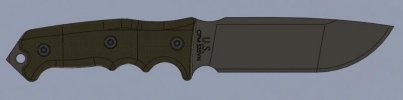
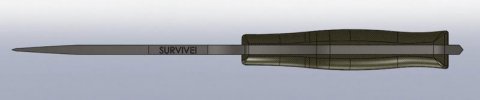
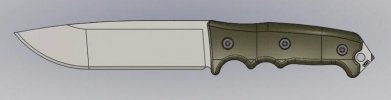
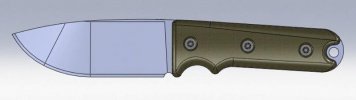
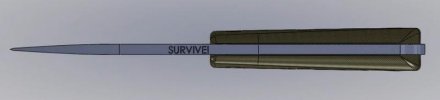


 I like your set up.

