
-
The BladeForums.com 2024 Traditional Knife is available! Price is $250 ea (shipped within CONUS).
Order here: https://www.bladeforums.com/help/2024-traditional/
You are using an out of date browser. It may not display this or other websites correctly.
You should upgrade or use an alternative browser.
You should upgrade or use an alternative browser.
What folder would you guys take on a hike?
- Thread starter combatjiujitsu
- Start date
It's a very tricky question, I think, because there are several ways to think about "a hike". There are different goals that people have and really, different sub-cultures.
If one thinks of oneself primarily as a hunter or fisherman and perhaps knows the name "Nick Adams", then there are a set of activities that might be involved with that hike that might demand the cleaning of game, and with that, certain styles of knives make more sense.
If one self-identifies as a "bushcrafter" or "survivalist" and if Mors Kochanski or Ray Mears is on one's reading stand, then one might have a different set of activities in mind that might come up and with that, a different style of knife.
If one thinks of themselves primarily as a hiker or climber and perhaps knows the names Harvey Manning or Yvon Chouinard, then again, an entirely different set of expectations about activities and other supplemental equipment kicks in. And if Ray Jardine is a name that rings a bell, then your "knife" might be nothing more than a razor blade!
More deeply, I think people will select their knife, even their traditional knife, based mostly on the cultural need to feel accepted by others in which ever of these groups they feel most closely aligned with. The knife becomes something of a badge, or a part of the expected uniform or worn identity. What sometimes gets called a "competency display".
For the field & stream set, I would think a 2 blade folding trapper would be ideal (or a bird and trout, if we can expand it to fixed blades).
For the bushcrafter set, I think the most discussed folders are the Opinels (favored by Kochanski for some time). Among other things, they can be battoned with the lock ring disengaged. The other would be the Svord Peasant. Obviously, students of Mears would really insist on a bushcrafting style fixed blade.
For the backpacking and climbing set, the basic Swiss-Army Knife is easily the common carry and for lots of good reasons. But, this is definitely changing for equally good reasons.
I'm a backpacker, ski-tourer, pedestrian level mountaineer (very, very pedestrian level) and bike tourer. What follows are my thoughts from that tradition.
IMO, the consideration for a knife for modern backpacking needs to be in the context of the other tools carried. The considerations are:
1) First aid
2) Equipment repair
3) Food preparation
You will note that fire starting, woodcraft and game cleaning are not on this list. The assumption is that by virtue of good planning, strong navigation skills and smart choices to retreat when conditions are bad that you will avoid "survival" situations. And if forced into unplanned nights in the backcountry, that you will rely on your equipment (tent, clothing, stove) and carried food until you can retreat.
First aid considerations involve routine bodily care to allow you to stay mobile. This means (among other things) dealing with toe nails, blisters, minor cuts and injuries. It may also mean stabilizing a victim of more profound injuries until rescue is possible. Useful knife related tools include scissors for bandage preparation and the ability to cut fabric and cordage to deal with splints and access to wounds, good pointy tweezers to deal with splinters, either scissors or nail clippers to tend to toe nails and a file capable of being used on nails. If emphasis on toes doesn't make sense, you need to deal with a hiking partner who is incapacity or slowed due to an ingrown toe nail or an infected toe that has been cut by a sharp, poorly manicured toe nail. As Harvey Manning noted, it should be called "footpacking", not "backpacking".
Gear repair minimally means the ability to drive a heavy needle and thread through thick packcloth and webbing. Small pliers are very, very useful for this. Gear repair also means the ability to turn screws, bolts and nuts that are a part of ones pack, stove and other necessities (e.g. ski binding, bike, snowshoes, crampons, etc.) that might change based on where, when and how you are "hiking".
Considerations for food preparation vary considerably. If one is using pre-cut dry foods, no knife is needed. If one is using pre-packaged foods, all that is needed is the ability to cut open the packaging.
Given all of this, for ultra lite backpacking and hiking all that is "needed" is a small lobster patterned knife, like the Victorinox classic backed up with very small needle nose pliers and (imo) a proper set of tweezers (the Victorinox ones can't handle bad, trip stopping splinters. (Alternatively, one can ditch the pliers and carry a key chain sized multitool, like the Leatherman PS4 Squirt).
I like to travel sort of light and prefer foods that are cut (cheese, hard salami) or spread (peanut butter, hummus). I also feel naked without a larger EDC knife in my pocket.
So, I carry an Opinel in my pocket and a PS4 and tweezers in my first aid kit. Something like this, only with a different multi-tool.

EDC with lanyards by Pinnah, on Flickr
If one thinks of oneself primarily as a hunter or fisherman and perhaps knows the name "Nick Adams", then there are a set of activities that might be involved with that hike that might demand the cleaning of game, and with that, certain styles of knives make more sense.
If one self-identifies as a "bushcrafter" or "survivalist" and if Mors Kochanski or Ray Mears is on one's reading stand, then one might have a different set of activities in mind that might come up and with that, a different style of knife.
If one thinks of themselves primarily as a hiker or climber and perhaps knows the names Harvey Manning or Yvon Chouinard, then again, an entirely different set of expectations about activities and other supplemental equipment kicks in. And if Ray Jardine is a name that rings a bell, then your "knife" might be nothing more than a razor blade!
More deeply, I think people will select their knife, even their traditional knife, based mostly on the cultural need to feel accepted by others in which ever of these groups they feel most closely aligned with. The knife becomes something of a badge, or a part of the expected uniform or worn identity. What sometimes gets called a "competency display".
For the field & stream set, I would think a 2 blade folding trapper would be ideal (or a bird and trout, if we can expand it to fixed blades).
For the bushcrafter set, I think the most discussed folders are the Opinels (favored by Kochanski for some time). Among other things, they can be battoned with the lock ring disengaged. The other would be the Svord Peasant. Obviously, students of Mears would really insist on a bushcrafting style fixed blade.
For the backpacking and climbing set, the basic Swiss-Army Knife is easily the common carry and for lots of good reasons. But, this is definitely changing for equally good reasons.
I'm a backpacker, ski-tourer, pedestrian level mountaineer (very, very pedestrian level) and bike tourer. What follows are my thoughts from that tradition.
IMO, the consideration for a knife for modern backpacking needs to be in the context of the other tools carried. The considerations are:
1) First aid
2) Equipment repair
3) Food preparation
You will note that fire starting, woodcraft and game cleaning are not on this list. The assumption is that by virtue of good planning, strong navigation skills and smart choices to retreat when conditions are bad that you will avoid "survival" situations. And if forced into unplanned nights in the backcountry, that you will rely on your equipment (tent, clothing, stove) and carried food until you can retreat.
First aid considerations involve routine bodily care to allow you to stay mobile. This means (among other things) dealing with toe nails, blisters, minor cuts and injuries. It may also mean stabilizing a victim of more profound injuries until rescue is possible. Useful knife related tools include scissors for bandage preparation and the ability to cut fabric and cordage to deal with splints and access to wounds, good pointy tweezers to deal with splinters, either scissors or nail clippers to tend to toe nails and a file capable of being used on nails. If emphasis on toes doesn't make sense, you need to deal with a hiking partner who is incapacity or slowed due to an ingrown toe nail or an infected toe that has been cut by a sharp, poorly manicured toe nail. As Harvey Manning noted, it should be called "footpacking", not "backpacking".
Gear repair minimally means the ability to drive a heavy needle and thread through thick packcloth and webbing. Small pliers are very, very useful for this. Gear repair also means the ability to turn screws, bolts and nuts that are a part of ones pack, stove and other necessities (e.g. ski binding, bike, snowshoes, crampons, etc.) that might change based on where, when and how you are "hiking".
Considerations for food preparation vary considerably. If one is using pre-cut dry foods, no knife is needed. If one is using pre-packaged foods, all that is needed is the ability to cut open the packaging.
Given all of this, for ultra lite backpacking and hiking all that is "needed" is a small lobster patterned knife, like the Victorinox classic backed up with very small needle nose pliers and (imo) a proper set of tweezers (the Victorinox ones can't handle bad, trip stopping splinters. (Alternatively, one can ditch the pliers and carry a key chain sized multitool, like the Leatherman PS4 Squirt).
I like to travel sort of light and prefer foods that are cut (cheese, hard salami) or spread (peanut butter, hummus). I also feel naked without a larger EDC knife in my pocket.
So, I carry an Opinel in my pocket and a PS4 and tweezers in my first aid kit. Something like this, only with a different multi-tool.
EDC with lanyards by Pinnah, on Flickr


- Joined
- Mar 6, 2013
- Messages
- 8,331
I tried this recently with an opinel 9 and a rr mini trapper. My hikes are usually 5 to 10 miles round trip with an elevation change of usually 1000 to 2000 feet all in all I found carrying a traditional less satisfying no better to say I didn't like it as I like to have something attached to my belt via a clip.
So I went back to rotating a crkt tribute and a spyderco ambitious both are on the smaller side which is all I need for day hikes. I tried a fixed blade skyline and it was overkill.
Maybe someday ill try a fixed blade again if i get to hike the eastern section of the AT which is a bucket list item for me and the wife.
So I went back to rotating a crkt tribute and a spyderco ambitious both are on the smaller side which is all I need for day hikes. I tried a fixed blade skyline and it was overkill.
Maybe someday ill try a fixed blade again if i get to hike the eastern section of the AT which is a bucket list item for me and the wife.
My choice would be the Case peanut and my Condor Hudson Bay.
You must have known my dad!
I've covered some ground in the woods with a small pocket knife and my dad's old 'bushwacker' as he called it. Cut down English machete. It chops, slices, and dices. Nowadays it will be my resolza or GEC boys knife, or whatever my pocket knife of the day is, and bushwhacker.

Carl.
Last edited:

- Joined
- Nov 20, 2005
- Messages
- 19,385
It depends on how I am camping. I bring everything but the kitchen stove if I am car camping. I tend to fall back on my regulars which is a Vic SAK. I have my preferences. But for a using knife, I would carry something larger than a Classic.


- Joined
- Feb 1, 2012
- Messages
- 11,784
What folder would you guys take on a hike?
On a hike? This one:

A week of camping, now, that's something else entirely. I shall leave that to the Campers.
~ P.
On a hike? This one:
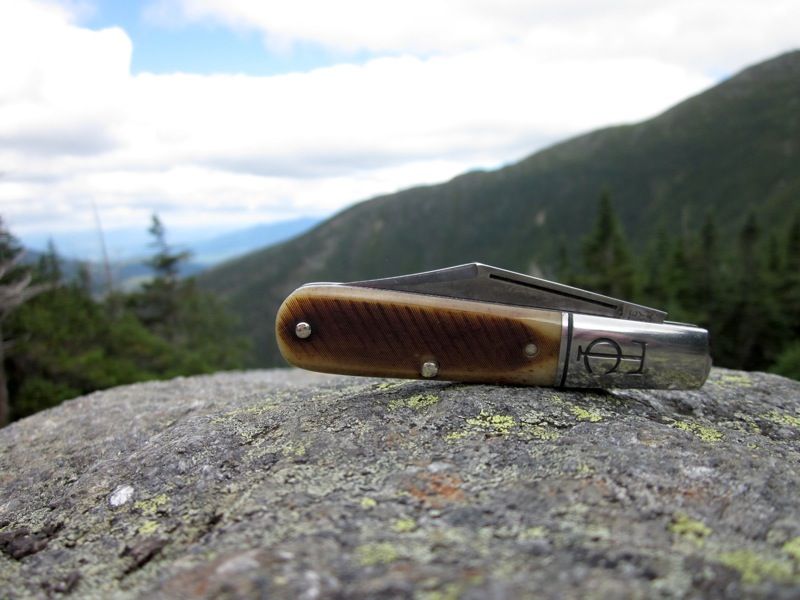
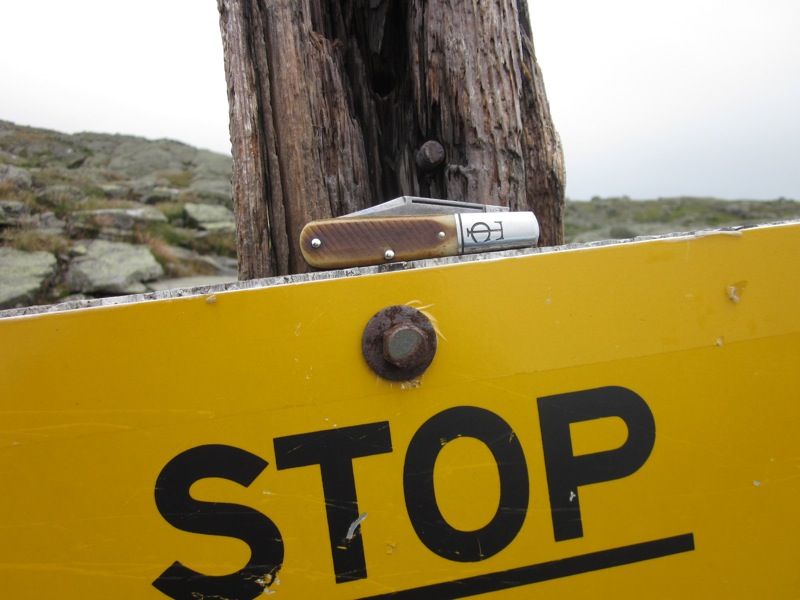
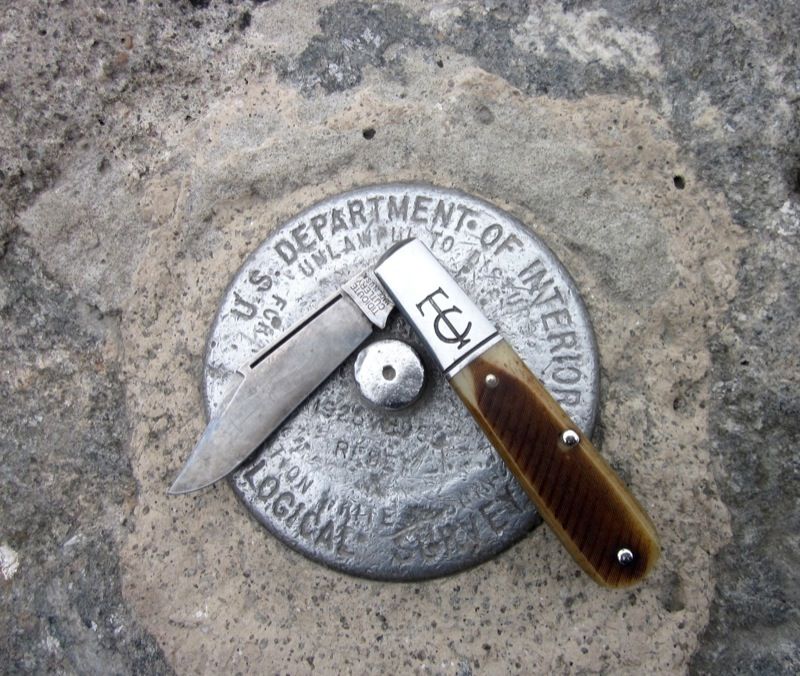
A week of camping, now, that's something else entirely. I shall leave that to the Campers.
~ P.

- Joined
- Jan 17, 2011
- Messages
- 15,193
It's a very tricky question, I think, because there are several ways to think about "a hike". There are different goals that people have and really, different sub-cultures.
If one thinks of oneself primarily as a hunter or fisherman and perhaps knows the name "Nick Adams", then there are a set of activities that might be involved with that hike that might demand the cleaning of game, and with that, certain styles of knives make more sense.
If one self-identifies as a "bushcrafter" or "survivalist" and if Mors Kochanski or Ray Mears is on one's reading stand, then one might have a different set of activities in mind that might come up and with that, a different style of knife.
If one thinks of themselves primarily as a hiker or climber and perhaps knows the names Harvey Manning or Yvon Chouinard, then again, an entirely different set of expectations about activities and other supplemental equipment kicks in. And if Ray Jardine is a name that rings a bell, then your "knife" might be nothing more than a razor blade!
More deeply, I think people will select their knife, even their traditional knife, based mostly on the cultural need to feel accepted by others in which ever of these groups they feel most closely aligned with. The knife becomes something of a badge, or a part of the expected uniform or worn identity. What sometimes gets called a "competency display".
For the field & stream set, I would think a 2 blade folding trapper would be ideal (or a bird and trout, if we can expand it to fixed blades).
For the bushcrafter set, I think the most discussed folders are the Opinels (favored by Kochanski for some time). Among other things, they can be battoned with the lock ring disengaged. The other would be the Svord Peasant. Obviously, students of Mears would really insist on a bushcrafting style fixed blade.
For the backpacking and climbing set, the basic Swiss-Army Knife is easily the common carry and for lots of good reasons. But, this is definitely changing for equally good reasons.
I'm a backpacker, ski-tourer, pedestrian level mountaineer (very, very pedestrian level) and bike tourer. What follows are my thoughts from that tradition.
IMO, the consideration for a knife for modern backpacking needs to be in the context of the other tools carried. The considerations are:
1) First aid
2) Equipment repair
3) Food preparation
You will note that fire starting, woodcraft and game cleaning are not on this list. The assumption is that by virtue of good planning, strong navigation skills and smart choices to retreat when conditions are bad that you will avoid "survival" situations. And if forced into unplanned nights in the backcountry, that you will rely on your equipment (tent, clothing, stove) and carried food until you can retreat.
First aid considerations involve routine bodily care to allow you to stay mobile. This means (among other things) dealing with toe nails, blisters, minor cuts and injuries. It may also mean stabilizing a victim of more profound injuries until rescue is possible. Useful knife related tools include scissors for bandage preparation and the ability to cut fabric and cordage to deal with splints and access to wounds, good pointy tweezers to deal with splinters, either scissors or nail clippers to tend to toe nails and a file capable of being used on nails. If emphasis on toes doesn't make sense, you need to deal with a hiking partner who is incapacity or slowed due to an ingrown toe nail or an infected toe that has been cut by a sharp, poorly manicured toe nail. As Harvey Manning noted, it should be called "footpacking", not "backpacking".
Gear repair minimally means the ability to drive a heavy needle and thread through thick packcloth and webbing. Small pliers are very, very useful for this. Gear repair also means the ability to turn screws, bolts and nuts that are a part of ones pack, stove and other necessities (e.g. ski binding, bike, snowshoes, crampons, etc.) that might change based on where, when and how you are "hiking".
Considerations for food preparation vary considerably. If one is using pre-cut dry foods, no knife is needed. If one is using pre-packaged foods, all that is needed is the ability to cut open the packaging.
Given all of this, for ultra lite backpacking and hiking all that is "needed" is a small lobster patterned knife, like the Victorinox classic backed up with very small needle nose pliers and (imo) a proper set of tweezers (the Victorinox ones can't handle bad, trip stopping splinters. (Alternatively, one can ditch the pliers and carry a key chain sized multitool, like the Leatherman PS4 Squirt).
I like to travel sort of light and prefer foods that are cut (cheese, hard salami) or spread (peanut butter, hummus). I also feel naked without a larger EDC knife in my pocket.
So, I carry an Opinel in my pocket and a PS4 and tweezers in my first aid kit. Something like this, only with a different multi-tool.
Excellent post!!! Totally enjoyed it.:thumbup::thumbup:


- Joined
- Dec 2, 2005
- Messages
- 73,726
Excellent post!!! Totally enjoyed it.:thumbup::thumbup:
Yes superb, I was entranced! Thanks for putting the effort in sir :thumbup:

- Joined
- May 7, 2011
- Messages
- 3,426
Add me to those who enjoyed Pinnah's post and insights
So, to follow his post, I'm no bushcrafter nor hunter. I just like to walk and hike. I like carrying a small fixed blade, but honestly I could get by with just a folder.
So, generally I like having a SAK with me, along with an Opinel sometimes.
Honestly, in my type of hiking routine, any decent knife will do the job, although for some reason I tend to carry slightly bigger knives than on my average day.
As for first aid issues, I know I'm biased because of my job, but I found out that the only cutting tools which is really useful is some safety shears (which I include in my very basic first aid kit). As for food, I do cut food (cheese, sausage, fruit - I try to keep my diet varied on 1-2 day hikes) but I'm aware that any knife will do. At least for me.
Fausto

So, to follow his post, I'm no bushcrafter nor hunter. I just like to walk and hike. I like carrying a small fixed blade, but honestly I could get by with just a folder.
So, generally I like having a SAK with me, along with an Opinel sometimes.
Honestly, in my type of hiking routine, any decent knife will do the job, although for some reason I tend to carry slightly bigger knives than on my average day.
As for first aid issues, I know I'm biased because of my job, but I found out that the only cutting tools which is really useful is some safety shears (which I include in my very basic first aid kit). As for food, I do cut food (cheese, sausage, fruit - I try to keep my diet varied on 1-2 day hikes) but I'm aware that any knife will do. At least for me.
Fausto

- Joined
- Feb 7, 2000
- Messages
- 6,696
I know its not ideal but was just curious if you didnt have the option of a fixed blade what traditional would you take on a week long camping trip?
I'd probably opt for a combination of my Opinel 8 and Victorinox Rambler or Leatherman Micra (mainly for scissors and tweezers), plus a P38 can opener.* Or I'd tote along my Victorinox Huntsman. It wouldn't even occur to me to carry a fixed blade. I have two, but never use them.
-- Mark
* No, I wouldn't likely be camping or backpacking with canned food; it's just sort of the eternal Boy Scout in me -- be prepared.
What folder would you guys take on a hike?
On a hike? This one:
A week of camping, now, that's something else entirely. I shall leave that to the Campers™.
~ P.
Pertinux, looks like we tramp in the same neck of the woods! One of the family treasures is a video of my daughter reading the famous "STOP" sign with a tremendous amount of gusto and enthusiasm. It was raining sideways at the time. "Stop! The area ahead has the worst weather in America. Many have died here from exposure, even in the summer...."
If I could see the elevation under that Barlow, I would know more exactly where that was. Can you give a hint? Dying to figure out what that ridge is.
Some shots from a few weekends ago...
Lunch stop on the way up.
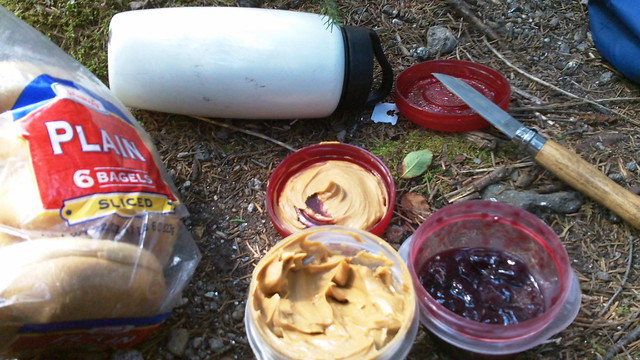
Lunch by Pinnah, on Flickr
Dinner included extra sharp Cabot with the stew. The Opinel handles the food well. We are not savages, although I think she looks like I served her cat food!
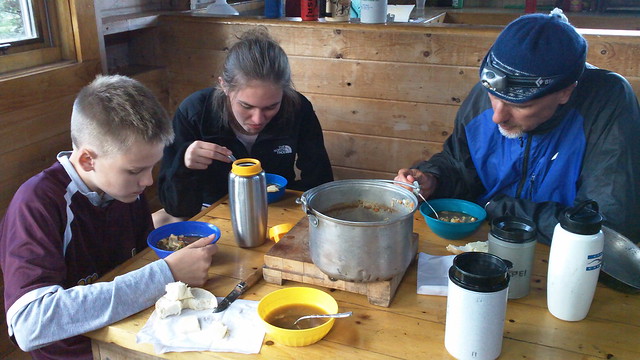
Dinner at Crag by Pinnah, on Flickr
The view from the front porch
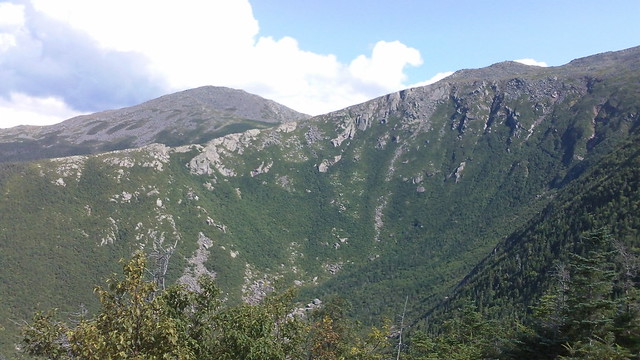
King Ravine by Pinnah, on Flickr
Last edited:


silenthunterstudios
Slipjoint Addict
- Joined
- Feb 2, 2005
- Messages
- 20,039
Nessmuk had the right idea, but I don't really need a axe or hatchet for a day hike. I always take a folder and small fixed blade on a hike. 3-4" blade on the fixed. I guess my 73 and Gossman Kephart would be good. That's about what I've been taking already.
For just a quick walk, which is about what I'm good for these days (hour to two hour long leisurely stroll or evening dog walk), my 73 is good. I usually carry a peanut or Charlow every day, so I keep one or the other with the 73 if I stop off for a walk after work at the Heritage Rail Trail (stone trail that goes through residential areas/farmland and woods).
For just a quick walk, which is about what I'm good for these days (hour to two hour long leisurely stroll or evening dog walk), my 73 is good. I usually carry a peanut or Charlow every day, so I keep one or the other with the 73 if I stop off for a walk after work at the Heritage Rail Trail (stone trail that goes through residential areas/farmland and woods).
- Joined
- Feb 1, 2012
- Messages
- 11,784
If I could see the elevation under that Barlow, I would know more exactly where that was. Can you give a hint? Dying to figure out what that ridge is.
Someone didn't follow the "This one" link above.
I'll wait here.

I consider those my stomping grounds, but for now I only get to visit.
"Stop! The area ahead has the worst weather in America. Many have died here from exposure, even in the summer...."

(That's me above the sign to the right; I did not STOP, either.
 )
)Great pictures! Looks like your front porch is on t'other side of the mountain. :thumbup:
~ P.

ron finkbeiner jr
Gold Member
- Joined
- Jan 6, 2012
- Messages
- 3,497
Endura 4 Vg10

- Joined
- Sep 2, 2004
- Messages
- 18,745
Endura 4 Vg10
Let's keep it to Traditional knives please.