What is the defining attribute of a "whittler" ?

Joined
Aug 27, 2004
Messages
2,701
Several threads and posts recently prompted me to ask this question purely in the spirit of learning.

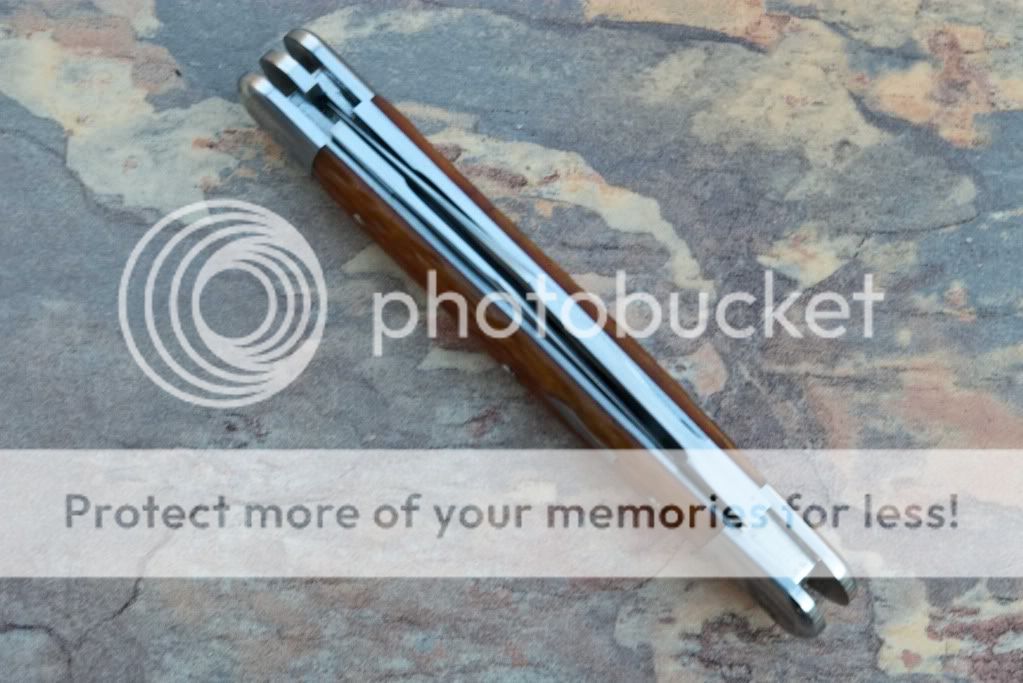
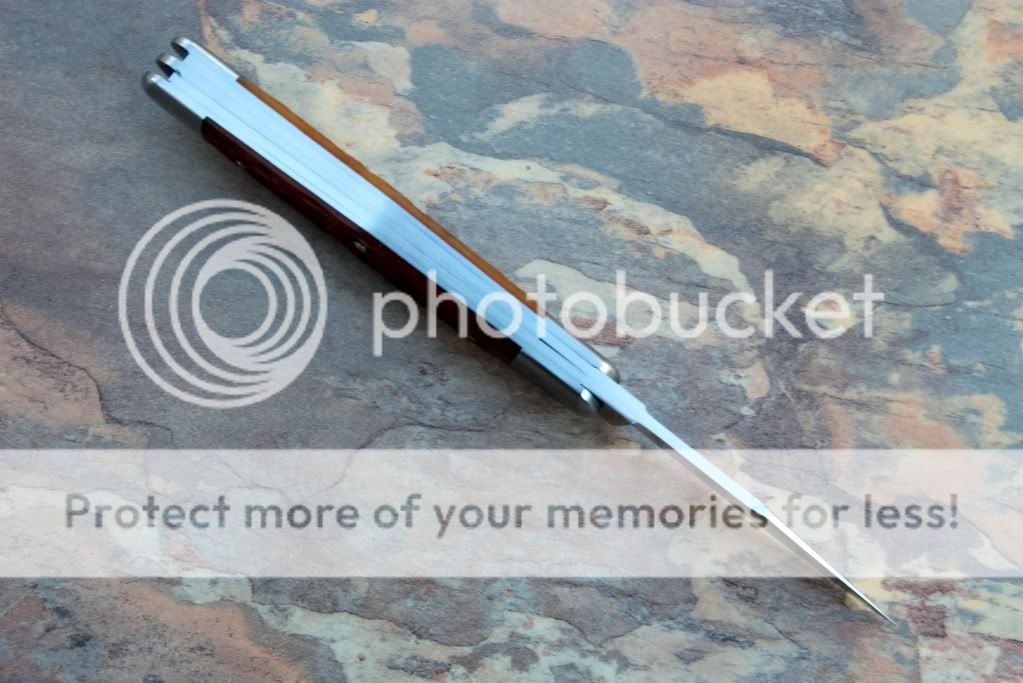
To start I will state what I believe to be the defining attributes of a whittler. 3 blades, master on one end with two secondary blades on the opposite end. A split spring with the wide end, or two springs with both springs, resting/working on the tang of the master. The opposite ends working the tangs of the secondary blades. When looking down at the well with blades closed the master rests between the secondary's. On lockback whittlers the two secondary springs also work the lockbar.
IMGP7598_edited-1.jpg

IMGP7599_edited-1.jpg


While talking to a respected slipjoint maker he stated that a 3 spring knife with the master resting between the secondary blades would be considered a whittler by the majority. Kerry Hampton also referred to a 3 spring knife as a whittler. Here is a link to a photo of 3 spring knife.

http://www.bladeforums.com/forums/showthread.php/527126-quot-Old-Knives-quot?p=9570003#post9570003

It has become obvious to me that I may be wrong on what makes a whittler a whittler and would love to hear other thoughts and discussion.
 
Must cut wood.

Seriously, I've "whittled" (read that as made shavings out of perfectly good sticks) with just about every type of knife. But as to the whittler pattern I cannot say which is 100% correct. I think the advantage to your 2 spring version is that it more easily allows the tapering so well shown in your photo. I like that; it's much more elegant.
 
To me the whittler is defined by having 2 springs, the master blade working on both, with one secondary on each spring at the other end. Now the springs can be split with a wedge, or parallel (no wedge) and straight end to end, or parallel and tapered on the outside of the springs toward the master end, or even the old original genuine single split spring - split only at the secondary end (actually two springs forge welded part way) -- it's all good and all whittlers.

To me though, a three spring "whittler" is simply a simulation of real whittler construction and not a whittler at all.
 
Dwight,

Thanks for your input. Would you agree that a whittler can wear many faces? Another words, a whittler can be based on many different frame patterns. Swell center, serpentine, sleeveboard etc, as long as you have the 3 blades, two spring working master, with other end working secondary blade layout?
 
To me the whittler is defined by having 2 springs, the master blade working on both, with one secondary on each spring at the other end. Now the springs can be split with a wedge, or parallel (no wedge) and straight end to end, or parallel and tapered on the outside of the springs toward the master end, or even the old original genuine single split spring - split only at the secondary end (actually two springs forge welded part way) -- it's all good and all whittlers.

To me though, a three spring "whittler" is simply a simulation of real whittler construction and not a whittler at all.

I totally agree.

And the so called "half whittler" pattern, some companies promote, is basically a large pen knife, with two opposing blades, sharing the same spring. IMO

Ray
 
And the so called "half whittler" pattern, some companies promote, is basically a large pen knife, with two opposing blades, sharing the same spring. IMO

Ray

Ray,

I agree about the "half whittler" being a pen or double end jack, even though I am guilty of this in the past.
 
The actual "pattern" doesn't much matter to a true whittler, as patterns are typically defined -- the whittler is defined by its particular (peculiar?) basic construction.

However, it must be remembered that for most of the centuries of the "whittler's" existence, it was simply a "three blade folding knife" -- it was simply how they made a knife with three blades - "whittler", as we use the term now, is a modern collector's terminology.
 
"whittler", as we use the term now, is a modern collector's terminology.

Now you have me wondering about the particular origins for the term "whittler". Does anyone know the existence of advertising, catalog, printed material that would predate the popular modern collector's usage?
 
I am too old school.
To start I will state what I believe to be the defining attributes of a whittler. 3 blades, master on one end with two secondary blades on the opposite end. A split spring with the wide end, or two springs with both springs, resting/working on the tang of the master. The opposite ends working the tangs of the secondary blades. When looking down at the well with blades closed the master rests between the secondary's.
Works for me.

These modern whittlers based on two parallel backsprings are not whittlers in my book. (old, yellowed and dog-eared that it is) :D.
 
Does anyone make one with a single spring? Such spring-work is fairly standard in older firearms, but I cannot remember seeing such in a folding knife.
 
You might ask BL.

That's what got me in trouble in the first place! :) His position is the same as Dwight's, which I agree with. That being said I hope to hear from a range of users/collectors/makers thoughts on the subject.
 
Even a 5 year old knows enough to quit asking questions when they get the answer they want...:)
 
Does anyone make one with a single spring? Such spring-work is fairly standard in older firearms, but I cannot remember seeing such in a folding knife.

You have to go way back, like later 1700s IIRC - I think LG4 shows some French cuts of three blade knives made with a single wide spring. A few years later you have the "true split spring" versions with two springs forge welded half the length of the knife, with the master blade riding on the wide solid spring portion (these are hard enough to find).
 
whittler: 3 blades, master on one end and two secondary blades on the opposite end.

Providing that there are only two (tapered or split) backsprings and the master blade rides on each, I'm down with that. :thumbup:
 
I will go on record as agreeing with BRL, Dwight, Ken and Elliott (if I read this thread correctly).

Now lets see some more pictures of that awesome whittler Ken!
 
Even a 5 year old knows enough to quit asking questions when they get the answer they want...:)

Of course it is nice to have ones ideas and beliefs bolstered by others, but on the other hand I am mature and experienced in life enough to have my mind changed by the opinions of others.

Thanks for all opinions and posts thus far!
 
...when is a sowbelly stockman a whittler?

orig.jpg


orig.jpg


When it's a Ruple...:D
 
Back
Top