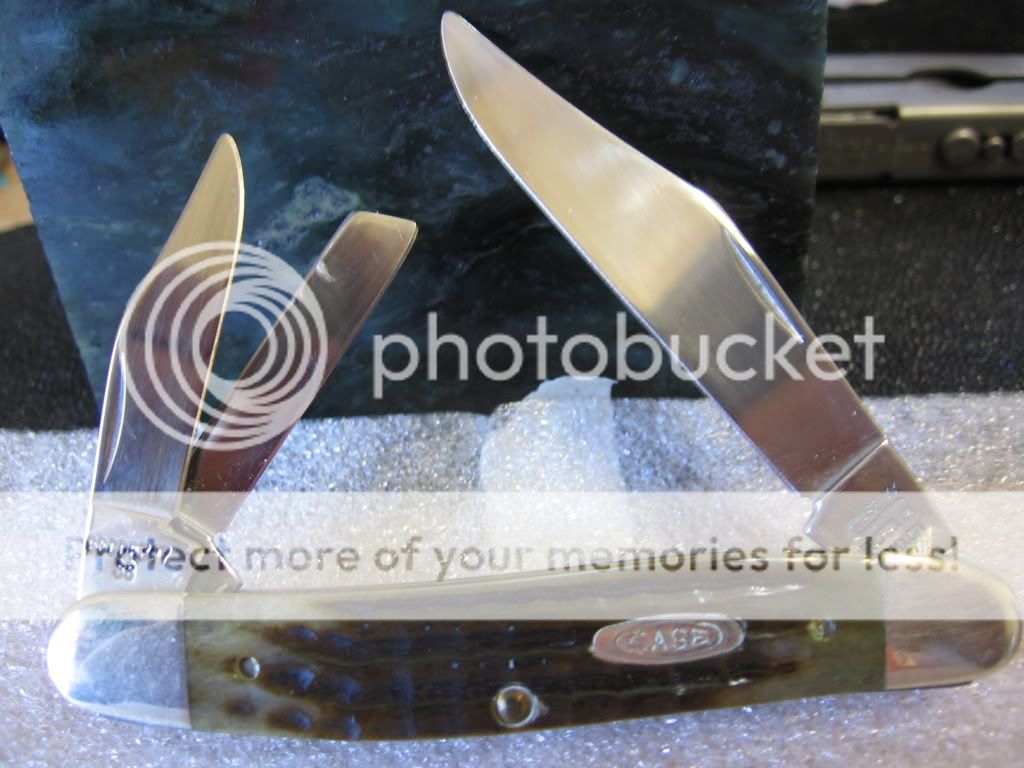
What is the defining attribute of a "whittler" ?

I have to agree. Those look like excellent knives for whittling. Personally, that's what I think of when I think of a whittler : a substantial handle and a short scary-sharp blade.

As far as a whittler pattern...I dunno. I only have one; a GEC Executive whittler, and it fits the standard definition. It's an amazing piece of the knifemaker's art, but I suspect it wouldn't be terribly good for whittling at all. ;)

Your suspicions are incorrect.;) The long handle makes it quite comfortable, and I was surprised at how well the long main blade worked for fine details. I usually don't get much use out of the main blades on my whittlers, but I use that one a lot.

I'm in the "Three blades, two springs, main on both and secondary blades on one each" camp as well. I've whittled for hours at a time with a Case 6308, and my hands ain't exactly petite.

DSCF0329.jpg
 
I whittler, in my view must have a clip main, coping and pen or small clip blades.Case makes a 47 pattern with these blades.Are you guys saying its not a whittler?Its a stock knife pattern,but not stockman blades.
IMG_0004-7.jpg

Case at various times, has made the '47 pattern whittler with three springs AND with two springs!
 
Last edited:
Hey guys...please excuse my lack of knowledge here ok,
I haven't as of yet had a play with a three springed Whittler, but Just what does the wedge do?...and what is the actual theory behind the wedge?, and what is wrong ( or the difference ) between the straight springs, and the wedged springs?
I hope this is keeping within the op's topic.
 
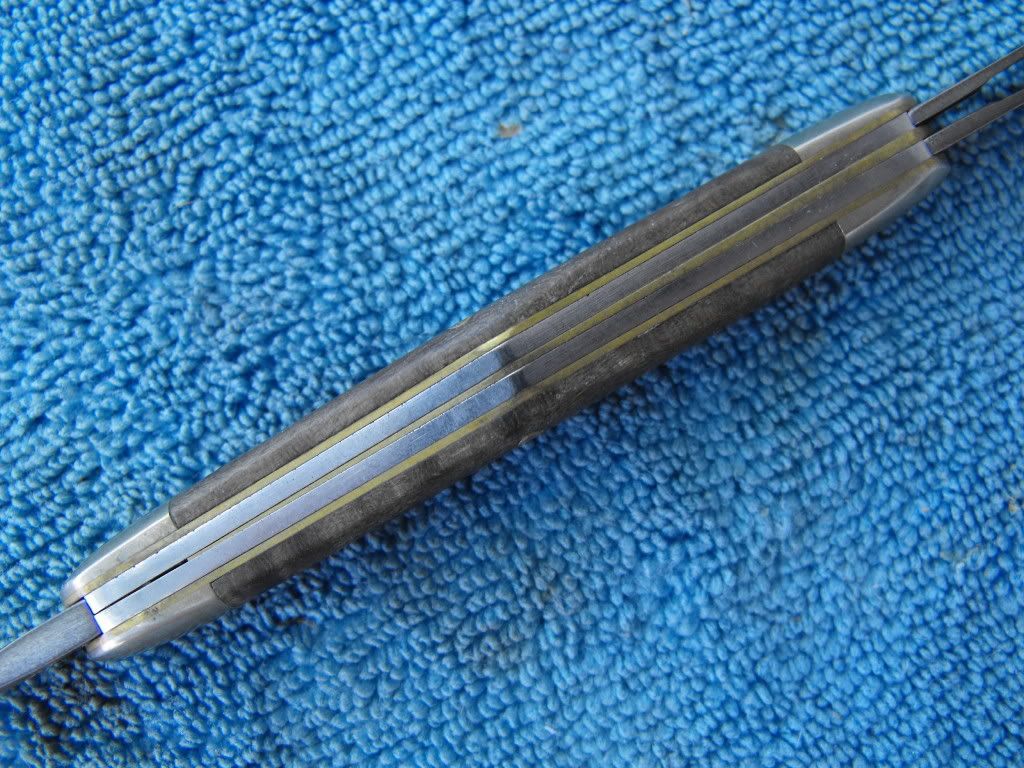
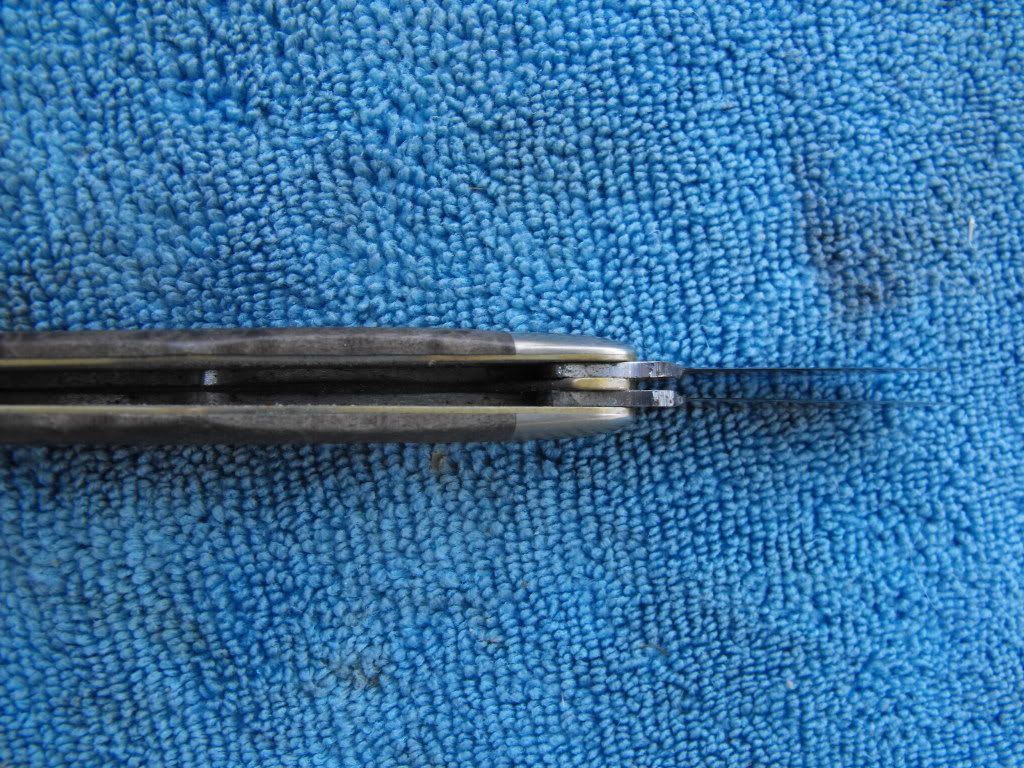
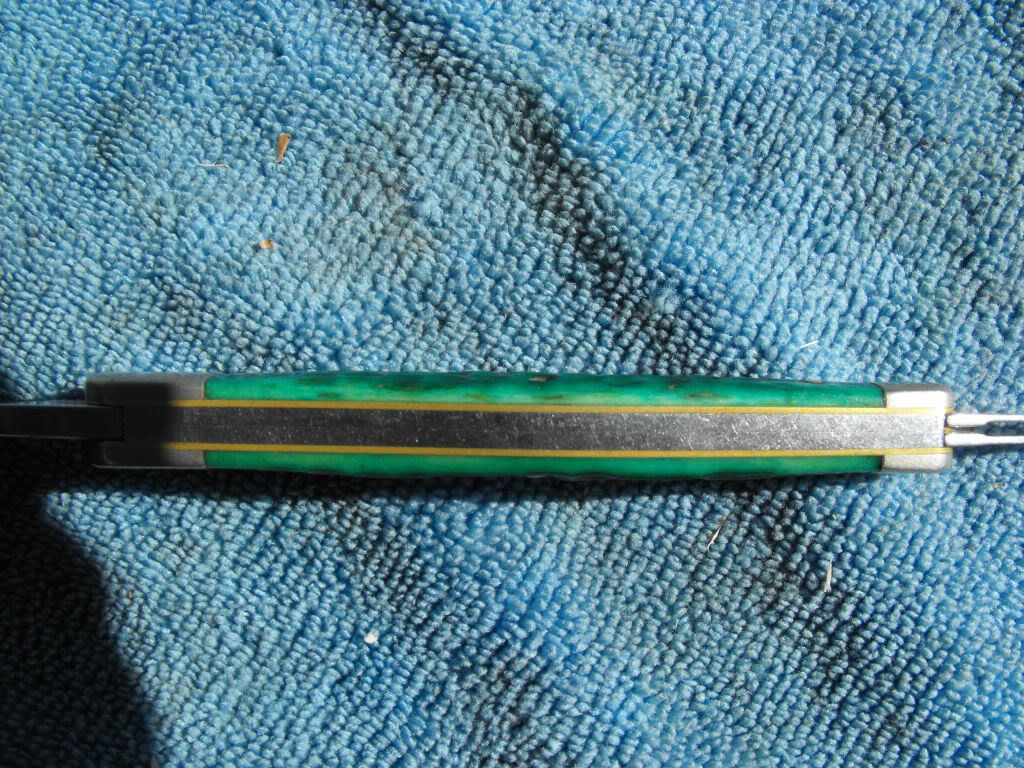
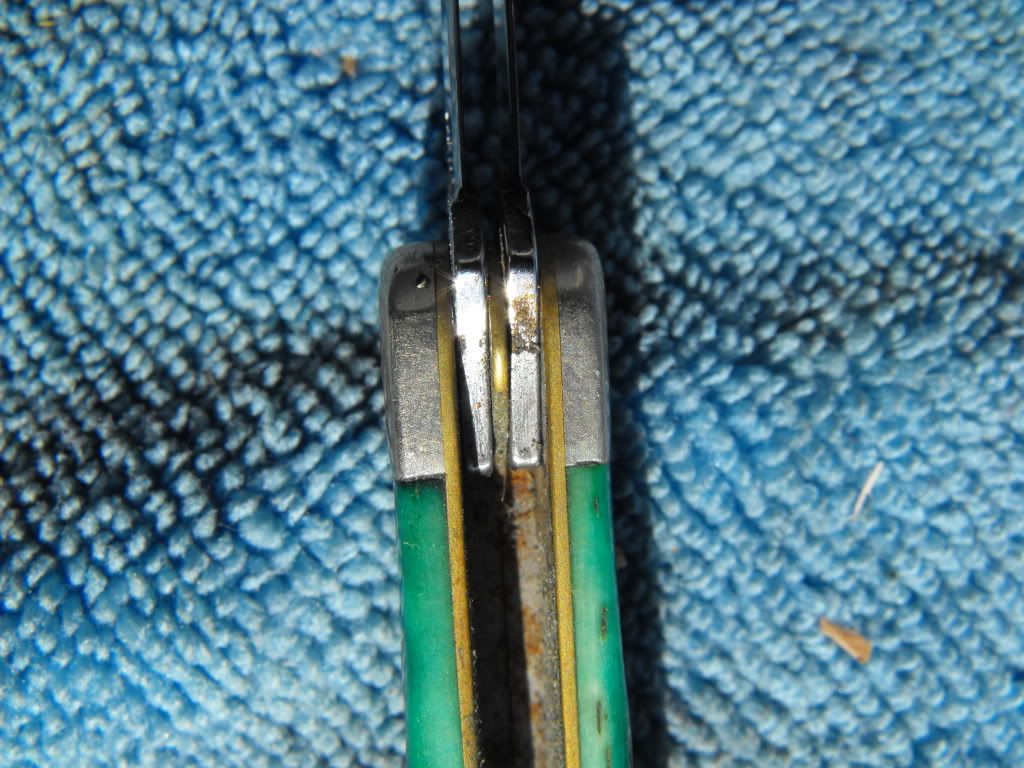
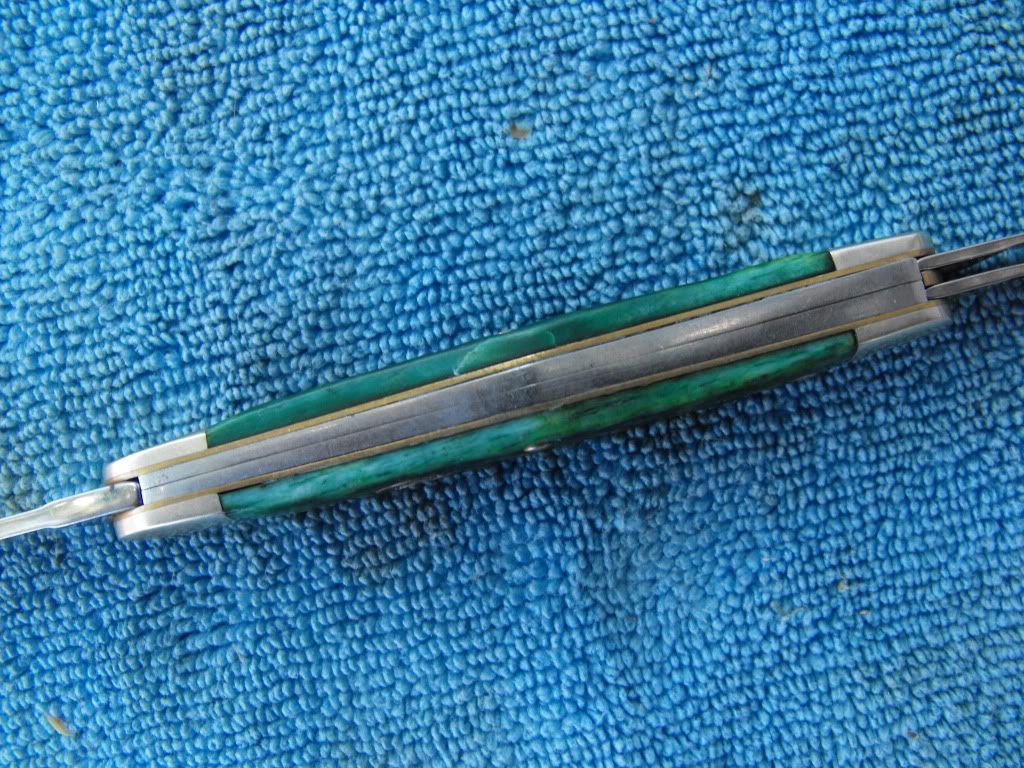
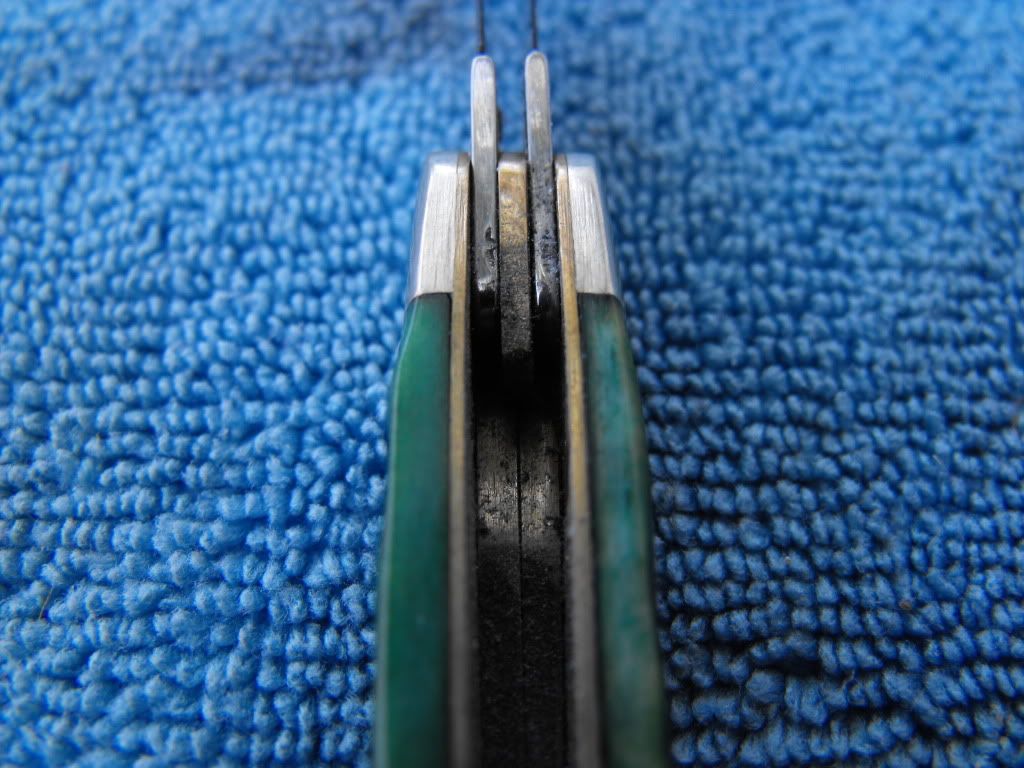
The wedge seperates the two springs at the secondary end, spreading them apart to provide room between the secondary blades for the main blade to fit into. Parallel springs are sometimes used, with a catch bit to provide the spacing between the secondaries. I also have one that has tapered springs with a catch bit.

Split back

DSCF0219.jpg

DSCF0218.jpg


Parallel Spring

DSCF0199.jpg

DSCF0197.jpg


Tapered springs

DSCF0211.jpg

DSCF0212.jpg
 
Jack,
Thank you for that fantastic expalanation ( with the pics :thumbup: )..its taught me a hell of a lot my friend..thank you.
 
Happy to help. My personal opinion is the split backspring shows the most skill in construction, followed by the tapered spring. The straight parallel spring set up is simple and effective, but it has always struck me as "taking the easy way out". It also tends to leave the main blade thicker than I care for. I prefer my whittling blades thin.
 
I haven't stuck my $.01 in here because I don't have a lot of "whittlers". But I think what really makes a whittler is the hand that holds it. Some pocket knives are, I think, somewhat aimed at that niche with the design of the knife and thus are "whittler" patterns. Ken, the one you show is a fabulous knife and I recognise it instantly as a whittler whereas I have to look twice at Elliott's Ruple sowbelly and even then it strikes me as a stockman and not a whittler. Elliott, that Ruple sowbelly might just be my perfect "stockman" three blade knife, but I'd have to put it in my hand to be sure. It is a fabulous pocket knife. As is Ken's whittler shown in the OP.

In my younger days I did a lot more whittling than I do now and never had a "whittler" to do it with. Be that as it may, I'd love to have some more "whittler" pattern knives and will probably pick up a few along. Ken, don't forget how you made that knife.

Ed J
 
Happy to help. My personal opinion is the split backspring shows the most skill in construction, followed by the tapered spring. The straight parallel spring set up is simple and effective, but it has always struck me as "taking the easy way out". It also tends to leave the main blade thicker than I care for. I prefer my whittling blades thin.

I think you nailed it right there, Yablanowitz , particularly the "taking the easy way" comment.
The method, a knife company builds/contracts, their "Whittler" pattern, tells me, almost, all I need to know about them.
This has been an interesting thread.

Ray
 
Last edited:
Very Cool thread- Here is a "Whittler" from Camillus-
camilluswhittler.jpg

By coniferwoodsman at 2011-03-16
Three blades, two springs. A Main blade, small clip and a coping blade. By the traditional definition this is not a whittler because of the blade configuration-
Here is a Western"Carpenters Special" Traditional blade configuration and a wedged pair of back springs-
carpenter.jpg

By coniferwoodsman at 2011-04-11
Here is another by Camillus that is not a traditional "whittler"- Wedged two back springs,three blades, but one is a fingernail file. Note the bolsters.-
whittler2.jpg

By coniferwoodsman at 2011-04-09
Another "whittler" thats not a whittler by Moore Maker, probably Queen in manufacture- Three blades, three springs. According to BRL this is really a three back spring cattle knife.
moorewhittler.jpg

By coniferwoodsman at 2011-03-16
I don't think I really helped answer the question, but these are a couple examples of what is out there. The oldest reference I could find was in a 1902 Sears Catalog which advertised a Wharncliffe Pattern with clip, copeing and pen blade. Called a "workingmans knife' , it looks identical to Case's Seahorse Whittler.
All the best
 
Very Cool thread- Here is a "Whittler" from Camillus-
camilluswhittler.jpg

They also made "whittlers" with the blades in typical stockman arrangement, being that the straight blade is beside the master clip, and the small curved blade is at the opposite end. But with typical "whittler" blades rather than typical stockman blades (small clip and coping). In this arrangement, the 2 short blades look a bit longer than the one pictured above. Do a google search for "Camillus yellow whittler" and it should be the first few that pop up. I've seen both of these also called "carpenters whittlers". Beats me why.
 
I have a couple of Remington (by Camillus) carpenter's whittlers that have the swell center handle (unequal end) with blades in a stockman configuration but the blades are a narrow coping blade rather than the wide sheepsfoot and the small clip instead of the spey. I like them much better than the standard stockman knife.

Here's the Staglon one:

EDC051610.jpg


It's not a whittler if you use the definitions Ken has started with, but it has the right blades and an appropriate handle configuration, but the blades are arranged as a stockman with two springs. They apparently made this knife for others as well as themselves.

Ed J
 
Last edited:
That's exactly what I was trying to describe above, just with a different badge. Thanks for the picture.
 
To start I will state what I believe to be the defining attributes of a whittler. 3 blades, master on one end with two secondary blades on the opposite end. A split spring with the wide end, or two springs with both springs, resting/working on the tang of the master. The opposite ends working the tangs of the secondary blades. When looking down at the well with blades closed the master rests between the secondary's. On lockback whittlers the two secondary springs also work the lockbar.

Interesting discussion Ken! There are people much more knowledgable about "whittlers" responding but I'll add my two cents for what it's worth. I agree with that definition. But what does it mean???

"Years ago, knife manufacturers did not usually distinguish their whittlers form their other pen knives. Today, however, whittlers are a separate and important collecting specialty.
LG4 p237

"Whittler" is a modern collector's term
LG4 p248

The history of the term seems to be much more recent than the pattern. Although I agree with that definition, I don't mind manufacturers blurring the lines a little. Actually, I find that the odd ball patterns are one of the fun things about knife collecting.

Do the number of springs make a difference? Would you consider the picture of this three spring knife ( http://www.bladeforums.com/forums/showthread.php/527126-quot-Old-Knives-quot?p=9570003#post9570003 ) a whittler?

Ken, That's a "Eureka". …and a nice one too. ;)

hsc3265l.jpg


What makes it a "Eureka" or a "three-spring Cattle Knife" and not a "three-spring whittler"? I'm not sure but I'd say the blades, the handle shape and the historical relation to "Cattle knives".

You might find it interesting that the 3-spring construction was emphasized in the advertisement of the knife.

henry-sears-eureka.jpg
 
Having lost my Buck 110, I dropped into one of the knife stores in Gatlinburg to buy something to 'whittle' with while on vacation. I settled for a stout Buck 301 Stockman... and whittled away contently on a rainy day there - and on many more - never knowing it wasn't a whittler. That was two decades ago. What did I know, I had whittled with a Buck 110 - or a Vic SAK - for years... guess I just couldn't get that camp hatchet sharp enough. Then, one day - suitably 'enlightened' - I elected to try a knife called a 'Whittler'.

I recalled my Dad's old Boker Tree Brand knife of a half century earlier - and ordered a BO280 series - carbon steel with tapered springs. Considerably smaller than the Buck Stockman, it is more comfortable for small whittling - even some detail carving, although I have grown more accustomed to a small fb, like Rick Butz's carvers, for that. Then - last autumn, just after Case dropped them - I saw the Case Seahorse Whittler pattern - with the straight blade main - a la a Wharncliffe - and that Butz fb. I ordered one - and my wife overheard me talking about it. She thought she'd help me get one - and got a local knife seller to order one - he got two. Within days, I went from never having a Case knife to having three - all Seahorse Whittlers, albeit in different handles.

So, now that I have some called 'whittlers', which one do I like? I'd love a combo! The Tree Brand's carbon steel is great - the Seahorse Whittler's main blade shape, size, and open angle are great. While the main blade is sufficient, so is the Seahorse's handle size - it feels good in my carpal tunnel problematic hands now. The Boker's tapered springs make openning the main blade easier - and it is a smaller handled size. The 'quality' of the Boker is great, too - the Case is a distant second there (All three Seahorse Whittlers came gritty and stiff. Cleaning and lube helped - still, it wasn't the best way to be introduced to Case knives.). My few Boker Tree Brand classic slippies, all carbon steel, are keepers.

Not being a crowd follower, I'll likely take the proper whittler suggestions with a grain of salt - but I have enjoyed this discourse all the same. The three spring whittler was a new one for me. Thanks to all!

Stainz

 
Last edited:
I appreciate the input from everyone! While we may have strayed a bit from my original question and intent for this thread I personally have come away with a new perspective on what defines a "whittler" and hope others have as well.

I do think it is important in a hobby such as knife collecting (slipjoints in particular in this case) that we maintain and foster the use of correct nomenclature and terminology. This only serves to strengthen the overall knowledge and interest shared by so many folks here.

That being said, I sincerely hope that some have come away from this thread with a better understanding of what "whittler's" are all about. Whittler's are one of the most complex constructed slipjoints with a very wide range of frame patterns/blade selections and sizes. It is no wonder to me that "whittlers" are some of the most collected patterns in the slipjoint world.
 
Back
Top