
-
The BladeForums.com 2024 Traditional Knife is available! Price is $250 ea (shipped within CONUS).
Order here: https://www.bladeforums.com/help/2024-traditional/
You are using an out of date browser. It may not display this or other websites correctly.
You should upgrade or use an alternative browser.
You should upgrade or use an alternative browser.
What is the defining attribute of a "whittler" ?
- Thread starter ken erickson
- Start date

- Joined
- Oct 2, 1998
- Messages
- 50,147
Don, according to your post the "whittler" is not based upon a pattern or particular style of construction but simply a group of blades. Am I reading that correctly?
(Now, my favorite knife to actually whittle with is a congress but I don't consider it a "whittler" per se.)
(Now, my favorite knife to actually whittle with is a congress but I don't consider it a "whittler" per se.)

- Joined
- Aug 27, 2004
- Messages
- 2,701
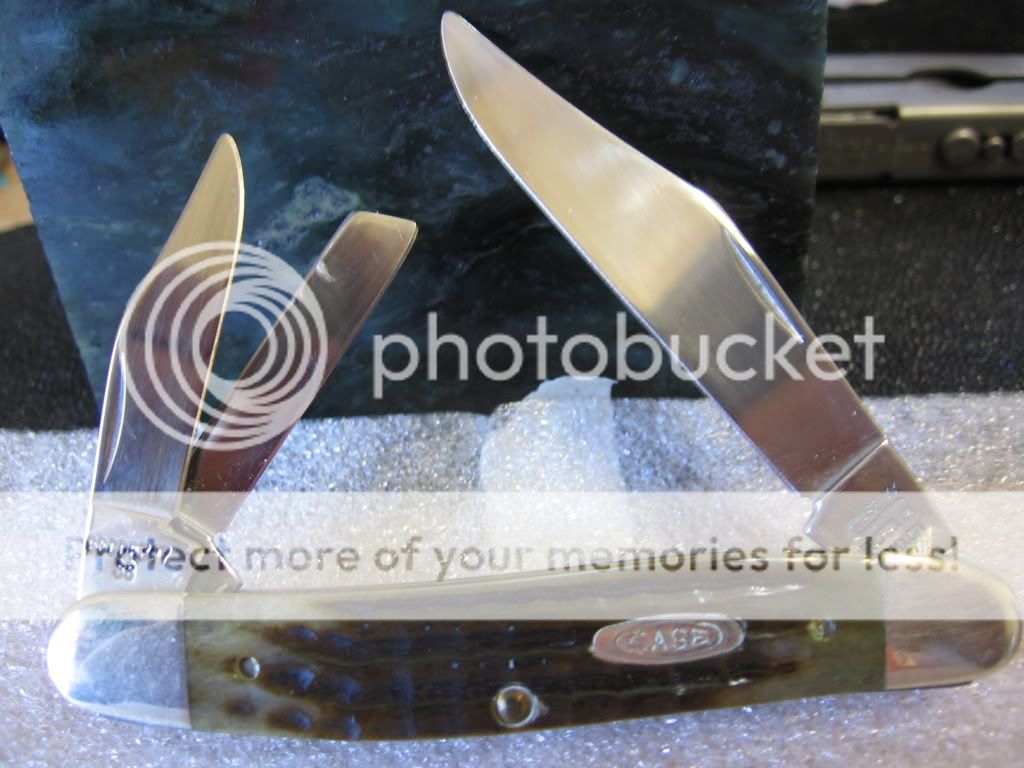
I whittler, in my view must have a clip main, coping and pen or small clip blades.Case makes a 47 pattern with these blades.Are you guys saying its not a whittler?Its a stock knife pattern,but not stockman blades.
I would have to say this knife is still considered a Stock knife even with the pen blade. This is from AAPK's site.
"The three blade 47 pattern is a 3 7/8" multi-bladed knife that is part of the stockman family. This particular member is larger than most stockmans, so it is often called a large stockman. As fasr as I know, all 47 pattern knives have a clip master blade, and most often have a sheepfoot and spey blade. Some have been produced with various combinations of second and third blades which includes sheepfoot, spey, pen, and punch blades. Case introduced this pattern sometime prior to 1915. "
- Joined
- Oct 2, 1998
- Messages
- 50,147
Don, now that I see the image you just posted, I'd consider that a whittler "if" the master rode on two backsprings. Is that "47" a two or three spring knife?
The blade selection pretty much duplicates the Case 6380 (Big Whittler) pattern. (Which does have the master riding on the two backsprings.)
The blade selection pretty much duplicates the Case 6380 (Big Whittler) pattern. (Which does have the master riding on the two backsprings.)

- Joined
- Oct 12, 2007
- Messages
- 2,655
Arent those blades ,the coping and small clip designed for whittling and a whittler knife?As for construction,i agree what comes to mind is the centered clip with the smaller pair at the opposite end.Just thought id try and throw a monkey wrench in the joint.( : Even Kens quoted description doesnt mention the coping blade.I think mt green 47 is a whittler for people that like to hold the 47 pattern better.

kc custom
Knifemaker / Craftsman / Service Provider
- Joined
- Apr 20, 2005
- Messages
- 2,362
Hopefully without starting a flame war here Ken and I have talked about this- I'm the maker
he's refering to. We or anyone can call anything they want whatever----but if its the amount
of springs over blade configuration theres a whole lot of stockmen and muskrats out there that
either are not as named or we can just keep it to one certain knife to be right with as far as
traditional nomenclature for what purpose is anyones guess.
Ken.
he's refering to. We or anyone can call anything they want whatever----but if its the amount
of springs over blade configuration theres a whole lot of stockmen and muskrats out there that
either are not as named or we can just keep it to one certain knife to be right with as far as
traditional nomenclature for what purpose is anyones guess.
Ken.
- Joined
- Oct 12, 2007
- Messages
- 2,655
Don, now that I see the image you just posted, I'd consider that a whittler "if" the master rode on two backsprings. Is that "47" a two or three spring knife?
The blade selection pretty much duplicates the Case 6380 (Big Whittler) pattern. (Which does have the master riding on the two backsprings.)
Its actually a 3 backspring with the master riding the center line.
- Joined
- Oct 2, 1998
- Messages
- 50,147
Thanks, Don...that's what I thought. A good useful knife whatever anyone may call it. I love the 47 pattern and the 80 (Big Whittler) is one of my all time favorites.
Ken Coats: I totally agree that the waters get pretty murky and that at a certain point it's hard to employ logic in knife nomenclature. That said, I think that the standards used by Levine in his guide are useful in sorting out and describing the variables amongst the many patterns available.
Ken Coats: I totally agree that the waters get pretty murky and that at a certain point it's hard to employ logic in knife nomenclature. That said, I think that the standards used by Levine in his guide are useful in sorting out and describing the variables amongst the many patterns available.
- Joined
- Aug 27, 2004
- Messages
- 2,701
Its actually a 3 backspring with the master riding the center line.
This also from AAPK's site, which clearly makes reference to 3 spring whittlers.
Whittler:
Sometimes known as a split back or split-backspring whittler. Some whittlers have three springs and are referred to as three spring whittlers.
Any knife that uses a split-back spring construction falls into the whittler category. The split-back design uses two springs that support a large single blade on one end, and two smaller blades on the other. The larger blade uses both springs, and each small blade rides on its own spring. See illustration All knives that work in this manner are referred to as whittlers regardless of the shape or design of the handle. This allows for many different styles of whittler knives with numerous names. Some include balloon whittler, seahorse whittler, equal end whittler, sleeveboard whittler etc. There is more work that goes into their construction than almost any other styles of knife. They have always been very collectable patterns. Case's most well known whittlers include the following patterns: 08, 80, 83, and 55. A few whittlers have three springs and are usually known as a three spring whittlers.
Some of the confusion appears to be what a knife could be used for, and what the pattern of the knife is.
I can whittle or carve with my stockman pattern , or just about any other of the knives in the collection, but don't consider them whittler patterns.
To the purist, the "whittler" pattern is a 3 bladed, split-back spring knife.
Large single blade, usually a clip, and two small blades
(Some purists insist a coping blade is a required blade for one of the two small blades)

Case 6308 - Large clip and two blades, small clip and pen
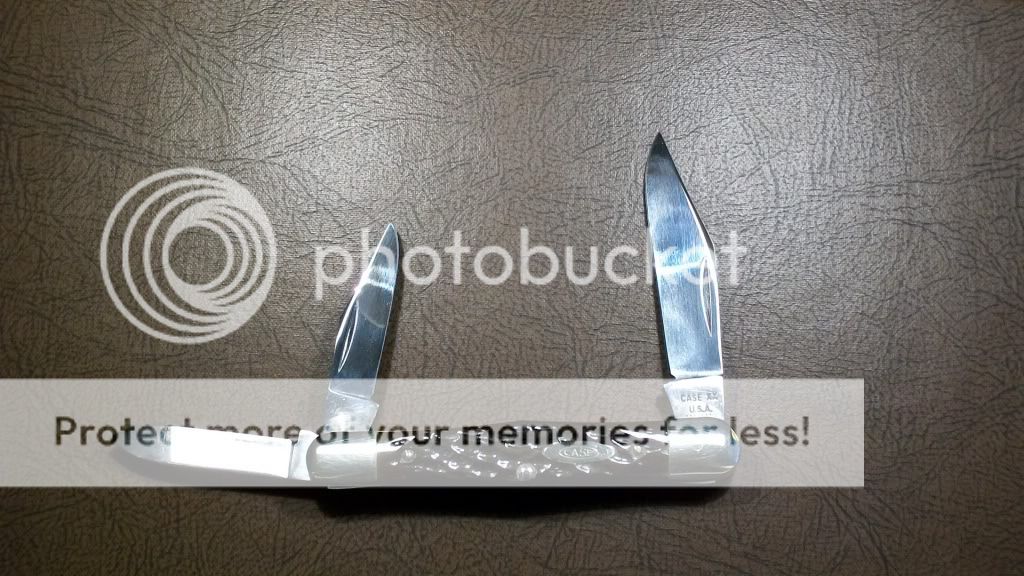
Case 6383 - Large clip and small clip & pen blades.
I can whittle or carve with my stockman pattern , or just about any other of the knives in the collection, but don't consider them whittler patterns.
To the purist, the "whittler" pattern is a 3 bladed, split-back spring knife.
Large single blade, usually a clip, and two small blades
(Some purists insist a coping blade is a required blade for one of the two small blades)
Case 6308 - Large clip and two blades, small clip and pen
Case 6383 - Large clip and small clip & pen blades.
Last edited:

Planterz
Іди на хуй Путін!
- Joined
- Mar 26, 2004
- Messages
- 24,929
I'm split (no pun intended) on what "whittler" means or should mean. At the basic level if somebody says "whittler", I'm going to assume 2 springs and 3 blades, one large that uses both springs, and 2 small blades at the opposite end, each riding one spring. Any variation should be qualified in the description, ie: 3 spring whittler.
But the other part of me wonders why whittlers and their fans need to be so pretentious about what defines a whittler; other pattern collectors aren't so anal. Muskrat collectors maybe, who may claim that a muskrat is only a true muskrat if it has the single backspring, despite the decades of examples that use 2 springs. But you don't see people getting in a twist over Case using 4 springs for congresses or Buck making stockmans with 3 springs.
I think it has to do with the uniqueness and complexity of the construction of "true" whittlers. 3 blade whittlers are "true" whittlers the same way a Porsche 914 is a "true" Porsche.
But the other part of me wonders why whittlers and their fans need to be so pretentious about what defines a whittler; other pattern collectors aren't so anal. Muskrat collectors maybe, who may claim that a muskrat is only a true muskrat if it has the single backspring, despite the decades of examples that use 2 springs. But you don't see people getting in a twist over Case using 4 springs for congresses or Buck making stockmans with 3 springs.
I think it has to do with the uniqueness and complexity of the construction of "true" whittlers. 3 blade whittlers are "true" whittlers the same way a Porsche 914 is a "true" Porsche.
- Joined
- Oct 2, 1998
- Messages
- 50,147
But the other part of me wonders why whittlers and their fans need to be so pretentious about what defines a whittler; other pattern collectors aren't so anal. Muskrat collectors maybe, who may claim that a muskrat is only a true muskrat if it has the single backspring, despite the decades of examples that use 2 springs. But you don't see people getting in a twist over Case using 4 springs for congresses or Buck making stockmans with 3 springs.
I think it has to do with the uniqueness and complexity of the construction of "true" whittlers. 3 blade whittlers are "true" whittlers the same way a Porsche 914 is a "true" Porsche.
I'd have to strongly disagree. I see lots of folks with "issues" about all of the variants you bring up...from congress knives to muskrats to stock knives and more. It's not anal...that just demeans and reduces any attempt to catalog and define the patterns to a capricious exercise. (I'd hardly consider Levine's guide capricious or whimsical but that doesn't mean everyone feels that way.)
Companies call their knives what they will. For those for whom this practice suffices, so be it. For those who wish to be more precise in defining the attributes and characteristics of a particular pattern, more clarity is called for.
To each his own (without the need for finger pointing and divisiveness.)

- Joined
- Nov 27, 1998
- Messages
- 2,602
I concur with those who believe that a 'true' whittler is defined by its blade and spring layout rather than the handle pattern or blade profiles. The small blades can be anything from a file to a punch, and the handle anything from a Stockman to a Congress, but IMO, the knife is still a whittler as long as it has three blades and two springs with the master blade riding on both and the small blades riding on one apiece. That said, I don't believe that a tapered spacer between the springs is absolutely necessary to the definition, though it's certainly a desirable attribute.
Planterz
Іди на хуй Путін!
- Joined
- Mar 26, 2004
- Messages
- 24,929
I'm sorry, "pretentious" and "anal" were the best words I could come up with at the time. I didn't mean anything negative by using those words. I can't think of the right word. Punctilious maybe?I'd have to strongly disagree. I see lots of folks with "issues" about all of the variants you bring up...from congress knives to muskrats to stock knives and more. It's not anal...that just demeans and reduces any attempt to catalog and define the patterns to a capricious exercise. (I'd hardly consider Levine's guide capricious or whimsical but that doesn't mean everyone feels that way.)
Companies call their knives what they will. For those for whom this practice suffices, so be it. For those who wish to be more precise in defining the attributes and characteristics of a particular pattern, more clarity is called for.
To each his own (without the need for finger pointing and divisiveness.)
And I'll take your word for it regarding other patterns; you've been here longer than I have.
 I just haven't seen it in my (short) time here.
On a side note, I have 2 whittlers in the mail. A Queen in amber stag bone, and a GEC Courthouse in garnet bone. Hopefully my thumbnail grows back in time before they get there.

- Joined
- Oct 2, 1998
- Messages
- 50,147
I'm sorry, "pretentious" and "anal" were the best words I could come up with at the time. I didn't mean anything negative by using those words. I can't think of the right word. Punctilious maybe?
And I'll take your word for it regarding other patterns; you've been here longer than I have.
I didn't think so...but didn't want any "new" folks to get the wrong message either. Thanks for clearing that up. :thumbup:
I have one of those Queen's in ACSB. I think you're going to like it.
Being a whittler for 30+ yrs - I have an opinion. The 'whittler' style will have three blades - primary on one end & two smaller blades on the other. Backsprings can be 1 that is actually split, two or three - it's blade configuration. However, the 'whittler' style posket knife is actually a poor choice to whittle with. Mainly due to the actual construction. The closed blades normally stick up too high & jab your hand when using the knife for any period of time. There are three exception I've found: the Congress whittler, the Seahorse whittler & the Humpback whittler. These knives the closed blades ride almost flush with the handles, making them the most comfortable. Another however - these styles of knives are too small in the hand & become uncomfortable quickly, again - a bad choice. The real whittler is a large handle fixed blade (1"-2") length. Some would say this is a 'carving' knife. Now the difference between whittlers & carvers is another thread entirely...

waynorth
Dealer / Materials Provider
- Joined
- Nov 19, 2005
- Messages
- 34,648
Maybe we should capitalize Whittler to differentiate the collector's term from all other knives with which one can whittle.
A (W)hittler refers to the spring and blade configuration. Two springs (or one spring with a split) and three blades, with the main on both springs. I will concede the wedge is not necessary to fit the definition.
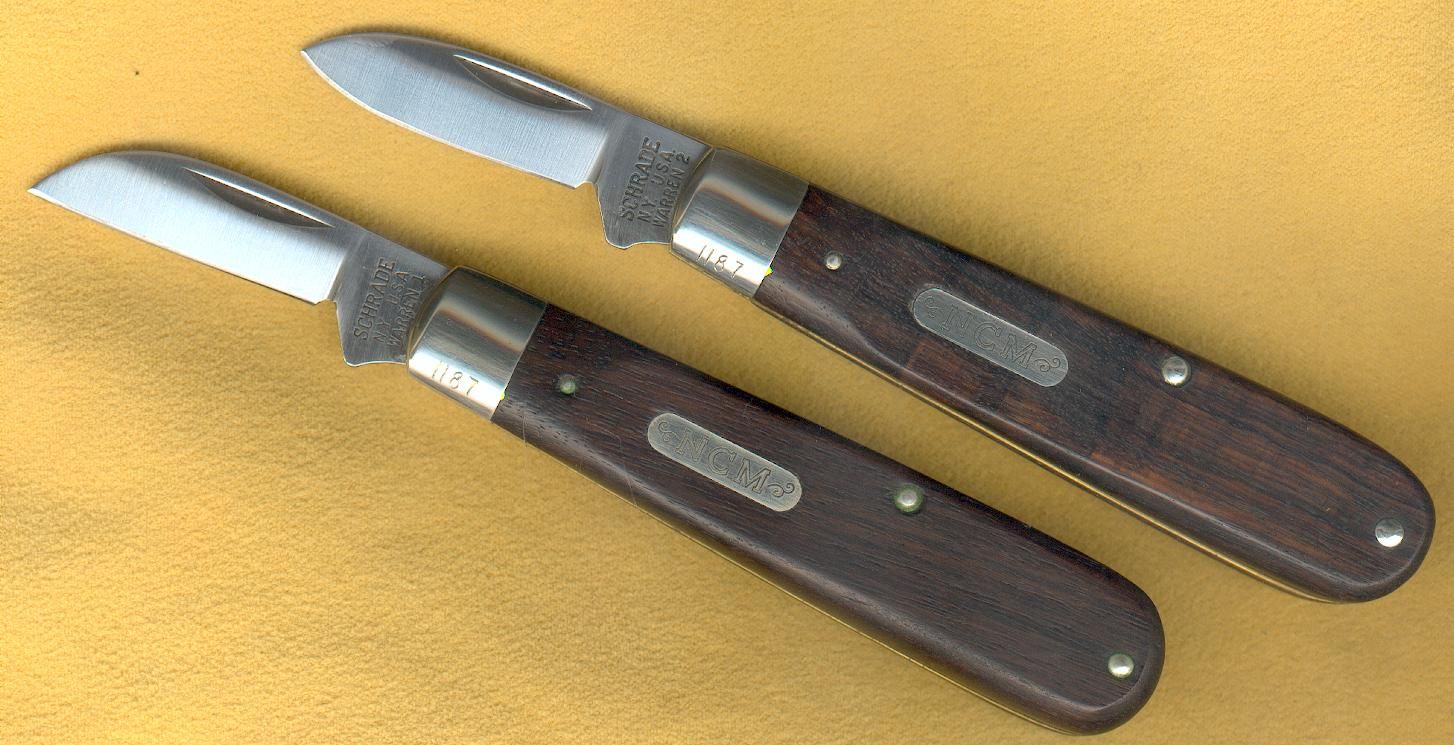
The main need not be a clip - have we forgotten one of the early true Whittlers and its great and useful blade - a Wharncliffe??
These are whittlers!!
And these are Whittlers!
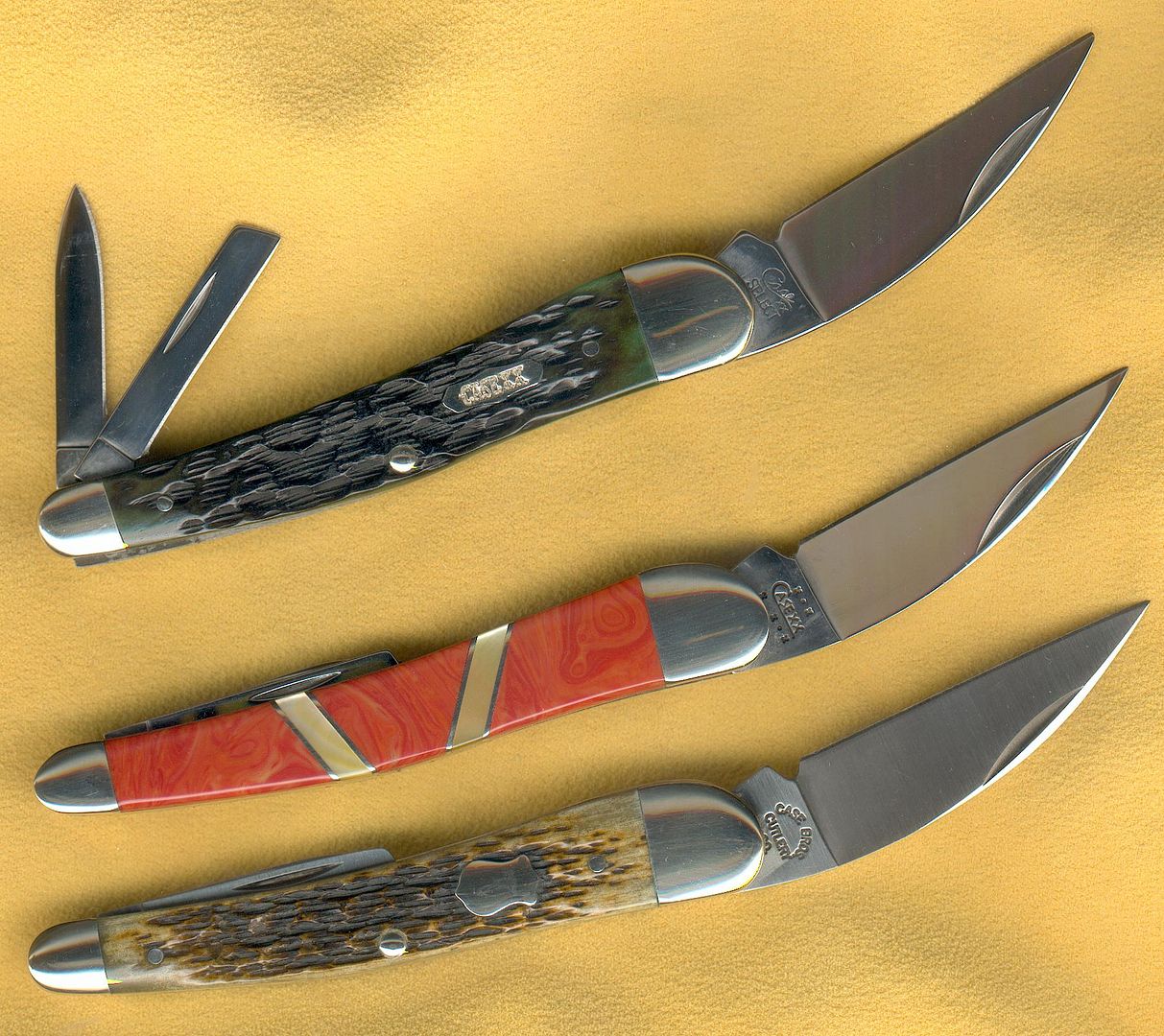
And these are Whittlers with the traditional wedged backsprings!
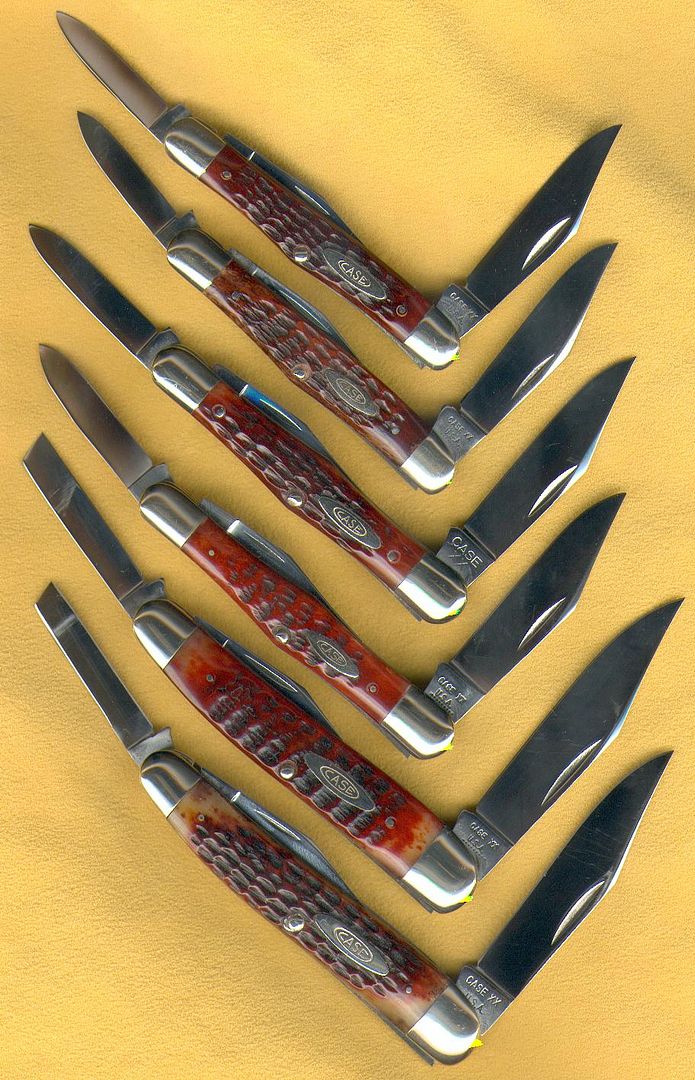
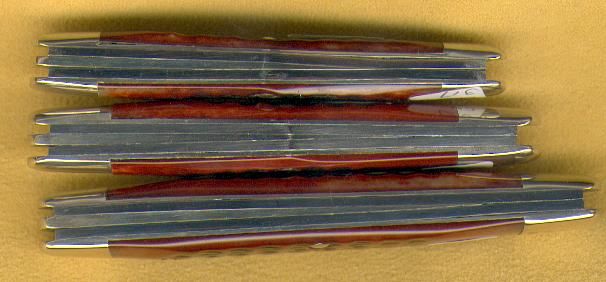
Seems like a Carving knife looks more like this! - probably another discussion!
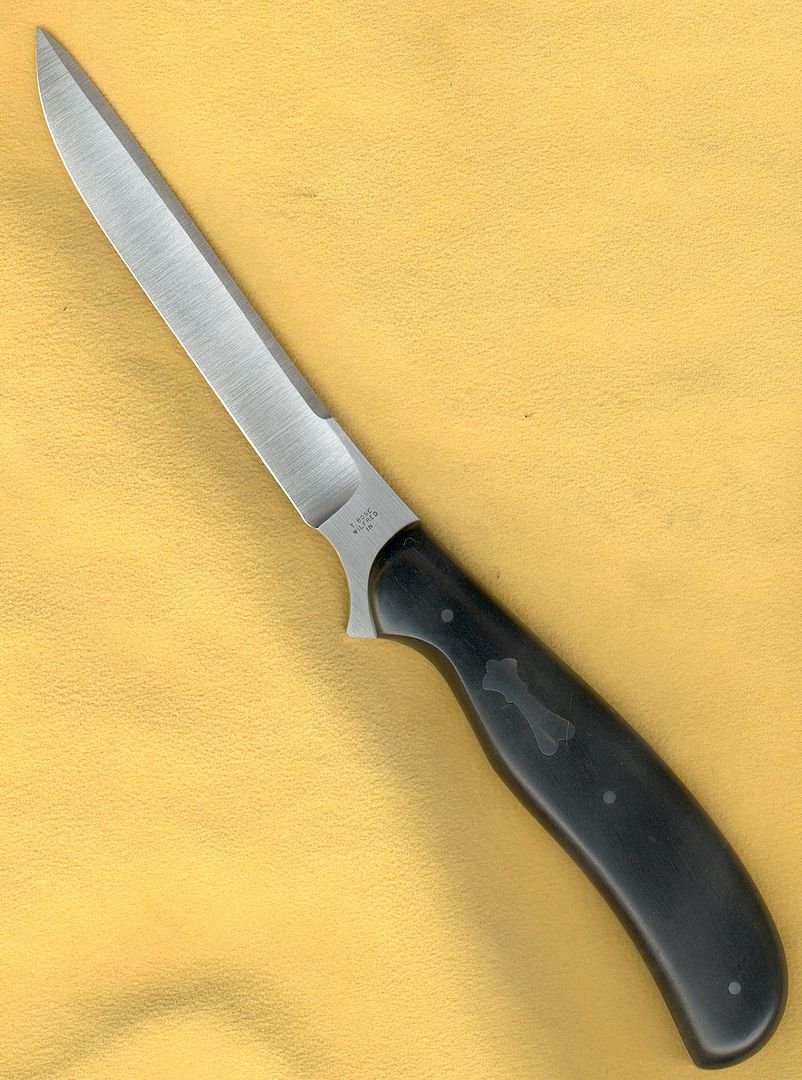
A (W)hittler refers to the spring and blade configuration. Two springs (or one spring with a split) and three blades, with the main on both springs. I will concede the wedge is not necessary to fit the definition.
The main need not be a clip - have we forgotten one of the early true Whittlers and its great and useful blade - a Wharncliffe??
These are whittlers!!
And these are Whittlers!
And these are Whittlers with the traditional wedged backsprings!
Seems like a Carving knife looks more like this!
- probably another discussion!
Last edited:
These are whittlers!!
I have to agree. Those look like excellent knives for whittling. Personally, that's what I think of when I think of a whittler : a substantial handle and a short scary-sharp blade.
As far as a whittler pattern...I dunno. I only have one; a GEC Executive whittler, and it fits the standard definition. It's an amazing piece of the knifemaker's art, but I suspect it wouldn't be terribly good for whittling at all.


- Joined
- Dec 10, 2003
- Messages
- 1,620
Ken, I believe your (and others) definition of a "whittler" is correct. I agree the defining nature of a "whittler" is the configuration of the blades and springs and that the master blade rides on both springs with a separate blade on each opposing end. To me the style of the blades is not a defining matter. I've seen lots of "whittlers" with manicure blades, but that's for another discussion
Great looking whittler by the way
Great looking whittler by the way

- Joined
- Apr 19, 2005
- Messages
- 5,533
You guys are talking knife grad school level, I may be down in the 4th grade......
In the Buck world it is very simple, the 310 Whittler (the only one so named) is a two blade opposite ended clip and pen blade knife with the addition of a coping blade. Not being a whittler, but seeing knives folks called whittler's, coping blades seemed to stand out. But, Buck puts three spings in the knife, main blade in the middle as has been suggested above. I have on occasion, whittled with a hatchet.
300Bucks
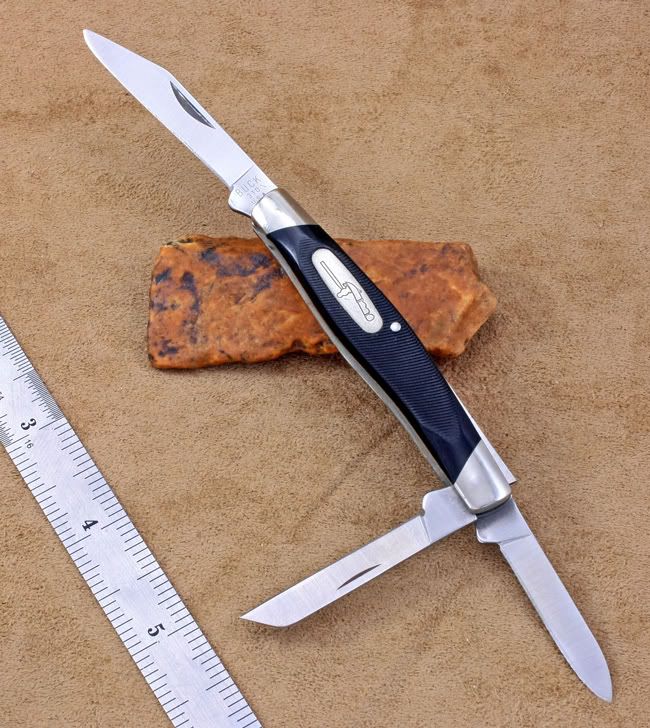
In the Buck world it is very simple, the 310 Whittler (the only one so named) is a two blade opposite ended clip and pen blade knife with the addition of a coping blade. Not being a whittler, but seeing knives folks called whittler's, coping blades seemed to stand out. But, Buck puts three spings in the knife, main blade in the middle as has been suggested above. I have on occasion, whittled with a hatchet.
300Bucks