What is the process that takes place when using this technique? Forge Welding.

There is no need for a second weld if the process is done correctly. This is identical to using sealed stainless cans to weld in.

I think you will find that because the success rate is so high this technique is very efficient.

Hope so! I'd love to quit using borax. I'm sick of relining my forge so often...
 
erik,
The best way to choose is to get the formula of the oil. If it is basically a C#H# product (eg. C12H26) then it will work well.
If I remember correctly, kerosene is also called paraffin and paraffin oil in the UK, but I don't know about Holland.
I would suspect that lamp oil will work, but check it out if you can.

Gelukkig nieuwjaar

Thank you, Sir. Gelukkig nieuwjaar to you too.:)
 
I am not trying to derail, but I wanted to say, reading this thread is like sitting in a room full of guys that are much smarter and more experienced and its amazing to learn something from you guys, so thank you!

Jake
 
Google translate converts "Kerosene" in english to "kerosine" in Dutch.

I don't know if that's right, Petroloum you say ?

We used to also call it "Coal Oil"

It's clear and colourless, thinner than oil and thicker than water with a slight oily feel.

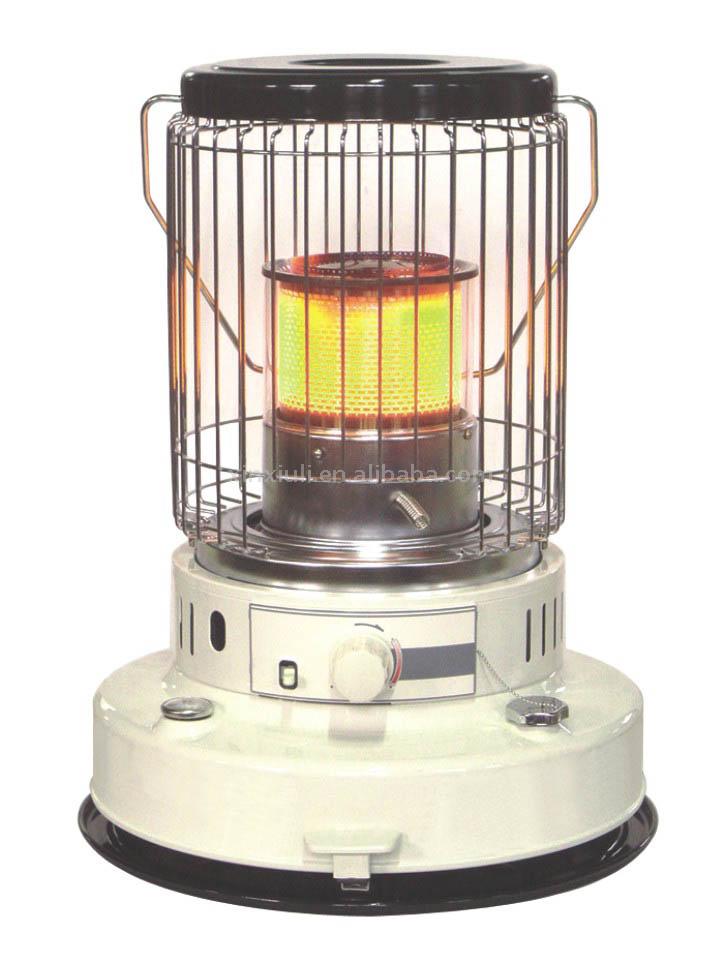
It's widely available here in farm supply and hardware stores as lantern fuel, portable heater fuel, paint solvent.
"K1" is aircraft jet engine fuel.

We can buy it in 1 Litre, 4 litre, 20 litre and 200 Litre containers.
quart, gallon, 5 gallon pail, 55 gallon drum

coleman-lantern.1.jpg

kerosene_heater.jpg

24880476_26069409_trimmed.jpg


When I buy "lamp oil" here in Canada it's coloured and perfumed so it looks pretty in these lamps
coal_oil_lamps-2.jpeg

Who knows what those additives are and it's probably best to skip those.
 
The coal oil is the same as our petroleum according to your description. Tomorrow will be experiment day! Thanks!
 
A couple of things here. not all hydrocarbon solvent work well. Road fuel (#1 diesel) works as well as kerosine. #2 dyded fuel is very tough to get to work well. and I haven't been able to get parts washing solvent to work at all. Also the atmospher in the forge is more critical so if you are using kerosine and not getting a weld and you can weld with borax then look at your atmosphere in the forge it is probabbly too lean (oxidizing).
 
A couple of things here. not all hydrocarbon solvent work well. Road fuel (#1 diesel) works as well as kerosine. #2 dyded fuel is very tough to get to work well. and I haven't been able to get parts washing solvent to work at all. Also the atmospher in the forge is more critical so if you are using kerosine and not getting a weld and you can weld with borax then look at your atmosphere in the forge it is probabbly too lean (oxidizing).

Good points Bill. I do use parts cleaning solvent that I get from Tractor Supply, in 5 gallon cans. It works well for me. I'm wondering if what you're saying on top about additives is what gave you the zero results with parts cleaning solvent. I've used the K-1 kerosene with excellent results.
 
Phillip, it works just fine. I didnt bother tacking or anything, I just wired the strips together (1084 and 15n20) and let them sit in the jar while the forge heated up. Once it was at heat, I popped the billet in and it flamed up right away, (I think I have some pictures somewhere). Im pretty sure the first weld took when I did it and I used a 2 pound club hammer. I put it back and did it twice more just to be sure but after drawing it out to length, I let it cool then cut it and there were no inclusions or gaps. I ground them flat and wired them up again but I could have easily just folded the piece before I let it cool and soaked it like that. The second weld took just as good as the first. This was my first forge weld ever, so Im pretty sure this is a sound technique and had nothing to do with my abilities hehe.

Erik, there are a bunch of liquids that are basically the same but called different things, kerosene or coal oil here (the US and sometimes Aus and NZ) is paraffin in the UK as Stacy said. There is also white gas (naptha) used in most lanterns, camp stoves and other pressurized heaters and white spirits which is used as a thinner and solvent and formerly used by drycleaners, while lamp oil is a more refined version of kerosene. They should all work on the same principle and have the same outcome, your choice would be based on availability.
 
Good question. It's a welding thing. You need flux. Seems to me a carbon based flux, would increase the carbon content in the interface zones, i.e. harndess, strenth and brittleness (tool steel). It would give those beautiful lines in a blade new properties. Keep heat'n n beatin', keep learning.
 
Well, I'm sold. I just tried it with a small billet I've been working on (half mystery steel, half 1080) and it seemed to work great. I didn't have any kerosene handy, so I used vet grade mineral oil. I did do a second weld with borax, but I don't think it was needed.
 
This is a great thread. Extrapolating, I'd guess any long chain hydrocarbon would work as long as you could get it to sufficiently wet the surfaces of the metal (i.e. melted wax)? I'd also guess that more volatile solvents might not work as well because they could burn or evaporate off before a good carbon coating forms?
 
This is a great thread. Extrapolating, I'd guess any long chain hydrocarbon would work as long as you could get it to sufficiently wet the surfaces of the metal (i.e. melted wax)? I'd also guess that more volatile solvents might not work as well because they could burn or evaporate off before a good carbon coating forms?

That makes seance, the more sooty the burn the better; as long the oxygen is being consumed.
 
This is totally fascinating, and I don't even forge.

Would dipping a blade in one of these hydrocarbon fluxes help reduce decarb when heat-treating a blade in a propane forge as well, or should I just suck it up and buy some anti-scale compound or satanite?

-Daizee
 
Would dipping a blade in one of these hydrocarbon fluxes help reduce decarb when heat-treating a blade in a propane forge as well, ?

-Daizee

No, it has nothing to do with decarb at 1450F. I doubt it would help much at all, but if you want, do a group of twenty blades ( half with hydrocarbon and half without) and post the results.
 
Wow, this is very interesting but the technical explanation you gave Stacy,
Bill has the basics pretty well stated in layman's terms.

OK, some more chemistry

Methyl Hydrate is a fancy name for CH3OH....AKA Methanol...
Denatured alcohol is ethanol (CH3CH2OH), plus 10% methanol (CH3OH), plus a tad of methylisobutylkeytone (MIBK) - [CH3)2CHCH2C(O)CH3] to make it undrinkable.
Kerosene is C12H26 ( called dodecane by the pocket protector crowd)

As you can see ( well, some of us can see), the methanol has one water molecule attached to a methylene molecule (one carbon atom bound to two hydrogen atoms). In burn off, the water will leave, the hydrogen will combine with oxygen, and you get one carbon atom per molecule of methanol for the steel coating....not very efficient. Denatured alcohol isn't really much better.

Now, lets look at that kerosene. There is no water or oxygen to cause problems, twelve carbon atoms to add to the metal, and twenty-six hydrogen atoms to carry away oxygen. The value as a flux is easily far greater to see than methyl hydrate.

Well that explanation put me back in Chemistry class and I wasn't sure whether to scratch my head or my........!:eek: No wonder when the teacher started trying to explain all this it just became, blah, blah, bla, blabbbbbba bla!

However I think this is in that area where I don't have to fully understand it, just to know it works is probably enough on this one!:D

But you know the funny part of it, I really do understand it better with age!:rolleyes: Back when I was in HS it was just like someone was speaking in a foreign language to me!:confused:
 
But you know the funny part of it, I really do understand it better with age!:rolleyes: Back when I was in HS it was just like someone was speaking in a foreign language to me!:confused:


I'm not sure that it's age as much as interest. It's still as hard to understand today as it was back then, but now it actually has some relevence for you.

PS. Unfortunately, the subjects learnt at high school are, like youth itself, generally wasted on the young. But, usually by the time you realise the relevence, you've long ago forgotten the substance. (Well that's usually the case with me).
 
A couple of things here. not all hydrocarbon solvent work well. Road fuel (#1 diesel) works as well as kerosine. #2 dyded fuel is very tough to get to work well. and I haven't been able to get parts washing solvent to work at all. Also the atmospher in the forge is more critical so if you are using kerosine and not getting a weld and you can weld with borax then look at your atmosphere in the forge it is probabbly too lean (oxidizing).


I'm glad you mentioned this Bill, because I tried the Dyed Kerosene that's most ubiquitous here and had horrible luck with the welds.. Undyed went a lot better, but the couple of billets I've tried on the initial stack, I wasn't satisfied with the edges personally.

I'm limited to a hammer at the moment, since I'm building a new press. My experience thus far has been that I've had better luck with this method on restacks, and have been doing my initial stack wet, since I get near perfect results each time. I'd like to try diesel, and I've heard of people using various sprays like WD40, and others?

Honestly most of the time I just wet weld the first stack, and then mig or tig the restacks for dry welds, but I'd love to eliminate the first borax wet weld.

Are you guys setting your welds with a press? Anybody having luck with this method using a power hammer to set the weld?

I also read on the ABS forum that you needed to run these billets colder than what guys were using for flux welds, but that definitely didn't work out for me.

 
I'm glad you mentioned this Bill, because I tried the Dyed Kerosene that's most ubiquitous here and had horrible luck with the welds.. Undyed went a lot better, but the couple of billets I've tried on the initial stack, I wasn't satisfied with the edges personally.

I'm limited to a hammer at the moment, since I'm building a new press. My experience thus far has been that I've had better luck with this method on restacks, and have been doing my initial stack wet, since I get near perfect results each time. I'd like to try diesel, and I've heard of people using various sprays like WD40, and others?

Honestly most of the time I just wet weld the first stack, and then mig or tig the restacks for dry welds, but I'd love to eliminate the first borax wet weld.

Are you guys setting your welds with a press? Anybody having luck with this method using a power hammer to set the weld?

I also read on the ABS forum that you needed to run these billets colder than what guys were using for flux welds, but that definitely didn't work out for me.

I am guessing that the atmosphere in your forge is not where it needs to be for this type of welding. Try richening the mixture some. I had black lines the first few times I tried this, they went away after I added more fuel.

Wd-40 works well but my favorite is PB blaster.
 
I am guessing that the atmosphere in your forge is not where it needs to be for this type of welding. Try richening the mixture some. I had black lines the first few times I tried this, they went away after I added more fuel.

Wd-40 works well but my favorite is PB blaster.

Thanks Bill, I'll give it another shot in the next few days. I usually run a pretty heavy dragons breath, but I sometimes bring it up to temp a little less rich to let it soak longer, and that could have been the case that day.
 
Erik, Chris Marks told me that he has used diesel fuel. What I do is do the first weld each time with the kerosene and then hit the edges with egular flux the rest of the time. The objective is to keep the borax "glass" out of the billets, but sometimes you still need to seal up the edges of the billet, so better safe than sorry.
I am going to give this a try. Lampoil will do? I ask this because in holland we have the names for liquid fueles a bit mixed up. US kerosene in holland we call petroleum.
 
Back
Top