I am going to attempt to make a general purpose knife, not one that has a specific purpose. I won't be using it at all for cooking, or throwing, or any specific purpose, just to use it when the time needs it. I have heard 01 is good, but it is expensive, is just plain steel an ok resource?

-
The BladeForums.com 2024 Traditional Knife is available! Price is $250 ea (shipped within CONUS).
Order here: https://www.bladeforums.com/help/2024-traditional/
You are using an out of date browser. It may not display this or other websites correctly.
You should upgrade or use an alternative browser.
You should upgrade or use an alternative browser.
What's a good type of steel to use for my knife?
- Thread starter Gamgades456
- Start date

I looked up some, and which of those steels would be available at home depot, or ace?
Ok, I'll look into that, and one more question, what makes mild steel unusable? What will happen if I make a knife out of it?
Would it be ok to make a partially usable knife out of it though?
Then can I make a decorative knife out of it?

Then can I make a decorative knife out of it?
Yes but it will only be a decoration.
I made a knife out of mild steel as a beginner, I think I still have the rest of the bar... 1084 would have been more cost effective.
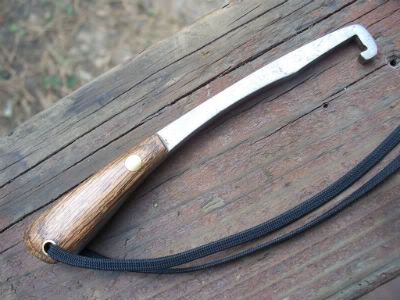
I did learn a lot on it, I wanted to try making a shackle opener and didn't want to use my good steel. Looking back I wish it was a better steel because it came out nicely.
Did you already buy it or something??
I bought it to make bottle openers with, that was my first completed project from scratch. For a bottle opener the 1/4" I used was great, it stands up to daily use. I used oak trim wood for the scales and stained them, lol. I remember not being able to heat treat anything... I had ground some knives and wanted to complete a project.
Not to derail the thread but here's the opener... I learned a lot even though it was mild steel.
Here's a bit on steel selection, my two cents...
http://www.bladeforums.com/forums/s...lection-for-Beginning-Knifemakers-My-Thoughts
Last edited:
If you plan on making one for pure decoration, then it might - MIGHT be an ok steel choice, but if used it would likely begin to lose the edge/sharpness on anything harder than pine wood. The steel you can find at Lowe's, Home Depot, etc. is mild 1018; the 18 standing for .18% carbon. A carbon content of .40 - .45 is the minimum for achieving martensite, or hard steel, upon quench. NJsteelbaron is the best choice for a high carbon/tool steel/hardenable stainless as far as I'm aware. If you plan on doing mostly stock removal to shape it, NJsteelbaron (Aldo's) O1 steel is resilient enough that it can be quenched in oil OR brine with good results! If you'll be doing a lot of cold-working, or shaping via forging then I would suggest being wary of the brine. The W2 can take a fine edge and in my opinion is easier to heat treat than O1...it's not as "picky" about heating and quenching conditions, there is a greater chance that it will experience some slight warping, which fortunately can be re-straightened by clamping it to a flat bar of metal and tempering for 1.5 - 2 hours. While I've not worked with the 1075, 1084, or 1095 offered from there, I hear many good things about them all.
In short; if this will be used as needed or frequently, I would recommend ordering a steel of your choice from NJsteelbaron. If you make it from 1018, A36 (1018 with a different name), or commercial weld steel, it can still be a decent looking and sharp knife, but due to lack of hardenability the edge would need re-honed far more often and dents/scratches would occur far easier (IF it is used). A blade can be both decorative and durable if the smith wishes it. If you don't have experience with heat treatment, read some of the "sticky" articles in shop talk. It's entirely up to you, and actually if this is for skill building rather than a commissioned work, those low carbon mild steels are great for practice.
In short; if this will be used as needed or frequently, I would recommend ordering a steel of your choice from NJsteelbaron. If you make it from 1018, A36 (1018 with a different name), or commercial weld steel, it can still be a decent looking and sharp knife, but due to lack of hardenability the edge would need re-honed far more often and dents/scratches would occur far easier (IF it is used). A blade can be both decorative and durable if the smith wishes it. If you don't have experience with heat treatment, read some of the "sticky" articles in shop talk. It's entirely up to you, and actually if this is for skill building rather than a commissioned work, those low carbon mild steels are great for practice.
ya I bought mine to make my first knife out of and should have listened to you guys on here. I even went through the process of heat treating it and everything which really makes me mad because like you said with yours it actually turned out pretty decent (for my standards anyway) Now it sits in a box never to be used.
That is what I got, I bought a 1/8x2x4ft piece of welding steel, would that be somewhat fine to use?
Welding steel should contain more carbon than mild steel, but probably not enough to fully harden it. Unless you're going to use the entire bar, I would suggest saving a small piece of it and doing some heat treating tests on the scrap to find out if it can be hardened. I've not looked into it; I use welding steel for the fittings which don't require heat treatment, so I can't give a straight yes/no answer. Chances are slim to none, but slim means it's still possible - though barely. If the edge isn't going to take a heavy beating, then it would be an ok choice.

SBuzek
Basic Member
No matter how many times you ask, the answer will not change.It is only good for practice or a wall hanger.If you want knife steel contact Aldo http://newjerseysteelbaron.com/shop/1084/ You can get a good piece of steel shipped to you for less than 20 bucks.
Stan
Stan