- Joined
- Dec 5, 2013
- Messages
- 1,180
I'm going to ignore all the back and forth about the shiny, mis-ground spot on the blade and answer the question in the title. In my opinion, whether to hand sand or not is totally a question of what kind of knife you are making and what kind of knifemaker you want to be perceived as. One of the best pieces of advice I ever got came from Bruce Bingenheimer at my first show. He said, "If you want to sell to collectors, you need to hand finish your blades."
I took that advice to heart and hand finished every knife I made after that...until this year. I decided to produce a couple belt finished knives for the ICCE show in Ft. Worth. I still have both of them. In fact, I decided to carry one as my personal EDC but, the people who buy my knives don't want belt finished blades. They are willing to pay more for the hand finish but, I've reached a point in my knife making where, I don't have to charge more for a hand finish. I can come off the grinder at 600 grit, hand sand with 500 and then 800 and I'm done in ten minutes. I wont say never but, I don't see ever doing another machine finish on one of my folders; it just doesn't fit who I am as a knife maker.
Bob
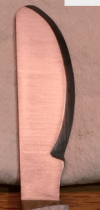
My machine finished EDC

I took that advice to heart and hand finished every knife I made after that...until this year. I decided to produce a couple belt finished knives for the ICCE show in Ft. Worth. I still have both of them. In fact, I decided to carry one as my personal EDC but, the people who buy my knives don't want belt finished blades. They are willing to pay more for the hand finish but, I've reached a point in my knife making where, I don't have to charge more for a hand finish. I can come off the grinder at 600 grit, hand sand with 500 and then 800 and I'm done in ten minutes. I wont say never but, I don't see ever doing another machine finish on one of my folders; it just doesn't fit who I am as a knife maker.
Bob
My machine finished EDC
Last edited:
 i think we need to come back to what stacy said and recognize that the grinder just is not that controlled a device, and what others have said that even at 200 or 300 grit you can lose / gain a mil of surface height in a spot for the smallest of reasons. Maybe it is just expecting too much of a grinder above, say, 220 grit, to maintain a blemish-free surface? Maybe that is the answer to the thread title? If you want to go higher than that, you gotta hand sand?? Kinda makes sense - all processes have their limits...