- Joined
- Feb 28, 2007
- Messages
- 9,786
Okay, I'm not trolling here (well perhaps a wee tiny bit  ). We've had so many threads in the past year about what is the best chopper (axes, big knives, machetes etc) and the latest big debate was on the merits (or lack thereof) of batoning.
The question for this thread is why and how much chopping do you actually do when you are outdoors?
I got to thinking about this in today's thread about 7" knives (the mid-size category) and uniformly people answer - its not an efficient chopper. This is true, but it is also true that it gets the job done, just less efficiently.
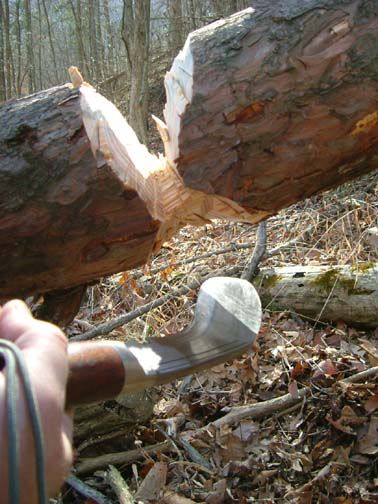
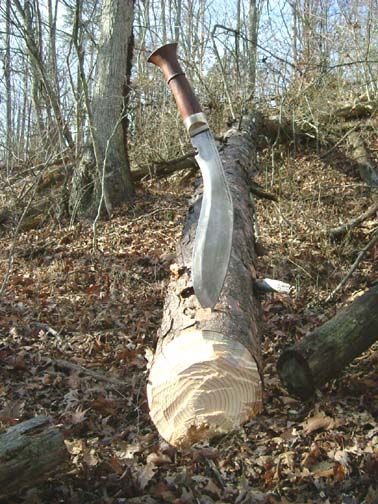
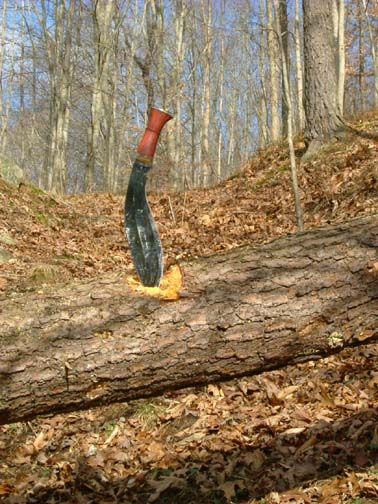
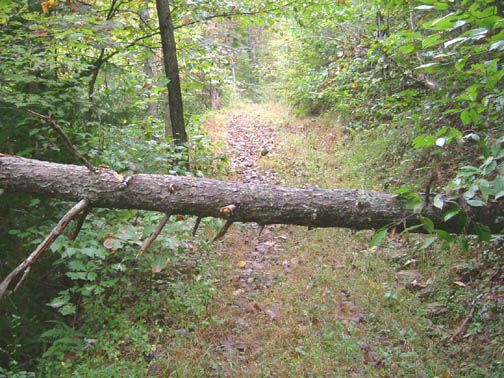
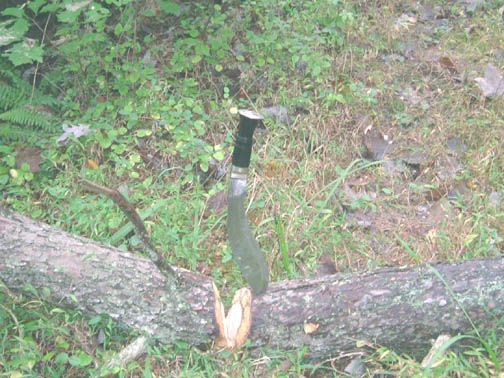
Now I could have done this with an axe, but for demonstration purposes I did it with a knife. It took about 5 min and a portable axe might have taken 2 min (maybe 1 min if you are better than I am) to do.


Then again, how many times am I actually going to chop and for what purpose will I chop in a given trip?
In truth, if I want to make firewood from a standing tree, lets say of the above size, the only chopping I do is to fell the tree. After it has fallen I will use a saw to cut it into sections and then split the sections. One could chop up the tree into sections, but that is a PITA. Then you have these sharpened pencil type ends on both ends of the pieces and about the only way you can split it is by baton, or performing some magic kung fu balancing act of the piece followed by the axe swing
I may also chop in order to limb the tree that was chopped down, or to gather spruce bows ect for bedding. In this case 1" limbs make up the majority.
So maybe you guys take down bigger trees then this routinely, I don't know what y'all do and inquiring minds want to know.
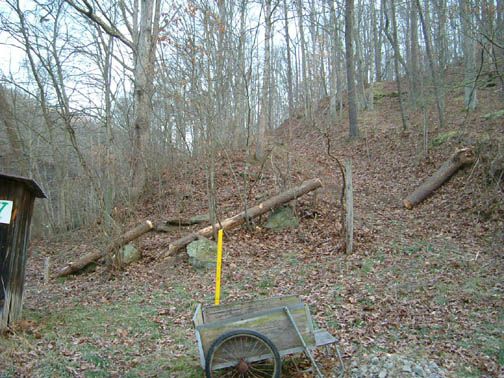
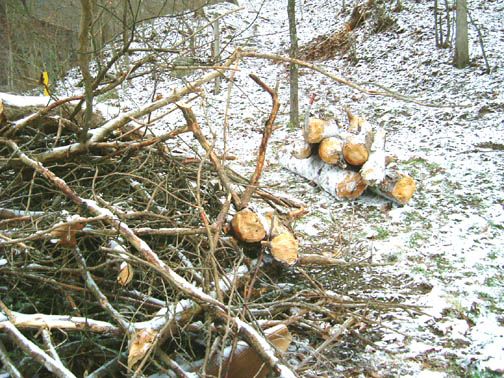
The picture above represents about the size of tree (dead standing) I will usually tackle for a night in front of a small campfire, this and supplementing with smaller foraged pieces. Lots of other folks indicate that they simply gather sticks and such to meet their needs.
So the crux of the matter is, if the initial fell and limbing is really the only chopping I'm going to do for the night, do I necessarily need a 'tool built for the chop'?
). We've had so many threads in the past year about what is the best chopper (axes, big knives, machetes etc) and the latest big debate was on the merits (or lack thereof) of batoning.The question for this thread is why and how much chopping do you actually do when you are outdoors?
I got to thinking about this in today's thread about 7" knives (the mid-size category) and uniformly people answer - its not an efficient chopper. This is true, but it is also true that it gets the job done, just less efficiently.
Now I could have done this with an axe, but for demonstration purposes I did it with a knife. It took about 5 min and a portable axe might have taken 2 min (maybe 1 min if you are better than I am) to do.
Then again, how many times am I actually going to chop and for what purpose will I chop in a given trip?
In truth, if I want to make firewood from a standing tree, lets say of the above size, the only chopping I do is to fell the tree. After it has fallen I will use a saw to cut it into sections and then split the sections. One could chop up the tree into sections, but that is a PITA. Then you have these sharpened pencil type ends on both ends of the pieces and about the only way you can split it is by baton, or performing some magic kung fu balancing act of the piece followed by the axe swing
I may also chop in order to limb the tree that was chopped down, or to gather spruce bows ect for bedding. In this case 1" limbs make up the majority.
So maybe you guys take down bigger trees then this routinely, I don't know what y'all do and inquiring minds want to know.
The picture above represents about the size of tree (dead standing) I will usually tackle for a night in front of a small campfire, this and supplementing with smaller foraged pieces. Lots of other folks indicate that they simply gather sticks and such to meet their needs.
So the crux of the matter is, if the initial fell and limbing is really the only chopping I'm going to do for the night, do I necessarily need a 'tool built for the chop'?