WIP: Arkansas locking Hunter

Is there a reason for the liners being so thick!!?

Another good question!

I mill my bolsters and liners out of one piece of bar stock or flat stock depending on the knife. The reasons I do this as I believe it yields a better knife and I can guarantee that a "seam will never been seen" between bolster and liner. The other reason is that I can very easy alter or custom tailor the liner thickness while retaining the same overall thickness of liner and bolster. If you look at a lot of old knives that used .032 cutlers brass often times you will see warping (from abuse mostly) of the liners. I will often times mill the recess leaving .038 on a knife of this size. While .005 does not sound like a lot, in terms of strength it is. Of course there is a downside , and that is material waste in the form of milling chips. Some would say that more time is spent milling a bolster/frame versus soldering bolsters on to a flat liner. This also brings up something I wanted to make sure was clear.

There are many ways of building a traditional folding knife. My way works for me but may not work for the next maker. Like has been said, "many ways of skinning a cat! "
 
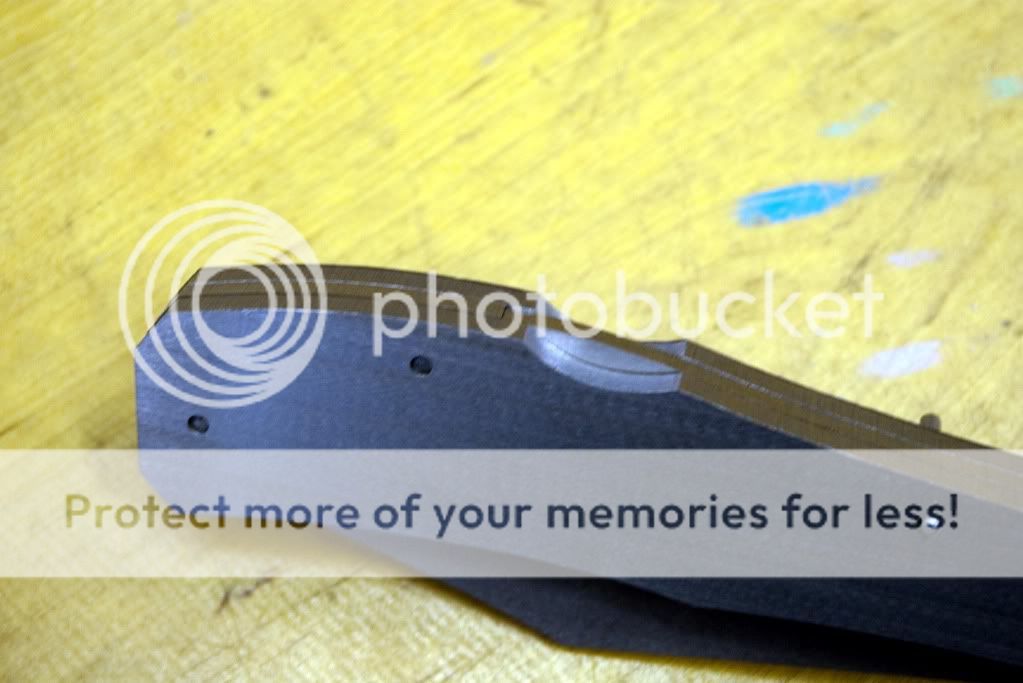
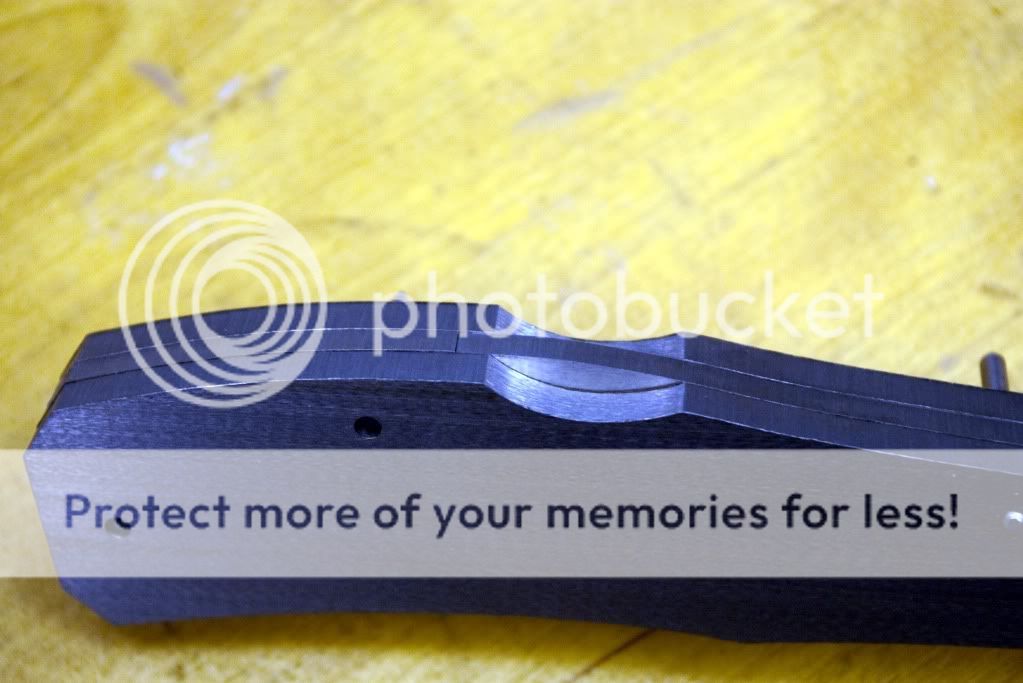
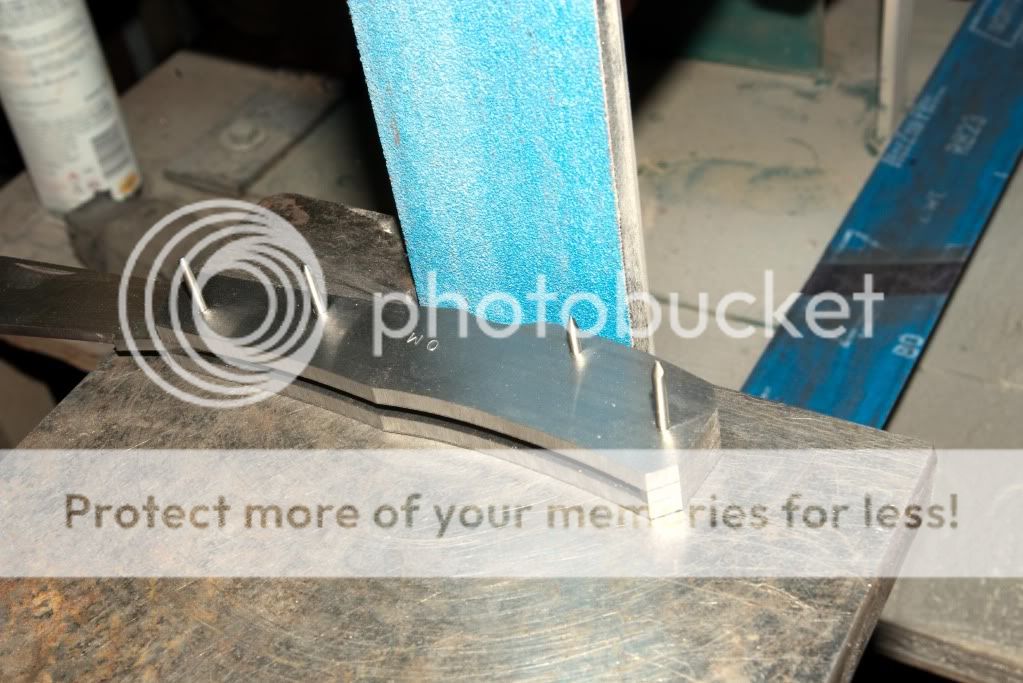
I have fit the locking bar locking tab into the notch in the top side of the tang. This assures that the blade has the right attitude when open. In other words, the tip of the blade not too low, nor to high in the open position. The next step was to make sure that when the blade was closed, (1) the tip was sunk into the frame, (2) the lock bar sits at the same level as when open.

IMGP6416_edited-1.jpg

IMGP6417_edited-1.jpg

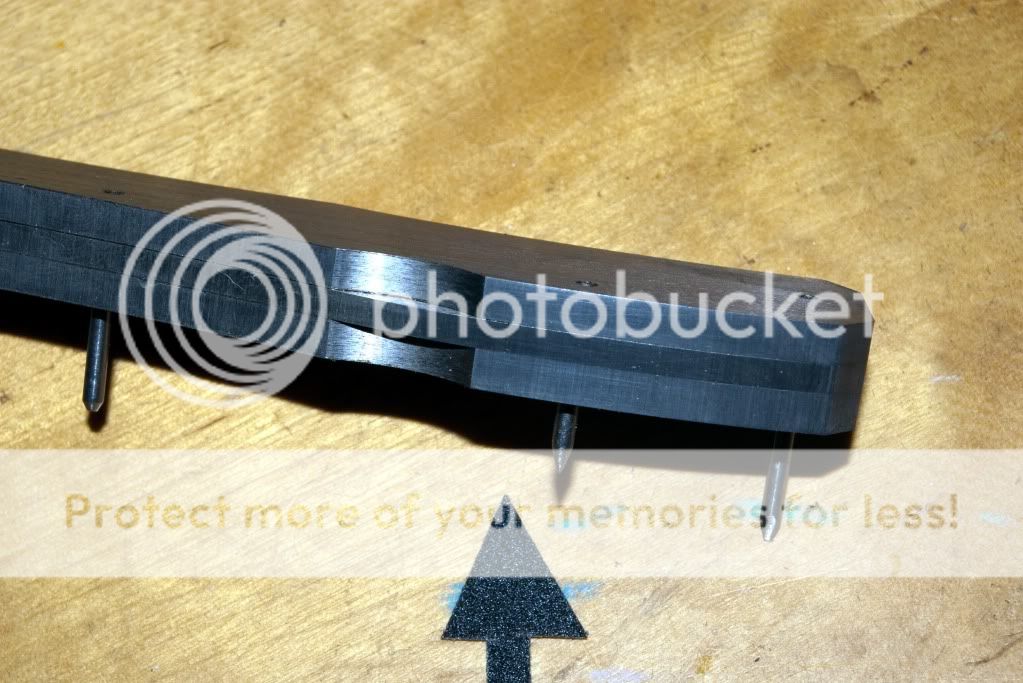
These two pictures show how the rear most part of the lockbar sits lower in the frame when the blade is closed. This means that the lock bar must be lowered in front to raise the rear up. The first photo is with blade closed, the second with blade open.


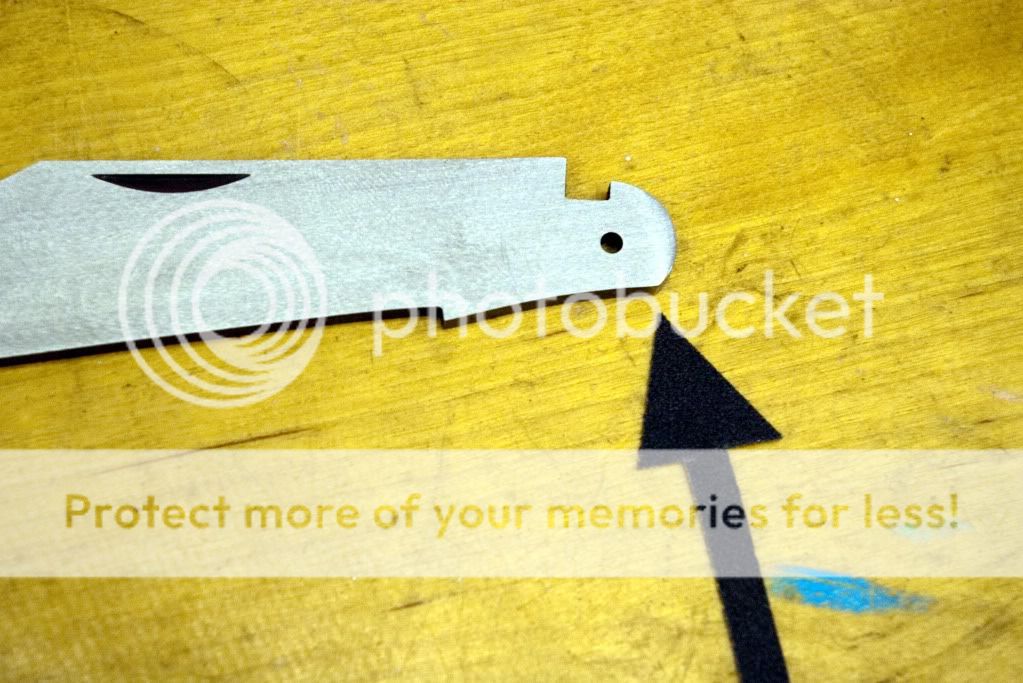
IMGP6418_edited-1.jpg

The arrow shows the point that I will remove a bit of material to let the lock bar sit lower in front and higher in the rear. A by product of removing material at the point alone is that the tip of the blade will raise slightly. Not a concern as I have the tip buried plenty low enough in the frame.


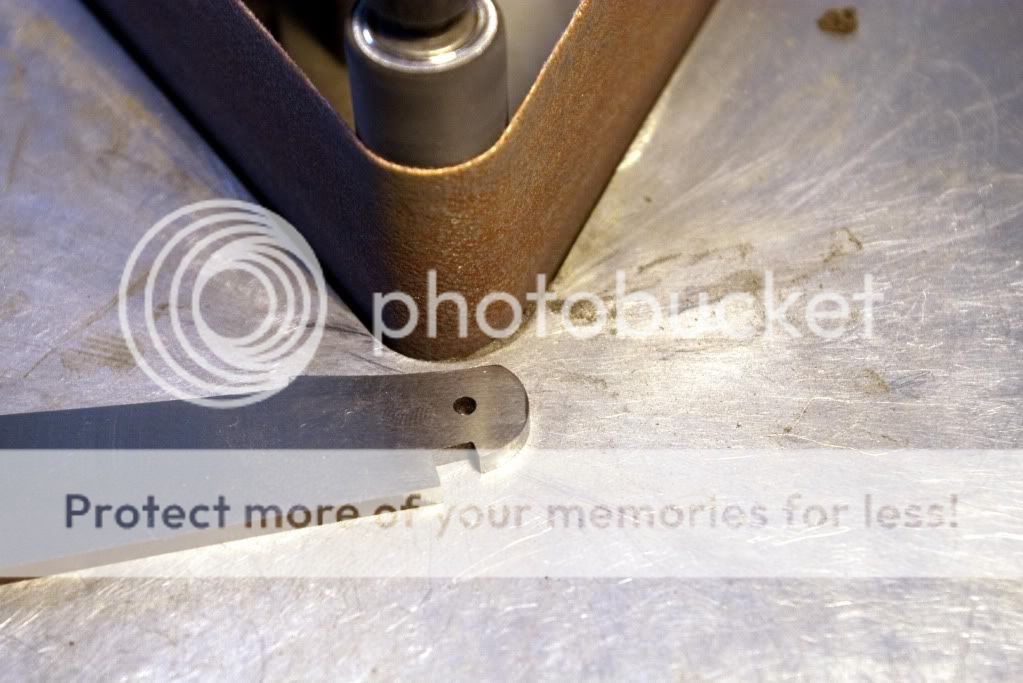
IMGP6421_edited-1.jpg

This is my home-built horizontal grinder that I use to remove metal in a radius while keeping things square


IMGP6425_edited-1.jpg

I am now removing material both from the frame,lock bar and the lock bar spring/filler keeping things square


IMGP6428_edited-1.jpg

I now have the lock bar, lock bar spring/filler flush with the frame, with the blade open and closed
 
Wow...this is an amazing thread, thank you for taking the time to show this amazing process step by step ( its still over my head a wee bit :o ).
The original post-that knife is lovely!!
 
Ken, Thank You very much!! This is great!! I feel like it's the top of the 9th with two outs and 1 man one and We are all tied up!!! I can't to see the HIT !!!!
Thanks again,
Jason
 
Great show, Ken!! Simply riveting!!!;)

I am fortunate that Ken chose to do this knife for me, and ever grateful to see the process. The story behind the knife will equal the knife!!
 
Going back a little bit in the process, why heat treat before having everything fitted up and ground to the correct profiles. I would think this would make it harder to grind the blade than if it were not heat treated. Granted, I know nothing about heat treating and I'm learning about the knife making process so please forgive me if it sounds as if I'm questioning your methods. Just looking for a little "this is why I do it". Loving the thread!

Chuck
 
I do not heat treat my 416 frames, what you are seeing is layout dye.


Ken

I thought that but wasn't sure. Dykem blue.

Another question was raised on the thickness of the liners. Nothing wrong about making chips and having integral bolsters. It's going to be one solid knife.

Steve
 
Going back a little bit in the process, why heat treat before having everything fitted up and ground to the correct profiles. I would think this would make it harder to grind the blade than if it were not heat treated. Granted, I know nothing about heat treating and I'm learning about the knife making process so please forgive me if it sounds as if I'm questioning your methods. Just looking for a little "this is why I do it". Loving the thread!

Chuck


Chuck,

Great question!

The reasons that I heat treat the blade, locking bar and spring are as follows.

I can not fit the locking notch properly unless the surfaces are hardened. Otherwise they could gall, or actually deform. The lock bar has to fall into the notch on the blade tang with the same pressure as the spring will exert, so, I have to have the spring treated.

As for the surface grinding I have found I experience no warping of parts after heat treating, as compared to grinding them in an annealed state.

Certain blades will get their bevels ground before heat treat. I decided to grind this one after. I may use an extra belt but otherwise no real difference in time.

Hope this helps!:D

Ken
 
Ken: This WIP is great. Two questions please. Are spring and blade exact same thickness? No allowance for clearance on blade? At times I have a bit of a problem when peining all together and liners do not completely close up on spring and a small gap is evident. I guess that the spring needs a bit of clearance also to move up and down. What are your thoughts on this? Thanks. ALso..I see you prefer a stone on your surface grinder rather than a conversion to a belt? Think the stone is more accurate?

John
 
Are spring and blade exact same thickness? No allowance for clearance on blade? At times I have a bit of a problem when peining all together and liners do not completely close up on spring and a small gap is evident. I guess that the spring needs a bit of clearance also to move up and down. What are your thoughts on this? Thanks. ALso..I see you prefer a stone on your surface grinder rather than a conversion to a belt? Think the stone is more accurate?

John

John,

Thanks for the questions!;)

1. The blade, lock bar, and lock bar spring are ground all the same thickness. I know that in some printed material , authored by skilled slipjoint makers they advocate the spring to be .0005 thinner than the blade tang. Again, every maker does what works best for him/her. My thoughts are that if the frame is peened to allow the blade to pivot, it will allow the spring to rise and fall.

2. I have not had the pleasure to run a surface grinder converted to a belt so I can not really speak as to which is more accurate.

Ken
 
I am back in the shop working on the "Arkansas Hunter" and thought I would post my progress. I had some trouble loading pictures to my normal hosting site, so hang in if I have troubles with these pictures.

imgp6432edited1.jpg

I am ready to scribe a line down the center thickness of the blade and on the sides were I want the saber grind to stop

imgp6434edited1.jpg

You can see the line on the side that I will continue the flat grind up to. I will walk my initial grind up both sides till they are even from side to side

imgp6436edited1.jpg

I have ground up as far as I want on this side, with clean plunge cut

imgp6438edited1.jpg

I have both sides ground to 220 grit with swedges drawn

imgp6444edited1.jpg

Here I am refining the frame profile. I find it amazing that even .050 can make a huge difference in the overall shape, feel and look of a slipjoint

imgp6445edited1.jpg

Starting to look like a knife! At this point I am real happy with my plunge cuts, grind lines.

The next step will be to start turning the two large slabs of 416SS into something that looks like it has bolsters and belongs on a folding knife!:eek:
 
Last edited:
This is great, thanks again:thumbup:

This is gonna be one "beauty and the beast" knife!
 
Every step is a startling transformation! This is MUCH better than television!!
That knife has some complicated lines on it. One has to appreciate your eye for the forms you are creating Ken! Amazing!
 
What a great thread. :thumbup:
I learned so much about the inner workings of a lockback.
Thanks Ken!
 
When you are performing your grinds on the blade, does the grind follow the radius at the end of the blade, or is it more or less a straight grind down the length and it just tapers itself out to the edge? In the first picture when you showed the start of the flat grind it looks to follow the edge but in the last it looks as if it were made straight down the length of the blade. Hopefully this question makes sense. Thanks

Chuck
 
Mr. Erickson, thank you for taking the time to show us your progress on this knife, and answer all the questions. I'm pretty new to collecting knives, although I've been using traditionals since I was little boy. I've not ever owned a custom knife. But, I would be proud to be able to own one some day. I really do enjoy reading this thread and seeing the pictures of how you put together a knife.

Thanks again,

Marty Ley
 
Back
Top