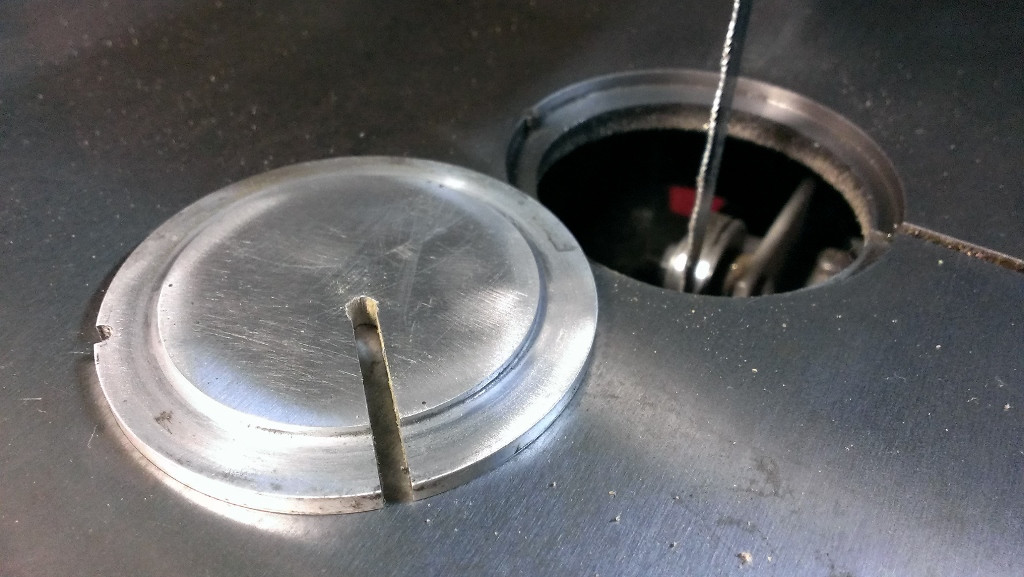
Wood Bandsaw: Should I use it for metal?

Joined
Aug 13, 2002
Messages
5,703
I finally found a used surface grinder not far from me for a good price. A little work to be done (with your help of course, I'll make a WIP of it) but while I was there I picked up a few more things for a good price, one of which was a older 14” Beaver (Model 3300) wood bandsaw.

beaver_bandsaw1.JPG


As you can see it has a DC motor with gearbox.

beaver_bandsaw2.JPG


And a Leeson controller

beaver_bandsaw3.JPG


And finally the tires are worn and cracked which is perfectly understandable and easy (I hope:o) to replace.

beaver_bandsaw4.JPG


This was in the home shop of machinist. With all this work to reduce the speed I guess it was used to cut metal, although not sure it did recently since there is a 10TPI blade on it and the old dust residue I removed was wood. The gentleman had a newer metal cutting bandsaw (not for sale :() so he might have started with this one and stopped using it for metal once he got the new one.

My question is, should I try and set it up to cut metal? My portaband is fine and all but it'd be nice not to be limited by the shallow throat. But on the other hand it might be a lot of work and of course will never work as good as a real metal cutting bandsaw. So maybe I should just use it as I first intended for wood/handle material?

What do you guys think?
 
I'm no expert but I thought the main problem with wood bandsaws is that they are too fast for metal. If there is the proper gearing/speed reduction to get into metal-working rpm ranges it should probably work fine. I'm getting by with a cheapo HF Vert/Horiz model set up vertically. It is very slow but is getting the job done. Let us know how yours works out.
 
How are the guides?

A metal bandsaw also has bearing guides, each side and spine on the top and bottom


I'd be more inclined to use that motor controller and gearbox to build a rollling mill

and use that bandsaw with a fixed motor
 
Hi Pat. With a variable speed drive it will do a great job on metal with the right type of blade as you already knew. Many places will order blades made up or even make them in any length you want. I do believe this was once one of those "wish" machines that you always would like to have but could never afford to buy. It has to a very special band saw. Frank
 
My question is said:
What do you guys think?

It depends a lot on how much you plan to use it. If your main goal is just use the saw with metal cutting, the idea of converting to metal saw is totally fine.
The first thing you have work with is speed reduction. This can be achieved by belt pulleys and jackshaft arrangement. Get new blade and guides. There are only few things to change/modify in the saw. I never tried converting wood to metal yet but I've tried running my 601 Haltbar blade on a converted saw. With just right set up and tension , the cuts were great.
 
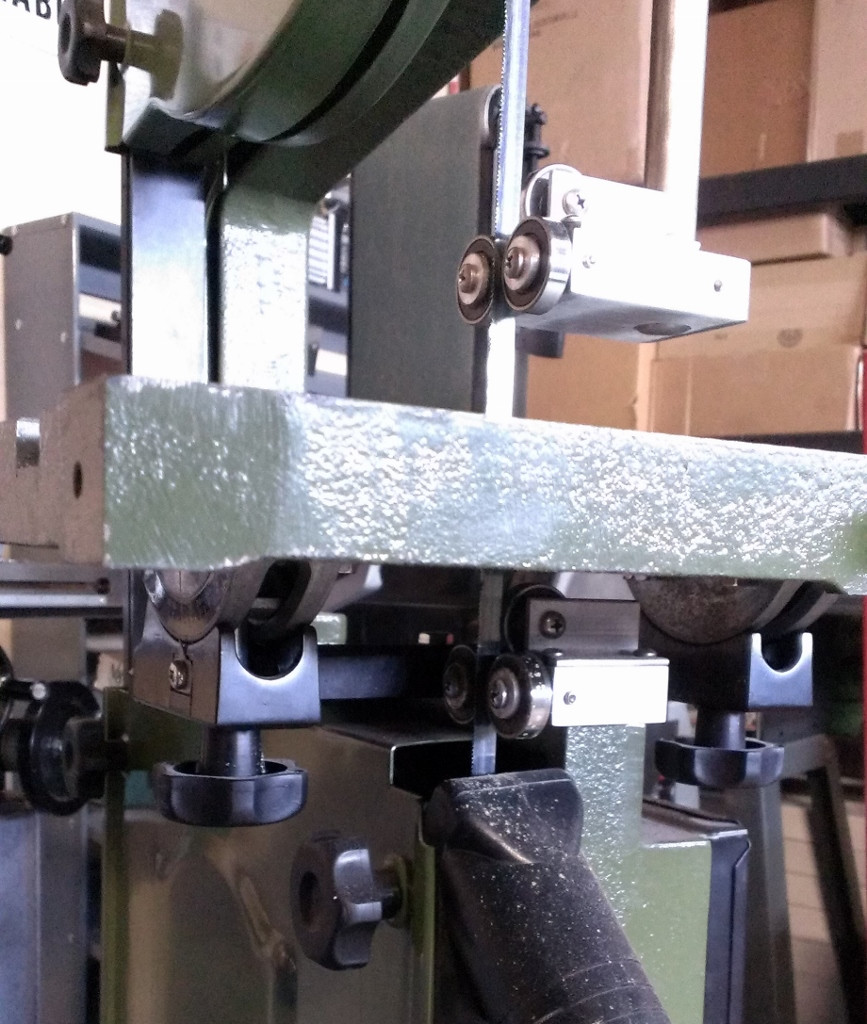
Sam, here are pictures of the upper and lower guides. Solid on the sides and bearings in the front on both upper and lower guides. Don't know if solid is better than bearings or the other way around but in any case it looks to me to be solid enough to handle steel.

beaver_bandsaw5.JPG


beaver_bandsaw6.JPG


You are right Frank, I guess it could not hurt to order a few blades and give it a try. And yes, a high dollar item that was on my “To buy in a distant future” list. But for 200$ it moved to the “To buy right now” list in a hurry. ;) The controller alone is worth about that new. Pus it just looks so darn good. I'll probably take it apart, clean it and repaint it eventually. I do love good looking machinery which they don't seem to make anymore. :(

Thanks for your help guys.
 
Pat, it's a great machine and when you get at it, you will make it look like one !!!! I ran a high speed metal cutting band saw with micarta guides on each side of the blade at about 4500 feet per min. and it operated real well. At that speed you can cut hardened metal at 60 RC or more. Better for you to figure at doing about 200' - 300' per minute which is what I run my slower metal cutting band saw at. Frank
 
I have an old Powermatic and thoes guides look a lot like the ones it came with. They worked fine. I did upgrade them with a set from Carter in an attempt to increase blade life.
 
Pat,
I can't see anything but good things on that beast. It should last a lifetime. Get a Lenox Die-Master, or similar Bi-metal blade, and and you will be able to cut steel like crazy.
 
Thanks for the confirmation guys. Now I just have to find some of those blades in 100" length Stacy, which is what is written with a permanent makers on one of the wheels.
 
Try to check Haltbar band saw blades. I ordered several blades with them already and had a discount for buying two blades in my last order.
 
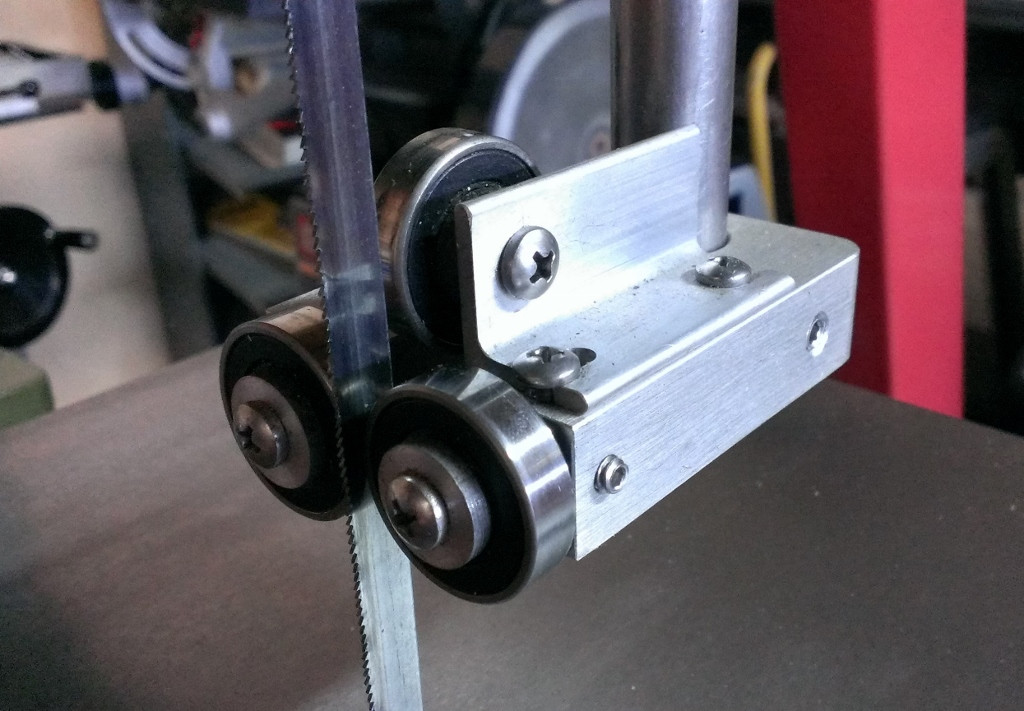
I refitted my 14" harbor freight bandsaw with home made ball bearing guides for metal-cutting. It's passable on the slowest speed (still on the high side for ferrous metals), so I need to source a gear motor for it as shown in the OP, or at least change a pulley. It works well as long as you keep the limited ability in mind. The guides are fairly easy, you just need access to a rotary table on a mill or a four-jaw chuck on a lathe to make the offset pivots for the side bearings.

hq6VJEc.jpg


uP1AVzQ.jpg
 
Thanks Quint and machine1960, both places look interesting. Probably gonna order a couple of blade from one or the other to give it a try. The upper wheel bearings adjustment looks like it could accommodate a longer or shorter blade than the 100” written on the wheel.

beaver_bandsaw7.JPG


I wonder if I have to use 100” or if I can try and get something closer to a stock size? Be it longer or smaller?

Thanks for the pics vintage, something I might do in the future.

Sam, I get 0 to "I don't know what yet". I'll try my new tachometer tomorrow and see what I get as far as the fast end.
 
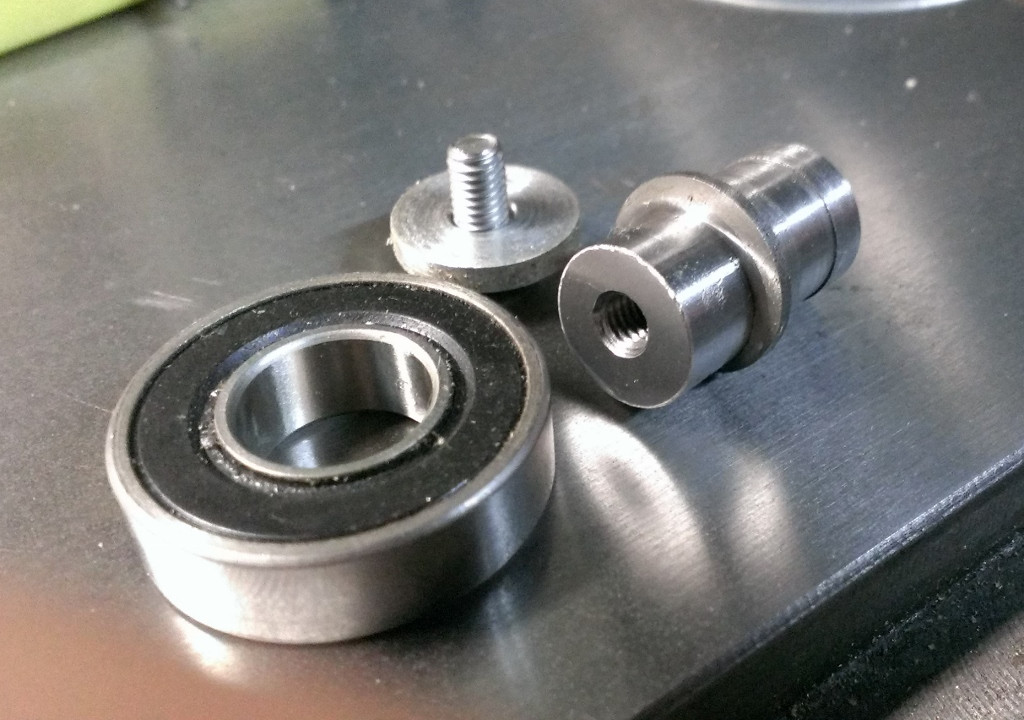
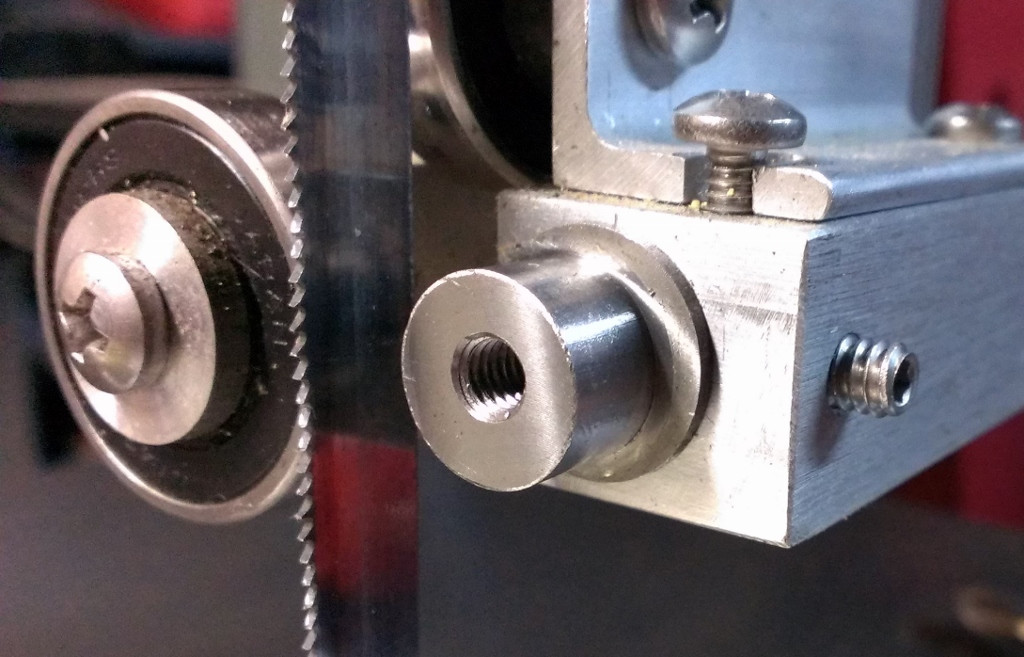
I had some spare time waiting on UPS today, so I took apart the bearing/pin assembly and took a couple pics for you, in case you're feeling adventurous.


I'm pretty sure the pin is 304SS. The shallow groove in the rear of the pin makes sure that the pin doesn't get stuck if the metal gets marred by the set screw, and it also retains the bearing/pin assembly when the set screw is loosened for adjustment.
1MOCOSb.jpg


The lip on the pin spaces the bearing from the guide body and locates the pin within the socket.
kDzaXQd.jpg


This is another modification I had to make but forgot to mention... the stock blade insert was a (very poorly) molded piece of plastic, it was absolutely abysmal. I machined this out of some aluminum plate scrap. A solid blade insert will increase blade life, reduce chances of breakage due to pinch, and generally make life much easier.
JedhB7U.jpg
 
Thanks for the additional pic, I really appreciate. I will do the bearing conversion. And the insert on mine is missing so I will make a similar one. Of course it will surely not look as good as your does.
 
Finally got the bandsaw cleaned, realigned the motor a bit, made a table insert and put on a brand new Lenox blade. Results?....O...M...G!!! It cuts just like butter! I thought my Dewalt portaband worked well but this is completely different. Of course I only tried some 0.125 mild steel first and then some 316 stainless a little thinner but I don't see why this won't work as well on blade steels.

A couple of question for you guys:

1) I bought some tires to replace the old ones that are a little cracked but it is now tracking almost perfectly and works so well that I am thinking this is a case of “If it ain't broke....”. What do you think?


2) As far as speed is concerned, I set it to roughly 100SFPM. I read that depending on the type of steel, I can need as low as 40SFPM and as high as 200SFPM. Since I have variable speed, I can easily change the speed but my question is: Do I need to? Does it make a big difference or do most people set it at a general speed and leave it there?

Thanks for looking
 
If it ain't broke...

I would run the saw until it either won't track well any more or a tire breaks, in which case you've already got the replacements on hand.

As for speed, yes sometimes it matters. It will depend on the material, the blade, etc. But another consideration if the motor has a fan, make sure to run the motor fast enough to cool itself, or reduce the duty cycle on the machine so the motor can cool off. We have a big lathe in the shop with a variable speed fan cooled motor, and if you leave it running at low speed for an hour or two, the motor can overheat
 
Back
Top