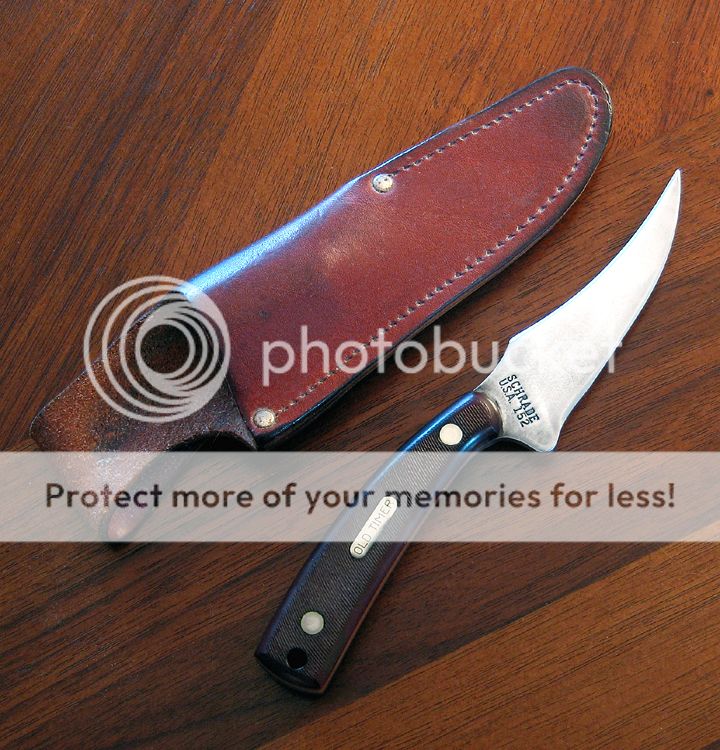
Your first fixed blade do you still have it? Pictures please!

Thanks to all for sharing the great stories and pics.

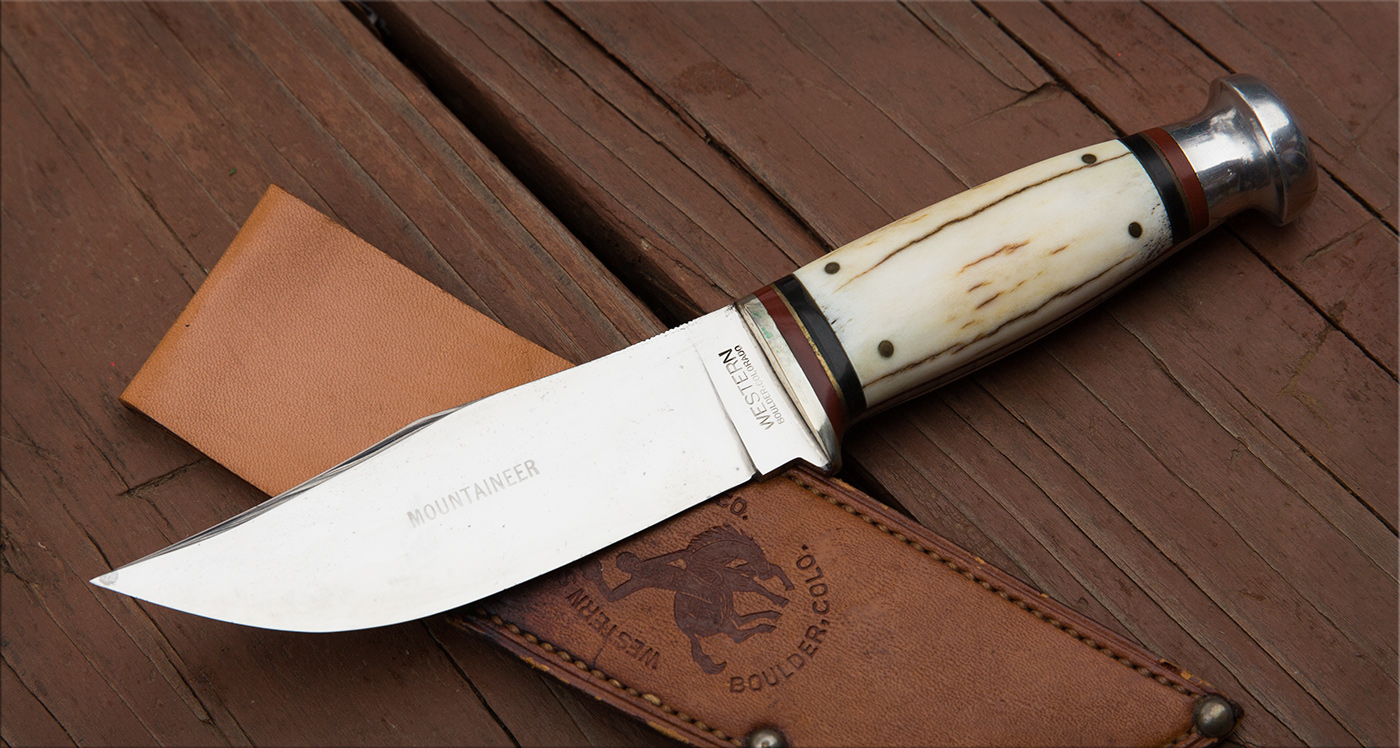
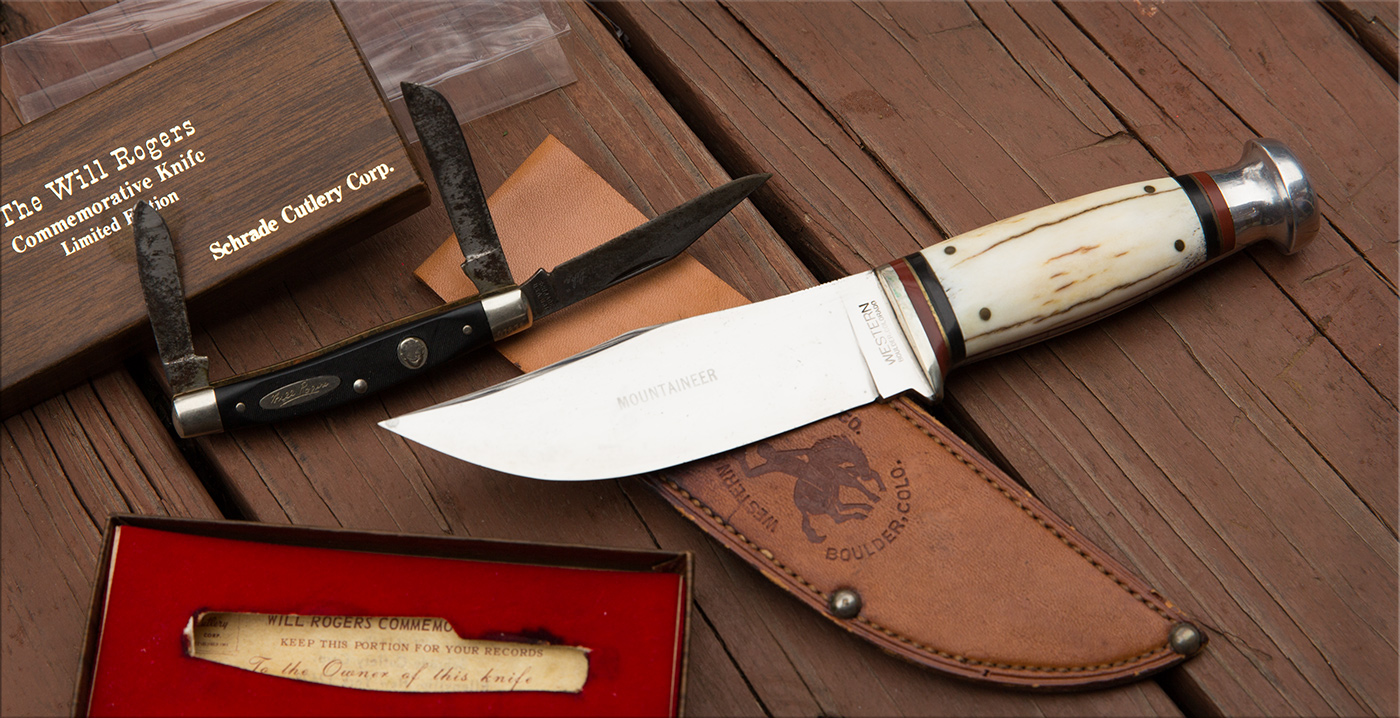
Grandfather C. worked part time in a sporting goods store during retirement in the late 1960s, that's where this one came from. Remember him oiling and fondling it with the utmost pride, he would even store it wrapped in tin foil! He preferred the solitude of fishing over hunting, so most knife chores were handled by smaller folders, like the Will Rogers Schrade. The Western might have skinned some squirrels, but that's about it. He was the first of my grandparents to pass, I was very close to him.

grandpaknives.jpg


grandpaknives1.jpg
 
My first fixed blade?

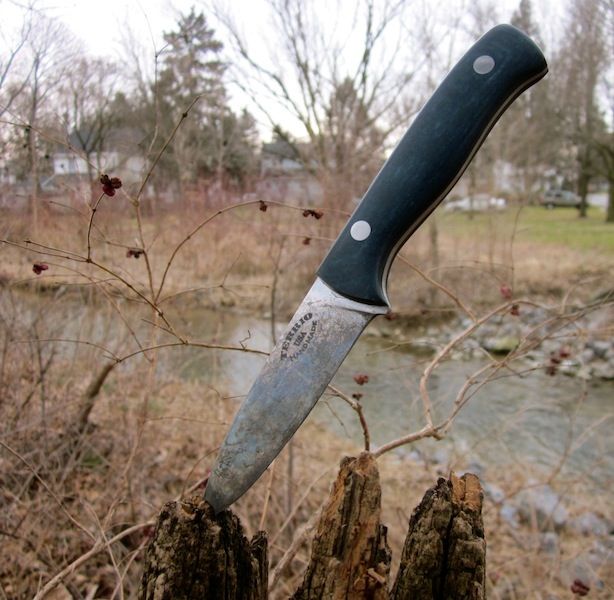
A 2013 Strix custom-made for me by THK (Terrio Handmade Knives):

IMG_7458_zpsff391fb3.jpg~original


IMG_6721_zpsbecc97b5.jpg~original


(I started a little later than y'all.
Cool.gif~original
)

~ P.
 
Thanks to all for sharing the great stories and pics.

Grandfather C. worked part time in a sporting goods store during retirement in the late 1960s, that's where this one came from. Remember him oiling and fondling it with the utmost pride, he would even store it wrapped in tin foil! He preferred the solitude of fishing over hunting, so most knife chores were handled by smaller folders, like the Will Rogers Schrade. The Western might have skinned some squirrels, but that's about it. He was the first of my grandparents to pass, I was very close to him.

grandpaknives.jpg


grandpaknives1.jpg

Chief, thanks for sharing that beauty! I am sure that you know, but others may not know your knife was made in the 1930s. Wow; I like it a lot!
 
Chief, thanks for sharing that beauty! I am sure that you know, but others may not know your knife was made in the 1930s. Wow; I like it a lot!

Honestly I didn't know when it was made, thanks for the info. In pretty good shape to be so old, marked pat pending on the backside. I just remember my grandfather treasuring it for as long as I can remember, and I'm getting on :)
 
Beautiful knife John, and an equally nice story :thumbup:
 
My very first fixed-blade (strictly speaking the first 3) was a Gurkha Kukri given to me by my favourite uncle. He had been in the navy for years, and had brought it back from his travels. Being as I hadn't even started school yet, my parents thought I should keep it at my grandparents house, where my uncle lived. I did get to carry it a few times though. Sadly, my uncle died very young, and another relative stole my knife - nice eh? :(

When I was about 10, my mother gave me a paring knife out of the kitchen drawer. My dad took it into work and sharpened it up for me, and my mother made me a sheath. It was my knife for years, until sadly that knife too was stolen. The only other sheath knives I had as a kid were Sheffield 'town patterns' like this one (or larger) by Arthur Wright, which PMEW very kindly gifted me.


When I was 16 I bought a Solingen-made FB, carried it for a while before giving it to a good friend.
 

Honestly I didn't know when it was made, thanks for the info. In pretty good shape to be so old, marked pat pending on the backside. I just remember my grandfather treasuring it for as long as I can remember, and I'm getting on :)

Absolutely gorgeous. I have 2 similar knives, but didn't know they were called "MOUNTAINEER"s. On mine, the etches are gone.

The pattern is 43. The first number/letter of the model number indicates the handle material.
L for leather
X for bakelite in "various colors" (seen in black, brown and colored swirl patterns)
2 for "unbreakable composition pearl" (aka celluloid)
5 for "genuine buckhorn"
6 for "bone stag"
7 for "horn colored composition".

With bone handles, that makes yours a model 643 and and the stamp you report means it was made between late 1932 to late 1933/early 1934.

Western applied for the dual tang patent in 1931. Knives made in late 1931 and early 1932 were marked "Patent Applied For" (sometimes with Patent and/or Applied abbreviated.) Knives in late 1932 and 1933 were stamp "Patent Pending" or "Pat Pending". After the patent was granted, from 1934 to 1953, the word "Patented" or "PAT'D' or some version of the word Patented w/ the patent number 1,967,468 was stamped on all knives constructed with the dual tang. Late 40s to 52/53ish, the stamp could be "PAT'D Made in USA".
 
I received this Western F66 Black Beauty as a Christmas gift from my parents in 1966; still have it and use it occasionally to skin and butcher a deer (the original sheath is long gone). This Imperial M-4 was my Dad's; he brought it back from Japan after serving there in the US Army in the mid-1950's; he gave it to me in 1990 when I was waiting to deploy to Desert Storm (never got there). The Imperial was very dull and painted black; I spent a several of hours on the stones getting the dings of the previous 45 years out of it and removing the paint. It is currently in my footlocker with other treasured things. OH

Western_1966.JPG

Is the F66 model number stamped onto the pile side ricasso or into the guard? I have collected Western knives (among other things) for years. I'm always trying to pin down stamp changes and every data point helps.
 
My first fixed knife made on AOEM plant in press shop by some guy who is trying make knives from everything he has around. Handmade, but well balanced and has good sharp resistance. Blade is polished in mirror.
 
When I was about 10, my mother gave me a paring knife out of the kitchen drawer. My dad took it into work and sharpened it up for me, and my mother made me a sheath. It was my knife for years, until sadly that knife too was stolen. The only other sheath knives I had as a kid were Sheffield 'town patterns' like this one (or larger) by Arthur Wright, which PMEW very kindly gifted me.


Whence "town pattern"? Made by every factory in town? Required wear for the man about town?
I still have a paring knife I found in Mom's garden and kept as a hunting/fighting knife. Probably older than the BSA knife, or I wouldn't have been so keen on it.
 
Absolutely gorgeous. I have 2 similar knives, but didn't know they were called "MOUNTAINEER"s. On mine, the etches are gone.

The pattern is 43. The first number/letter of the model number indicates the handle material.
L for leather
X for bakelite in "various colors" (seen in black, brown and colored swirl patterns)
2 for "unbreakable composition pearl" (aka celluloid)
5 for "genuine buckhorn"
6 for "bone stag"
7 for "horn colored composition".

With bone handles, that makes yours a model 643 and and the stamp you report means it was made between late 1932 to late 1933/early 1934.

Western applied for the dual tang patent in 1931. Knives made in late 1931 and early 1932 were marked "Patent Applied For" (sometimes with Patent and/or Applied abbreviated.) Knives in late 1932 and 1933 were stamp "Patent Pending" or "Pat Pending". After the patent was granted, from 1934 to 1953, the word "Patented" or "PAT'D' or some version of the word Patented w/ the patent number 1,967,468 was stamped on all knives constructed with the dual tang. Late 40s to 52/53ish, the stamp could be "PAT'D Made in USA".

Wow, thanks again for all the great info. Went looking through my pics and didn't have one of the backside so had to open the safe. Back side stamp first line "PAT." second line "APPL'D FOR". Will write a note and store it with the knife for my son.
 
Whence "town pattern"? Made by every factory in town? Required wear for the man about town?
I still have a paring knife I found in Mom's garden and kept as a hunting/fighting knife. Probably older than the BSA knife, or I wouldn't have been so keen on it.

It's a very old Sheffield term, still in use. Town patterns are basically the very common patterns that many Sheffield cutlers make and have tools/blades for. Because of the 'Little Mester' system, most cutlers did work for more than one big cutlery firm, and often the only difference is the tang-stamp (sometimes not even that, because there isn't one) :thumbup:

I think I learned a lot from that old paring knife, it certainly cut better than a lot of the chisel-ground military-style knives that were kicking around a decade or two later. I often wonder about all the great-looking FBs that get posted here and ask myself when FBs got so sensible again ;) :)
 
Never owned a fixed blade knife until I was all grown up. Not sure what a traditional fixed blade is really. My first fixed blade was a custom drop point in 440C that I traded a rifle for at a gunshow. Other fixed blades followed in rapid succession including an EK, and a couple Randalls.
 
Bought this Enco Bowie back in the late 70's when I went to the Rocking Horse Ranch in Sullivan County NY. Still have the sheath for it too.


Back
Top