
-
The BladeForums.com 2024 Traditional Knife is available! Price is $250 ea (shipped within CONUS).
Order here: https://www.bladeforums.com/help/2024-traditional/
You are using an out of date browser. It may not display this or other websites correctly.
You should upgrade or use an alternative browser.
You should upgrade or use an alternative browser.
5" Fixed blade for daily carry and backpacking
- Thread starter blira
- Start date
Thanks for all the replies.
There were a couple of things asked by multiple people, so I will address them generally.
In regards to the length, I was looking for the full 5 inches because of its usefulness when backpacking / camping for tasks such as fire building--it won't hurt for self defense either. But I was not looking for anything bigger because of the state law restriction. I do agree that in the woods no one is going to hassle you about bringing a 6"-7" blade, but I also want to use it for EDC (I guess I'm already picking up the jargon around here ). As someone pointed out, a folder in your pocket won't get you hassled at all while a sheathed fixed blade on your hip may draw attention, but at the end of the day the fixed blade is perfectly legal while in many cases the folder would not be--there are a lot of confusing and ambiguous restrictions on folders in Texas. Any misunderstanding with a police officer cannot be ignored and should be easy to resolve, but I won't be impeded by random citizens in carrying a blade.
In regards to sheaths, I love the sheath on the RAT RC4--it's one of the best I've seen. A couple of others I like are the Ka-Bar 1258 kydex sheath, and the Cold Steel SRK sheath. I would love to find something like one of those three for the Fallkniven S1, anyone know a place?
As someone asked, when I said the Fallkniven sheaths seem next to worthless, that was probably a bad choice of words--they will afterall, do their job of holding your knife. Better said, they are pretty bland, and don't really offer a mounting choice besides on your belt.
kgd, thank you for the suggestion of custom knives, but I think I'm partial to high-end productions models such as the Fallkniven S1. I think there is something to be said for quality control when someone comes into work and everyday makes the same knife, I'm sure it would be easy to notice some sort of flaw or varience with this consistency--as opposed to someone making a custom ordered knife for the first time.
At this point, I am pretty much torn between the RAT RC4 and Fallkniven S1. Overall, I like the blade on the S1 better, but with the RC4 I won't have to go chasing down a sheath. Maintainence scares me with the S1, and rust scares me with the RC4 (I like to hit to beach or lake when I can). From what I can gather, convex sharpened blades are superior in pretty much every way, but I have never sharpened a knife and it would really scare me taking a stone freehand to $100+ knife for the first time. Are there any good systems for sharpening convex blades?
Thanks,
-Brandon
There were a couple of things asked by multiple people, so I will address them generally.
In regards to the length, I was looking for the full 5 inches because of its usefulness when backpacking / camping for tasks such as fire building--it won't hurt for self defense either. But I was not looking for anything bigger because of the state law restriction. I do agree that in the woods no one is going to hassle you about bringing a 6"-7" blade, but I also want to use it for EDC (I guess I'm already picking up the jargon around here
). As someone pointed out, a folder in your pocket won't get you hassled at all while a sheathed fixed blade on your hip may draw attention, but at the end of the day the fixed blade is perfectly legal while in many cases the folder would not be--there are a lot of confusing and ambiguous restrictions on folders in Texas. Any misunderstanding with a police officer cannot be ignored and should be easy to resolve, but I won't be impeded by random citizens in carrying a blade.In regards to sheaths, I love the sheath on the RAT RC4--it's one of the best I've seen. A couple of others I like are the Ka-Bar 1258 kydex sheath, and the Cold Steel SRK sheath. I would love to find something like one of those three for the Fallkniven S1, anyone know a place?
As someone asked, when I said the Fallkniven sheaths seem next to worthless, that was probably a bad choice of words--they will afterall, do their job of holding your knife. Better said, they are pretty bland, and don't really offer a mounting choice besides on your belt.
kgd, thank you for the suggestion of custom knives, but I think I'm partial to high-end productions models such as the Fallkniven S1. I think there is something to be said for quality control when someone comes into work and everyday makes the same knife, I'm sure it would be easy to notice some sort of flaw or varience with this consistency--as opposed to someone making a custom ordered knife for the first time.
At this point, I am pretty much torn between the RAT RC4 and Fallkniven S1. Overall, I like the blade on the S1 better, but with the RC4 I won't have to go chasing down a sheath. Maintainence scares me with the S1, and rust scares me with the RC4 (I like to hit to beach or lake when I can). From what I can gather, convex sharpened blades are superior in pretty much every way, but I have never sharpened a knife and it would really scare me taking a stone freehand to $100+ knife for the first time. Are there any good systems for sharpening convex blades?
Thanks,
-Brandon

- Joined
- Dec 19, 2008
- Messages
- 2,033
I would say the Rat Cutlery RC4, or Fehrman knives. The last chance would be great, but its thick for what you want, but they have another line that are thinner and would work great.
There definately is kydex for the S1 and other leather sheaths as well - JRE? I had a kydex made for my Fallkniven F1, and thinking of having one made for my S1 as well
Hopefully someone else will post (The suggestion came from here) - or simply make a thread asking the question
It took time for the scandanavian "dangler" sheath to grow on me - but it is also quite useful
- You can wear it on you belt and have it accessible while having a backpack on
- it flips out of the way when sitting down, getting in and out of cars etc
- Not tactical, but also less frightening in appearance
You can also fold the dangler over and secure it with vlecro tape or zip ties and change it to a more regular belt knife style
Ther are many good knives suggested here, though I am happy with both my falkniven - the only reason I would change would be to get a thinner blade if I was going for a more dedicated slicer.
Look forward to hearing your choice - the issue you face is that there are too many good choices - it comes to nuances of taste and use.
Cheers
Hopefully someone else will post (The suggestion came from here) - or simply make a thread asking the question
It took time for the scandanavian "dangler" sheath to grow on me - but it is also quite useful
- You can wear it on you belt and have it accessible while having a backpack on
- it flips out of the way when sitting down, getting in and out of cars etc
- Not tactical, but also less frightening in appearance
You can also fold the dangler over and secure it with vlecro tape or zip ties and change it to a more regular belt knife style
Ther are many good knives suggested here, though I am happy with both my falkniven - the only reason I would change would be to get a thinner blade if I was going for a more dedicated slicer.
Look forward to hearing your choice - the issue you face is that there are too many good choices - it comes to nuances of taste and use.
Cheers

fishface5
Gold Member
- Joined
- Feb 3, 2001
- Messages
- 9,841
Just wanted to toss in that a friend of mine carries an RC5 concealed under his shirt w/o a problem - when that space isn't taken by a Glock, or whatever other toy his CCW permit allows him to tote.
As for sharpening, you can spend well more than the cost of a knife on sharpening systems! best to get a double-sided stone of decent size, some mineral oil, a cheap knife and then start practicing. For convex blades, all you need is several grits of wet/dry aluminum oxide sandpaper and a mousepad. Don't use too much pressure and it should work out ok.
As for sharpening, you can spend well more than the cost of a knife on sharpening systems! best to get a double-sided stone of decent size, some mineral oil, a cheap knife and then start practicing. For convex blades, all you need is several grits of wet/dry aluminum oxide sandpaper and a mousepad. Don't use too much pressure and it should work out ok.

Pilot1
Gold Member
- Joined
- Sep 24, 2005
- Messages
- 2,113
I just got an RC-5 and love it, but for backpacking the RC-4 is a bit more practical due to less weight and maybe a little more versatility. Other choices would be a Bark River Bravo-1 and Fallkniven S1 or evne and F1. I can vouch personally for the Barkie Bravo-1 and Fallkniven F1. Great knives.
Last edited:

- Joined
- Feb 28, 2007
- Messages
- 9,786
Blira - I have an RC-4 (actually I have an RC3, 4, 6 and Izula). It is a solid and excellent knife. The one that I always keep in my pack. The kydex is not just a kydex sheath. It is a well thought out system.
Rust is a phobia but rarely an issue with tool steel knives. The RC-4 is coated and the coating on their knives is very heavy duty. It will take along time for the coating to wear out, although it, like all coatings, eventually do under work load. So basically, it is just the edge of the knife that can get exposed to moisture. The reality is that if you use your knife, the cutting action keeps the edge clean. Sure, if you leave it wet over night you will get a couple of stains on the edge, and also those stains will rub right off when you use the knife next. Little bits of rust spots are always easy to take off and unless the knife is stored for several months in poor condition, this never leads to actual damage of the knife. On an extended trip with my coating free tool steel knives, I simply throw a small piece of cloth with some mineral oil on it in a ziplock. From time to time I give the blade a little wipe. When you think about it this is no more maintenance than you would perform on a stainless blade. Are you really going to put that stainless knife full of dirt chunks or food bits back into the sheath like that? No you will wipe it first. Same with the tool steel.
Like you, I was deciding between a fallkniven and RC-product at the time I purchased mine. Both knives are great. The deciding factor for me is that I didn't like the clip on the falkniven and I really didn't like the kraton handle. The mircata handles on the RC products are far superior to plastic kraton handles. As a knock against the RC-4, some people think the handle is a touch small. For myself, and I wear large size gloves, it fits me well. If you have really big hands than you might have a problem.
I'll have to disagree with you on your statements about quality control of custom knives, but I respect your stance and opinion on the matter. However, what better quality control can be had than a single maker being responsible for every step in the process of making your knife. Production knives are made by the 1000's and involve many hands. A custom knife is made by a single person. Yes, you are relying on the maker's experience when you do so and therefore it is essential to contact a maker of good reputation. Let me assure you, when a maker of repute makes only 30 or so knives per year they know that their reputation is on the line with every blade that leaves their shop. They go an extra length to ensure its quality. Sometime check out Koyote's forum on how he tests every one of his blades after they go through a heat treat. You simply don't get that attention in a factory blade.
Convex blades are not very hard to maintain. The best approach is to use the mouse-pad sandpaper technique. It requires a bit of practice and you will undoubtly put a couple of scratches on the blade when going through the grit series but with patience those scratches get worked out as you proceed to finer grits. Most times you just need to touch up with 2000 grit paper and you won't scratch your blade during touch-ups. I personally like convex and have convexed my rats. If you stick with the V-grind on the RC-4 than I recommend purchasing the Spyderco Sharpmaker for maintenance. It is the best system going for its price and will keep you rats very sharp. You can also sharpen the S1 with a sharpmaker. At first it will create a microbevel and eventually form a full bevel. In fact, I like to use both the mouse pad sand paper method for creating a convex edge and then often put a microbevel with the sharpmaker for ease of touching up. I find it faster than stropping and produces about the same cutting results.
Rust is a phobia but rarely an issue with tool steel knives. The RC-4 is coated and the coating on their knives is very heavy duty. It will take along time for the coating to wear out, although it, like all coatings, eventually do under work load. So basically, it is just the edge of the knife that can get exposed to moisture. The reality is that if you use your knife, the cutting action keeps the edge clean. Sure, if you leave it wet over night you will get a couple of stains on the edge, and also those stains will rub right off when you use the knife next. Little bits of rust spots are always easy to take off and unless the knife is stored for several months in poor condition, this never leads to actual damage of the knife. On an extended trip with my coating free tool steel knives, I simply throw a small piece of cloth with some mineral oil on it in a ziplock. From time to time I give the blade a little wipe. When you think about it this is no more maintenance than you would perform on a stainless blade. Are you really going to put that stainless knife full of dirt chunks or food bits back into the sheath like that? No you will wipe it first. Same with the tool steel.
Like you, I was deciding between a fallkniven and RC-product at the time I purchased mine. Both knives are great. The deciding factor for me is that I didn't like the clip on the falkniven and I really didn't like the kraton handle. The mircata handles on the RC products are far superior to plastic kraton handles. As a knock against the RC-4, some people think the handle is a touch small. For myself, and I wear large size gloves, it fits me well. If you have really big hands than you might have a problem.
I'll have to disagree with you on your statements about quality control of custom knives, but I respect your stance and opinion on the matter. However, what better quality control can be had than a single maker being responsible for every step in the process of making your knife. Production knives are made by the 1000's and involve many hands. A custom knife is made by a single person. Yes, you are relying on the maker's experience when you do so and therefore it is essential to contact a maker of good reputation. Let me assure you, when a maker of repute makes only 30 or so knives per year they know that their reputation is on the line with every blade that leaves their shop. They go an extra length to ensure its quality. Sometime check out Koyote's forum on how he tests every one of his blades after they go through a heat treat. You simply don't get that attention in a factory blade.
Convex blades are not very hard to maintain. The best approach is to use the mouse-pad sandpaper technique. It requires a bit of practice and you will undoubtly put a couple of scratches on the blade when going through the grit series but with patience those scratches get worked out as you proceed to finer grits. Most times you just need to touch up with 2000 grit paper and you won't scratch your blade during touch-ups. I personally like convex and have convexed my rats. If you stick with the V-grind on the RC-4 than I recommend purchasing the Spyderco Sharpmaker for maintenance. It is the best system going for its price and will keep you rats very sharp. You can also sharpen the S1 with a sharpmaker. At first it will create a microbevel and eventually form a full bevel. In fact, I like to use both the mouse pad sand paper method for creating a convex edge and then often put a microbevel with the sharpmaker for ease of touching up. I find it faster than stropping and produces about the same cutting results.
Last edited:

I would save up for two. RC-3 for EDC and a RC-6 for outdoor camping duties. Lighter in weight than the 5 for more comfortable carry and as others have stated as long as you only tote it into the great outdoors should not pose any issues. The 3 for EDC will be more convenient than even the 4. Lastly utilizing both while camping will allow you the most versatility.

Esav Benyamin
MidniteSuperMod
- Joined
- Apr 6, 2000
- Messages
- 90,915
- Joined
- Feb 28, 2007
- Messages
- 9,786
I would save up for two. RC-3 for EDC and a RC-6 for outdoor camping duties. Lighter in weight than the 5 for more comfortable carry and as others have stated as long as you only tote it into the great outdoors should not pose any issues. The 3 for EDC will be more convenient than even the 4. Lastly utilizing both while camping will allow you the most versatility.
They do piggy back nicely together


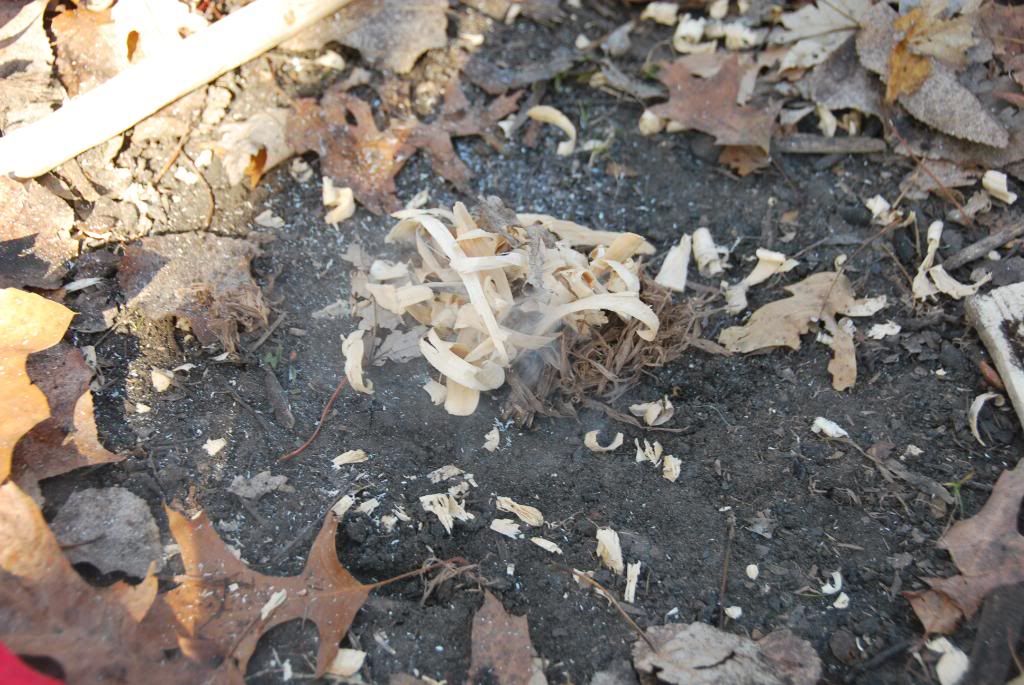

Seriously though, the RC-4 and a saw or axe is all you really need. Two knives are great if you are a knife nut

kdg,
I think I may have brushed aside your suggestion on custom knives too brashly. But I do still have a few reservations about it. Perhaps it is my own ignorance, but full flat grind blades make me nervous about their reliability--and essential every advertised blade from the makers you recommended have a flat grind instead of my preferred design of a nice sturdy clip point (correct terminology I hope?) blade like on the Fallkniven S1. The custom blades I found also are quite thin, mostly 1/8". Again, this could be my own misunderstanding, but they seem unreliably thin--a 1/5" (0.2") like the S1 to me seems like a good balance. I do not need a perfect slicer, if a thicker blade will give me extra reliability in a survival situation, while wasting a little bit of a potato when peeling that is a trade off I'm willing to make. I also want a blade useful for camp tasks such as fire building, I can only imaging how horrible it would be to try and split a log with a flat ground 1/8" blade.
I am intrigued, however, by the wide range of materials and options custom makers offer. I have read Joe Talmadge's Steel FAQ and he speaks highly of materials like O1 which I know at least one of the makers you suggested use. But can you advise me a little more on some finer points, taking O1 for example, Mr. Talmadge says it takes a holds an edge superbly, but is not as strong as other materials like 5160. To a novice like me, I don't know what kind of baselines he's dealing with...So clearly O1 is weaker than 5160, but just how weak? Am I at some kind of risk of breakage with an O1 blade? You seem knowledgeable to the field, do you have a 3 go to steels list for a backpacking blade that you think provide the best overall balance?
I will email the makers like you suggested, I just hope the preferences I have (such as a thicker blade, and clip point design) won't make my "custom custom" knife out of my reach financially--my hope was the keep the price sub-$100, which I guess I could stretch a little for a truly superb non-production blade.
I like your "piggy-back" concept, by the way, but for a broke college freshman that kind of setup is a little out of my reach...
Thanks,
Brandon
I think I may have brushed aside your suggestion on custom knives too brashly. But I do still have a few reservations about it. Perhaps it is my own ignorance, but full flat grind blades make me nervous about their reliability--and essential every advertised blade from the makers you recommended have a flat grind instead of my preferred design of a nice sturdy clip point (correct terminology I hope?) blade like on the Fallkniven S1. The custom blades I found also are quite thin, mostly 1/8". Again, this could be my own misunderstanding, but they seem unreliably thin--a 1/5" (0.2") like the S1 to me seems like a good balance. I do not need a perfect slicer, if a thicker blade will give me extra reliability in a survival situation, while wasting a little bit of a potato when peeling that is a trade off I'm willing to make. I also want a blade useful for camp tasks such as fire building, I can only imaging how horrible it would be to try and split a log with a flat ground 1/8" blade.
I am intrigued, however, by the wide range of materials and options custom makers offer. I have read Joe Talmadge's Steel FAQ and he speaks highly of materials like O1 which I know at least one of the makers you suggested use. But can you advise me a little more on some finer points, taking O1 for example, Mr. Talmadge says it takes a holds an edge superbly, but is not as strong as other materials like 5160. To a novice like me, I don't know what kind of baselines he's dealing with...So clearly O1 is weaker than 5160, but just how weak? Am I at some kind of risk of breakage with an O1 blade? You seem knowledgeable to the field, do you have a 3 go to steels list for a backpacking blade that you think provide the best overall balance?
I will email the makers like you suggested, I just hope the preferences I have (such as a thicker blade, and clip point design) won't make my "custom custom" knife out of my reach financially--my hope was the keep the price sub-$100, which I guess I could stretch a little for a truly superb non-production blade.
I like your "piggy-back" concept, by the way, but for a broke college freshman that kind of setup is a little out of my reach...
Thanks,
Brandon
- Joined
- Feb 28, 2007
- Messages
- 9,786
Hi Brandon, I hope I'm not overwhelming you with too much information.
I will tell you that when I first got into knives I thought I needed .25" for robustness. You have to realize that bladeforums and its users sort of go through cycles and sometimes as a crowd we really like thick, and then there is a backlash and all of a sudden we like thinner blades again. No one is really correct, but I've come to the opinion that in a 5" knife you probably don't want .25" unless prying is some kind of priority you have at the expense of cutting. Esav's post (and he knows what he is talking about) is a the truth as far as I'm concerned. Having procured a couple knives in .25", I really didn't like them that much in the smaller sizes. Too much weight, which is great if it is primarily to be used as a chopper and is >7" but not very good at cutting for a small knife.
I then ended up with the Rat Cutlery products which are 3/16". I like the way this thickness performs and it is particularly well suited for the RC-6. For the RC-4, I found that aggressively convexing the edge greatly helped its cutting performance. Knowing what I know now, if I could buy an RC-4 in 1/8" (like the RC-3) than I would buy that as an option. Everything else about the RC-4 is superb, however. Great blade shape, functional sheath. A very usable knife.
I then started getting into custom knives. Bryan Breeden was the first maker I started talking to after seeing a review of his work here on BF. Bryan is a really interesting guy who loves knives and frequently posts in W&SS about making shelters and camping. Anyhow, in ordering my first custom from him I initially suggested going 3/16" just like my rats. He suggested I go with 1/8". My very first question to him was - is it robust enough to baton through wood. No - problem he says, I stake my reputation on it. So I went with 1/8" and now that is my preferred thickness for tool steels particularly in the 3-5" range. I have several in that thickness and trust me, I baton them through wood and put them through a lot of punishment. Heck the 10" chopper in my sig. line is 1/8" thick and I've put it through a tonne of punishment. Now prying is out for 1/8" thick but I find I rarely do that kind of thing.
Okay for steels. I'm not the best person to ask as there are folks around these parts that are all about the metallurgy. My preferences are for simple tool steels. My preferred ones are 1095, O1 and A2. I like 5160 and have it in a larger blade. It is known for its high degree of toughness. I've been told by a few others that it isn't their favorite in a small blade as it tends to not hold a fine edge quite as well, yet I see a number of smaller knives by popular makers using this steel. Regarding my favorite tool steels above, A2 is supposed to hold a slightly better edge followed by O1 and then 1095. A2 is also supposed to be somewhat better at stain resistance.
In practice, I can't tell any difference among them in the knives I have. Many folks will indicate that the heat treat makes more difference than the steel composition. There you go again - heat treat is a function of the maker and you want a maker who knows how to deal with his steel. Many folks recommend that if a given maker offers different steels for a blade, that you ask them - which one do you work with most often ? - and choose that one rather than looking at the steel characteristics too closely.
You've noted that my preference is for full flat grind. I like a flat ground knife and prefer to put a convex edge on them. That is a preference because I like the way it cuts. Bark River makes full convex knives that are true convex - that is they begin to taper right from the spine to the edge. This allows both a thicker spine and thin edge and arguable is the most robust configuration. Somebody mentioned the Bravo-1 model from BRK&T which is super solid and yet a good slicer. If you really value robustness than you might like that particular model - many people do and it is super popular among the W&SS crowd.
Regarding clip points. I think that is a style thing more than anything else. A clip point does allow for a sharper tip, but that can also mean a weaker tip. Many camping/bushcraft folks consider a spearpoint to be the optimum, which gives you a centered point that is the most robust - but not necessarily the sharpest. A clip doesn't add to strength to the knife, arguably it reduces it. However, as you can see from my post, I don't necessarily always go for strength over function. If you like clip points for their aesthetics than don't be afraid to get one! Maybe you should check out some of the JK-tactical models. He likes making clips too and also provides them in 3/16" O1 or 1095 if you ask.
http://www.jkhandmadeknives.com/apps/photos/photo?photoid=15604560
Anyhow, that is how I've come around to things. I started off thinking that knife toughness was the real trait to look at and later decided that all that strength wasn't really needed in real world use and I got much more enjoyment out of the knives that were better optimized to the tasks I used them for. The simple truth is that any knife you are looking at in this thread, whether it be fallkniven, rat cutlery or some of the custom makers - will serve you well and provide a lifetime of use.
Since you've come this far in your knife buying research - I can also guarentee you that you will buy a few knives in your lifetime Sure you are in school now - but hey you have lots of years ahead of you to explore the wide variety of cutlery that is out there. Good luck!
I will tell you that when I first got into knives I thought I needed .25" for robustness. You have to realize that bladeforums and its users sort of go through cycles and sometimes as a crowd we really like thick, and then there is a backlash and all of a sudden we like thinner blades again. No one is really correct, but I've come to the opinion that in a 5" knife you probably don't want .25" unless prying is some kind of priority you have at the expense of cutting. Esav's post (and he knows what he is talking about) is a the truth as far as I'm concerned. Having procured a couple knives in .25", I really didn't like them that much in the smaller sizes. Too much weight, which is great if it is primarily to be used as a chopper and is >7" but not very good at cutting for a small knife.
I then ended up with the Rat Cutlery products which are 3/16". I like the way this thickness performs and it is particularly well suited for the RC-6. For the RC-4, I found that aggressively convexing the edge greatly helped its cutting performance. Knowing what I know now, if I could buy an RC-4 in 1/8" (like the RC-3) than I would buy that as an option. Everything else about the RC-4 is superb, however. Great blade shape, functional sheath. A very usable knife.
I then started getting into custom knives. Bryan Breeden was the first maker I started talking to after seeing a review of his work here on BF. Bryan is a really interesting guy who loves knives and frequently posts in W&SS about making shelters and camping. Anyhow, in ordering my first custom from him I initially suggested going 3/16" just like my rats. He suggested I go with 1/8". My very first question to him was - is it robust enough to baton through wood. No - problem he says, I stake my reputation on it. So I went with 1/8" and now that is my preferred thickness for tool steels particularly in the 3-5" range. I have several in that thickness and trust me, I baton them through wood and put them through a lot of punishment. Heck the 10" chopper in my sig. line is 1/8" thick and I've put it through a tonne of punishment. Now prying is out for 1/8" thick but I find I rarely do that kind of thing.
Okay for steels. I'm not the best person to ask as there are folks around these parts that are all about the metallurgy. My preferences are for simple tool steels. My preferred ones are 1095, O1 and A2. I like 5160 and have it in a larger blade. It is known for its high degree of toughness. I've been told by a few others that it isn't their favorite in a small blade as it tends to not hold a fine edge quite as well, yet I see a number of smaller knives by popular makers using this steel. Regarding my favorite tool steels above, A2 is supposed to hold a slightly better edge followed by O1 and then 1095. A2 is also supposed to be somewhat better at stain resistance.
In practice, I can't tell any difference among them in the knives I have. Many folks will indicate that the heat treat makes more difference than the steel composition. There you go again - heat treat is a function of the maker and you want a maker who knows how to deal with his steel. Many folks recommend that if a given maker offers different steels for a blade, that you ask them - which one do you work with most often ? - and choose that one rather than looking at the steel characteristics too closely.
You've noted that my preference is for full flat grind. I like a flat ground knife and prefer to put a convex edge on them. That is a preference because I like the way it cuts. Bark River makes full convex knives that are true convex - that is they begin to taper right from the spine to the edge. This allows both a thicker spine and thin edge and arguable is the most robust configuration. Somebody mentioned the Bravo-1 model from BRK&T which is super solid and yet a good slicer. If you really value robustness than you might like that particular model - many people do and it is super popular among the W&SS crowd.
Regarding clip points. I think that is a style thing more than anything else. A clip point does allow for a sharper tip, but that can also mean a weaker tip. Many camping/bushcraft folks consider a spearpoint to be the optimum, which gives you a centered point that is the most robust - but not necessarily the sharpest. A clip doesn't add to strength to the knife, arguably it reduces it. However, as you can see from my post, I don't necessarily always go for strength over function. If you like clip points for their aesthetics than don't be afraid to get one! Maybe you should check out some of the JK-tactical models. He likes making clips too and also provides them in 3/16" O1 or 1095 if you ask.
http://www.jkhandmadeknives.com/apps/photos/photo?photoid=15604560
Anyhow, that is how I've come around to things. I started off thinking that knife toughness was the real trait to look at and later decided that all that strength wasn't really needed in real world use and I got much more enjoyment out of the knives that were better optimized to the tasks I used them for. The simple truth is that any knife you are looking at in this thread, whether it be fallkniven, rat cutlery or some of the custom makers - will serve you well and provide a lifetime of use.
Since you've come this far in your knife buying research - I can also guarentee you that you will buy a few knives in your lifetime
Sure you are in school now - but hey you have lots of years ahead of you to explore the wide variety of cutlery that is out there. Good luck!Yeah that
I had typed a longer response but that says it better. (a little less Fallkniven than in my response though)
You have lots of good choices - pick th art form you like to start with
Enjoy your first, it won't be your last
And if it is - well you chose extremely well!
P.s. google or ebay s1 sheath and you will find a number of options if that is where your taste takes you. I like the laminated rust free s1 blade - but that is my taste
I had typed a longer response but that says it better. (a little less Fallkniven than in my response though)
You have lots of good choices - pick th art form you like to start with
Enjoy your first, it won't be your last
And if it is - well you chose extremely well!
P.s. google or ebay s1 sheath and you will find a number of options if that is where your taste takes you. I like the laminated rust free s1 blade - but that is my taste
Esav Benyamin
MidniteSuperMod
- Joined
- Apr 6, 2000
- Messages
- 90,915
Regarding blade thickness and the utility of a less-robust knife, try a little experiment. Buy a Mora. Get the classic Mora #1 with the red wooden handle and the cheap plastic sheath. Cut up food, whittle twigs, baton with it. A thin blade slips into materials easier than a thick blade. (A flat ground blade does so better than a sabre ground blade like a Mora.) This is not the knife you're looking for, but it is the test bed for some of the characteristics you might like to consider.
Now imagine if you got one of our W&SS knifemakers to build you a bigger, better Mora, a full tang, tool steel, flat ground, convex edged, thin blade. Do you know what that would be, functionally and historically? A mountain man knife. They didn't have tactical, overbuilt, heavy choppers. They carried high carbon steel, thin-bladed butcher knives, because the most critical function of their knives was taking animals apart. And they learned to use those knives for everything else, too. Including self-defense. Preparing food. Fire and shelter. Jeremiah Johnson would have been very happy with the knife Koyote made me.
Get a Mora and see how far it will take you, and think about how you might improve it.
Now imagine if you got one of our W&SS knifemakers to build you a bigger, better Mora, a full tang, tool steel, flat ground, convex edged, thin blade. Do you know what that would be, functionally and historically? A mountain man knife. They didn't have tactical, overbuilt, heavy choppers. They carried high carbon steel, thin-bladed butcher knives, because the most critical function of their knives was taking animals apart. And they learned to use those knives for everything else, too. Including self-defense. Preparing food. Fire and shelter. Jeremiah Johnson would have been very happy with the knife Koyote made me.
Get a Mora and see how far it will take you, and think about how you might improve it.
I have the RC4 and an RC5. I use the RC4 as my EDC blade due to the sheath design which allows me to use horizontal carry accross the middle of the back.
The sheath system on the RC5 allows it to be turned into a fairly comprehensive survival kit. The weight of this knife in this well designed sheath really doesn't give one any problems with carry, even over the long stretch. Just my experience. It is a beefy knife and does not move as deftly in the hand as the RC4, but it does offer lots more handle.
Another option I have experience with is the Himalayan Imports R-10. It has a forged blade of equivalent to 5160 (merceds truck leaf spring) and is between thr RC5 and the RC4 in size. It moves well in the hand and combines toughness with grace very well. The sheath that comes with em is only ok. I was carrying mine as my EDC till I picked up the RC4 and will probably do so again once I have a kydex or better leather sheath made for it. The price is around 1/2 to 2/3 the cost of the RAT's last time I looked.
The sheath system on the RC5 allows it to be turned into a fairly comprehensive survival kit. The weight of this knife in this well designed sheath really doesn't give one any problems with carry, even over the long stretch. Just my experience. It is a beefy knife and does not move as deftly in the hand as the RC4, but it does offer lots more handle.
Another option I have experience with is the Himalayan Imports R-10. It has a forged blade of equivalent to 5160 (merceds truck leaf spring) and is between thr RC5 and the RC4 in size. It moves well in the hand and combines toughness with grace very well. The sheath that comes with em is only ok. I was carrying mine as my EDC till I picked up the RC4 and will probably do so again once I have a kydex or better leather sheath made for it. The price is around 1/2 to 2/3 the cost of the RAT's last time I looked.
Take a look at Doug Ritter's RSK Mk3:
http://www.equipped.org/rsk_mk3.htm
$165 - and a part of that goes to not-for-profit Equipped to Survive Foundation
4.5" long blade
0.14" thick blade
5.7 oz knife weight
S30V semi-stainless steel
Full tang
G10 handle CNC machined handle slabs
Multi-attachment point nylon sheath w/ ABS liner
Light enough to carry. Thin enough blade to be a great camp knife. Tough enough to avoid rust and last a lifetime.
If the $165 is above your budget, take a look at the Benchmade fixed Griptilian. It is a lower cost - about $70 - knife patterned after the Mk3, but with lesser 154CM 4.16" steel blade, and a molded handle.
http://www.equipped.org/rsk_mk3.htm
$165 - and a part of that goes to not-for-profit Equipped to Survive Foundation
4.5" long blade
0.14" thick blade
5.7 oz knife weight
S30V semi-stainless steel
Full tang
G10 handle CNC machined handle slabs
Multi-attachment point nylon sheath w/ ABS liner
Light enough to carry. Thin enough blade to be a great camp knife. Tough enough to avoid rust and last a lifetime.
If the $165 is above your budget, take a look at the Benchmade fixed Griptilian. It is a lower cost - about $70 - knife patterned after the Mk3, but with lesser 154CM 4.16" steel blade, and a molded handle.