
-
The BladeForums.com 2024 Traditional Knife is available! Price is $250 ea (shipped within CONUS).
Order here: https://www.bladeforums.com/help/2024-traditional/
You are using an out of date browser. It may not display this or other websites correctly.
You should upgrade or use an alternative browser.
You should upgrade or use an alternative browser.
Best production liner lock ?
- Thread starter Jpalmer1988
- Start date
- Joined
- Oct 30, 2005
- Messages
- 5,171
It's a linerlock in the same sense Millie's nested liner is.
The Microbar has a mechanically separate pivot pin/bolt and separate coil springs. Where are these on the Military or the old SOCOM knives?

- Joined
- Dec 26, 2006
- Messages
- 10,795
Just get the Military.
Why? Do you have an opinion to offer to support your reply? The OP is asking about liner locks. Had he asked "what knife should I buy without giving me any reason as to why" then your reply makes sense. Otherwise it is irreverent.

- Joined
- Dec 23, 2009
- Messages
- 257
I don't have the kind of experience that would qualify me to name the best production liner lock, but the best one I have handled is the Kershaw Tyrade G10. The liner lock on that knife is as thick as many frame locks, and the beefy G10 scales mean there's no flex alongside the liner lock when the blade is deployed.
In the eye of the beholder, I guess; strongest? smoothest? ergonomic? Not having had experience with "all" the liner locks how can one say which is best? I'm not a real fan of liner locks but my BM Dejavoo is one Hell of a knife! This morning I have a Kershaw Skyline in my pocket, nice knife. BEST by what criteria?

- Joined
- Aug 7, 2007
- Messages
- 2,588
I'd always liked the liner lock action on my Kershaw Lahar.
ZT200 is almost a framelock and is very solid especially with the multiple spacers and thick textured G10. But it is a bit bulky.
I like the Spydie Milllie but must admit I flippin hate them puny screws. Very easy to strip.
Among my list of folders I'd choose the ZT200 for my best linerlock
ZT200 is almost a framelock and is very solid especially with the multiple spacers and thick textured G10. But it is a bit bulky.
I like the Spydie Milllie but must admit I flippin hate them puny screws. Very easy to strip.
Among my list of folders I'd choose the ZT200 for my best linerlock

JTR357
Gold Member
- Joined
- Sep 10, 2007
- Messages
- 14,577
I haven't read the whole thread,so if it's been mentioned I apologize for repeating it.
I haven't bought a liner lock for at least a year & a half.Thought I was done withem'.
I recently bought the Spyderco Gayle Bradley & I like it a lot.Thick liner,perfect lockup,zero blade play.
The Spyderco Gayle Bradley gets my vote for #1 production linerlock.
OTOH,Emerson makes some pretty awesome linerlocks too.:thumbup:
I haven't bought a liner lock for at least a year & a half.Thought I was done withem'.
I recently bought the Spyderco Gayle Bradley & I like it a lot.Thick liner,perfect lockup,zero blade play.
The Spyderco Gayle Bradley gets my vote for #1 production linerlock.
OTOH,Emerson makes some pretty awesome linerlocks too.:thumbup:

- Joined
- Mar 29, 2007
- Messages
- 3,220
G10 Tyrade. It's in the details, no craptastic plastic back spacer (G10 here bud) like some others sport, tip down/tip up carry option. Super thick steel locking liner, grippy G10 and CPM D2 blade. All at an unbelievable price with the best warranty in the business.

Blade-Tech!Aside from Spyderco's Military model, I consider Blade-Tech's Pro Hunter model to have the best production liner lock in the business!:thumbup:
I was thinking of this one also 3G. I think it is very similar to the Military lock, only the Blade Tech uses full liners. Good call!:thumbup:
- Joined
- Feb 2, 2008
- Messages
- 716
spyderco doesnt make a single mediocre liner lock. i think emerson does a close to perfect job as well although ive never handled one. im sure zt knives sport super tough liners too.

- Joined
- Nov 12, 2005
- Messages
- 1,494
Robust and affordable linerlock ?
Kershaw Ener-G II could almost qualify as a framelock the liners are so beefy. You do not have to pay buku bucks for a high quality knife.
Tostig
The Ener-g does have a well made liner lock.:thumbup: The best imo and that I own is the G-10 Tyrade. The JYD2 is also nice and solid. The bad thing about the JYD 2 is the tip down funky clip. Wish Kershaw would do a nice tip up option and a clip that doesn't scream at you. The one Tim uses on his JYD Pro is much nicer.
http://i232.photobucket.com/albums/ee11/tjgalyean/PSJYD6.jpg
IMO the Spyderco Military has the most properly executed liner lock on the market.
The lock face on the tang is curved, not straight, which helps keep the liner contacting properly with wear, and helps to prevent the liner from disengaging under pressure (as the angle of the tang is reduced the liner is less likely to slip).
The tension on the liner is very strong compared to most. With a strong lock bar there is more force keeping the lock in place, compared to a liner lock that is nice and easy to unlock. This is also an indication of the quality of the lock. If there is very little force pushing the lockbar in place, you can get away with a lot of slop in the overall build of the knife. With more force the lockbar tries harder to push its way across the tang. I have one knife from a respected manufacturer where the lockbar exhibits less pressure and travels nearly all the way across the tang, when the knife is new. After owning three examples of the Military, they all started out with very little lockbar travel, and my most used Military is at about the halfway point.
The Contact point between the liner and the tang should be as far away from the pivot as possible. This is an element of overall design, as well as the fit of the lock. On the Spyderco Military the contact point is about 3/8" away from the center of the pivot. Some knives may have a wide tang, but if not fit correctly they may contact closer to the pivot anyway.
One point of debate seems to be whether to have the liner cut at an angle to the lockface, ensuring that the liner contacts only at the farthest point from the pivot, as Strider particularly likes to do (and Spyderco on the Military). Or to try and have the entire width of the liner contact the blade tang, as Kershaw does. IMO Kershaw's method is better for the longevity of the lock, as much more of the liner contacts the blade tang, and there is much more metal to be removed for the lock to wear in. This method requires more precision, however, since it is much closer to potentially having the lock contact only near the pivot and not farther. Thankfully this has not been a problem with any of the Kershaw knives I have used, the lock angels are all done very well on my Kershaw folders.
Thickness of the lockbar is not necessarily an indicator of strength. It certainly can help with reliability (less flex under pressure), and the lock will wear in more slowly with more metal on metal contact, but remember that a chain is only as strong as its weakest link. The lockbar on the Military has no cut-out. Nearly all frame locks, and many of the thicker liner locks out there, have a cut-out (allowing the lock to flex more easily so that the user can unlock the knife). The thickness of the lock bar at that cut-out is often the limiting factor in the overall strength of a lock. This puts the Military right up there with many of the bulky "heavy duty" folders in terms of overall lock strength.
I think that covers most of it.
Other than the Spyderco Military, the Kershaw ZT0200 and JYD II are my favorite liner locks.
The lock face on the tang is curved, not straight, which helps keep the liner contacting properly with wear, and helps to prevent the liner from disengaging under pressure (as the angle of the tang is reduced the liner is less likely to slip).
The tension on the liner is very strong compared to most. With a strong lock bar there is more force keeping the lock in place, compared to a liner lock that is nice and easy to unlock. This is also an indication of the quality of the lock. If there is very little force pushing the lockbar in place, you can get away with a lot of slop in the overall build of the knife. With more force the lockbar tries harder to push its way across the tang. I have one knife from a respected manufacturer where the lockbar exhibits less pressure and travels nearly all the way across the tang, when the knife is new. After owning three examples of the Military, they all started out with very little lockbar travel, and my most used Military is at about the halfway point.
The Contact point between the liner and the tang should be as far away from the pivot as possible. This is an element of overall design, as well as the fit of the lock. On the Spyderco Military the contact point is about 3/8" away from the center of the pivot. Some knives may have a wide tang, but if not fit correctly they may contact closer to the pivot anyway.
One point of debate seems to be whether to have the liner cut at an angle to the lockface, ensuring that the liner contacts only at the farthest point from the pivot, as Strider particularly likes to do (and Spyderco on the Military). Or to try and have the entire width of the liner contact the blade tang, as Kershaw does. IMO Kershaw's method is better for the longevity of the lock, as much more of the liner contacts the blade tang, and there is much more metal to be removed for the lock to wear in. This method requires more precision, however, since it is much closer to potentially having the lock contact only near the pivot and not farther. Thankfully this has not been a problem with any of the Kershaw knives I have used, the lock angels are all done very well on my Kershaw folders.
Thickness of the lockbar is not necessarily an indicator of strength. It certainly can help with reliability (less flex under pressure), and the lock will wear in more slowly with more metal on metal contact, but remember that a chain is only as strong as its weakest link. The lockbar on the Military has no cut-out. Nearly all frame locks, and many of the thicker liner locks out there, have a cut-out (allowing the lock to flex more easily so that the user can unlock the knife). The thickness of the lock bar at that cut-out is often the limiting factor in the overall strength of a lock. This puts the Military right up there with many of the bulky "heavy duty" folders in terms of overall lock strength.
I think that covers most of it.
Other than the Spyderco Military, the Kershaw ZT0200 and JYD II are my favorite liner locks.


- Joined
- Jan 21, 2005
- Messages
- 63
The Microbar looks really neat.
well i have to cast my vote here also
because is looks like the most solid lock up i have ever seen
would like to see one on pass around some time.
I like the Al Mar sere 2000 for a liner lock. I am surprised it wasn't mentioned yet.
Mine had vertical blade play that compromised the lock. I
sent it back for repair and after a couple of months the same
problem returned. I sold it to a friend who was aware of the
difficulties I had with it and he has subsequently had it
repaired again. We'll see what happens next.

 but
but 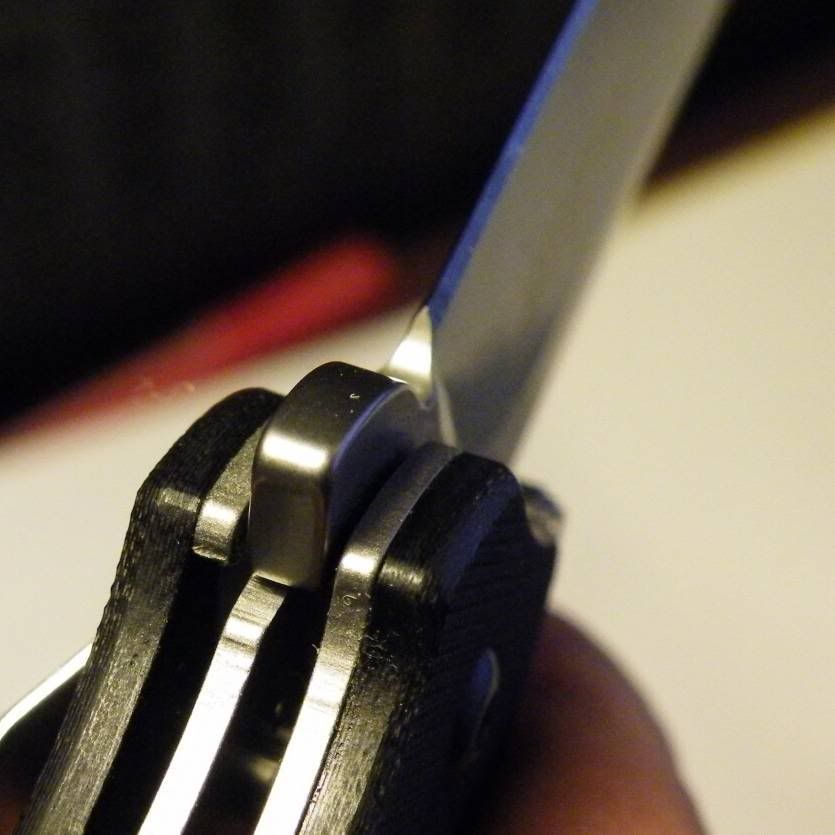

- Joined
- Dec 19, 2006
- Messages
- 915
Just get the Military.
Why? Do you have an opinion to offer to support your reply? The OP is asking about liner locks. Had he asked "what knife should I buy without giving me any reason as to why" then your reply makes sense. Otherwise it is irreverent.
When dozens of people in this thread have said they think the Military is one of the best production liner locks, I think my "Just get a Military" comment is relevant. If you want to argue over why you think the Military isn't one of the best liner locks, go ahead. Knock yourself out.