blade quenching fact or fiction

Status
Not open for further replies.
"We can view "hard facts" as reality, but an accumulation of facts no matter how large, is no more a science than a pile of bricks is a house." Ed Fowler

Right on Ed! :)
this is true and a good point but also hard to build a brick house without bricks :) the little pigs saw how straw and sticks held up as buildings :)
 
It's not so much how many facts you have, as what you do with the ones you do have. Some folks do real well with very few facts and others can't do squat with a boat load of them... Kind of the same with any tools. In "fact" (no pun intended) some folks have so many facts crammed into such a small space, it's impossible for them to wade through and make any sense of it.

Ever heard the expression "paralysis through over analysis"?... or "a head full of mush"?

No one has ALL the facts.
 
Last edited:
Microfractures, Grain Growth, Alloy Banding....
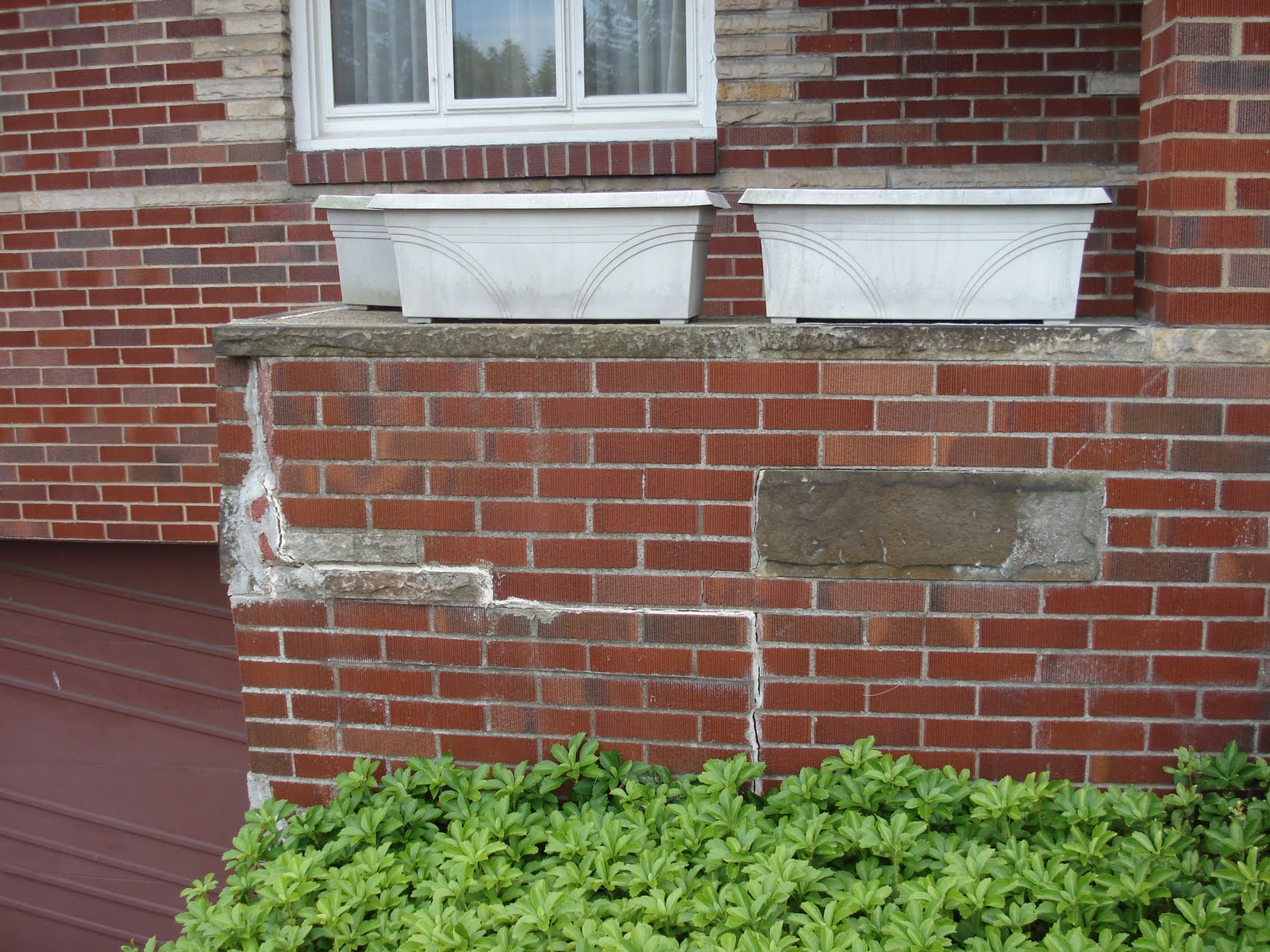
DSC01775.JPG


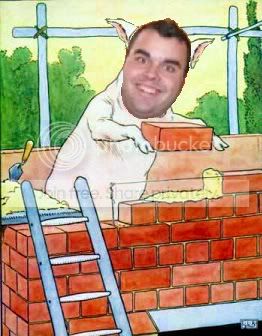
Even the best skid of bricks and bags of mortor will only be as good as the mason who puts it all together.
the-thrid-pig-and-brick-house.jpg
 
I do not want to seem flippant but I want to get back to my original question and make shore I have the basic ideas correct
1)it is edge quenching not blade quenching (I was thinking faster then I was typing at the time)

2)edge quenching is NOT an out of date technique

3)edge quenching is a practical technique

4)edge quenching is not a myth

5) edge quenching is a techniques I should study*

* depending on which half of the forum one agrees with. it should be studied so that one will know it is ether more or less effective then drawing back the spine.

I wanted to have these parts correct before this dead horse was beaten in further, thank all of you for your time and knowledge
 
yes you should see if you like it and the blades it makes (there is a place for it )
yes keep an open mind but also beware of magic

there is also a difference in edge quenching and edge heating then quench (torch HT of jsut the edge or now the newer "friction forging of an edge) if you could find a good way to control it the new to the hobbyist induction forge would be fun to try and HT with

you can also see that it depends on the kind of blades you make that the HT needs to be for them (if i made a chefs knife that could be bent back and forth like puddy it would not matter how good an edge it would take they would send it back and ask for a return of there $ or a proper HT
 
That about sums it up.... all of these HT techniques are real and in use. Learn the facts, apply the facts, do the testing and make a judgement call. There is no wrong descision if you are honest to yourself, your craft and your customer.

Rick
 
"...make an (honorable) judgement call..." is always sound advice.

That about sums it up.... all of these HT techniques are real and in use. Learn the facts, apply the facts, do the testing and make a judgement call. There is no wrong descision if you are honest to yourself, your craft and your customer.

Rick
 
We just finished a seminar, our student Mark Reich tested an experimental 52100 blade I forged and edge quenched. the test blade measured 3/16 thick, 1 1/8 spine to edge and 4 1/4 inches long. First came the edge flex test, 10 edge flexes, no chip, then cut - 150 cuts on tough hemp rope and still shaved hair, obviously would have cut more. Went to the post vice where we attached a torque wrench to her and it took about 70 foot pounds of torque to flex the blade to 90, then back the other way and again 70 foot pounds to almost 90 when the edge cracked. The crack extended straight up from the edge toward the spine for about 1/4 of an inch when it split and ran from ricasso to tip. The split or Y occurred when when it started into thee soft steel. We then straightened the blade and it could still be used.

That was tremendous pressure required to flex about 2" of the blade as the front third as in the vice and the back 1" was held by the clamp for the torque wrench.

The blade was 52100, rate of reduction by forging about 96% all low temp forging.

This is what is possible with the differentially edge hardened blade, and the results are repeatable. Each seminar has its own experimental blade that is developed as an example for the student. While each blade is a special experiment in its own right, not one has failed catastrophically in the 9 years we have been teaching differential hardening along with our forging technique. There is no magic, no secrets and we will share with anyone who want to know.

The methods have been slowly developed over the last 30 years, 100's of blades have been tested to destruction. Three metallurgists have worked with us and many blade smiths have worked on the development of what we do. I cannot tell you what is best for your blades, I can only say what we do and what the blades are for.

 
Dan, I think you're right on all counts. Edge quenching is fine, I've made quite a few knives in the past with that method- if I had to choose between a woods knife with a mono-HT, or an edge quenched blade, it'd be the latter in a heartbeat.

Have fun trying it.
 
Stacey that is a nice selection of "hard facts" in summary form. Thanks for posting it.
We can view "hard facts" as reality, but an accumulation of facts no matter how large, is no more a science than a pile of bricks is a house.
It is up to each individual maker to develop the total package of science into the knife he wants to make.

Some here are interpreting Stacy and Ed's comments as metallurgy and heat treating being an inexact science.

As Jim Crowell often tells his students: "you can change the methods, but you can't alter the principles."
To me, that's exactly what Ed is saying: there are a fundamental set of metallurgical principles, understand them and apply them to make the best blade you can.

Or you can just heat it up to orange and quench in canola oil :D
 
All right I have two question for the MS bladesmiths we have here.
1. What quench method did you use for you MS test knife??
2. What quench method do you use for customer knives??

I ask these because I have watched several you tube videos of smiths making test knives for their MS rating and all edged quenched and tempered back the spines.
 
Edge quench for my MS test knife and every knife I have sold since I started forging blades.
Since we developed and tested multiple differential quench methods I have used it extensively on every knife I have made. The spine does not need a "soft back draw" as it does not harden significantly. Usually25 RC. on the spine.
 
Jeez, 25 RC? That must be because you use a torch to heat the edge, many times I have 52100 air harden more than that.
 
25HRC??

Ed.... what kind of strength are you getting from your average thickness blades at 35deg flex and less. The reason I ask is that in a working blade, I look for something that can work for me with minimal flex. IMO, it is more valuable to have a blade that can transfer enough energy to pry open a rotted stump with minimal flex, than a blade that needs to flex 75degs(and take a set) to get the same job done. THAT is what I found lacking with the edge quench method(I think I did a good job on those edge quenched blades, too.) My toughest, strongest (fully quenched)blades have had spines in the low 40HRC range. They won't bend 90degs and survive but I never need them to. My thoughts are if I am haveing to flexing my knife even 45degs... I need to rethink my strategy. If it doesn't do what I need by that point it is not going to.

Also, What is the minimum angle at which the blade returns to true without counter bending? Even the smallest deformation is damaging the microscructures to the point that only thermal treatment can correct.

Thanks, Ed
Rick
 
Last edited:
The last test blade only flexed over 1 3/4 inches, The rest of the blade was either in the vice or surrounded by the torque wrench jig. Had the blade been longer it would have withstood more flexes than it did.

I was watching degrees of flex, Chris was watching the torque wrench. They resist deformation very early in the flex. At 50 ft lbs of torque I feel it would return to straight, at 70 ft lbs of torque it started to take a set. Just before the edge cracked it stiffened to a little over 70 ft lbs. Chris in not here right now and Rich is headed for home. I will discuss what I just wrote and make sure what I stated is correct.

Chris, Rich and I were discussing testing the next test blade to various degrees of flex and recording the ft lbs required before it took a set.
The thickness of the spine of this blade was .0198 where it bent. I seriously doubt that you could put this level of force on the blade using your hands on the handle of the blade. The geometry of the blade is the modified Price grind I talk about, this allows the maker to dictate exactly where the blade will flex, it flexed where I designed it to flex, about 9/32 ahead of the plunge line.

We test experimental and demonstration blades to destruction to observe how and when they fail. Your thoughts are in line with future experiments.

Thanks
 
Thanks for the prompt answer, Ed. As I have told you before, I truly respect what you are continually striving for....... the better blade. I may have my doubts at times and that is for a couple of reasons. Either I am simply not at the level of understanding the concept at hand or it directly contradicts my own findings through testing and experimenting. My experience in knifemaking is minimal when compared to yours but I feel that I've immersed myself enough to have a solid grasp of what I do know. I don't argue for the sake of arguing... like you, I just want to make better blades. Cheers

Rick
 
Status
Not open for further replies.
Back
Top