Stacy E. Apelt - Bladesmith
ilmarinen - MODERATOR
Moderator
Knifemaker / Craftsman / Service Provider
- Joined
- Aug 20, 2004
- Messages
- 38,720
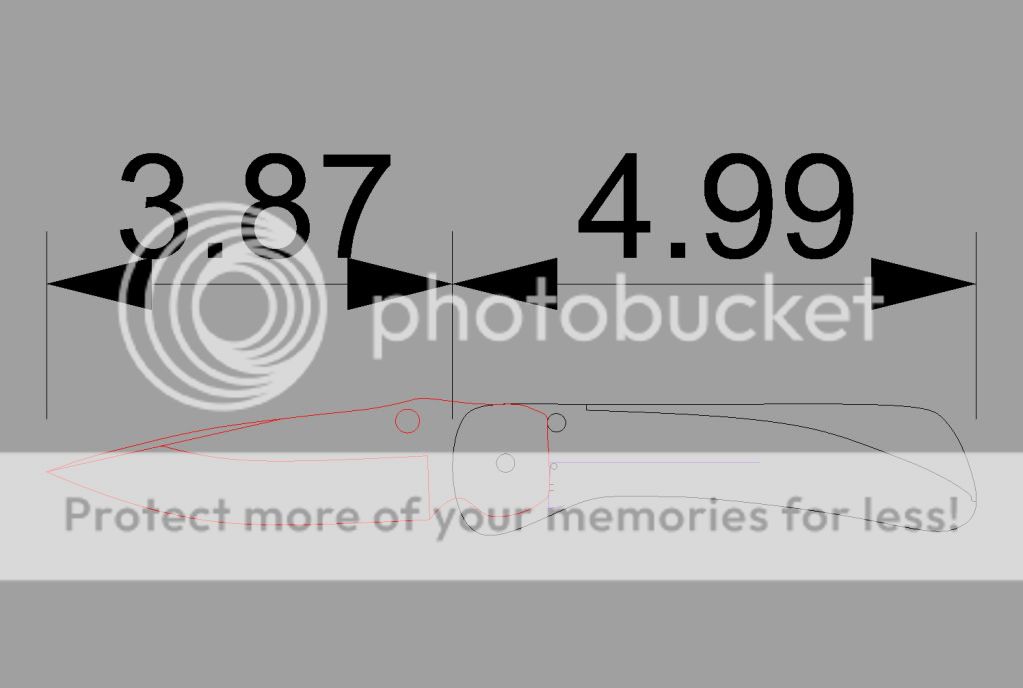
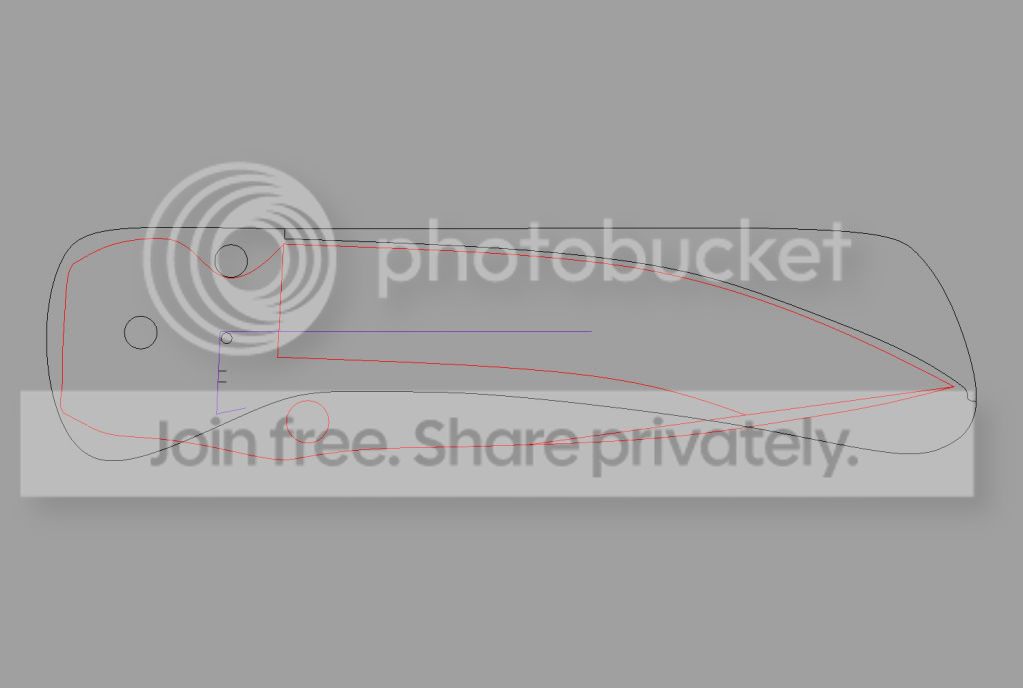
One good thing to do when designing your first folder mechanism is to see what really works vs what you dream up. Many of us think things ,even draw them on CAD design, and when they are transfered into metal we find what we missed. If you don't want to make several trial blades, get a knife with a shape and lock mechanism similar to what you want, and disassemble it. You might even use the tang shape as a template for laying out yours. Once you have several folders under your belt, you can start re-inventing the wheel.
One thing you really want to make is a set-up jig. It is a piece of heavy aluminum plate ( or steel) that you drill out exactly like your liners. The holes should be the same size,too. Using pins inserted into the holes ( instead of screws and pivots), you assemble the knife on this, rotate things to see where more metal needs to come off, fit the locks, etc. Once all is right, you can move to assembling and disassembling the knife with the screws and bolts. Such a jig is almost a requirement for lock back assembly and design.
Stiff cardboard or plastic sheet makes an excellent material for creating a blade template when doing work board design. A plastic blade with a pin/tack through the center of the pivot area can be rotated over a drawing to see what hits where.
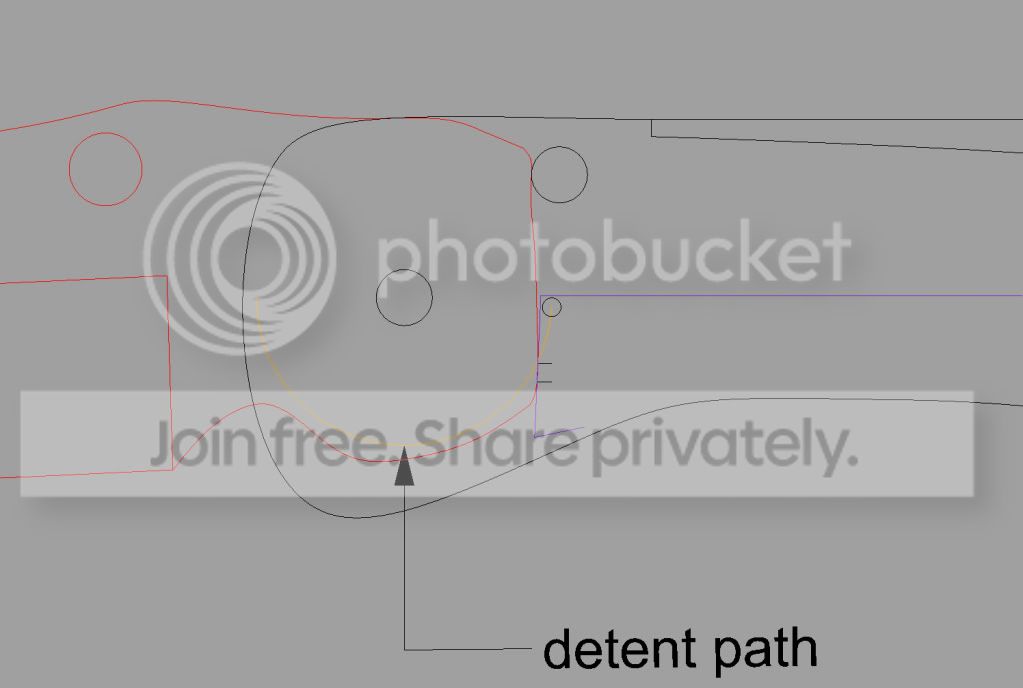
While Ron's triangle is hard to visualize, a circle is easy. Start all folder tang design with a circle the size of the pivot. Then draw in a second circle that is the distance from center that the farthest part of the blade from the pivot ( usually the spine). Last, draw a circle where the detent will ride. From these three concentric circles you can place all the lock components and then extend the blade out from that. Once you have this, you can remove parts of the tang to shape it as you wish, as long as any of those circles do not get crossed. Thus you add a flat for the lock, a dip from the outer circle to nearly the detent circle for the stop pin,shape the heel so it still keeps the detent on the tang during close, position the closed stop so the blade rests just proud of the standoffs, etc.
If you add those circles to your drawing, you will instantly see what Ron saw.
One thing you really want to make is a set-up jig. It is a piece of heavy aluminum plate ( or steel) that you drill out exactly like your liners. The holes should be the same size,too. Using pins inserted into the holes ( instead of screws and pivots), you assemble the knife on this, rotate things to see where more metal needs to come off, fit the locks, etc. Once all is right, you can move to assembling and disassembling the knife with the screws and bolts. Such a jig is almost a requirement for lock back assembly and design.
Stiff cardboard or plastic sheet makes an excellent material for creating a blade template when doing work board design. A plastic blade with a pin/tack through the center of the pivot area can be rotated over a drawing to see what hits where.
While Ron's triangle is hard to visualize, a circle is easy. Start all folder tang design with a circle the size of the pivot. Then draw in a second circle that is the distance from center that the farthest part of the blade from the pivot ( usually the spine). Last, draw a circle where the detent will ride. From these three concentric circles you can place all the lock components and then extend the blade out from that. Once you have this, you can remove parts of the tang to shape it as you wish, as long as any of those circles do not get crossed. Thus you add a flat for the lock, a dip from the outer circle to nearly the detent circle for the stop pin,shape the heel so it still keeps the detent on the tang during close, position the closed stop so the blade rests just proud of the standoffs, etc.
If you add those circles to your drawing, you will instantly see what Ron saw.


 Just how close is close enough? I am with in .2 units ( I haven't set a measurement scale) from largest side to smallest side.



 Maybe I will just stop announcing them and the site will stay up for ever