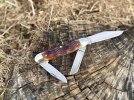
-
The BladeForums.com 2024 Traditional Knife is available! Price is $250 ea (shipped within CONUS).
Order here: https://www.bladeforums.com/help/2024-traditional/
You are using an out of date browser. It may not display this or other websites correctly.
You should upgrade or use an alternative browser.
You should upgrade or use an alternative browser.
Custom Dyed GEC’s by Nathan & Travis
- Thread starter Travman
- Start date

Travman
Gold Member
- Joined
- Jan 26, 2016
- Messages
- 9,119
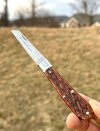
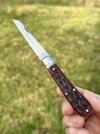
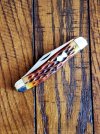
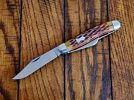
I really like yours. Your knife was probably the most resistant to absorbing dye. It just took more time and several attempts.I sent this one to get dyed and just got it back. I'm extremely pleased with how it turned out.
Before.
View attachment 3040826
After.
View attachment 3040828
View attachment 3040829
Time to put a good edge on it and throw it in my pocket. Thanks again Nathan & Travis!

JJ_Colt45
Gold Member
- Joined
- Sep 11, 2014
- Messages
- 6,887
I wouldn't have guessed that by how good it looks. I am more than pleased with how it turned out! It's been in my pocket quite a bit since it got home.I really like yours. Your knife was probably the most resistant to absorbing dye. It just took more time and several attempts.
Thanks again!
Travman
Gold Member
- Joined
- Jan 26, 2016
- Messages
- 9,119
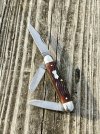
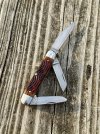
This one came from the factory as an unsatisfactory lighter red with light pink edges. I couldn’t stand looking at it so, I added dark red many times and used a hairdryer to give it just enough heat for the dye to absorb into the bone.

I have been using Angelis Leather Dyes for the past two years. I use lacquer thinner to dilute the dye if I’m going to submerge a knife into the liquid. https://angelusdirect.com/collections/angelus-dye-1
BTW, the clean up of the knife is hard work. It isn’t easy getting all the dye out of the areas of the knife, especially if the knife had been submerged in the liquid. After physically removing as much dye as possible with paper towels, I then wash the entire knife with soap and water. This is where it gets tricky, because if you use super hot water, it will instantly patina the blades. So you want to use slightly warm water, but not super hot. If the knife is a user and you’re not worried about putting a little patina on a new satin blade, then it doesn’t matter. I will then completely dry the knife with compressed air. Then I spray the whole thing down with Basistol oil or WD-40. Then after a few minutes, I clean the whole thing again with paper towels. Then I wrap the knife in clean paper towels with a rubber band around the whole package. Then I carry it in my pocket and the action of carrying it around and the heat of my body helps displace any extra oil or dye and that will reach out onto the wrap of the paper towels.
Now, if the knife is still leaking out any dye then I have to do the whole washing, drying, and oiling process again. If after all this, the knife color did not turn out the way it was supposed to, then we start all over and work even harder and longer with even more heat to get the dye to absorb. Many of the knives I have dyed and shown off are the result of several weeks or months of working on them. A few of the knives have been very easy and only took one attempt. The easy ones tend to be white bone knives that came from the factory as white bone knives.
I have been using Angelis Leather Dyes for the past two years. I use lacquer thinner to dilute the dye if I’m going to submerge a knife into the liquid. https://angelusdirect.com/collections/angelus-dye-1
BTW, the clean up of the knife is hard work. It isn’t easy getting all the dye out of the areas of the knife, especially if the knife had been submerged in the liquid. After physically removing as much dye as possible with paper towels, I then wash the entire knife with soap and water. This is where it gets tricky, because if you use super hot water, it will instantly patina the blades. So you want to use slightly warm water, but not super hot. If the knife is a user and you’re not worried about putting a little patina on a new satin blade, then it doesn’t matter. I will then completely dry the knife with compressed air. Then I spray the whole thing down with Basistol oil or WD-40. Then after a few minutes, I clean the whole thing again with paper towels. Then I wrap the knife in clean paper towels with a rubber band around the whole package. Then I carry it in my pocket and the action of carrying it around and the heat of my body helps displace any extra oil or dye and that will reach out onto the wrap of the paper towels.
Now, if the knife is still leaking out any dye then I have to do the whole washing, drying, and oiling process again. If after all this, the knife color did not turn out the way it was supposed to, then we start all over and work even harder and longer with even more heat to get the dye to absorb. Many of the knives I have dyed and shown off are the result of several weeks or months of working on them. A few of the knives have been very easy and only took one attempt. The easy ones tend to be white bone knives that came from the factory as white bone knives.
Last edited:
Your Name Goes Here
Gold Member
- Joined
- Mar 28, 2018
- Messages
- 1,405
This one came from the factory as an unsatisfactory lighter red with light pink edges. I couldn’t stand looking at it so I added dark red many times and used a hairdryer to give it just enough heat for the dye to absorb into the bone.
I have been using Angelis Leather Dyes for the past two years. I use lacquer thinner to dilute the dye if I’m going to submerge a knife into the liquid. https://angelusdirect.com/collections/angelus-dye-1
BTW, the clean up of the knife is hard work. It isn’t easy getting all the dye out of the areas of the knife, especially if the knife had been submerged in the liquid. After physically removing as much dye as possible with paper towels, I then wash the entire knife with soap and water. This is where it gets tricky, because if you use super hot water, it will instantly patina the blades. So you want to use slightly warm water, but not super hot. If the knife is a user and you’re not worried about putting a little patina on a new satin blade, then it doesn’t matter. I will then completely dry the knife with compressed air. Then I spray the whole thing down with Basistol oil or WD-40. Then after a few minutes, I clean the whole thing again with paper towels. Then I wrap the knife in clean paper towels with a rubber band around the whole package. Then I carry it in my pocket and the action of carrying it around and the heat of my body helps displace any extra oil or dye and that will reach out onto the wrap of the paper towels.
Now, if the knife is still leaking out any dye then I have to do the whole washing, drying, and oiling process again. If after all this, the knife color did not turn out the way it was supposed to, then we start all over and work even harder and longer with even more heat to get the dye to absorb. Many of the knives I have dyed and shown off are the result of several weeks or months of working on them. A few of the knives have been very easy and only took one attempt. The easy ones tend to be white bone knives that came from the factory as white bone knives.
Awesome dedication with amazing results. One of my favorite threads to follow. Thanks for the details on your process.

waynorth
Dealer / Materials Provider
- Joined
- Nov 19, 2005
- Messages
- 34,862
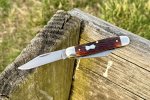
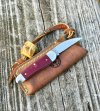
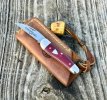
Nice dye job, Travis!!!This one was a white bone #19 Rattler. The white bone knives are the easiest to dye. These are like a blank canvas.View attachment 3077958
View attachment 3077956

What is that lanyard bead made of, please???
Bigburly912
Gold Member
- Joined
- Nov 14, 2018
- Messages
- 969
I sent this one to get dyed and just got it back. I'm extremely pleased with how it turned out
My gosh that’s the worst one I had seen. That definitely deserved a good dye job
Travman
Gold Member
- Joined
- Jan 26, 2016
- Messages
- 9,119
Thank you Charlie. That bead is just a nice piece of stag.Nice dye job, Travis!!!
What is that lanyard bead made of, please???
Last edited:
waynorth
Dealer / Materials Provider
- Joined
- Nov 19, 2005
- Messages
- 34,862
Merci!!!Thank you Charlie. That bead is just a nice piece of stag.

hsherzfeld
Gold Member
- Joined
- Mar 10, 2016
- Messages
- 693
Does the dye soak in better if it’s diluted or concentrated?
Travman
Gold Member
- Joined
- Jan 26, 2016
- Messages
- 9,119
If it is the leather dye that I have been using lately, I don’t dilute it.Does the dye soak in better if it’s diluted or concentrated?

Oldy
Gold Member
- Joined
- Aug 22, 2022
- Messages
- 2,342
I think it would be safe to say that the 93 is the most dyed bladeforums knife by a country mile lolI sent this one to get dyed and just got it back. I'm extremely pleased with how it turned out.
Before.
View attachment 3040826
After.
View attachment 3040828
View attachment 3040829
Time to put an good edge on it and throw it in my pocket. Thanks again Nathan & Travis!
JJ_Colt45
Gold Member
- Joined
- Sep 11, 2014
- Messages
- 6,887
I would guess that you're right on that.I think it would be safe to say that the 93 is the most dyed bladeforums knife by a country mile lol

AusLoX
Platinum Member
- Joined
- Jan 23, 2015
- Messages
- 3,400
I had to put on sunglasses for the first photoI sent this one to get dyed and just got it back. I'm extremely pleased with how it turned out.
Before.
View attachment 3040826
After.
View attachment 3040828
View attachment 3040829
Time to put a good edge on it and throw it in my pocket. Thanks again Nathan & Travis!

But wow those colors turned out perfect

DaveHS
Gold Member
- Joined
- Nov 22, 2024
- Messages
- 9,099
I love my white bone 19 but the dye job sure looks great!This one was a white bone #19 Rattler. The white bone knives are the easiest to dye. These are like a blank canvas.View attachment 3077958
View attachment 3077956
Travman
Gold Member
- Joined
- Jan 26, 2016
- Messages
- 9,119
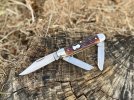
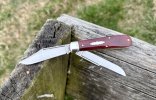
We have not dyed any knives in a while. I am going to work on a few of my own knives soon. Today I am enjoying this dark red 39 we dyed a few months ago. This one is especially satisfying because the dark red color looks so good and it covers up two major pin cracks that we had to glue/repair. The only way to hide a pin crack is to go dark in color.
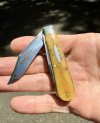
This run of 39’s had a lot of pin cracks. This crack was repaired sealing it with super glue. A lot of people think it’s a more complicated process than this, however, this is pretty much the same method GEC would use to fix a pin crack. The only other option, is to replace the handles.
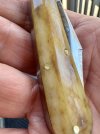
I have to use magnification to see the crack now. The added bonus is that the knife looks really nice and it is a unique knife.
This run of 39’s had a lot of pin cracks. This crack was repaired sealing it with super glue. A lot of people think it’s a more complicated process than this, however, this is pretty much the same method GEC would use to fix a pin crack. The only other option, is to replace the handles.
I have to use magnification to see the crack now. The added bonus is that the knife looks really nice and it is a unique knife.
Last edited: