
D2 heat treatment, three processes, you can break to 90 degrees.By

Joined
Apr 2, 2017
Messages
29
Hello everyone, I am from China. I will not be in English, thanks to Google translation, I am sorry.
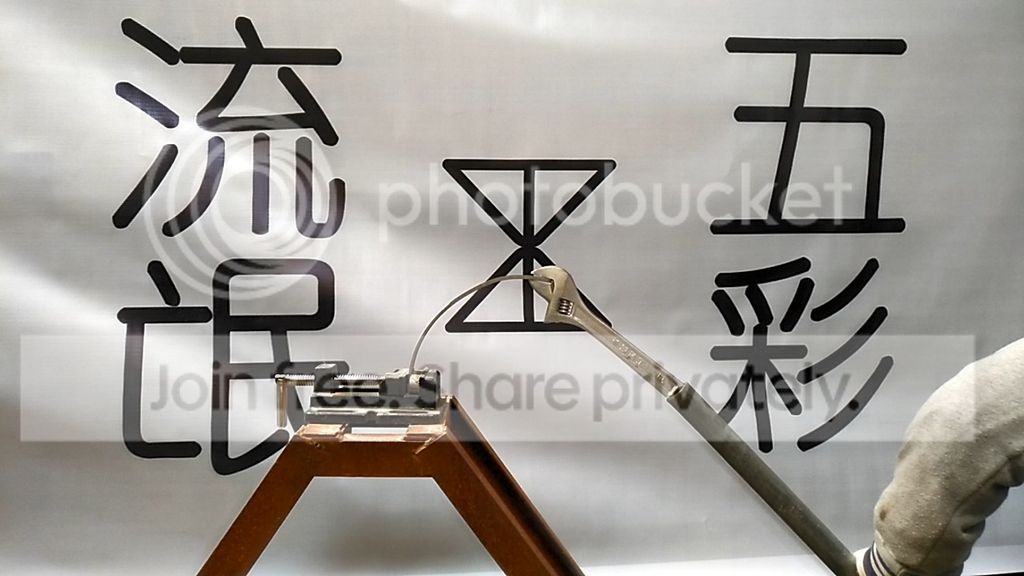
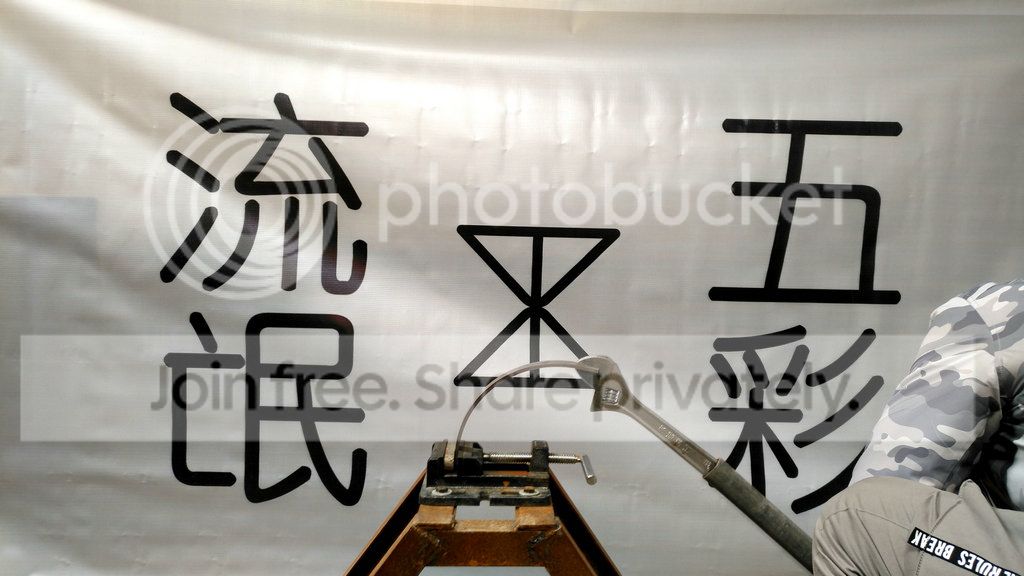
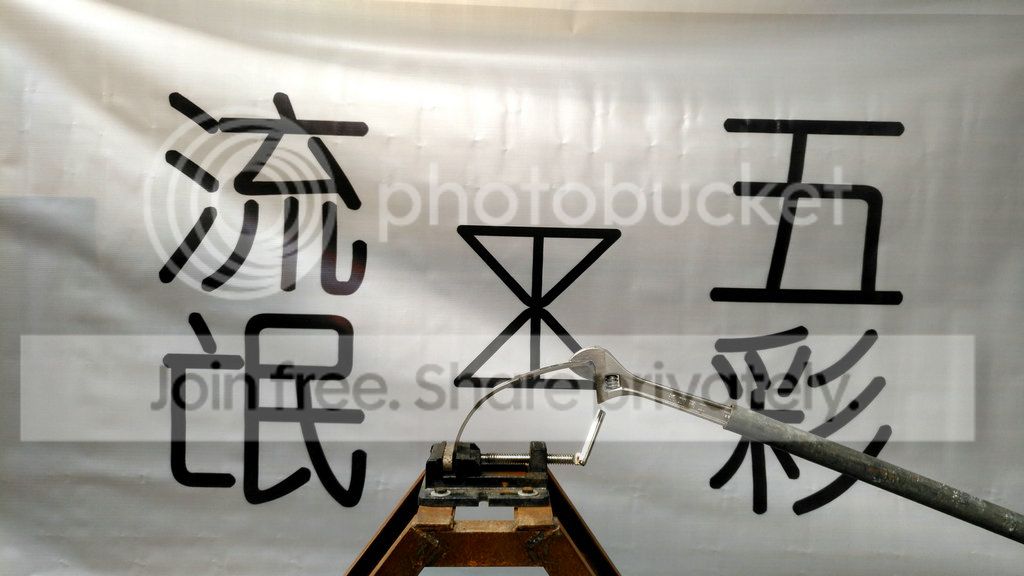
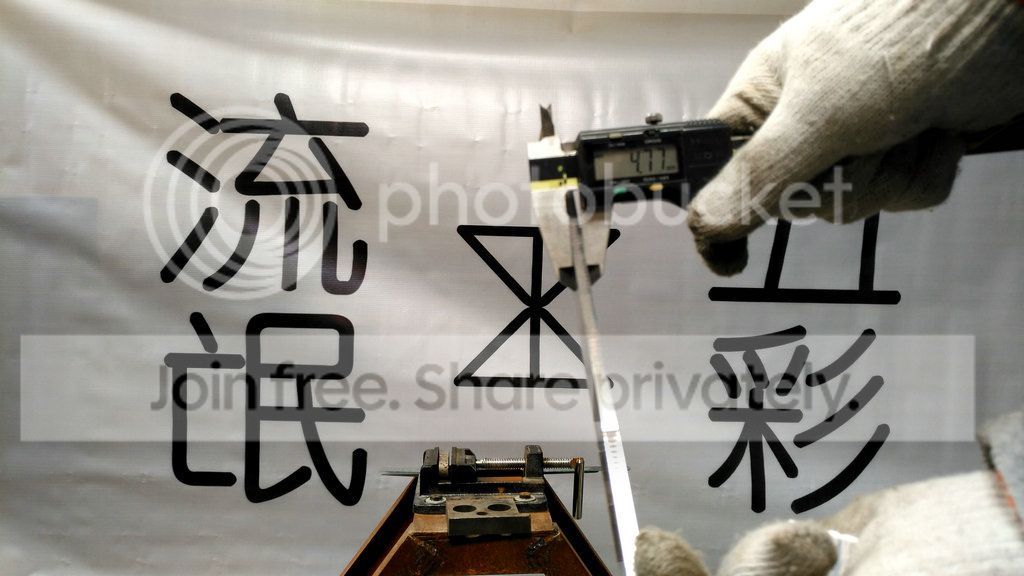
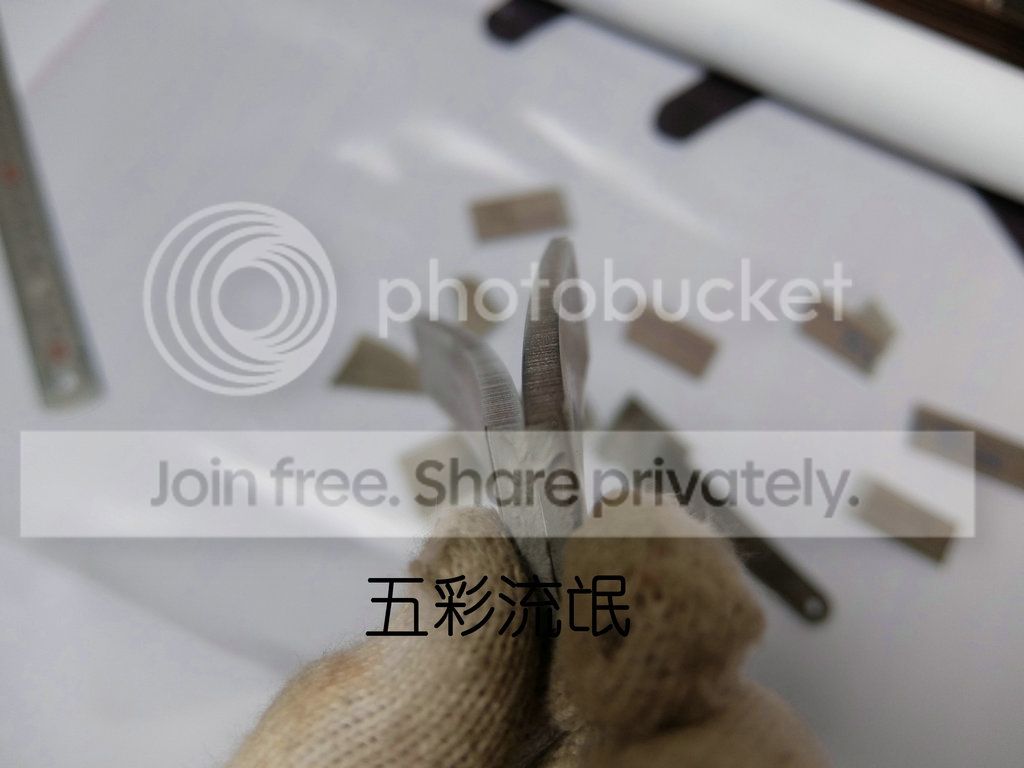
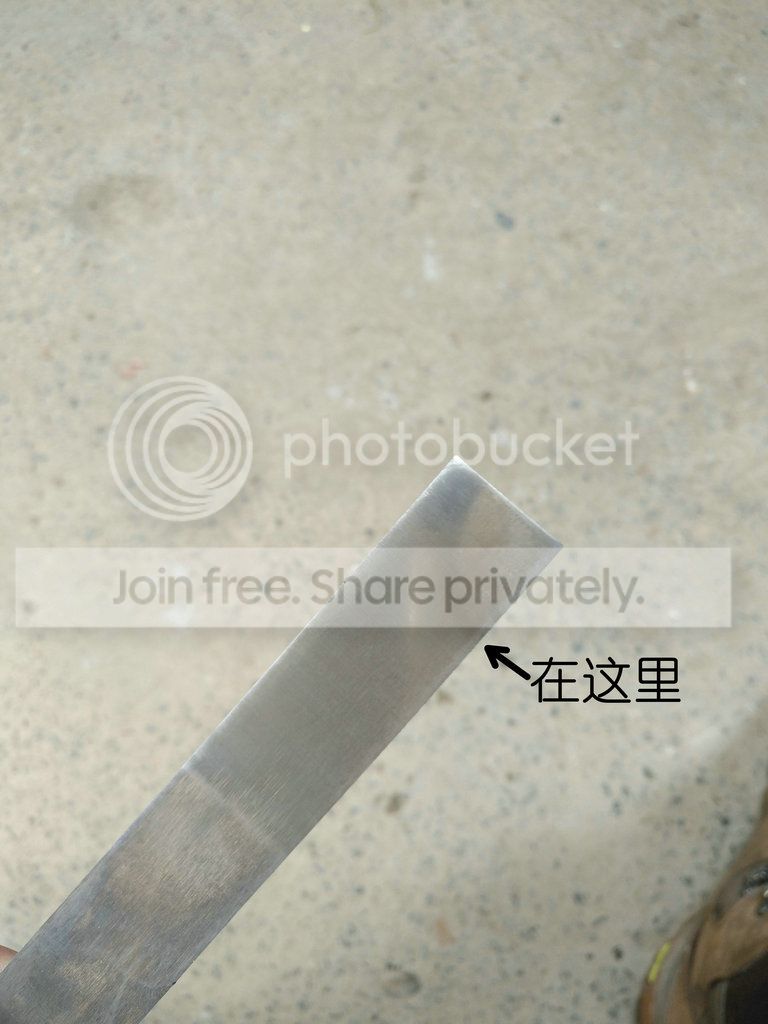
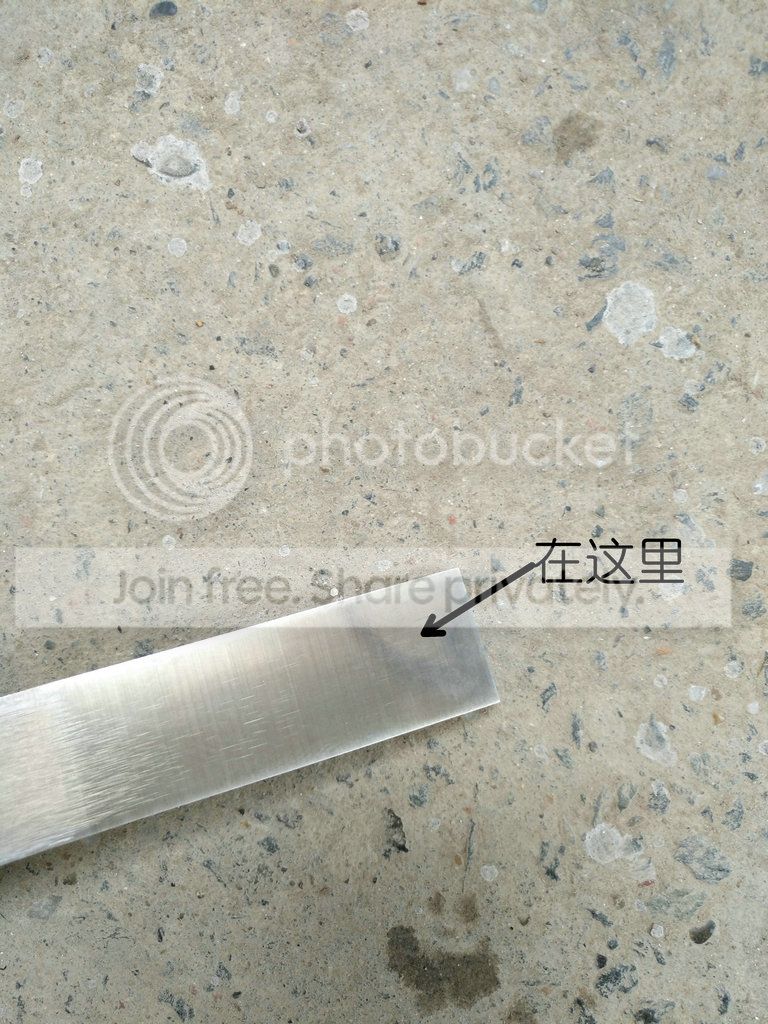
The following is my heat treatment D2, 3 processes, the thickness is 4.5-4.7, the length of the photo.
The length-to-thickness ratio is usually 35-40 (long-thick ratio: intermediate remaining length / material thickness)
Hardness: the first, 59-60 HRC. Second, 58 ± 1 HRC

Now you can break to 70-90 degrees. You can use its flexibility, plastic absorption of the impact of effective work. That is, you can make a long long knife.
The first is similar to carbon steel local quenching, the second is the overall quenching. The third is the sample
Sorry i do not know how to translate, i will not use english, but use google translation may be wrong ~ sorry.
The original is a few videos, these are screenshots, but do not know how to upload to here. I have uploaded videos in relevant forums in China.
Also please, here is not only upload outside the link.
By 五彩流氓 https://twitter.com/WucaiLiumang


Impressive flexibility for D2. My experience with it has not been with a knife, but rather making progressive dies and gages with it, where flexibility is not a desirable function, but high precision with a lower amount of thermal expansion is needed. If you're able to get D2 to harden and have that level of flexibility, that is amazing work.

Thank google translate for this...

D2的令人印象深刻的灵活性。我的经验没有用刀,而是用渐进的模具和量具,其中灵活性不是期望的功能,但是需要具有较低热膨胀量的高精度。如果你能够使D2变硬,并具有这样的灵活性,那就是惊人的工作。
D2 de lìng rén yìnxiàng shēnkè de línghuó xìng. Wǒ de jīngyàn méiyǒu yòng dāo, ér shì yòng jiànjìn de mújù hé liángjù, qízhōng línghuó xìng bùshì qīwàng de gōngnéng, dànshì xūyào jùyǒu jiào dī rèpéngzhàng liàng de gāo jīngdù. Rúguǒ nǐ nénggòu shǐ D2 biàn yìng, bìng jùyǒu zhèyàng de línghuó xìng, nà jiùshì jīngrén de gōngzuò.
 
hahahahaha.I am very surprise that liumang come here to advertise here.Could you transform the Chinese word into English. D2 is a good cheap steel,you heat treatment it broken we old impression. Hope you can do better,build a liumang heat treat factory.
 
Impressive flexibility for D2. My experience with it has not been with a knife, but rather making progressive dies and gages with it, where flexibility is not a desirable function, but high precision with a lower amount of thermal expansion is needed. If you're able to get D2 to harden and have that level of flexibility, that is amazing work.

Thank google translate for this...

D2的令人印象深刻的灵活性。我的经验没有用刀,而是用渐进的模具和量具,其中灵活性不是期望的功能,但是需要具有较低热膨胀量的高精度。如果你能够使D2变硬,并具有这样的灵活性,那就是惊人的工作。
D2 de lìng rén yìnxiàng shēnkè de línghuó xìng. Wǒ de jīngyàn méiyǒu yòng dāo, ér shì yòng jiànjìn de mújù hé liángjù, qízhōng línghuó xìng bùshì qīwàng de gōngnéng, dànshì xūyào jùyǒu jiào dī rèpéngzhàng liàng de gāo jīngdù. Rúguǒ nǐ nénggòu shǐ D2 biàn yìng, bìng jùyǒu zhèyàng de línghuó xìng, nà jiùshì jīngrén de gōngzuò.


Hello, D2 as a knife material is very common, many brands and knives will use D2 as a knife material. I now do the work is to break through the "high alloy is not suitable for long knife" this view. In China, personal production knife is a gray area, the limitations are great, but I have this heat treatment process of semi-finished products sold to other enthusiasts, and is doing further testing.
Thank you very much for your reply, the next time you can use English directly on the line, I will use google translation. Pinyin is not used.
Thanks!
- By Google Translate
 
hahahahaha.I am very surprise that liumang come here to advertise here.Could you transform the Chinese word into English. D2 is a good cheap steel,you heat treatment it broken we old impression. Hope you can do better,build a liumang heat treat factory.

I think,I know you......
 
You gonna make swords out of D2?
 
You gonna make swords out of D2?

To make a long knife, such as a sword. But I'm not good at polishing my sword, so I'm not going to do it. I'll make a long knife for the test. If someone else is willing to make a long knife or sword, I can heat it for him.
OR
Can do a long knife, such as a sword. But my own level of grinding the sword is not very good, so I will not do it I will do a long knife to show the test. If someone else is willing to do a long knife or sword, I can do heat treatment for him.


...Which one is right
 
Never thought i'd see d2 flex like that. Great heat treat! d2 is a favorite of mine for blades.
 
mecha- Can you do the HT? This would be very cool.
rolf

Hello, I am sorry that the translation software is limited, I do not quite understand what you mean, I am sorry.
OR
Hello, I am sorry that this translation software is limited, I do not understand your meaning, sorry.
 
I've gotten good at polishing my sword... Been doing it since I was 11.
 
Hello everyone, I am from China. I will not be in English...

Well thank God there! Good thing you're posting on a U.S. site. Not many English speakers around here...

Would you consider making a banana tanto out of super powered Chinese (D)ragon 2?
 
Last edited:
OP - look like you are on something here - 60rc 90 degrees deflection... If I may

What are the actual(or estimate) deflection/flex of this bar for: Elastic (bend and return straight); Plastic(yielded/set - stay bend) ranges prior to fracture/break?

Although D2 is fairly inexpensive relative to others & PM tool steels. A long knife/chopper bar is quite expensive compare to 10xx/52100/80crv2/etc. steels.

I like to experiment with D2 because of its known poor toughness - hence, easy to discern/delineate improvement (if any). Here is my D2 chopper, I posted a year ago

[video=youtube_share;31QhteR1SMA]http://youtu.be/31QhteR1SMA[/video]

If I was asked to produce a bar can flex as op did, my thinking would be:

Annealed D2 - can't do it because low elasticity (bend too easily) and not that great plasticity because high carbide volume.
Fully martensite (less than 5% RA) - similar to ^
High RA% matrix - yes, this would be my approach. Excess carbon in austenite matrix, thus remove as much carbon from carbide as possible. 25+% RA while still reach 60rc, which support good deflection ranges. However edge impact load probably only good for few impacts until RA convert to martensite (chip thereof). High RA% also lend to lousy edge stability.
 
To make a long knife, such as a sword. But I'm not good at polishing my sword, so I'm not going to do it. I'll make a long knife for the test. If someone else is willing to make a long knife or sword, I can heat it for him.
OR
Can do a long knife, such as a sword. But my own level of grinding the sword is not very good, so I will not do it I will do a long knife to show the test. If someone else is willing to do a long knife or sword, I can do heat treatment for him.


...Which one is right

The bolded is the better translation... though some here prefer the innuendo of the first.


Welcome!
 
OP - look like you are on something here - 60rc 90 degrees deflection... If I may

What are the actual(or estimate) deflection/flex of this bar for: Elastic (bend and return straight); Plastic(yielded/set - stay bend) ranges prior to fracture/break?

Although D2 is fairly inexpensive relative to others & PM tool steels. A long knife/chopper bar is quite expensive compare to 10xx/52100/80crv2/etc. steels.

I like to experiment with D2 because of its known poor toughness - hence, easy to discern/delineate improvement (if any). Here is my D2 chopper, I posted a year ago

[video=youtube_share;31QhteR1SMA]http://youtu.be/31QhteR1SMA[/video]

If I was asked to produce a bar can flex as op did, my thinking would be:

Annealed D2 - can't do it because low elasticity (bend too easily) and not that great plasticity because high carbide volume.
Fully martensite (less than 5% RA) - similar to ^
High RA% matrix - yes, this would be my approach. Excess carbon in austenite matrix, thus remove as much carbon from carbide as possible. 25+% RA while still reach 60rc, which support good deflection ranges. However edge impact load probably only good for few impacts until RA convert to martensite (chip thereof). High RA% also lend to lousy edge stability.

I can hardly translate your words. But I guess I still guess what you mean.
1, the video inside the knife is not mine, this is what I guess the first paragraph.
2, a long knife needs some flexibility, plastic. Because of the long knife in the cutting, there will be a very high impact power, this time, the impact of the steel itself is not enough to support the upper limit of the impact of high impact power. Need to have some body to absorb some of the impact function. Is to rely on the blade deformation. That is how much the ability to break the knife, like the ABS test. The strength of this break can not be particularly large, not particularly small. Different lengths of knives and shapes and uses require different values. The knife is too easy to break the bend in the use of very easy to deformation, not easy to break the knife when the use is easy to cut off, or knock back after breaking. This is my guess at your second paragraph.
3, there are 3 heat treatment process, but it is not what you describe. Residual austenite is needed, a certain amount of retained austenite is good. But this can be bent to 90 degrees can not only rely on retained austenite.
I hope I correctly translate and understand your main meaning.

OR

I can hardly translate your words. But I think I still guess some of what you want to express.
1, the video inside the knife is not my, this is what I guess the first paragraph of the meaning of words.
2, a long knife needs a certain degree of flexibility, plastic type. Because the long knife in the hacking time, there will be a high impact of the work, this time, the impact of steel itself, the upper limit of toughness is not enough to support such a high impact work. Need to have a certain blade to absorb part of the impact of work. Is to rely on the deformation of the blade. Which is the ability to break the knife how much, like the same as the ABS test. The breaking force can not be particularly large, nor can it be particularly small. Different lengths of knife and shape and use require different values. It is easy to break the knife in the use of easy to deformation, not easy to break the knife when the knife is easy to cut off, or back after the break. This is my guess about your second paragraph.
3, there are three heat treatment process, but not what you describe the meaning. Residual austenite is needed, and a certain amount of retained austenite is advantageous. But this can break off to 90 degrees can not rely on residual austenite.

I want to translate and understand your main meaning correctly.
 
I've gotten good at polishing my sword... Been doing it since I was 11.

You are very powerful, 11 years old in the production of a knife.
Youtube in China is shielded by the government, you must use VPN can see. The The Very difficult. Thanks for that friend.

OR

You are so powerful. You were 11 years old.
YouTube is blocked by the government in China, you must use VPN to see... Very difficult. Thanks to this friend.
 
Back
Top