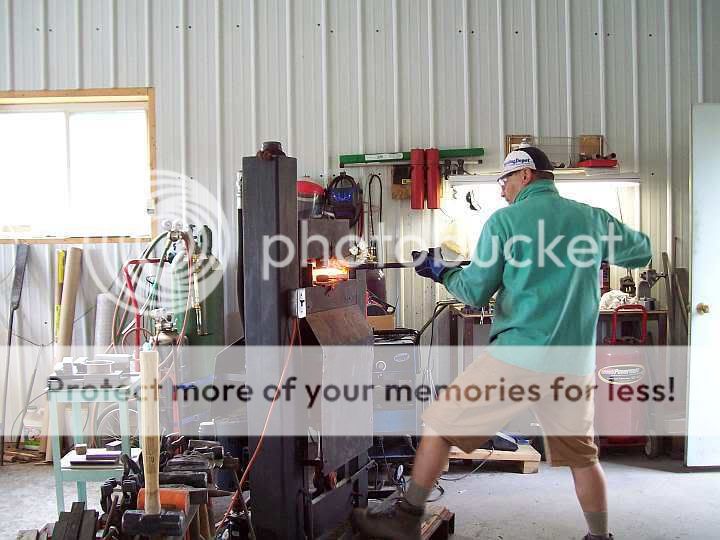
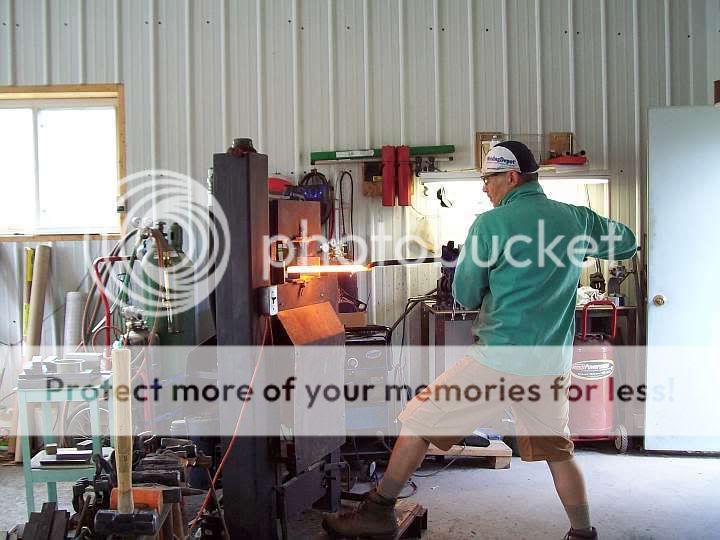
David Wesner - modified "Gus" model camp knife - WIP- Coop pics added!

Status
Not open for further replies.
Looking darn good, and congratulations on making knives that will be handily passing the performance part of the Journeyman smith test!

 
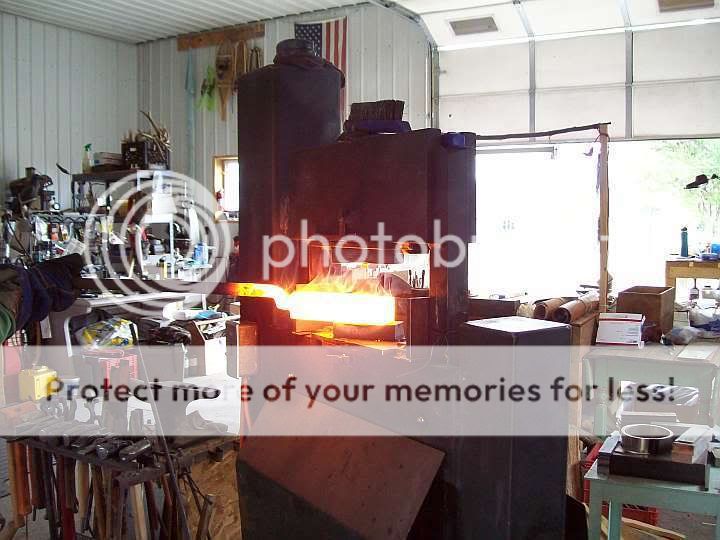
Here we see the forge coming up to temp.:

orig.jpg


Getting ready to add flux after heating the billet:

orig.jpg


The billet going into the forge for a good soak prior to making the first weld:

orig.jpg


The first few bumps:

orig.jpg


The billet just after the first weld:

orig.jpg


Roger
 
Thank you StormCrow :) I really appreciate you're comment and the fact you're following along :thumbup:


I have a few more progress pics to add behind what Roger has just posted.

This first image shows the billet end after grinding and etching. Even though the welding I did (TIG) to keep the pieces of 1084 & 15N20 together prior to the initial first forge weld didn't include any filler rod, I still want to get rid of what could possibly be a random blob showing up somewhere in the finished billet. I do that by grinding the end to get rid of the TIG weld line, then doing a quick etch just to make sure it's gone.
Do to my background in Tool & Die/Machining, I attack my knifemaking and forging from a systematic approach. It's just how I've learned to do things.
That being said, my theory when it comes to making pattern welded steel is that random pattern is just that, random.
On the other hand, I want the ladder pattern billet I'm creating for Roger's blade to be a very clean example. No surprises or "random" blobs popping up in the ladder pattern.
Just for the record, I always like to give my teachers and mentors in this wonderful craft credit for what they've taught me. This "etching the end" trick, in fact, most of what I know, regarding making Pattern Welded Steel, I've learned from my good friend Kevin Casey ;) Thanks Buddy ! :D The time you've spent helping me is very, very much appreciated :thumbup: :thumbup:
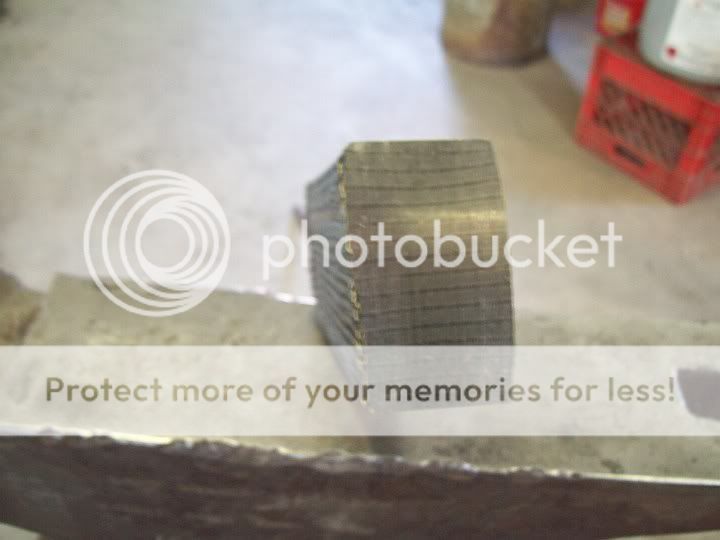
RogerWez16.jpg


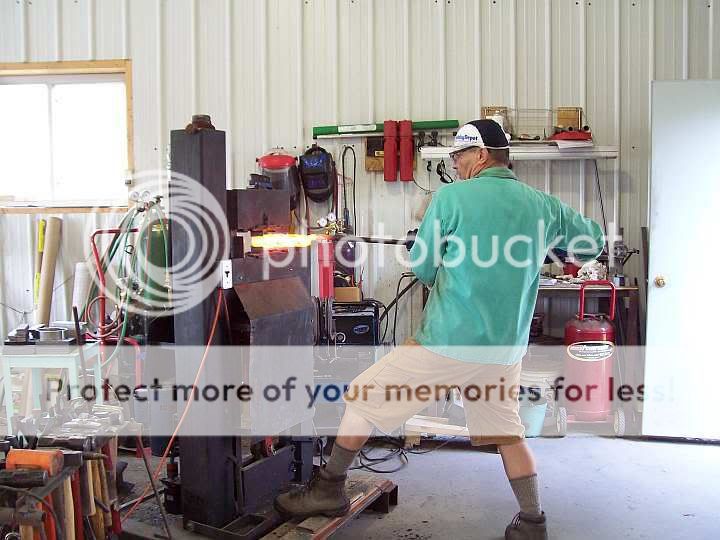
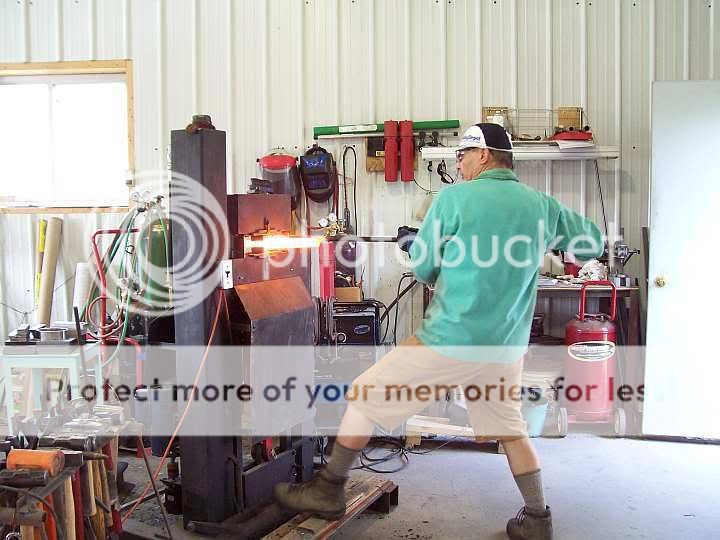
This next image is what I thought was a cool shot :o The billet coming up to temperature, ~ 2,150* F , through the dies of my press :thumbup:
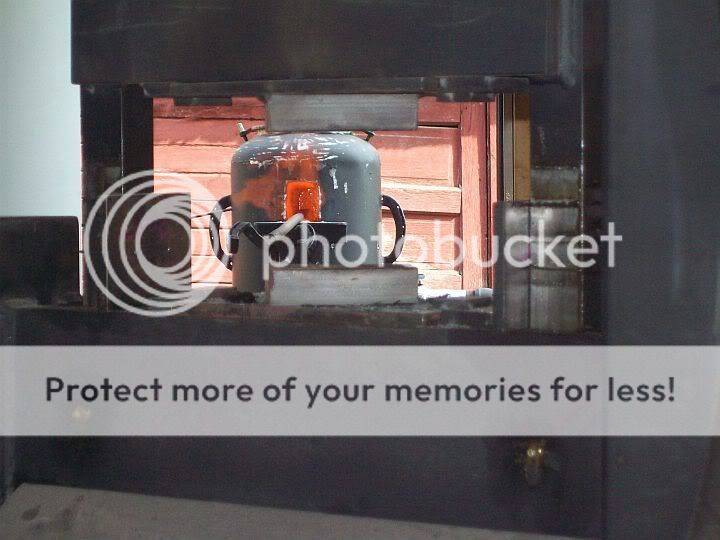
RogerWez17.jpg


:cool:
 
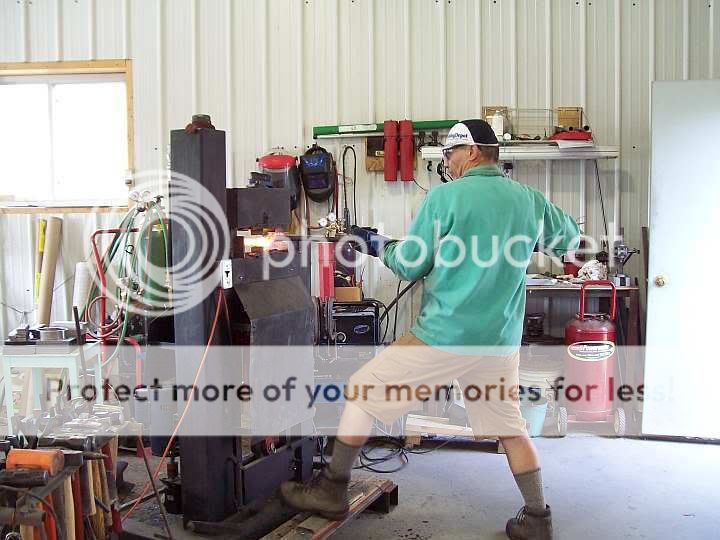
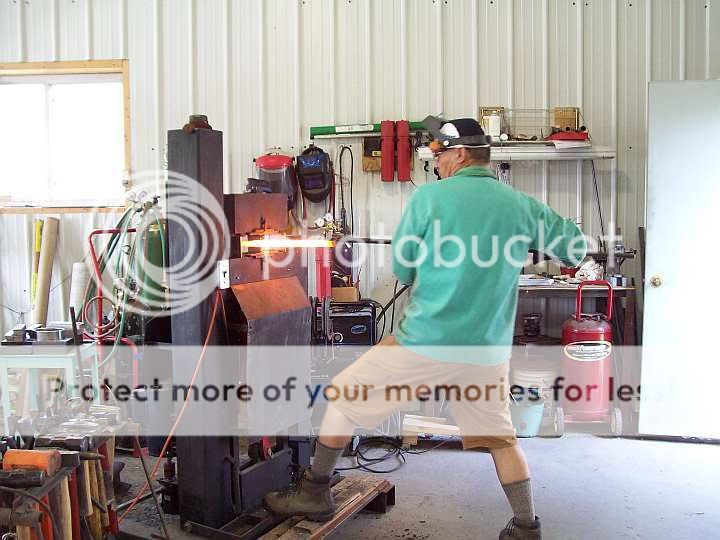
This next set of pics shows me drawing the billet out to what will end up being ~ 18" L.

RogerWez18.jpg


RogerWez19.jpg


RogerWez20.jpg


RogerWez21.jpg


RogerWez22.jpg


RogerWez23.jpg


Redundant, Redundant, Redundant
 
The next pic shows the billet drawn to it's pre-cut length of ~ 18" L.


RogerWez24.jpg


This pic shows the billet cooling slowly, after drawing, in my vermiculite tub. This allows me to easily saw cut the billet into 3 pieces of equal length. I'll clean up top and bottom of each piece, tack them together and go through this same process all over once again, (forge welding & drawing). Theoretically it will make the 31 layer billet 93 layers of 1084 & 15N20.

RogerWez25.jpg


That's all I have for the moment. I'll be heading back out to the shop after a BIG, COLD glass of ice tea and a quick bite to eat.

More to come ........................... ;)
 
Great thread, great knife, great person/knife maker!!! :cool: :thumbup: :thumbup: :thumbup: :)

Oh Nick ........... you're always too kind ;)

You know my friend, because of the absolutely epic, fantastic, world class build thread you completed a while back, I was a little reluctant to even do this WIP.
You're kind of a hard act to follow ................. no matter what the subject matter :D

I know I've mentioned this to you before but I can't even begin to list the skills I've learned from you over the years.

IMHO, you are without a doubt, one of the finest Knifemakers in the World !! If I'm able to achieve half the level of work you're doing, I'll be a very happy man ;)

Thanks for checking our thread out Nick. You have no idea how much I appreciate it !


;) :thumbup:
 
OK, back to bidness ;)

Just so you guys don't think I'm a slacker :D I want you to know, along with Rogers project, I'm working on several other knife builds throughout the workday.
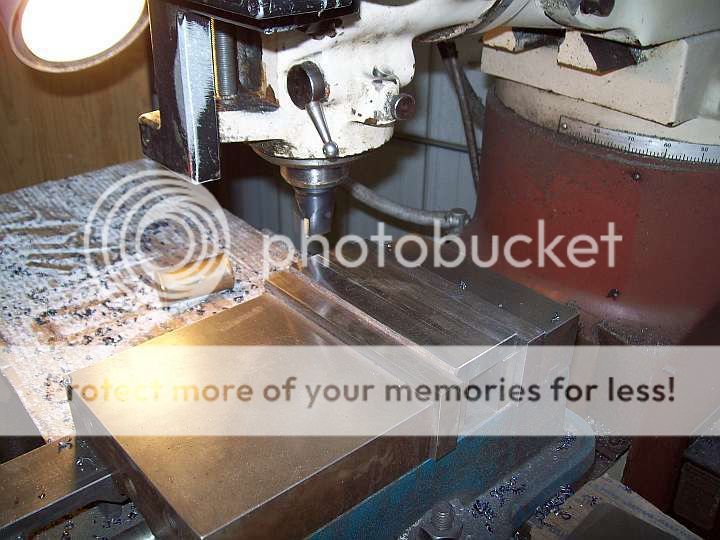
In regards to this build, today I was able to get the billet sawcut into 3 equal length pieces ~ 6" L.

Rather than grinding, when it comes to cleaning up the mating sides of a billet in preparation for increasing the layer count, I prefer to use my milling machine. I have the best luck using a 2 fluted indexable insert endmill. I simply clamp the pieces in my vise and clean-up the workpiece faces

RogerWez26.jpg


The next picture shows the 3 pieces ready to be tacked together. As you can see, if possible, and the weld still looks sound, I try to leave the handle on the end piece. No particular reason other than it eliminates having to weld it on again.

RogerWez27.jpg


Here we see the billet all tacked up, ready to forge weld. FWIW, and I can only speak for myself, I've found it best to pre-heat the ends prior to welding. Being high carbon steel, if I don't pre-heat, I've found the welds like to crack. I haven't had it happen to me yet, but I've heard it can be a real drag trying to fish pieces out of the forge that have come undone from the billet due to failed tack welds. I'd rather not have that happen ;)


RogerWez28.jpg


So I'm going back out to the shop to do some forge welding and drawing of the billet.

I'm getting a little ansy to start the actual blade work on this project ;)


Thanks again to all who are following along :thumbup:
 
Wow, great WIP. I would be proud to own and use one of your knives, David. They truly look like they are made for purpose.
 
I love to see the approach another machinist takes to the craft.

...every smith needs a TIG and a mill in their process...
 
Fun stuff. Looking forward to seeing this progress.

Thanks for coming by Stuart :thumbup: It's going to start getting good now ;)

Wow, great WIP. I would be proud to own and use one of your knives, David. They truly look like they are made for purpose.

Thanks JB :thumbup:

Although I truly can appreciate knives that spend their lives behind glass, it's really a kick to know that many of the knives I make get a chance to do their thing :D

Keep checking back, like I mentioned to Stuart, it going to start getting good now !


:cool:
 
I love to see the approach another machinist takes to the craft.

...every smith needs a TIG and a mill in their process...


Yeah, we do, sometimes, approach things a little bit different don't we :D :thumbup:

Nathan, I hate to even think about what I'd do without my mill.

In regards to my TIG welder, its really coming in handy now that I've started down the path of pattern welding steel :thumbup:

And thanks so much for checking Roger's build out Nathan. Very, very much appreciated !!


:cool:
 
Hi Folks :) I have some more progress pics to add ..............
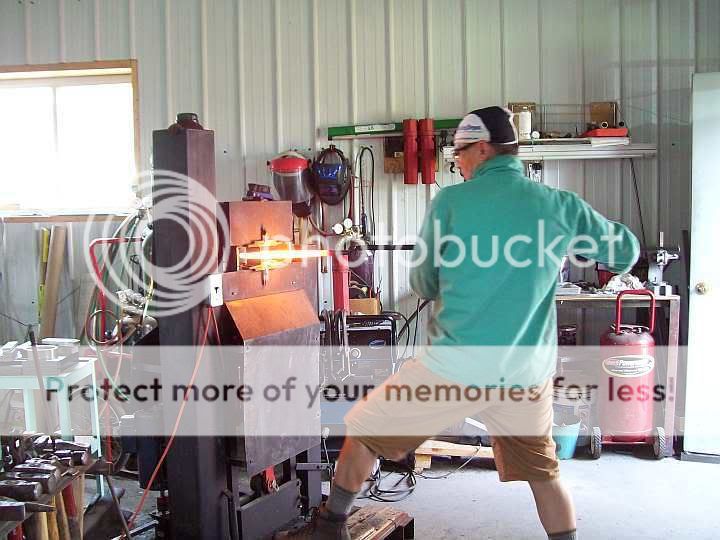
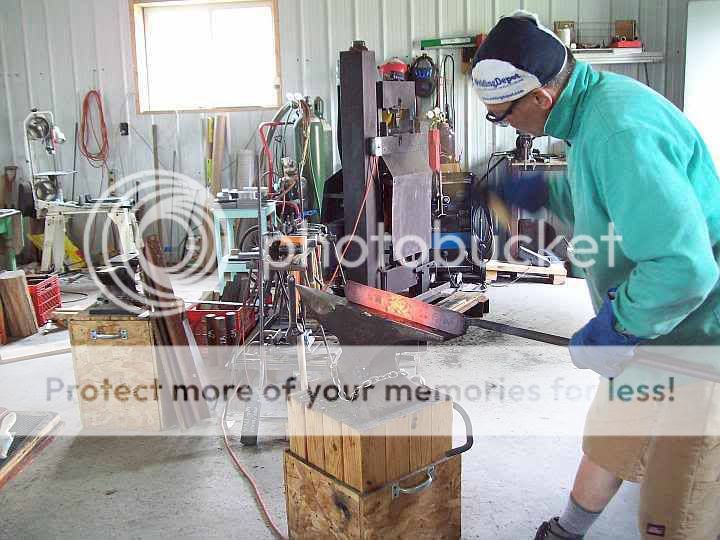
The last pictures posted showed the billet stacked, tacked and ready to forge weld into a billet that theoretically contained 93 layer alternating layers of 1084 and 15N20

Here's a pic showing me drawing the billet out after forge welding .......

RogerWez29.jpg


This one shows me at the anvil, just after the drawing operation. I occasionally end up here, using the long flat surface of the anvil to do some straightening.

RogerWez30.jpg


After the above starightening operation I took the billet back to the saw, cutting the billet into 3 equal length pieces again. Then went to the mill again to clean-up the mating surfaces. This will be the last stacking, tacking and forge welding operation for the blade steel.

Here's what I think is a very cool shot of the billet just before the forge welding bump .......


RogerWez31.jpg


:cool:
 
Good Bye Cruel Weld ................... :D I couldn't resist ;)


RogerWez32.jpg


After getting rid of any possible weld, I went back for the final drawing operations


RogerWez33.jpg


RogerWez34.jpg


The billet is now at the final layer count of ~ 279, and ready for the laddering operation.

Rather than milling or grinding grooves and/or divots, then flattening, I've been showing the distortion by pressing the ladder pattern into the billet with dies. Before I could start that operation today, I needed to do a little modification to my ladder pattern dies.

Although the last ladder pattern billet I made turned out very nice, I saw room for improvement. That could only be accomplished by changing the dies I've been using.

Back to good old "Bridgeport Mill" ;)

The dies and the billet are now ready and waiting :thumbup:

Check back tomorrow for pictures and text describing the process.

Thanks again to all who've been checking this thread.


:thumbup: :cool:
 
Status
Not open for further replies.
Back
Top